
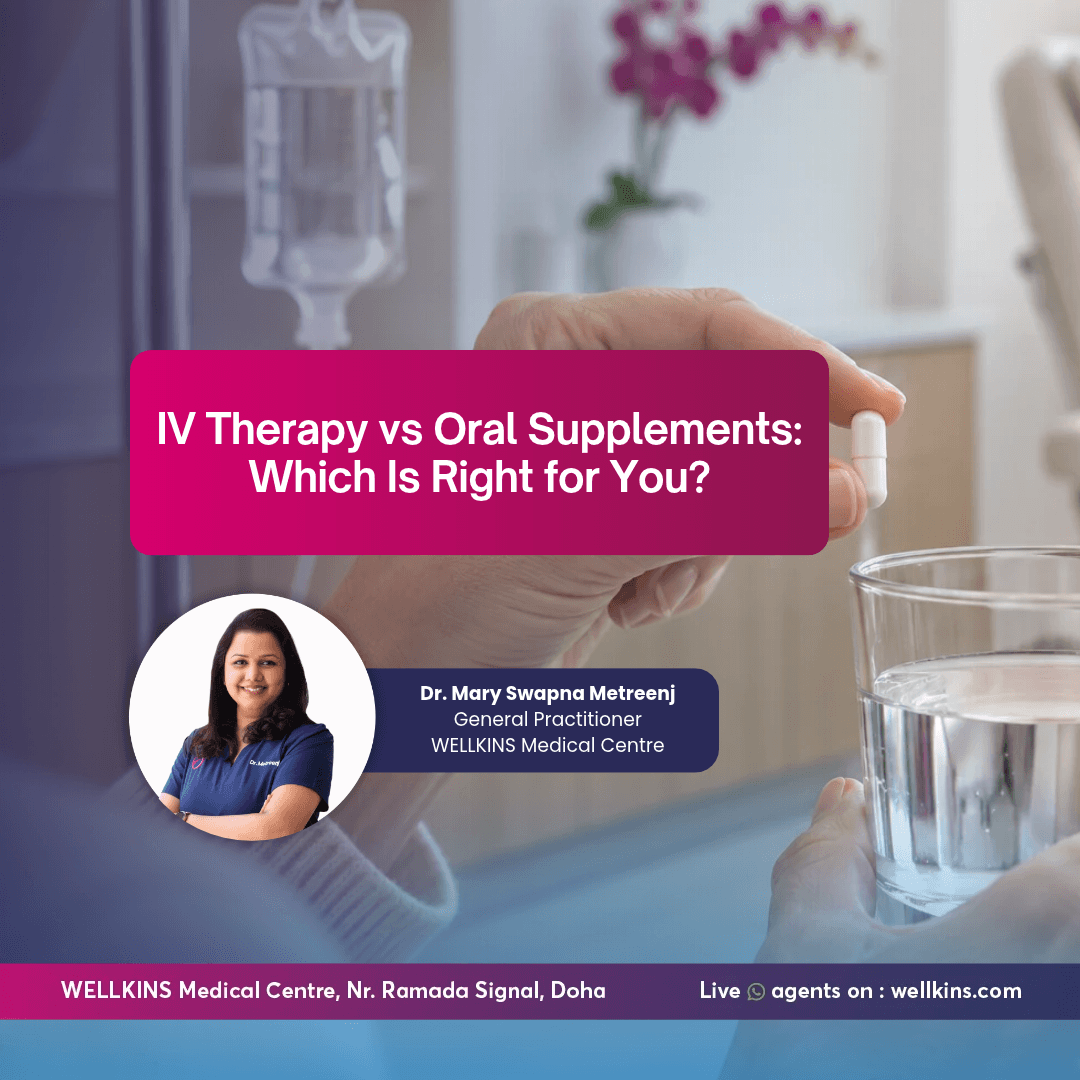
Author: Dr. Mary Swapna Metreenj, (General Practitioner at WELLKINS Medical Centre)
Vitamins and minerals support energy production, immunity, nerve function, blood formation and many other essential processes. When a nutritional gap is identified, patients may wonder whether oral supplements are sufficient or whether intravenous therapy should be considered.
The right choice depends on the cause of the deficiency, its severity, digestive health, current medicines and how quickly correction is medically required. IV therapy is not automatically better than tablets. A medical assessment and appropriate blood tests can help determine which approach may be suitable for you.
People Also Ask
Is IV therapy better than taking vitamins orally?
Not always. Oral supplements may be effective when digestion and absorption are normal. IV therapy may be considered when a doctor identifies a specific reason that intravenous treatment may be more appropriate.
Do I need blood tests before IV therapy?
At WELLKINS, baseline investigations are reviewed before the first infusion is booked. The tests required depend on your symptoms, medical history and the nutritional concern being assessed.
Can I choose an IV infusion without seeing a doctor?
No. Every IV infusion at WELLKINS requires a consultation with a licensed doctor who will review your symptoms, medical history, current medicines, allergies and individual health needs.
Blood tests are not required for every patient. The doctor may recommend testing when clinically appropriate and will determine whether IV therapy, oral supplements or another form of care is more suitable for you.
How long does an IV therapy session take?
The infusion generally takes around 30 to 45 minutes. Additional time may be needed for preparation and a short observation period after the infusion.
Can oral supplements cause side effects?
Yes. Oral supplements can cause digestive symptoms and may interact with medicines. Some vitamins and minerals can also become harmful when taken in excessive amounts.
IV Therapy vs Oral Supplements: Which Might Be Suitable for You?
Both oral supplements and IV therapy can deliver vitamins or minerals to the body. The main difference is how they enter the bloodstream and how the body processes them.
Oral supplements pass through the digestive system before nutrients are absorbed. IV therapy delivers prescribed fluids and nutrients directly into a vein through a small cannula. This bypasses the digestive process but also requires clinical supervision and careful patient selection.
“IV therapy and oral supplements should not be viewed as competing treatments. For many patients oral supplements are effective, convenient and affordable. IV therapy may be considered when tests identify a clinical need or when absorption, intake or another medical factor makes oral treatment less suitable. The safest decision begins with understanding why the deficiency developed and choosing the simplest effective way to correct it.”

What Are Oral Supplements?
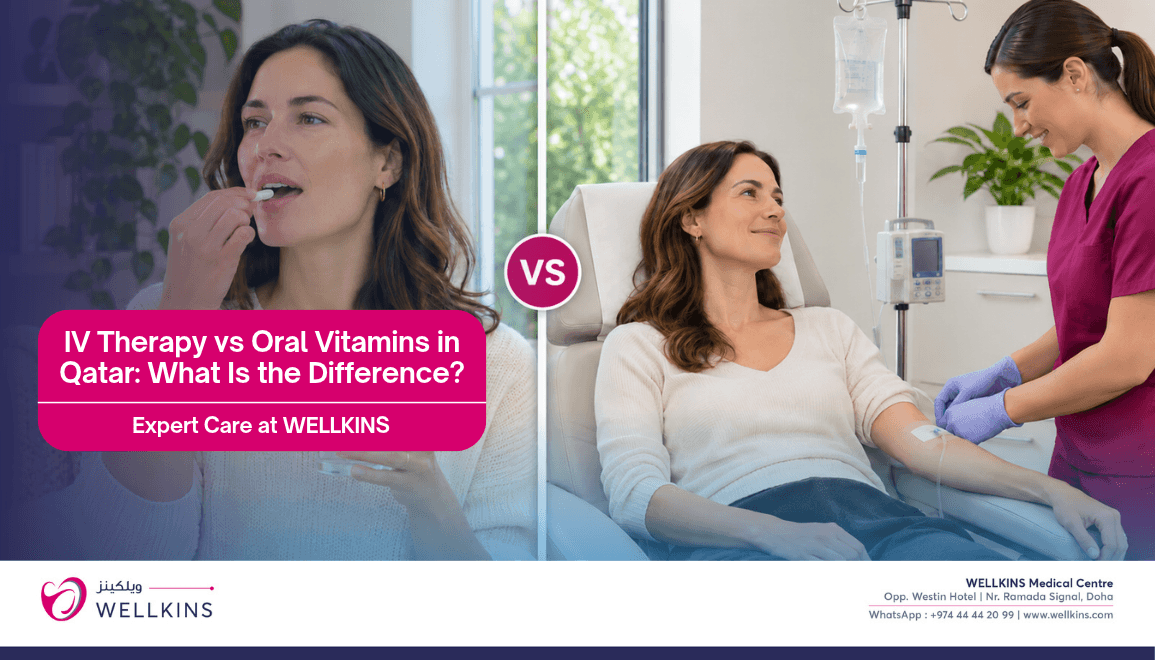
Oral supplements are tablets, capsules, powders, liquids or sprays that contain vitamins, minerals or other nutrients. They are absorbed through the stomach and intestines before entering the bloodstream.
Common examples include vitamin D, vitamin B12, iron, folic acid, calcium and multivitamin preparations. When digestion and absorption are working normally, oral supplements are often the first option because they are convenient and can be taken at home.
However, the dose and duration should be based on the person’s nutritional needs. Taking several supplements without medical advice can lead to unnecessary intake, interactions with medicines or excessive levels of certain vitamins.
What Is IV Therapy?
IV therapy at WELLKINS Medical Centre delivers prescribed fluids and nutrients directly into the bloodstream. A small cannula is placed into a vein and the infusion is administered by a trained nurse in a dedicated treatment room.
Before treatment, a doctor reviews the patient’s symptoms, medical history, medicines, allergies and relevant blood results. IV therapy is considered supportive care. It does not treat every cause of fatigue and it does not replace healthy eating, adequate sleep or proper treatment for an underlying medical condition.
The licensed multivitamin preparation used by WELLKINS contains vitamins A, B1, B2, B3, B5, B6, B12, C, D3 and E along with biotin and folic acid. The exact treatment decision and number of sessions depend on the doctor’s assessment and test results.
How Does Absorption Differ?
Oral nutrients must pass through the digestive system. Their absorption can be influenced by the nutrient, dose, food intake, digestive health and interactions with medicines or other supplements.
IV therapy bypasses digestion and places the prescribed preparation directly into the bloodstream. This route may be useful in selected situations but bypassing digestion does not make IV therapy necessary for every patient.
If the digestive system is functioning normally and the deficiency can be corrected safely over time, oral treatment may work well. A doctor should consider the clinical need rather than selecting a treatment only because one method appears faster.
When Might Oral Supplements Be Suitable?
Oral supplementation may be appropriate when a deficiency is mild, absorption is expected to be normal and there is no urgent need for correction. It may also be used to maintain healthy levels after an initial deficiency has been treated.
- A mild vitamin or mineral deficiency confirmed by testing
- Normal digestive absorption
- A condition that can be managed with gradual replacement
- A need for long term maintenance under medical guidance
- A patient who can take the supplement consistently
Oral supplements are generally more convenient and less expensive than intravenous treatment. They also avoid the risks connected with inserting a cannula into a vein.
When Might IV Therapy Be Considered?
IV therapy may be considered when a medical assessment identifies a reason that oral treatment may not be sufficient or suitable. The decision should be based on symptoms, test results, medical history and the expected benefit of treatment.
Situations that may prompt a doctor to consider intravenous treatment include:
- Impaired absorption due to a digestive condition
- Difficulty tolerating or taking oral supplements
- Low nutritional intake during a medically supervised programme
- A clinically significant deficiency requiring more direct correction
- A recovery plan in which nutritional support has been prescribed
Not everyone with tiredness, poor concentration or low energy needs an infusion. These symptoms can also be related to anemia, thyroid disorders, diabetes, sleep problems, infection, emotional stress or another condition that requires different care.
Why Blood Tests May Be Important
Symptoms alone cannot confirm a vitamin deficiency. Fatigue, weakness, hair changes and poor concentration can have several possible causes. Relevant testing can prevent unnecessary treatment and guide the correct dose.
Depending on the symptoms and medical history, a doctor may request tests such as:
- Complete blood count
- Iron studies and ferritin
- Vitamin B12
- Vitamin D
- Thyroid function
- Blood glucose or HbA1c
- Kidney or liver function when clinically indicated
The WELLKINS Medical Laboratory supports clinical assessment with diagnostic testing. Results should be reviewed by a doctor who can connect them with your symptoms and examination findings.
Is IV Therapy Faster Than Oral Supplementation?
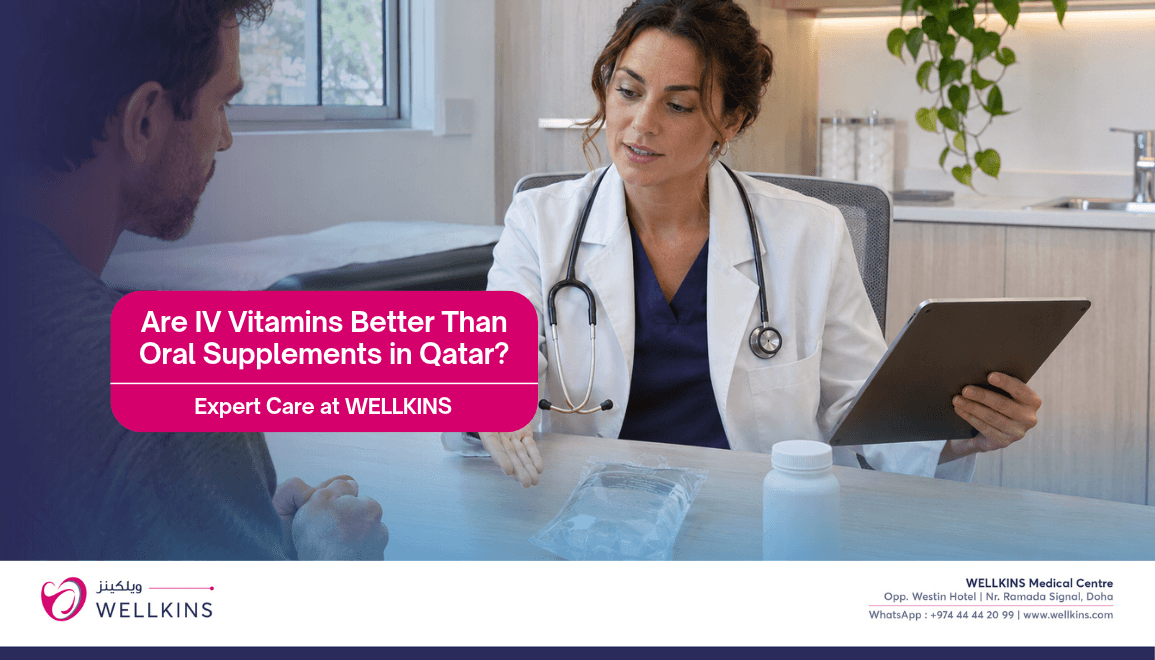
IV therapy places nutrients directly into the bloodstream. However, this does not mean that every patient will feel an immediate improvement. The response depends on whether a deficiency was present and whether it was responsible for the symptoms.
Some people may notice improved hydration or alertness after treatment while others may notice little immediate difference. If nutrient levels were already adequate, an infusion may not address the real cause of the symptoms.
Oral supplements usually work more gradually. When they are taken correctly and absorbed normally, they can be an effective way to treat or prevent certain deficiencies.
Does IV Therapy Provide More Energy?
IV therapy should not be promoted as a guaranteed energy treatment. Vitamins support normal energy metabolism but receiving additional vitamins does not automatically create extra energy when the body already has adequate levels.
Persistent fatigue deserves a proper medical assessment. A consultation through the General Medicine Department at WELLKINS Medical Centre can help identify whether tiredness may be connected with nutrition, sleep, medicines, infection or a chronic health condition.
What Are the Possible Risks?
Oral supplements and IV therapy can both cause side effects. The risks depend on the ingredient, dose, medical history and method of administration.
Possible concerns with oral supplements include:
- Stomach discomfort or nausea
- Constipation or diarrhea
- Interactions with medicines
- Excessive intake of certain vitamins or minerals
Possible concerns with IV therapy include:
- Pain or bruising where the cannula is inserted
- Temporary swelling or irritation
- Infection at the insertion site
- An allergic reaction to an ingredient
- Fluid or electrolyte problems in susceptible patients
Medical screening and trained administration help reduce these risks. Patients should disclose allergies, medicines, supplements, pregnancy and existing kidney, liver or heart conditions before treatment.
Who Should Not Have IV Vitamin Therapy?
IV vitamin therapy at WELLKINS is not offered to anyone under 18. It is not routinely recommended during pregnancy unless there is a specific medical indication that has been assessed by a doctor.
A known allergy to an infusion component may also make treatment unsuitable. The doctor may advise against an infusion when test results do not show a clinical reason for it or when another form of treatment would be safer.
Can You Take Oral Supplements After IV Therapy?
Some patients may be advised to continue with oral supplements after an infusion. This may help maintain corrected levels and reduce the need for repeated intravenous treatment.
The plan depends on the nutrient involved, the original cause of the deficiency and follow up results. Do not combine multiple products without checking their ingredients because different supplements may contain the same vitamins.
What Happens During an IV Therapy Assessment at WELLKINS?
The process starts with a doctor’s consultation rather than selecting an infusion without an assessment. Your doctor will discuss your symptoms, diet, medical conditions, medicines and previous test results.
Blood tests are reviewed before the first infusion is arranged. If treatment is prescribed, the infusion usually takes around 30 to 45 minutes followed by a short observation period.
A single infusion session is currently listed at QR 500 while a prescribed course of three is listed at QR 1,200. Consultation and blood test charges may apply separately. Patients should confirm the current cost when booking because service details and prices can change.
When Should You Consult a Doctor?
Arrange a medical assessment if tiredness, weakness, dizziness, poor concentration or other symptoms continue despite adequate sleep and regular meals. You should also seek advice before beginning high dose supplements or combining several nutritional products.
Prompt medical attention is important if fatigue occurs with chest pain, breathing difficulty, fainting, black stools, persistent vomiting, severe weakness or rapidly worsening symptoms. These concerns should not be managed with supplements or IV therapy alone.
Choosing the Right Option for Your Health
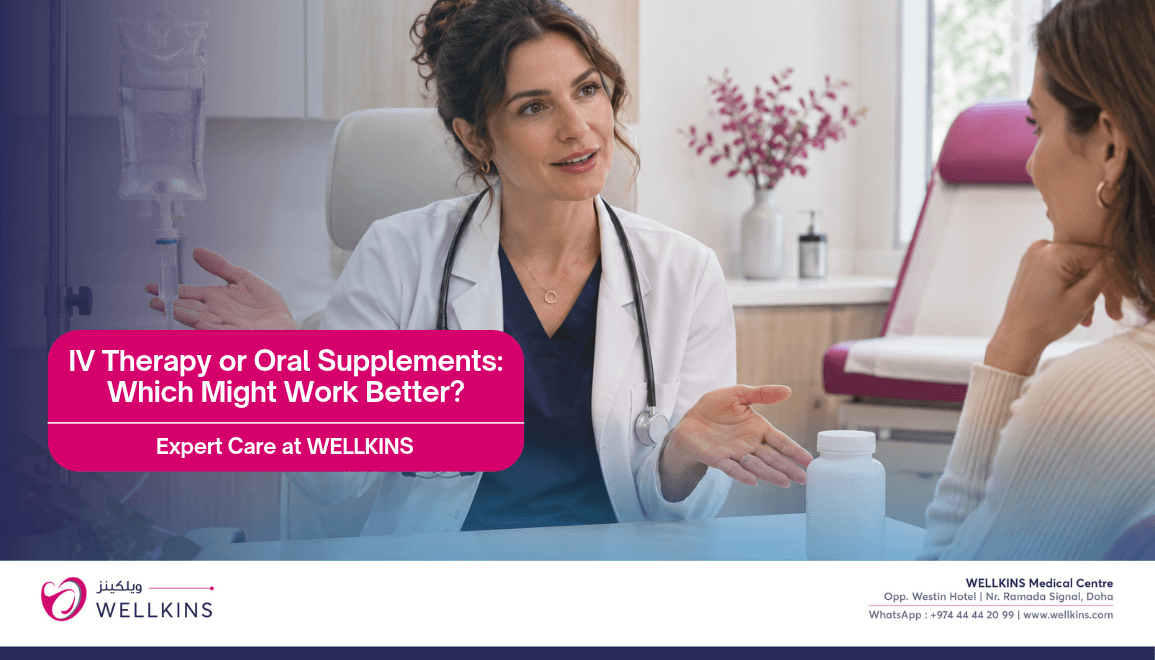
IV therapy and oral supplements can both have a role in correcting nutritional deficiencies. For many patients oral supplements remain the simplest and most practical option. IV therapy may be considered when clinical findings show that a more direct route is appropriate.
The decision should begin with diagnosis rather than assumptions. A consultation with Dr. Mary Swapna Metreenj can help determine whether your symptoms require testing, oral supplementation, IV therapy or assessment for another medical condition.
To learn more about medically supervised infusions, visit the IV Therapy service at WELLKINS Medical Centre or contact WELLKINS to arrange an assessment.
Medical disclaimer: This article provides general health information and does not replace an individual medical consultation. Supplements and intravenous therapy should only be used after appropriate professional assessment.