
Author: Dr. Reneesh, (Consultant Orthopedic Surgeon – WELLKINS Medical Centre)
Introduction
Children are naturally active and curious. Running, jumping, climbing, cycling and participating in sports are important for their physical development. These activities can sometimes result in injuries ranging from minor bruises and muscle strains to fractures, ligament injuries and injuries involving the growth plates of bones.
Children’s bones differ from adult bones because they are still developing. Their bones are generally more flexible and contain growth plates which are also known as physes. These areas allow bones to grow in length. These differences influence how injuries occur, how they appear on X-rays and how they should be treated.
When managing a child with an injury the main objectives are to identify the type and severity of the injury, protect the developing bone and joint, restore normal function and reduce the risk of long term complications.
Early assessment and appropriate treatment can help most children recover well and return safely to school, play and sport. A child who continues to experience pain, swelling, limping or reduced use of a limb should be assessed even when the original injury appeared minor.
“Children’s bones are still developing which means an injury can behave differently from a similar injury in an adult. Early assessment is particularly important when there is persistent tenderness, difficulty bearing weight or possible growth-plate involvement. A child may still move an injured limb despite having a fracture. The objective of treatment is not only to support healing but also to protect normal growth and help the child return safely to daily activities and sport.”
People Also Ask
Can a child have a fracture and still move the limb?
Yes. Some children can still move an injured arm or leg despite having a fracture. Persistent pain, focal tenderness, swelling or difficulty using the limb should be medically assessed.
When should limping after an injury be checked?
Medical assessment is recommended when a child cannot bear weight, the limp continues, pain becomes worse or there is swelling, bruising, fever or tenderness over a bone.
How long does a childhood fracture take to heal?
Healing time depends on the child’s age, the affected bone and the type and severity of the fracture. The treating orthopedic specialist will advise when normal activities and sport can safely resume.
Are growth-plate injuries serious?
Many growth-plate injuries heal well with appropriate treatment. Some injuries can affect future bone growth which is why prompt diagnosis and follow-up are important when growth-plate involvement is suspected.

1. What Are the Common Causes of Injuries in Children?
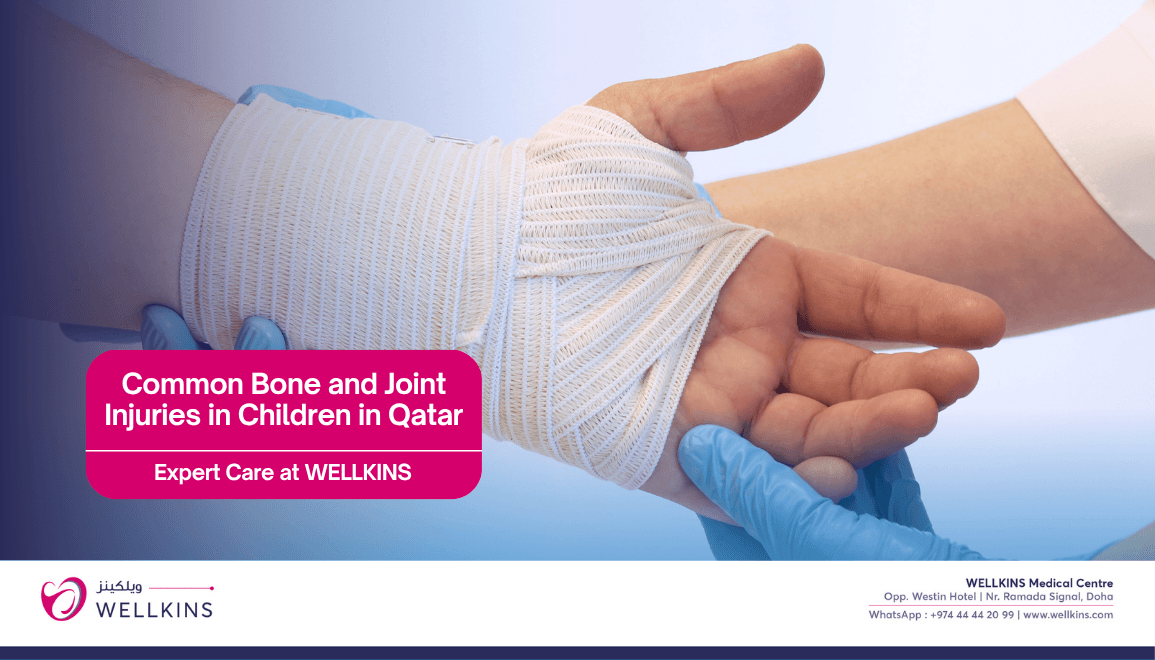
Childhood injuries can occur during everyday activities, recreational play, organized sport or accidents. The mechanism of injury and the child’s age help an orthopedic specialist determine which bones, joints or soft tissues may be affected.
Understanding whether an injury resulted from a fall, twisting movement, direct impact or repetitive activity is important because each mechanism can produce a different injury pattern.
A. Falls and Accidental Trauma
Falls are a common cause of childhood musculoskeletal injuries. Children may fall while running, playing on playground equipment, climbing or cycling.
A fall onto an outstretched hand is a common mechanism for fractures of the wrist and forearm. The type of injury depends on the direction of the fall and the force of impact.
Possible injuries include:
- Bruises and soft-tissue injuries
- Wrist and forearm fractures
- Elbow fractures
- Ankle and foot injuries
- Injuries around the knee or hip
B. Sports-Related Injuries
Children participating in football, basketball, gymnastics, cricket, martial arts and other sports may experience sudden injuries or problems caused by repeated loading.
Common examples include:
- Ankle sprains
- Muscle strains
- Fractures
- Knee ligament injuries
- Patellar dislocation
- Tendon-related pain
- Overuse injuries caused by repetitive loading
In children and adolescents an injury near a growth plate may occur instead of the ligament injury commonly seen in an adult following a similar movement. Persistent pain or difficulty bearing weight should therefore be assessed carefully.
C. Growth-Plate Injuries
Growth plates are areas of developing cartilage located near the ends of many long bones. They are responsible for bone growth and may be vulnerable to falls, twisting injuries, direct impacts and sporting accidents.
Some growth-plate injuries heal without complications. More serious injuries may cause premature growth-plate closure, a difference in limb length or an angular deformity.
Prompt diagnosis and appropriate follow-up are particularly important when a growth-plate injury is suspected.
D. Repetitive Stress and Overuse
Repeated loading without adequate recovery can cause overuse injuries in young athletes. These problems often develop gradually rather than following one clear accident.
Examples include:
- Stress injuries of bone
- Osgood–Schlatter disease causing pain near the tibial tubercle
- Calcaneal apophysitis which is commonly known as Sever’s disease
- Patellofemoral pain
- Tendon-related pain
Gradually increasing pain, reduced sports performance or pain that continues after activity may indicate that the child’s training load exceeds the body’s current capacity to recover.
E. Road Traffic and High-Energy Injuries
Road traffic accidents and other high-energy incidents may cause significant fractures, dislocations or injuries affecting several parts of the body.
Children involved in high-energy trauma require urgent medical assessment because some serious injuries may not be immediately apparent.
F. Inadequate Protective Equipment or Training
Unsuitable footwear, poorly fitted equipment, sudden increases in training and inadequate recovery may contribute to childhood injuries.
Childhood injuries are usually influenced by several factors and cannot always be prevented through equipment or technique alone. Age appropriate supervision and gradual training progression may help reduce avoidable risks.
2. What Are the Common Types of Childhood Orthopedic Injuries?
Childhood orthopedic injuries can involve bones, muscles, tendons, ligaments or joints. The type of injury is influenced by the child’s age, stage of development and the force placed on the affected area.
Recognizing the general injury pattern helps parents understand why an examination may be necessary even when a child can still move the affected limb.
A. Fractures
A fracture is a break in a bone. Common childhood fractures involve the forearm, wrist, elbow, clavicle, ankle and lower leg.
Children may develop characteristic fracture patterns including:
- Buckle fracture: Compression of the bone cortex which is commonly seen in the distal radius
- Greenstick fracture: An incomplete fracture where one side of the bone bends and the other side breaks
- Complete fracture: A break extending through the entire bone
- Growth-plate fracture: An injury involving the developing physis
Symptoms may include pain, swelling, tenderness, bruising and difficulty using the affected limb or bearing weight.
B. Sprains and Ligament Injuries
A sprain involves stretching or tearing a ligament. Ankle sprains are common in active children and adolescents.
In younger children an injury near a growth plate may sometimes be mistaken for a simple sprain. Persistent focal tenderness over a bone following an ankle injury should be assessed carefully.
C. Muscle Strains
A muscle strain occurs when muscle fibers or their associated tendon structures are overstretched or torn.
Symptoms can include pain during movement, tenderness, reduced strength and sometimes swelling or bruising. The child may also avoid activities that place force through the affected muscle.
D. Dislocations
A dislocation occurs when the bones forming a joint lose their normal alignment. Examples include elbow dislocation and patellar dislocation.
A suspected dislocation requires prompt assessment. Associated fractures, nerve injuries and circulation problems must also be considered.
E. Overuse Injuries
Overuse injuries develop when repetitive loading exceeds the body’s ability to recover. Symptoms may include gradually increasing pain during exercise, tenderness over a specific area and reduced tolerance for sport.
Pain that progresses to occur at rest or affects normal walking requires further evaluation.
3. What Are the Symptoms of Injuries in Children?
Symptoms vary according to the type of injury, its severity and the age of the child. Younger children may not be able to describe the location or nature of their pain clearly.
Common symptoms include:
- Pain at the injured site
- Swelling or bruising
- Tenderness when the area is touched
- Reduced movement of a joint or limb
- Difficulty walking or bearing weight
- Refusal to use an arm or leg
- Limping
- Visible deformity
- Muscle weakness
- Pain during sports or physical activity
Refusing to walk, avoiding the use of one arm or persistent crying during movement may indicate a significant injury.
The severity of pain alone cannot reliably determine whether a fracture is present. A child may have a fracture despite being able to move the affected limb.
4. How Are Childhood Injuries Diagnosed?
Diagnosis begins with a careful history and physical examination. Imaging is selected according to the injury mechanism, examination findings and suspected diagnosis.
Not every injury requires advanced imaging. The orthopedic specialist selects investigations that are appropriate for the child and likely to influence treatment.
A. Medical History
The orthopedic specialist may ask how and when the injury occurred, where the child feels pain and whether the child could walk or use the limb immediately afterwards.
The development of swelling or bruising, previous injuries, relevant medical conditions, sporting activities and recent changes in training may also be discussed.
B. Physical Examination
The examination may include checking for swelling, bruising, wounds and deformity. The doctor may assess tenderness, movement, limb alignment, stability, circulation, sensation and muscle function.
Examination of an acutely injured child should be gentle and should avoid unnecessary movement of a suspected fracture or dislocation.
C. X-ray Examination
X-rays are commonly the first imaging investigation for suspected fractures and dislocations. They can show the fracture location, displacement, alignment and possible growth-plate involvement.
Some nondisplaced fractures and certain growth-plate injuries may not be obvious on the first X-rays. When clinical concern remains high the doctor may recommend immobilization, reassessment, repeat radiographs or additional imaging.
D. MRI Scan
MRI may help assess:
- Occult fractures
- Growth-plate or bone marrow injuries
- Ligament or tendon injuries
- Meniscal or cartilage injuries
- Persistent symptoms that remain unexplained by X-rays
MRI is not required for every childhood injury. The decision is based on the suspected diagnosis and whether the result is likely to change treatment.
E. CT Scan
CT provides detailed images of bone anatomy and may be considered for selected complex fractures. It may be useful when the extent of joint involvement needs clarification.
Since CT uses ionizing radiation it should be used carefully with an appropriate pediatric imaging protocol.
F. Ultrasound and Laboratory Tests
Ultrasound may be useful for selected superficial soft-tissue injuries, joint effusions or suspected tendon abnormalities.
Blood tests are not routinely required for uncomplicated traumatic injuries. They may be requested if infection, inflammatory disease or another nontraumatic cause of symptoms is suspected.
5. What Is the Treatment for Injuries in Children?
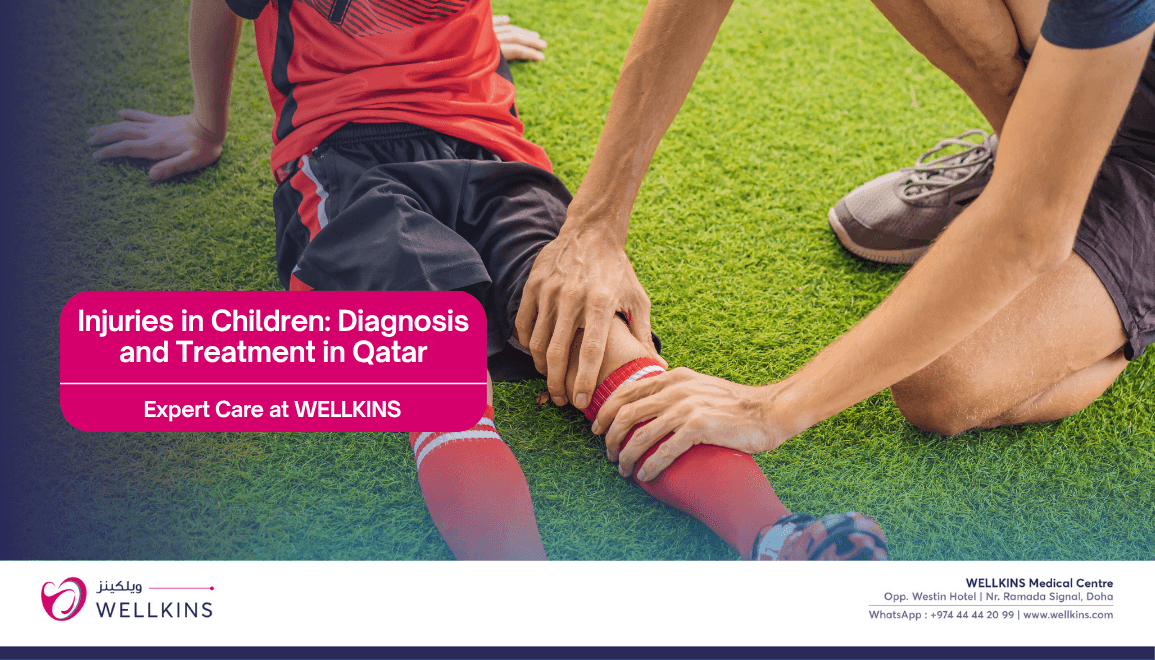
Treatment depends on the type of injury, fracture displacement, growth-plate involvement, the child’s age and the expected risk of complications.
Many childhood injuries can be managed without surgery when they are assessed and treated appropriately.
A. Initial First Aid
For many minor injuries initial care may include:
- Protecting the injured area from further trauma
- Applying a cold pack wrapped in a towel for short periods
- Elevating the limb when appropriate
- Avoiding activities that increase pain
- Seeking assessment when a fracture or significant injury is suspected
Do not attempt to straighten a visibly deformed limb or force a painful joint to move. A suspected dislocation, open fracture or circulation problem requires urgent medical care.
B. Immobilization
A splint, cast or brace may protect the injured structure and reduce pain. The choice depends on the injury and whether swelling is expected to increase.
Parents should seek reassessment if the child develops increasing pain, numbness, tingling, blue or pale fingers or toes or excessive swelling after immobilization.
C. Fracture Treatment
Many childhood fractures heal successfully with nonsurgical treatment. Management may include a removable brace, splint, cast or closed reduction followed by casting.
Surgery may be required for selected unstable, significantly displaced, open or complex fractures or when satisfactory alignment cannot be maintained.
D. Treatment of Growth-Plate Injuries
Growth-plate injuries require particular attention because some may affect future bone growth. Treatment may include immobilization, reduction or surgical fixation.
The treatment plan depends on the affected bone, fracture pattern, displacement and stability. Selected higher risk injuries may require longer follow-up to monitor future growth.
E. Treatment of Sprains and Muscle Strains
Mild sprains and strains are commonly treated with relative rest, symptom control and gradual rehabilitation.
Rehabilitation may include:
- Gentle range-of-motion exercises
- Progressive strengthening
- Balance and proprioception training
- Gait retraining
- Gradual return to sports
A suspected fracture should be excluded before progressing to exercises that place significant load on the injured area.
F. Physiotherapy and Rehabilitation
Physiotherapy can help restore movement, strength, coordination and confidence after many orthopedic injuries.
Rehabilitation should be appropriate for the child’s age and specific diagnosis. Children recovering from fractures, ligament injuries or surgery may require different rehabilitation timelines.
Return to sport should be based on adequate healing, pain-free functional movement, restored strength and the treating clinician’s assessment rather than a fixed number of days.
G. Surgical Treatment
Surgery is reserved for injuries where operative treatment offers a clear clinical benefit.
Examples include selected displaced fractures, open fractures, unstable fractures, certain intra-articular injuries and some complex ligament or tendon injuries.
The objective is to restore appropriate alignment and function while protecting the developing skeleton.
6. When Should Parents Seek Urgent Medical Attention?
Some symptoms should not be dismissed as part of a normal recovery. Urgent assessment helps identify injuries that may threaten bone alignment, circulation, nerve function or general health.
Immediate or urgent medical assessment is required when a child has:
- A visible deformity or suspected dislocation
- An open wound over a suspected fracture
- Severe or rapidly increasing pain and swelling
- Inability to bear weight after a significant injury
- A pale, cold or blue hand or foot
- Numbness, tingling or new weakness
- A high-energy injury such as a road traffic accident
- Increasing pain or tightness under a cast or splint
A child with a hot and swollen joint accompanied by fever also needs urgent assessment because a joint infection may require immediate treatment.
Head, neck, chest or abdominal injuries following significant trauma should also be evaluated according to the mechanism and symptoms even when a limb injury appears more obvious.
7. Can Injuries in Children Be Prevented?
Not every childhood injury can be prevented. However, practical safety measures may reduce the risk of several common injuries while allowing children to remain physically active.
- Use age-appropriate helmets and protective equipment
- Ensure playground equipment is safe and suitable for the child’s age
- Choose appropriate footwear for sports and physical activity
- Teach safe movement and sports techniques
- Increase training intensity gradually
- Encourage adequate rest and recovery
- Provide suitable supervision during higher risk activities
- Complete rehabilitation before returning to unrestricted sport
Children should be encouraged to remain physically active while learning how to recognize pain, avoid unsafe activities and ask for help when an injury occurs.
Conclusion
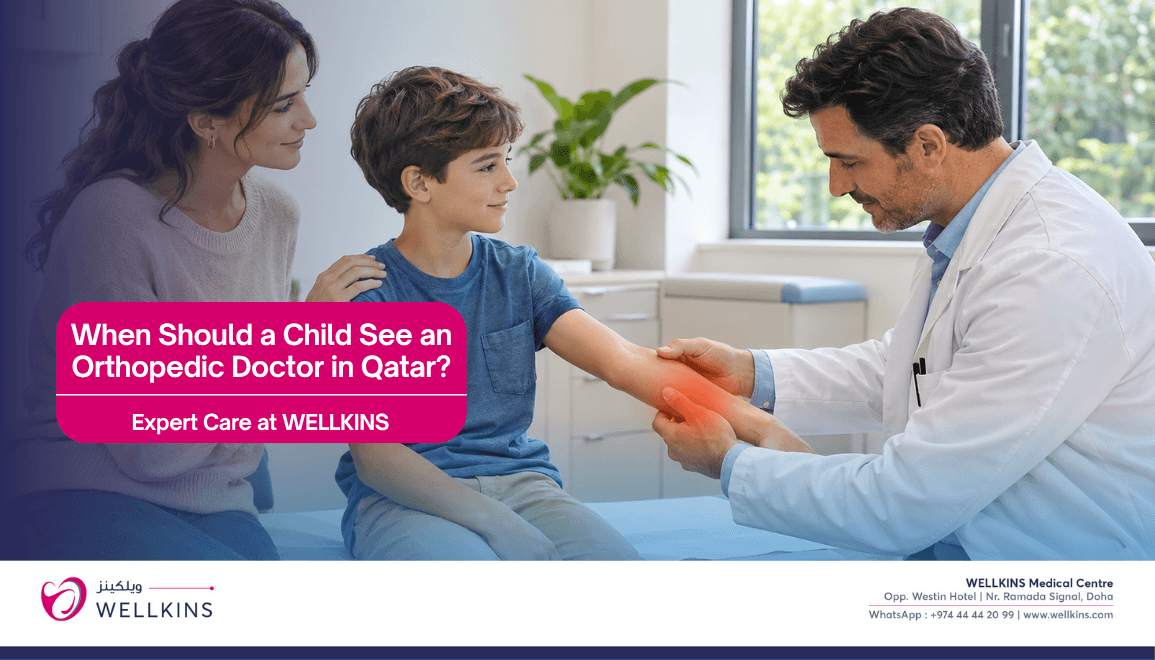
Orthopedic injuries in children range from minor bruises and sprains to fractures, growth-plate injuries and complex sports-related injuries. Since the developing skeleton differs from the adult skeleton accurate diagnosis and age-appropriate treatment are essential.
A detailed history, physical examination and appropriate imaging can help determine whether immobilization, rehabilitation or surgery is required.
Most childhood fractures and soft-tissue injuries heal well with appropriate care. Early assessment is particularly important when there is deformity, severe pain, inability to bear weight, persistent focal tenderness or suspected growth-plate involvement.
If your child develops pain, swelling, limping or reduced use of a limb following an injury consult an orthopedic specialist for an accurate diagnosis and an individual treatment plan at the Orthopedics Department at WELLKINS Medical Centre
Dr. Reneesh assesses fractures, growth-plate injuries, sports-related injuries and other musculoskeletal concerns affecting children.
To book an appointment with Dr. Reneesh at WELLKINS Medical Centre: https://wellkins.com/drreneesh/
To know more about Orthopedic services at WELLKINS Medical Centre: https://wellkins.com/orthopedics/
This article is intended for general education and does not replace an individual medical assessment. Seek urgent medical attention if a child has a visible deformity, severe pain, loss of sensation, circulation changes, fever with a swollen joint or an inability to bear weight following an injury.