
Author:Dr. Nikitha Fernandez, (Clinical Psychologist – WELLKINS Medical Centre)
“I came here to build a better life. So why do I sometimes feel like I am losing a part of myself?”
Imagine arriving in Qatar with two suitcases, a new job, a few familiar contacts and a head full of expectations. You tell your family that everything is going well. You send pictures of your new apartment. You talk about your workplace, the shopping malls, the restaurants and the opportunities ahead.
When your family asks, “Are you happy there?” you say:
“Yes, of course. Everything is good.”
Perhaps in many ways it is. You may be earning more than you did back home. You may have better career opportunities. You may be able to support your family financially, save for the future or give your children opportunities you never had yourself. But there are moments you do not put into those phone calls. The evenings when you miss home unexpectedly. The celebrations that feel incomplete because your family is thousands of kilometers away. The days when you are exhausted but have nobody nearby you feel comfortable asking for help.
There may also be moments when you wonder whether the life you are building is worth everything you have left behind.
Then comes the guilt.
“I chose this.”
“I should be grateful.”
“Other people are managing. Why am I finding it difficult?”
If you have ever felt this way, you are not necessarily ungrateful, weak or incapable of adjusting. You may simply be experiencing the emotional side of relocation which does not always appear in job offers, salary calculations or photographs of a new life. Moving to another country changes more than your address. It can change your routines, relationships, identity, sense of belonging and the way you experience yourself. These changes may take longer to process than you expected.
“Relocation can bring excitement, professional growth and financial opportunity while also creating homesickness, loneliness and uncertainty. These experiences are not contradictory. Many expatriates feel pressure to focus only on the positive parts of life abroad because they chose to move or because their families depend on them. Psychological support provides a confidential space to understand the emotional cost of relocation without dismissing the opportunities it has created. Needing support does not mean the move was a mistake. It means you are paying attention to your emotional wellbeing while adapting to a significant life transition.”
People Also Ask
Is it normal to feel unhappy after moving to Qatar?
It is common to experience mixed emotions after relocating. Excitement and gratitude can exist alongside homesickness, loneliness, uncertainty or grief for the life you left behind. These feelings often reflect the difficulty of adjustment rather than a failure to appreciate your new opportunities.
How long does it take to adjust to living in another country?
There is no fixed adjustment period. Some people feel settled within a few months while others need much longer to build relationships, establish routines and develop a sense of belonging. Adjustment may also change after job transitions, family visits or other major life events.
Can relocation cause anxiety or depression in Qatar?
Relocation does not automatically cause a mental health condition, but the associated stress, isolation, relationship changes and loss of familiar support can affect emotional wellbeing. Persistent symptoms that interfere with sleep, work or relationships deserve professional assessment.
When should an expatriate speak to a psychologist in Qatar?
Consider psychological support when sadness, anxiety, irritability, loneliness or exhaustion persists or begins affecting everyday functioning. You do not need to wait until you feel unable to cope before arranging an appointment.
Relocation is not just a geographical change
When people discuss moving to Qatar, the conversation often focuses on practical matters such as employment opportunities, salary, accommodation, school admissions, residency procedures, transport and lifestyle. These things matter enormously especially when you are trying to establish a life in a new country. However, another adjustment is happening quietly in the background. You are learning how to live without many of the familiar things that once made life feel normal. Back home, you may have known where to go when you needed something. You may have had friends who understood your sense of humour, relatives who visited without planning and routines that required very little thought.
In Qatar, even ordinary tasks can initially require more planning. You need to learn your surroundings, build new relationships, understand different social expectations and establish a routine. You may also be adjusting to a different workplace culture, climate, language environment or pace of life. Decisions that once felt automatic may now require attention and emotional energy. At first everything may feel new and interesting. Eventually the novelty fades and that is often when the emotional adjustment becomes more noticeable.
You can be excited about your new life and still grieve the life you left behind. Both feelings can exist together.

Understanding the Emotional Adjustment to Life in Qatar
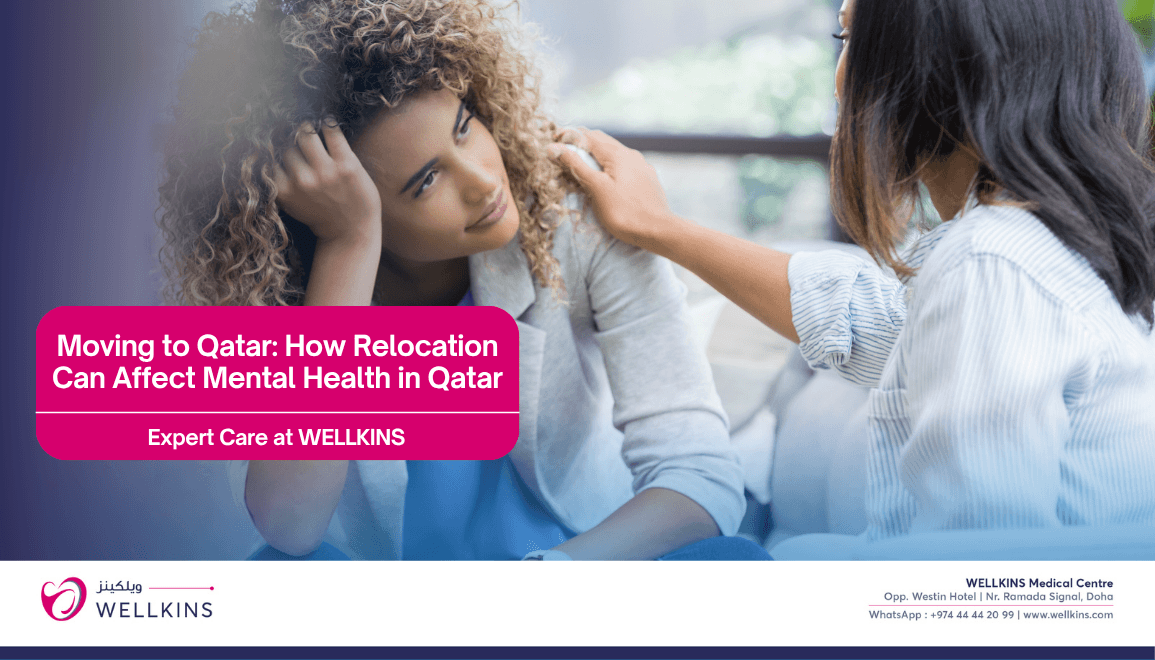
Relocation can affect identity, confidence, relationships and belonging even when the practical transition appears successful. Emotional adjustment often continues after accommodation, work and residency arrangements have been completed.
Recognising this process can reduce self criticism. It allows you to respond to your experience with curiosity and compassion rather than treating every difficult feeling as evidence that you made the wrong decision.
1. The loneliness nobody sees
Loneliness is one of the more difficult experiences to explain when you live abroad. You may work in a busy office, live in a building full of people, visit crowded shopping centres and interact with colleagues every day.
Yet you may still feel lonely because being around people is not the same as feeling connected to them. You can have colleagues without having close friends. You can have conversations without feeling understood. You can spend an entire day interacting with people and still have nobody you feel comfortable calling when something goes wrong. Perhaps you have not found your people yet. Perhaps you are still trying to move beyond polite conversations. You may have friends, but everyone may be busy with work, family and responsibilities.
For some expatriates, loneliness becomes particularly noticeable during weekends, public holidays, birthdays and festivals. These moments can highlight the physical distance from the people who would normally share them.
Social media can sometimes intensify this feeling. Seeing family gatherings and celebrations from a distance may create the impression that life is continuing without you.
What might help?
Start by thinking about the quality of connection rather than the number of people you know. You do not need a large social circle. You need opportunities to build relationships that feel meaningful.
- Make time for regular conversations with people you trust
- Explore interest based groups, classes or community activities
- Accept invitations when you have the energy even if you feel slightly nervous
- Invite a colleague or acquaintance for coffee rather than waiting for friendship to happen naturally
- Maintain relationships back home while making space for new ones
Friendships rarely develop instantly. Belonging may begin with a few ordinary conversations that gradually become something more meaningful.
2. Missing home and feeling guilty about it
You may have moved to Qatar because you wanted a better future. Perhaps you wanted to support your parents, provide better opportunities for your children or improve your financial stability.
Your decision may have involved considerable sacrifice. When you miss home you may therefore feel guilty.
You might think:
“I wanted this opportunity. Why am I complaining?”
Missing home does not mean you made the wrong decision. It means that something about your previous life mattered to you. You may miss the food you grew up eating, the way your family gathers without needing a reason or speaking your language without having to explain yourself. You may also miss being known. At home you were not only the new employee, the expatriate or the person who recently arrived. You were surrounded by people who understood your history and recognized different parts of your identity.
Sometimes what we miss is not a particular location. It is the feeling of being understood without having to explain everything. You can be deeply committed to your future in Qatar and still miss the familiarity of home. Gratitude does not cancel homesickness and homesickness does not cancel gratitude.
3. The pressure to make the sacrifice worthwhile
For some expatriates, relocating involves significant financial and emotional investment. There may be recruitment costs, relocation expenses, family expectations, debts, education fees or long term financial goals.
You may have promised yourself that this move would change your life. Your family may also have made sacrifices because of your decision or may depend on your income.
Under these circumstances, struggling emotionally can feel like a luxury you cannot afford.
You may tell yourself:
“I cannot be unhappy. I have responsibilities.”
“I need to keep going no matter what.”
“I did not come all this way to struggle.”
This pressure can lead people to ignore their emotional needs. They may continue working despite exhaustion, avoid discussing their difficulties and feel ashamed when they need support. Over time, the expectation to make everything worthwhile can become another source of stress. Every difficult day may feel like evidence that the plan is failing. Your wellbeing is part of the future you are trying to build. A better financial situation is valuable, but so are your sleep, relationships, emotional stability and ability to enjoy life. You do not need to pretend that every aspect of relocation is wonderful to prove that your decision was worthwhile.
4. When your family is far away, everyday problems feel bigger
Imagine having a difficult day at work. Back home, you might have visited your mother, spoken to a sibling, met an old friend or simply spent time with someone who knew you well. In Qatar, you may return to an empty apartment. You think about calling home, but it may be late there. Your family members may be busy or you may not want to worry them.
So you say nothing.
The problem itself may be manageable. Dealing with it alone can make it feel much heavier. This is particularly relevant for expatriates who arrive without a partner or family, although people living with their families can experience a similar sense of isolation. Sometimes the difficulty is not the absence of people. It is the absence of the particular people who usually help you feel safe and understood.
Build a support system before you desperately need one
You do not have to wait until you are overwhelmed before developing local connections. A support network is often easier to build through regular contact rather than during a crisis. Identify people you could contact for different kinds of support. One person may be a good listener. Another may share your interests while someone else may offer reliable practical advice. You may also find support through cultural communities, faith communities, professional networks, recreational activities or mental health services depending on your preferences.
Your local support system does not have to replace your family back home. It can provide additional connections that make daily life more manageable.
5. The relationship changes that happen after relocation
Moving countries can place unexpected pressure on relationships. Couples may find themselves adjusting to new jobs, financial expectations, living arrangements and responsibilities at the same time. One partner may settle into the new environment quickly while the other struggles with loneliness or uncertainty. One may focus on saving money while the other feels that life has become nothing but work and obligations.
Conversations that once felt easy may gradually become dominated by practical concerns:
“Did you pay the bill?”
“What are we doing this weekend?”
“How much have we saved?”
“When are we going to visit home?”
Meanwhile the emotional conversation remains unfinished.
One partner may think, “We are doing this for our future.” The other may be thinking, “I understand, but I am struggling right now.” Neither person necessarily has bad intentions. They may simply be experiencing the same relocation differently.
For couples living apart because one partner relocated first, time differences, missed milestones and uncertainty about reunification may create additional strain.
What can help?
Make room for conversations that are not only about money, logistics or responsibilities. Emotional connection needs deliberate attention especially when daily routines are demanding.
Consider asking each other:
- What has been the hardest part of this transition for you?
- What do you miss most about home?
- What do you need more of from me right now?
- What is one thing we can do together that makes life here feel better?
Try not to assume that your partner’s adjustment should look exactly like yours. You are two people experiencing a shared change, but your emotional experiences may still be different.
Relationships and Identity After Relocation
Relocation can reveal differences in expectations, coping styles and emotional needs. These differences do not necessarily mean the relationship is failing.
Honest conversations can help each person understand what the other is carrying. Couples counselling may also provide a structured space for discussing concerns when repeated conversations become tense or unproductive.
6. When work becomes your entire identity
For many expatriates, work is one of the main reasons they relocate. A job may represent financial security, professional growth, family responsibility or the opportunity to build something meaningful. When you are in a new country, work can gradually become your entire routine. You wake up, go to work, return home, eat, scroll through your phone and sleep.
Then you repeat the same pattern.
Weekends may be spent recovering from the working week or preparing for the next one. You may have very little time for hobbies, friendships, exercise or activities that once gave you pleasure. Eventually you may notice that you no longer know what you enjoy outside your professional role. This is not inevitable for everyone living abroad. However, when work becomes the only source of structure and identity, changes in employment can have a significant emotional impact.
A difficult day at work may begin to feel like a difficult day in your entire life. A conflict with a colleague may affect your sense of self worth while job insecurity may create anxiety that follows you home.
Try to build a life outside your job title
You are more than the work you do. Even if your schedule is demanding, look for small ways to maintain other parts of your identity. You might reconnect with an old hobby, learn something new, spend time outdoors, join a group or protect a small part of your week for an activity that has no professional purpose.
You do not need to build an exciting social life overnight. Start with something that reminds you that you are a person with interests, relationships and needs beyond work.
If work related exhaustion has become persistent, the WELLKINS guide to burnout treatment and mental health support in Qatar explains common warning signs and when professional support may help.
7. The emotional exhaustion of always appearing strong
Some expatriates feel responsible for reassuring everyone back home. When their parents ask how they are doing, they say everything is fine. When their children ask whether they are happy, they smile. When friends ask about life in Qatar, they discuss the opportunities and achievements. They may avoid mentioning the difficult parts because they do not want their family to worry. Others feel pressure to maintain an image of success. They do not want anyone to think that moving abroad was a mistake.
So they continue to perform the role of the person who is coping.
Constantly hiding distress can become exhausting. You may begin to feel that nobody really knows how you are doing. Because you have repeatedly told everyone that you are fine, it may become difficult to explain when you finally need help. You do not have to share every personal detail with everyone. Privacy is important. It may still help to identify at least one trusted person with whom you can be honest.
Instead of saying, “Everything is fine,” you might say:
“There are good things about being here, but I am finding some parts of the adjustment difficult.”
You can acknowledge the challenges without rejecting the opportunities. You can also ask for emotional support without making another person responsible for solving every problem.
8. Cultural adjustment is more than learning new routines
Relocating to another country may involve adjusting to different social expectations, communication styles and cultural practices. You may need time to understand how people interact at work, how friendships develop, what is expected in particular settings or how to navigate unfamiliar social situations. Even when you respect and appreciate the local culture, adjustment can require mental effort. You may find yourself carefully thinking about how to behave, what to say or whether you have misunderstood a situation.
For some people, language differences add another layer of effort. You may feel confident in your professional abilities but less confident in unfamiliar social environments. This can be tiring especially during the early stages of relocation. It can also create self consciousness in situations that would previously have felt ordinary. Give yourself permission to learn gradually. You do not need to understand every social detail immediately.
You can respect the culture around you while maintaining the values, traditions and parts of your identity that are important to you. Adapting to a new environment does not require abandoning who you are.
9. The weather and lifestyle can affect your routine, too
Qatar’s climate can influence how people organize daily life particularly during the hotter months. If you are accustomed to walking outdoors, spending time in parks or meeting friends outside, you may need to find alternatives during periods of extreme heat. For some people, spending more time indoors can make it harder to maintain physical activity, social connection and a consistent daily routine.
This does not mean the climate automatically causes mental health difficulties. However, if your lifestyle changes significantly after relocation, it is worth noticing how those changes affect your mood and energy.
You might consider:
- Walking indoors or using a gym when outdoor conditions are unsuitable
- Planning social activities in comfortable indoor settings
- Maintaining a regular sleep and wake schedule
- Getting daylight when practical and safe
- Making time for activities beyond work and household responsibilities
Small changes in routine can help maintain structure, movement and connection while you adapt to your surroundings.
10. When relocation begins affecting your mental health
Feeling homesick, lonely or uncertain during a major life transition does not automatically mean you have a mental health disorder. Adjustment takes time and experiences differ from person to person. Some difficult emotions may become less intense as routines and relationships develop.
However, it is important to pay attention when emotional difficulties persist, intensify or begin interfering with everyday life.
You might notice:
- Persistent sadness or irritability
- Anxiety that feels difficult to manage
- Changes in sleep or appetite
- Loss of interest in activities
- Difficulty concentrating at work
- Increasing social withdrawal
- Feeling hopeless or trapped
- Frequent arguments or relationship difficulties
- Physical tension or exhaustion that does not improve with rest
These experiences can have different causes, so it is important not to assume that relocation alone explains them. A psychologist or another qualified healthcare professional can help you understand what is happening and identify suitable support.
Therapy may help with processing homesickness, managing stress, navigating relationship changes, rebuilding confidence and adjusting to a new environment.
You do not have to wait until you are unable to function before asking for help.
Recognizing When Emotional Support May Help
Psychological support does not require you to reject the life you are building in Qatar. Therapy can help you understand mixed emotions and develop healthier ways of responding to loneliness, pressure and uncertainty. A confidential conversation may also help you separate temporary adjustment stress from symptoms that need more focused care. Support can begin before distress becomes a crisis.
What can you do to protect your mental health after moving to Qatar?
You cannot remove every challenge associated with relocation. You may still miss home. Work may remain demanding while building friendships may take time.
There are practical ways to make the transition more manageable and emotionally sustainable.
1. Create familiar routines
Prepare meals you enjoy, maintain meaningful traditions, listen to familiar music or establish a weekend ritual.
Small reminders of home can offer comfort while you build a new life. Familiarity can provide emotional continuity during a period of change.
2. Stay connected with people back home
Regular calls and messages can help maintain relationships, but try to make them realistic rather than another obligation.
A short meaningful conversation may be more helpful than feeling pressured to be constantly available.
3. Build local relationships slowly
You do not need to find your closest friends immediately. Start with repeated low pressure interactions.
Attend activities that genuinely interest you and allow relationships to develop naturally over time.
4. Protect time outside work
Where possible, create boundaries around working hours and make room for rest, social connection and activities that matter to you.
Your life in Qatar should be more than a cycle of working and recovering from work.
5. Allow yourself to experience mixed emotions
You can be happy about an opportunity and miss your family. You can appreciate your financial progress and feel exhausted.
You can love the life you are building and still struggle with parts of it. You do not have to choose only one feeling.
6. Talk before things become overwhelming
Reach out to someone you trust when you notice that you are struggling. Speaking honestly can reduce the pressure of carrying every concern alone.
If the difficulties persist or affect your daily functioning, consider professional support through the Clinical Psychology Department at WELLKINS Medical Centre.
7. Revisit your expectations
Sometimes we expect ourselves to settle into a new country within a few weeks or months. When reality takes longer, we may interpret normal adjustment as personal failure.
Adjustment is not a competition. Give yourself time to learn, make mistakes, build connections and discover what works for you.
A special message to expatriates who are struggling quietly
Perhaps you have been living in Qatar for years. Perhaps you arrived only recently.
Your career may be progressing. Your finances may be improving and your family may be proud of you. Yet you may still have days when you feel lonely, exhausted or uncertain. Please remember that these feelings do not automatically mean you made the wrong decision. They also do not mean that you are failing to appreciate what you have. You are adjusting to a life that may require you to be independent in ways you never anticipated. You may be carrying responsibilities that other people do not see.
You may be missing people who have been part of your life for decades. You may also be trying to build a future while learning how to feel at home in the present. You deserve space to acknowledge that experience.
You do not have to turn every difficult feeling into a lesson about resilience. Sometimes you can simply admit:
“This is harder than I expected and I need some support.”
That is not failure. It is an honest starting point.
Final Thoughts

Relocating to Qatar can bring opportunity, growth, financial stability and a chance to build a different future.
It can also bring loneliness, homesickness, pressure, uncertainty and the emotional challenge of creating a sense of belonging in a new place.
Both sides deserve to be acknowledged.
You do not have to pretend that relocation is easy simply because you chose it. You do not have to hide your struggles to prove that you are grateful.
You also do not have to build your entire life around work, responsibilities and the expectations of others.
Give yourself time to settle. Build relationships that help you feel connected and protect the parts of your life that bring you meaning.
If the emotional weight becomes difficult to manage, remember that professional support is available. The WELLKINS guide on how to find a psychologist in Qatar explains what to consider and what to expect during an initial appointment.
You moved countries to build a life. You deserve to feel that you are living that life rather than merely surviving it.
Home may be the place you came from. It may be the place you are building now. Sometimes learning to feel at home again begins with understanding what you need emotionally.
To book an appointment at Wellkins Medical Centre: https://wellkins.com/nikitha
To know more about the clinical psychology at Wellkins Medical Centre, Doha: https://wellkins.com/mentalhealth
To arrange a confidential consultation with Dr. Nikitha Fernandez, visit the WELLKINS appointment page
This article is intended for general education and does not replace an individual psychological assessment. Seek immediate local emergency assistance if you or someone else is at immediate risk of harm.