
Author: Dr. Joanne Mae J Villanueva, (Specialist Pediatrics – Wellkins Medical Centre)
Dealing with a child who has diarrhea is one of those parenting experiences that is simultaneously exhausting and worrying. You find yourself constantly checking nappies, counting stools, monitoring how much your child is drinking and wondering when it will end. Is this normal? Should you go to the clinic? Is your child getting worse?
The good news is that diarrhea is a very common childhood issue and in most cases it is short-lived and resolves on its own without medical intervention. However because infants and young children lose fluids and essential minerals far more quickly than adults, the primary goal of care is preventing dehydration which can escalate rapidly in this age group and which requires prompt recognition and management.
At Wellkins Medical Centre, diarrhea-related consultations are among the most frequent paediatric presentations we see. In Qatar’s warm climate where foodborne illness, rotavirus and other gut infections circulate throughout the year and where children in nurseries and schools are in consistent close contact, diarrhea is a reality most families encounter multiple times before a child reaches school age. This guide is designed to give you the knowledge to manage it calmly at home when that is appropriate and to recognise clearly when your child needs to be seen by a paediatrician.
The most common mistake parents make with childhood diarrhea is focusing on the stool count rather than the child’s hydration status. The diarrhea itself is rarely the danger. It is the fluid and electrolyte loss it causes that creates the real clinical risk, particularly in infants under twelve months whose reserves are small and who can become seriously dehydrated within hours. Keep your child drinking an oral rehydration solution, watch for the dehydration signs I describe and trust your instinct when something does not look right. That combination covers the vast majority of situations families encounter.
People Also Ask
How many loose stools is considered diarrhea in a child?
Diarrhea is defined clinically as three or more loose watery stools within a twenty-four hour period. However the consistency of the stool is as important as the frequency. A breastfed infant may normally have frequent soft stools that are not diarrhea. What constitutes diarrhea is a change from the child’s normal pattern toward stools that are distinctly more watery and more frequent than usual. Any blood or mucus in the stool regardless of frequency requires immediate medical review.
What is the best thing to give a child with diarrhea?
Oral rehydration solution is the single most important treatment for childhood diarrhea. Water alone is insufficient because it does not replace the electrolytes lost alongside the fluid. An oral rehydration solution provides the correct balance of sodium, potassium and glucose to support absorption and replace losses. Breastfeeding should be continued normally in infants. Once the child is tolerating fluids, easily digestible foods including rice, bread, bananas and lean meats can be reintroduced. Sugary drinks and juices should be avoided as excess sugar draws more water into the gut and worsens diarrhea.
When should I take my child to the doctor for diarrhea?
You should seek medical attention for any fever in an infant under three months old with diarrhea, for signs of dehydration including sunken eyes, dry mouth, no tears when crying and significantly reduced urination, for blood or mucus in the stool, for a high fever above 38.9 degrees Celsius in any age group, for vomiting that prevents the child from keeping any fluids down for more than a few hours and for diarrhea that continues beyond seven days without improvement. Trust your parental instinct throughout. If your child looks genuinely unwell to you, seek advice.
Can antibiotics cause diarrhea in children?
Yes and this is a very common cause of childhood diarrhea that parents often do not immediately connect to the medication. Antibiotics kill the harmful bacteria causing the original infection but also disrupt the normal healthy bacterial population in the gut. This antibiotic-associated diarrhea is generally milder than viral gastroenteritis and resolves once the antibiotic course is completed. Probiotic supplementation during and after an antibiotic course may help reduce the severity. If diarrhea during antibiotics is severe or contains blood, contact your pediatrician rather than continuing the course without review.

What Is Diarrhea and What Are the Symptoms?
Diarrhea means your child is passing three or more loose watery stools within a twenty-four hour period. It is not simply softer stools than usual or a single episode of looser output. True diarrhea represents a significant change from the child’s normal bowel pattern toward stools that are distinctly watery and frequently passed.
Depending on what is causing the irritation in the digestive tract your child may also experience a combination of the following signs and symptoms alongside the loose stools.
- Abdominal Cramps and Stomach Pain: The muscle contractions driving increased gut motility are often felt as intermittent cramping pain. In infants this manifests as drawing up of the legs and inconsolable crying that is relieved temporarily when a stool is passed.
- Nausea and Vomiting: Particularly common in viral gastroenteritis where the stomach and gut lining are both inflamed. Vomiting alongside diarrhea accelerates fluid loss significantly and requires more urgent attention to rehydration.
- Mild Fever or Chills: A low-grade fever is common with most infectious causes of diarrhea as the immune system responds to the pathogen. A high fever, particularly above 38.9 degrees Celsius, or any fever in an infant under three months warrants clinical assessment.
- Loss of Appetite: Entirely normal during a gut illness. Forcing food is counterproductive but offering simple easily digestible foods once the child is tolerating fluids supports recovery and prevents unnecessary nutritional depletion.
- Bloating and Gas: Increased intestinal gas production accompanies most gut infections and food intolerances. This contributes to the abdominal discomfort alongside the cramping.
- Irritability and Fussiness: Especially prominent in babies who cannot communicate their discomfort directly. An unusually fussy infant during or around a diarrheal illness is telling you something important about how they feel.
Common Causes of Childhood Diarrhea
Children’s digestive systems are sensitive and responsive to a wide range of disruptions. Understanding the most common causes in Qatar’s specific environment helps parents anticipate when diarrhea might occur and what pattern of symptoms to expect.
- Viral Infections: This is the most common cause by a significant margin. Viruses including rotavirus and norovirus spread easily among children in nurseries and schools in Doha and cause the sudden onset of watery diarrhea and vomiting that is commonly called stomach flu. Rotavirus vaccination, which is part of Qatar’s immunization schedule, significantly reduces the risk of the most severe rotavirus gastroenteritis but does not eliminate viral gut illness entirely.
- Bacterial Infections: Eating or drinking contaminated food or water can introduce bacteria including Salmonella, E. coli and Campylobacter. These infections tend to produce more severe symptoms than viral gastroenteritis including higher fevers, more significant abdominal pain and in some cases blood or mucus in the stool. Food safety practices including thorough cooking, safe food storage in Qatar’s heat and careful handwashing before food preparation are the most effective preventive measures.
- Antibiotics: Antibiotics given to treat other infections such as an ear infection or a chest infection disrupt the balance of the gut microbiome by eliminating beneficial bacteria alongside the target pathogen. The resulting antibiotic-associated diarrhea is generally mild and self-limiting but can be significant in some children. Completing the full prescribed antibiotic course remains important even if diarrhea develops unless advised otherwise by your clinician.
- Food Intolerances and Allergies: Sensitivity to lactose, the sugar in cow’s milk, or a diagnosed allergy to milk protein or soy can cause chronic or intermittent loose stools that are not infectious in origin. This type of diarrhea tends to recur reliably when the triggering food is consumed and resolves when it is eliminated, which is the diagnostic pattern that points toward a food intolerance rather than an infection.
- Too Much Juice or Sugary Drinks: Excessive intake of fruit juices, sweetened teas or sugary drinks draws water into the intestinal lumen through osmotic mechanisms, causing what is sometimes called toddler’s diarrhea. This is a dietary cause rather than an infectious one and resolves reliably when juice and sugar intake is reduced. In Qatar where sweetened drinks are widely available and frequently given to young children this is a surprisingly common and easily correctable cause of chronic loose stools.
Red Flags: What to Watch Out for in Terms of Dehydration
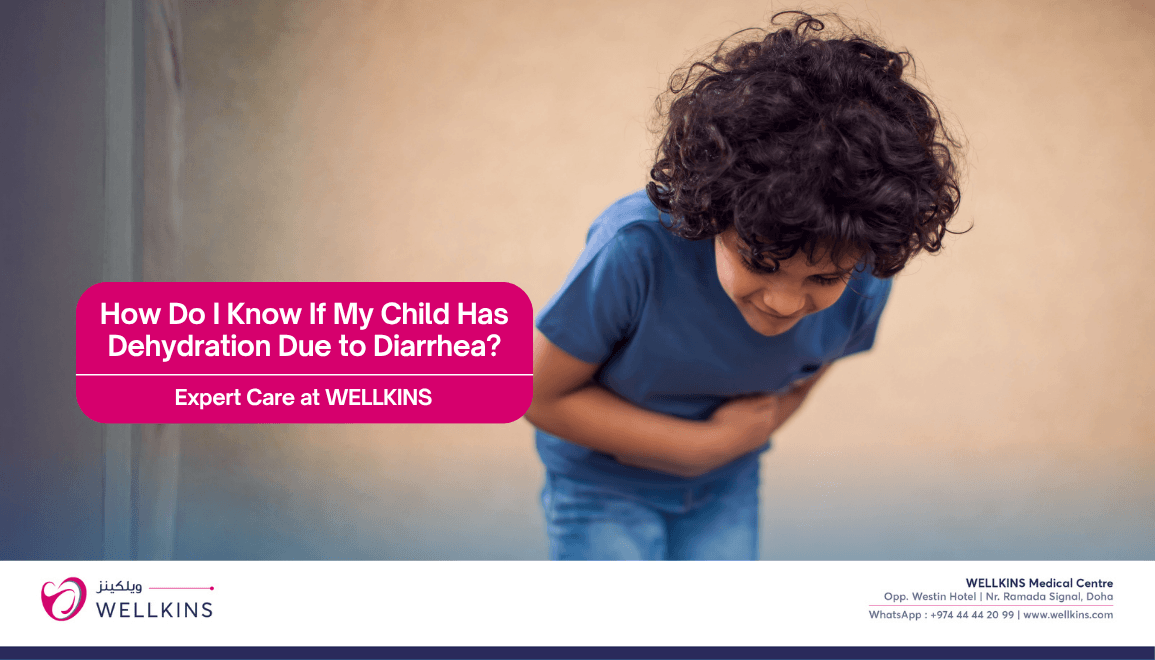
The biggest threat from childhood diarrhea is not the loose stools themselves. It is the loss of fluid and electrolytes that accompanies them. Infants and young children have a much smaller fluid reserve relative to their body weight than adults and can progress from mild to significant dehydration within hours, particularly when diarrhea is accompanied by vomiting.
These are the specific signs of dehydration every parent must know how to recognise.
- Sunken Eyes: The area around the eyes appears more hollowed than usual, giving the child a distinctly unwell appearance that is visible even to an untrained observer. This is a reliable physical sign of meaningful fluid deficit.
- Dry Mouth or Sticky Tongue: Reduced saliva production and dry mucous membranes in the mouth indicate that the body’s fluid reserves are becoming depleted. Run a clean finger along the inside of the lower lip: dry or sticky mucosa rather than moist and slippery tissue is a concerning sign.
- Crying Without Tears: An infant or young child who is crying but producing no tears or significantly fewer tears than usual is showing a classic and reliable sign of dehydration. Tear production requires adequate systemic hydration.
- Extreme Irritability or Lethargy: Significant behaviour changes in either direction, either extreme fussiness that cannot be consoled or unusual quietness, floppiness and reduced responsiveness, reflect the impact of dehydration on the child’s neurological state and should trigger prompt assessment.
- Reduced Urination: This is one of the most reliable early indicators of dehydration and one of the easiest for parents to monitor. For infants, fewer than six wet nappies in twenty-four hours is a warning threshold. For older children, no urination for more than six hours is the equivalent concern. Concentrated dark urine alongside reduced frequency is also significant.
- Sunken Fontanelle in Infants: The soft spot on the top of an infant’s head, which normally feels flat or slightly firm, appears sunken or depressed when the infant is significantly dehydrated. This is a sign of meaningful fluid deficit requiring urgent medical attention.
Safe Home Management and Treatment
If your child is alert and interactive, has moist mucous membranes, is producing adequate tears when crying and is able to keep fluids down, you can safely manage their recovery at home with the following structured approach.
- Priorities Rehydration: This is the most important step and it deserves the most attention. Water alone is insufficient because it lacks the essential electrolytes, specifically sodium and potassium, that the body loses alongside fluid during diarrhea. Use a commercially available oral rehydration solution such as Pedialyte or an equivalent, which provides the correct balance of electrolytes and glucose to support absorption. If the child is breastfeeding continue to do so on your normal schedule as breast milk provides excellent hydration and immune support. If the child is vomiting offer very small frequent sips of rehydration solution, as little as a teaspoon or a syringe-full every few minutes, rather than larger volumes that are more likely to trigger further vomiting.
- Keep Feeding Them: There is no clinical basis for withholding food from a child with diarrhea and doing so unnecessarily prolongs recovery and depletes nutritional reserves. Once the child is tolerating fluids adequately offer simple easily digestible foods. Reliable choices include complex carbohydrates such as bread, rice, pasta and oatmeal, lean meats, bananas and yoghurt with active live cultures. Avoid highly sugary foods, fruit juices and carbonated drinks as excess sugar draws additional water into the gut and worsens the diarrhea.
- Avoid Over-the-Counter Anti-Diarrheal Medications: Never give children adult anti-diarrheal preparations including loperamide unless your pediatrician has specifically directed you to do so. These medications work by slowing gut motility and can prevent the body from flushing out the responsible virus or bacteria. In young children they carry a risk of serious side effects including dangerous slowing of the gut. The diarrhea itself is the body’s mechanism for eliminating the pathogen. Supporting hydration is the goal, not stopping the bowel movements.
- Protect the Skin: Watery acidic stools cause rapid painful skin breakdown in the nappy area. Change nappies frequently and apply a generous thick layer of a barrier preparation, zinc oxide cream or petroleum jelly, to the nappy area with each change to prevent or manage the diaper rash that accompanies most episodes of diarrhea in infants and toddlers. Allow nappy-free time on a waterproof mat where practical to allow the skin to dry and recover.
- Monitor Closely and Reassess Regularly: The child’s condition can change in either direction over the course of a gut illness. Check their hydration status, fluid intake and overall responsiveness every few hours and be ready to escalate to clinical care if any of the warning signs described above appear.
When to See a Pediatrician
While most cases of childhood diarrhea resolve safely within a few days of home management, you should contact your pediatrician or seek medical attention promptly if any of the following apply.
- Signs of Severe Dehydration: Extreme lethargy or floppiness, cold or pale hands and feet, a sunken fontanelle in an infant or any combination of the dehydration signs described above that is worsening rather than stabilizing.
- Blood or Mucus in the Stool: Any blood, black discoloration or significant mucus in the stool requires clinical assessment to identify the cause. Bloody diarrhea indicates a more significant gut lining involvement and may suggest a bacterial infection requiring specific antibiotic treatment.
- High Fever: A temperature above 38.9 degrees Celsius in any child with diarrhea or any fever in an infant under three months of age. In this youngest age group any fever alongside diarrhea warrants immediate medical evaluation.
- Severe Abdominal Pain: Localized severe abdominal pain that does not come and go with bowel movements, or pain that seems out of proportion to the illness, warrants assessment to exclude conditions including appendicitis or intussusception that can present alongside gut symptoms.
- Inability to Keep Fluids Down: Repeated vomiting that prevents the child from swallowing and retaining any fluid for more than a few hours makes home rehydration impossible and requires clinical assessment for possible intravenous hydration.
- Duration Beyond Seven Days: Diarrhea that has continued for more than seven days without clear signs of improvement requires investigation to identify whether a specific pathogen, a food intolerance or another underlying cause is maintaining the symptoms.
Trust your parental instincts throughout the entire illness. If your child looks quite unwell to you, or your gut tells you something is not right even if the symptoms do not match any specific criteria listed here, do not hesitate to call your pediatrician for advice. That is exactly what we are here for and early contact is always better than delayed reassurance.
To book an appointment with Dr. Joanne Mae J Villanueva at Wellkins Medical Centre: https://wellkins.com/drjoanne
To know more about the Pediatric services at Wellkins Medical Centre: https://wellkins.com/pediatrics