
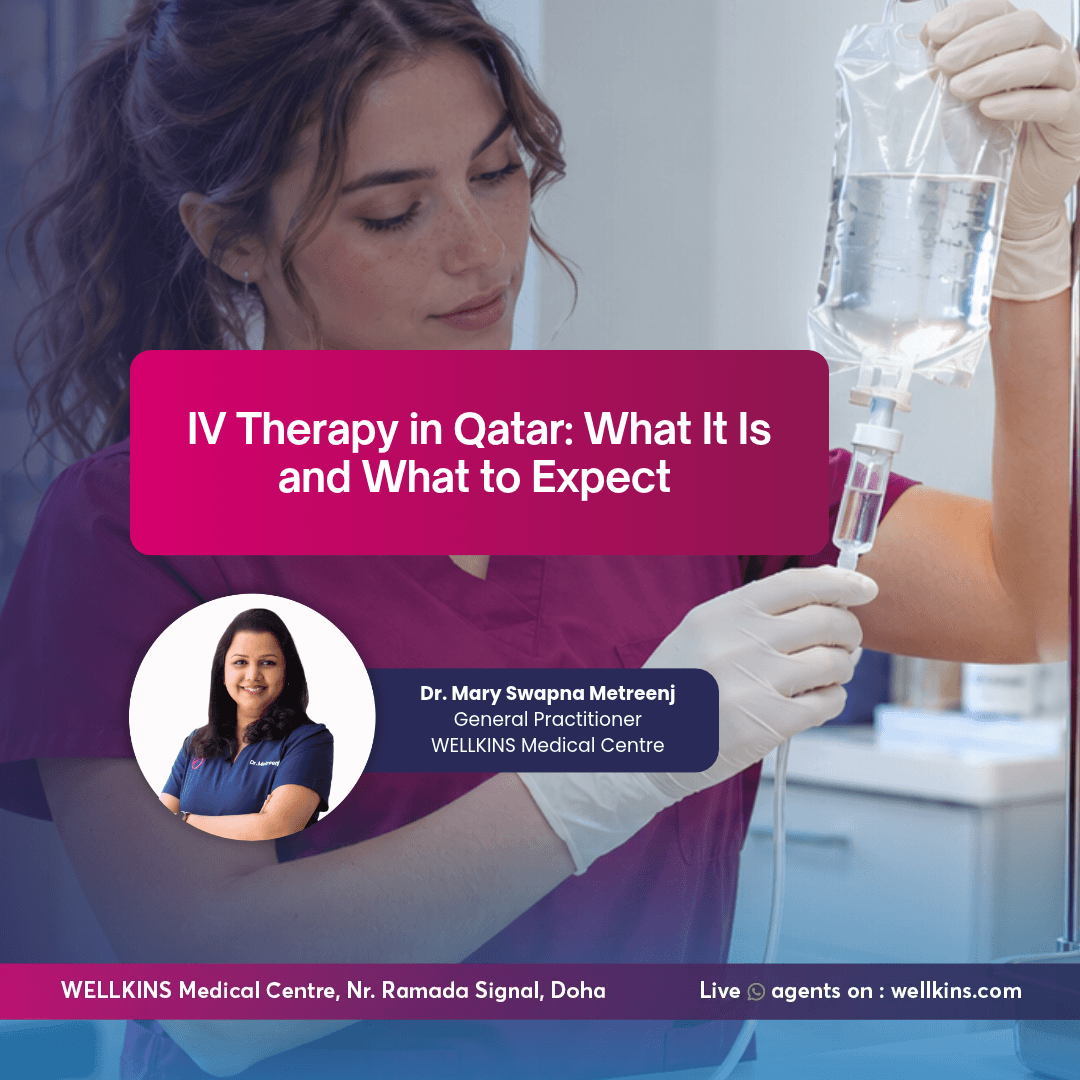
Author: Dr. Mary Swapna Metreenj, (General Practitioner at WELLKINS Medical Centre)
Introduction
IV therapy has become increasingly visible in Qatar as people look for medical support for fatigue, dehydration, nutritional deficiencies and recovery after illness. However, an IV infusion should not be selected simply because a person feels tired or wants a quick wellness treatment.
IV therapy delivers fluids and prescribed nutrients directly into a vein through a small cannula. Since the infusion enters the bloodstream without passing through the digestive system, absorption does not depend on appetite, digestion or the ability of the intestines to absorb nutrients.
This does not mean that everyone needs an infusion. At WELLKINS Medical Centre, IV therapy begins with a doctor consultation so that symptoms, medical history, medication and possible nutritional deficiencies can be reviewed before anything is prescribed.
“IV therapy should begin with understanding why the patient is seeking it. Fatigue, weakness, hair fall or poor recovery can have several causes including anaemia, thyroid disorders, sleep problems, dehydration, diabetes or nutritional deficiencies. An infusion may provide supportive care for an appropriate patient but it should never replace diagnosis or treatment of an underlying condition. The safest approach is to assess first, prescribe only when indicated and review the response before considering another session.”
People Also Ask
What is IV therapy?
IV therapy delivers prescribed fluids and nutrients directly into a vein through a cannula. The contents and amount should be selected by a doctor according to the patient’s health, symptoms and clinical needs.
How long does an IV therapy session take?
An infusion session at WELLKINS usually takes around 30 to 45 minutes followed by a short observation period. The total visit also includes the doctor consultation and preparation before the infusion begins.
Do I need a blood test before IV therapy?
There is no mandatory blood test for every WELLKINS IV therapy session. The doctor decides whether testing is needed after reviewing the patient’s symptoms, medical history and previous results.
Will I feel better immediately after an IV drip?
Some people notice improved hydration or alertness within a day while others notice little immediate difference. The response depends on whether a relevant deficiency, reduced intake or hydration problem was present.
Can IV therapy replace tablets or a healthy diet?
No. Oral supplements may be more practical when digestion and absorption are normal. IV therapy also cannot replace balanced nutrition, adequate sleep or treatment for a medical condition.

What Is IV Therapy?
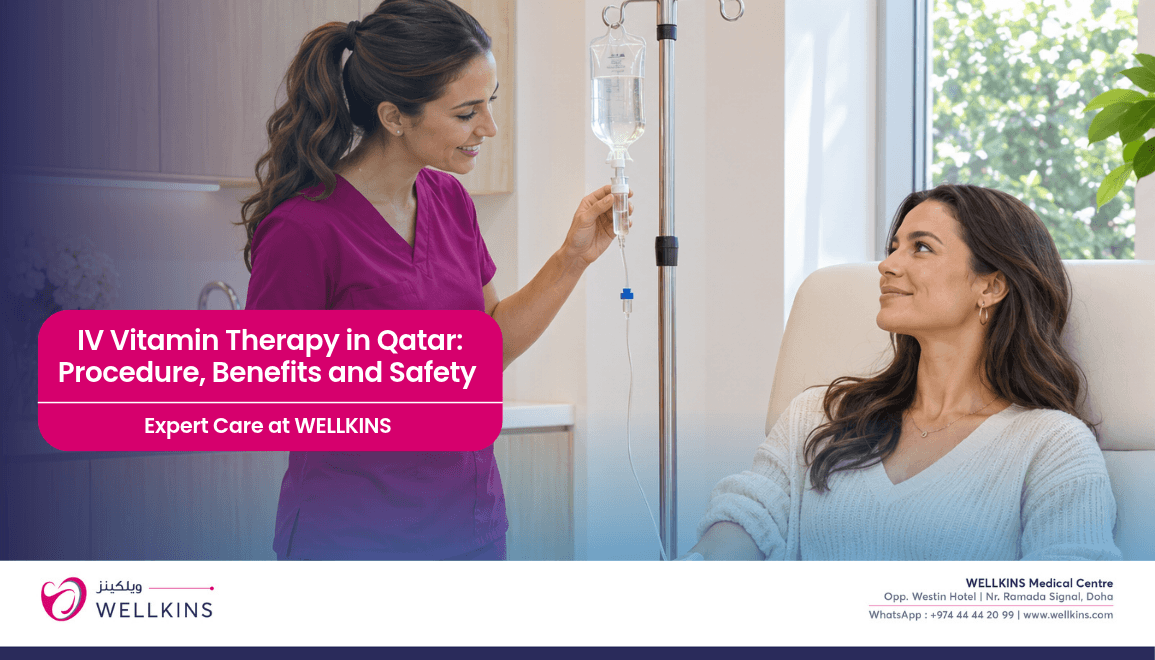
IV stands for intravenous which means that the treatment is delivered into a vein. A trained nurse places a small flexible cannula into a suitable vein in the hand or arm and connects it to the prescribed infusion.
The fluid enters the bloodstream gradually over a controlled period. This route is commonly used in medical care when a person needs fluid, medicine or nutrients that cannot be provided adequately through the digestive system.
Multivitamin IV therapy is also called IV vitamin therapy, vitamin infusion or an IV drip. At WELLKINS it is offered as supportive care following an individual medical assessment.
What Does Multivitamin IV Therapy Do?
Multivitamin IV therapy provides prescribed vitamins and fluids directly into the bloodstream. It bypasses digestion which may be relevant when nutritional intake is reduced or absorption is impaired.
The treatment does not automatically create more energy or correct every cause of fatigue. Its usefulness depends on whether the patient has a clinical reason for receiving the nutrients or fluids included in the infusion.
A person whose tiredness is caused by poor sleep, uncontrolled diabetes, thyroid disease, anaemia or another medical condition needs treatment directed at that cause. An infusion should not delay the correct diagnosis.
IV Therapy Is Supportive Care
IV therapy at WELLKINS is described as supportive therapy. It can replenish prescribed vitamins and fluids but it is not presented as a cure or a treatment for disease.
It does not replace a varied diet, adequate hydration, healthy sleep or prescribed medical treatment. Patients should be cautious about claims that one infusion can detoxify the body, cure illness or permanently increase energy.
The purpose of the initial consultation is to determine whether an infusion has a reasonable role in the patient’s wider care plan.
Who Might Be Considered for IV Therapy?
A doctor may consider IV therapy in selected situations after reviewing the patient’s history and current symptoms. These may include:
- Persistent fatigue that requires medical assessment
- Reduced nutritional intake
- Dehydration that is suitable for outpatient management
- Hair fall, brittle nails or dry skin associated with a possible deficiency
- Recovery after an illness or surgery
- Low iron or vitamin levels confirmed through appropriate assessment
- Heavy menstrual bleeding with nutritional concerns
- Recovery after delivery when medically appropriate
- Long term medication that may affect nutrient absorption
- Restricted intake during a medically supervised weight management programme
- Nutritional support during selected injury recovery programmes
Having one of these concerns does not automatically mean that IV therapy is required. The underlying cause still needs to be considered before a treatment is prescribed.
Why a Doctor Consultation Comes First
Symptoms such as tiredness, weakness, hair fall and poor concentration can have many causes. Providing vitamins without investigating the symptom may delay diagnosis.
During the consultation the doctor reviews:
- The main symptoms and how long they have been present
- Existing medical conditions
- Prescription medicines
- Supplements and nonprescription products
- Known allergies
- Previous blood test results
- Dietary intake and appetite
- Recent illness, surgery or weight loss
- Pregnancy or breastfeeding status
- Previous reactions to an infusion or injection
The doctor then decides whether IV therapy is appropriate, whether a test is needed first or whether another treatment should be considered instead.
IV Therapy at WELLKINS Medical Centre
The IV Therapy service at WELLKINS Medical Centre combines medical assessment, physician prescribing, administration by a trained nurse and a review before any repeat session.
Patients do not select an infusion on their own. Each infusion is prescribed after the doctor reviews the patient’s symptoms, medication, allergies and relevant health risks.
WELLKINS uses a licensed multivitamin preparation manufactured to pharmaceutical standards with batch traceability. Infusions are administered in a dedicated treatment room.
What Happens Before Your IV Therapy Session?
The visit begins with a medical consultation. The doctor asks why you are considering IV therapy and checks whether your symptoms may need further investigation.
Your blood pressure, pulse or other basic measurements may be checked when clinically appropriate. The doctor may also review previous laboratory reports or request a blood test if the result would change the treatment decision.
If an infusion is considered suitable, the doctor writes the prescription and explains what will be administered. You should have the opportunity to discuss possible benefits, limitations and side effects before treatment begins.
Do You Need Blood Tests Before IV Therapy?
Not every patient requires a blood test before an infusion at WELLKINS. Testing is selected according to the person’s symptoms, medical history and treatment plan.
Possible investigations may include:
- A complete blood count
- Iron studies and ferritin
- Vitamin B12
- Vitamin D
- Blood glucose or HbA1c
- Thyroid function
- Kidney function
- Liver function
- Electrolytes when indicated
The Medical Laboratory at WELLKINS Medical Centre provides nutritional, metabolic and organ function testing when requested by the treating doctor.
How Should You Prepare for the Appointment?
Most patients do not need complicated preparation. The clinic should tell you if a specific blood test requires fasting.
Before attending:
- Eat a normal meal unless fasting has been requested
- Drink water according to your usual medical advice
- Bring a list of medicines and supplements
- Bring relevant laboratory reports
- Wear clothing that allows comfortable access to the arm
- Inform the clinic about allergies
- Mention pregnancy or the possibility of pregnancy
- Explain any previous difficulty with cannulas, injections or fainting
- Report fever, infection or a recent change in your health
Do not stop prescribed medication before the appointment unless the prescribing doctor has specifically advised you to do so.
What Happens During the IV Therapy Session?
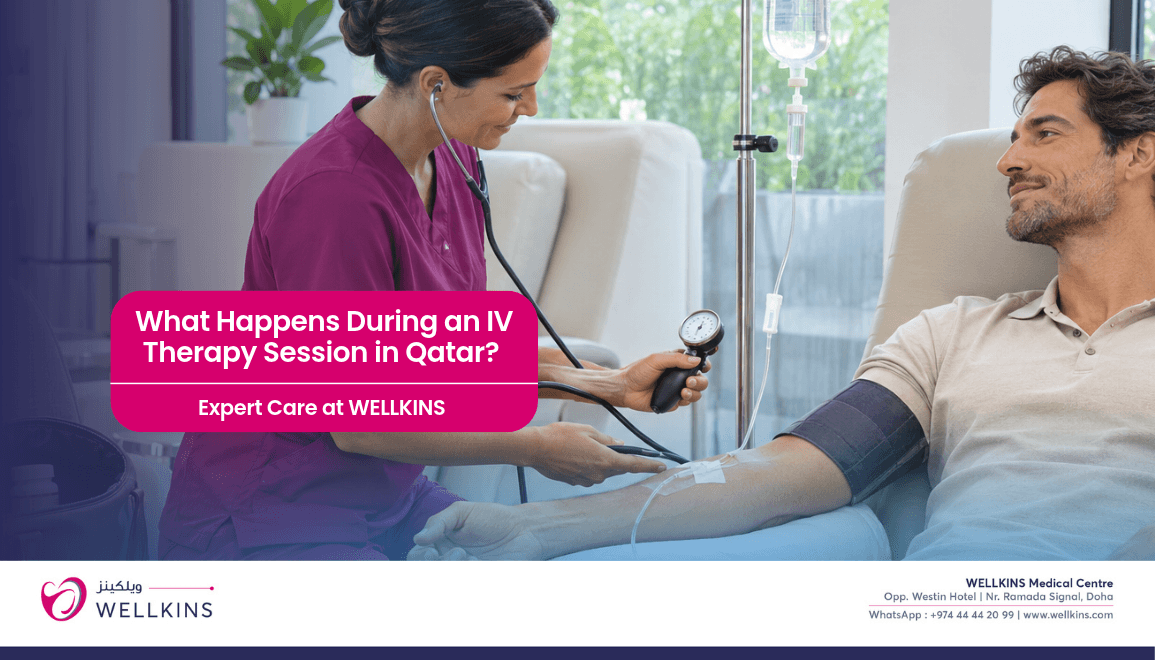
A trained nurse confirms the prescription and checks your identity, allergies and relevant treatment information. A suitable vein is then selected in the arm or hand.
The skin is cleaned and a small cannula is inserted into the vein. You may feel a brief pinching sensation similar to having a blood sample collected.
The cannula is connected to the infusion and the fluid is delivered gradually. The nurse checks the infusion site and monitors how you are feeling during the session.
You can usually sit, read, use your phone or rest while the infusion is running. Tell the nurse immediately if you feel pain, burning, swelling, dizziness, breathlessness or anything unusual.
How Long Does a Session Take?
The infusion itself generally takes around 30 to 45 minutes at WELLKINS. A short observation period may follow before the cannula is removed.
The complete visit takes longer because it includes registration, medical consultation, preparation and observation. Patients should avoid scheduling the appointment so tightly that they feel pressured to leave before the clinical process is complete.
The infusion rate should be determined by the clinical team. Asking for the drip to run faster may increase discomfort or the risk of a reaction.
What Vitamins Are Included?
The licensed multivitamin preparation currently described by WELLKINS contains a combination of vitamins selected for medical administration. The listed components include:
- Vitamin A
- Vitamin B1
- Vitamin B2
- Vitamin B3
- Vitamin B5
- Vitamin B6
- Vitamin B12
- Vitamin C
- Vitamin D3
- Vitamin E
- Biotin
- Folic acid
The presence of a vitamin in the preparation does not mean that every patient is deficient in it. The doctor assesses whether the infusion is appropriate as a complete prescribed preparation.
Will the Cannula Hurt?
Most patients feel a brief sting or pressure when the cannula is inserted. Once it is correctly positioned, the infusion should not cause significant pain.
Mild awareness of the cannula can occur. Burning, increasing pain, tightness or swelling around the site should be reported immediately because fluid may be irritating the vein or entering the surrounding tissue.
Patients who are anxious about needles should tell the clinical team before treatment. Lying down, slow breathing and clear communication can help reduce anxiety.
What Can You Do During the Infusion?
You can usually sit comfortably and rest throughout the session. Many patients read, listen to audio or use a phone while the nurse continues the necessary checks.
Keep the arm reasonably still so the cannula remains secure. Avoid adjusting the drip, touching the connection or changing the infusion rate yourself.
If you feel unwell at any point, tell the nurse rather than waiting to see whether the feeling passes.
What Happens After the Infusion?
When the infusion is complete, the nurse removes the cannula and applies pressure to the site. A small dressing may be placed over the area.
Before leaving, the patient may be observed briefly and given aftercare instructions. Most people can return to normal light activities after the appointment.
Temporary tenderness or a small bruise can occur around the cannula site. Contact the clinic if pain, redness, warmth or swelling becomes worse after leaving.
Will You Feel a Difference Immediately?
The response varies. Some people notice improved hydration or alertness within a day while others notice no immediate change.
A person whose nutrient levels were already adequate may not experience a noticeable benefit. This is one reason a medical assessment is more useful than choosing treatment based only on an advertised promise.
Improvement in symptoms should also be interpreted carefully. Feeling temporarily better does not prove that the underlying cause of fatigue or weakness has been corrected.
How Many Sessions Will You Need?
There is no standard number suitable for every patient. The doctor decides whether a single session or a short prescribed course is reasonable.
IV therapy at WELLKINS is not intended to become an automatic weekly routine. The response should be reviewed before another infusion is considered.
Repeat treatment should be based on clinical need, tolerance and the wider care plan rather than on the expectation that more sessions always produce better results.
IV Therapy Programmes at WELLKINS
WELLKINS currently organises IV therapy around several clinical assessment pathways. These include:
- Fatigue and nutritional assessment
- Skin, hair and nail concerns
- Iron and vitamin deficiency
- Chronic care nutritional support
- Weight management support
- Injury and post surgery recovery support
Each programme includes a relevant doctor consultation before the infusion is prescribed. A programme name does not guarantee that every patient will receive an infusion.
Fatigue and Nutritional Assessment
Persistent tiredness should be assessed before it is attributed to stress or vitamin deficiency. Sleep disorders, anaemia, thyroid conditions, diabetes, infection and emotional strain can all affect energy.
The General Medicine Department at WELLKINS Medical Centre provides evaluation for fatigue and related symptoms. If IV therapy is not clinically appropriate, the doctor can recommend care directed at the actual cause.
Skin, Hair and Nail Programme
Hair fall, brittle nails and dry skin may be associated with iron deficiency, thyroid conditions, dietary restriction or other medical concerns. Applying more products to the surface may not correct an internal cause.
The programme includes a dermatology assessment before an infusion is considered. Patients can learn more through the WELLKINS Dermatology Department.
Iron and Vitamin Deficiency Programme
Heavy menstrual bleeding, pregnancy, childbirth and dietary factors can contribute to low iron. However, fatigue alone cannot confirm iron deficiency.
Blood tests may be needed to determine whether iron levels are low and whether oral or intravenous treatment is appropriate. Women with heavy periods can also be assessed through the WELLKINS OB and Gynecology Department.
Chronic Care Nutritional Support
Diabetes, thyroid disorders and other long term conditions can occur alongside nutritional deficiencies. Some medicines may also affect appetite or nutrient absorption.
IV therapy does not treat diabetes or thyroid disease. It may be considered only as supportive care when an assessment identifies a relevant need.
Long term conditions can be evaluated through the Internal Medicine Department at WELLKINS Medical Centre.
Weight Management Support
Restricted eating plans and medicines that reduce appetite can lower nutritional intake. Patients may develop tiredness, dizziness, constipation, hair changes or other symptoms that need review.
An infusion should not be used to compensate for an unsafe diet. The first priority is ensuring that the weight management plan provides appropriate nutrition and medical monitoring.
Patients can learn more about doctor guided care through the WELLKINS Weight Management Programme.
Injury and Post Surgery Recovery Support
Recovery after an injury or surgery places additional demands on the body. Protein intake, vitamin status, sleep, rehabilitation and management of the original condition all influence recovery.
IV therapy cannot replace physiotherapy or orthopedic treatment. It may be considered as supportive care when a doctor identifies a relevant nutritional concern.
Patients can explore related care through the WELLKINS Orthopedics Department and the WELLKINS Physiotherapy Department.
Is IV Therapy Better Than Oral Supplements?
Not always. Oral supplements are generally more convenient and less invasive when digestion and absorption are working normally.
An infusion may be considered when intake is low, absorption is impaired or a doctor identifies another clinical reason for intravenous delivery. The route should be selected according to medical need rather than the assumption that intravenous treatment is automatically stronger or better.
Oral products and IV therapy can both cause side effects when taken unnecessarily or in excessive amounts. More vitamins do not always mean better health.
What Are the Possible Side Effects?
Any intravenous treatment carries possible risks. These may include:
- Pain or bruising at the cannula site
- Irritation or inflammation of the vein
- Swelling if fluid enters the surrounding tissue
- Dizziness or faintness
- Nausea
- Headache
- Allergic reaction
- Infection
- Fluid related problems in susceptible patients
- Unwanted effects from excessive or unsuitable nutrients
Medical screening, sterile technique, trained administration and appropriate monitoring reduce risk but cannot remove every possible complication.
Who Should Not Have Multivitamin IV Therapy?
The current WELLKINS service states that multivitamin IV therapy is not offered to anyone under 18. It is also not routinely suitable for pregnant women unless a doctor identifies a specific medical indication.
An infusion should not be given to anyone with a known allergy to one of its components. Additional caution may be required for people with kidney disease, heart disease, fluid restrictions or other conditions that affect how the body handles vitamins and fluid.
The doctor may decline treatment when the potential benefit does not justify the risk or when another form of care is more appropriate.
When Should You Tell the Nurse Immediately?
During the infusion, tell the nurse immediately if you develop:
- Increasing pain or burning around the cannula
- Swelling or tightness in the arm
- A rash or widespread itching
- Facial or throat swelling
- Difficulty breathing
- Chest discomfort
- Severe dizziness
- Sudden weakness
- Palpitations
- Nausea that is becoming worse
Breathing difficulty, facial swelling, collapse or severe chest symptoms require emergency medical care.
How Much Does IV Therapy Cost at WELLKINS?
The current listed price is QAR 500 for a doctor consultation and one prescribed infusion session. A prescribed course of three sessions is listed at QAR 1,200.
Tests are not included and are charged separately when the doctor decides they are needed. Multivitamin IV therapy is currently listed as a self pay service.
Prices, programme details and availability may change. Patients should confirm the current information through the official WELLKINS IV Therapy page before booking.
What Should You Ask Before Having IV Therapy?

Useful questions include:
- Why is this infusion being recommended for me?
- Do my symptoms require any tests?
- Would an oral supplement be sufficient?
- What ingredients are included?
- Are there interactions with my medicines?
- What side effects should I watch for?
- How will my response be reviewed?
- When should I seek medical care after the session?
- Do I need another session or any follow up testing?
A medical service should be able to explain the purpose and limitations of treatment clearly without promising guaranteed results.
IV Therapy With Dr. Mary Swapna Metreenj
Dr. Mary Swapna Metreenj, (General Practitioner at WELLKINS Medical Centre) provides assessment for fatigue, nutritional concerns, dehydration, chronic conditions and weight management related symptoms.
The consultation helps determine whether IV therapy has a supportive role or whether testing, oral treatment or another medical approach is more appropriate.
To arrange a consultation with Dr. Mary, visit the WELLKINS appointment page for Dr. Mary Swapna Metreenj.
Conclusion
IV therapy delivers prescribed fluids and vitamins directly into the bloodstream through a cannula. A typical WELLKINS session includes a medical consultation, physician prescription, nurse administered infusion and review before any repeat treatment.
The infusion itself generally takes around 30 to 45 minutes. Some patients may notice improved hydration or alertness while others may notice no immediate difference.
IV therapy is supportive care rather than a cure or replacement for balanced nutrition, sleep or treatment of an underlying condition. The safest approach is to understand the cause of the symptoms and use an infusion only when a doctor considers it appropriate.
The decision should begin with diagnosis rather than assumptions. A consultation with Dr. Mary Swapna Metreenj can help determine whether your symptoms require testing, oral supplementation, IV therapy or assessment for another medical condition.
To learn more about the programmes, safety process and current pricing, visit the IV Therapy service at WELLKINS Medical Centre.
Medical disclaimer: This article is intended for general education and does not replace an individual medical consultation. IV therapy should be prescribed and administered by qualified healthcare professionals after an appropriate assessment.