
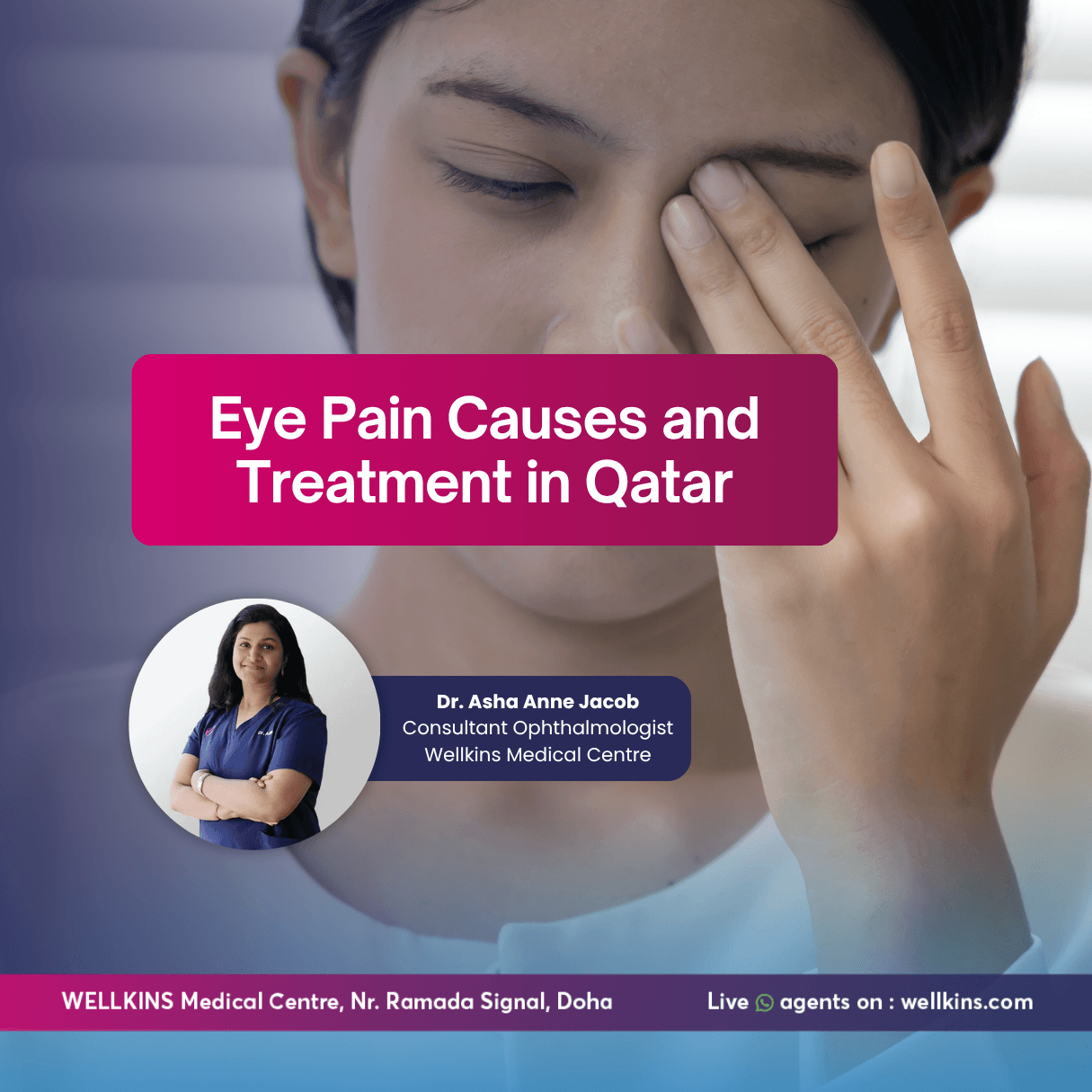
Author: Dr. Asha Anne Jacob, (Consultant Ophthalmologist – Wellkins Medical Centre)
Eye pain and unusual sensitivity to light can be more than temporary irritation. These symptoms may come from dryness or a minor surface problem, but they can also occur with inflammation, infection, injury or a sudden rise in pressure inside the eye.
Light sensitivity is medically known as photophobia. A person with photophobia may feel discomfort in sunlight, under indoor lighting or while looking at a digital screen. Some people need to close the affected eye or move into a darker room because light makes the pain noticeably worse.
The combination of eye pain and light sensitivity deserves particular attention when symptoms begin suddenly, affect one eye, follow an injury or occur with redness or blurred vision. An eye examination can identify whether the problem is on the surface of the eye or involves deeper structures that require urgent treatment.
“Eye pain with light sensitivity should not automatically be treated as simple dryness or screen strain. What matters is how suddenly the symptoms began and whether there is redness, blurred vision, discharge, headache, nausea, contact-lens use or a recent injury. Some conditions can look similar at first but require very different treatment. Prompt examination allows us to check the cornea, inflammation inside the eye, eye pressure and vision before deciding on the safest next step.”
People Also Ask
When is eye pain and light sensitivity an emergency in Qatar?
Seek urgent medical care when eye pain or light sensitivity is severe or sudden or occurs with reduced vision, marked redness, nausea, vomiting, injury or chemical exposure. A painful red eye in someone who wears contact lenses also requires prompt assessment.
Can dry eyes cause sensitivity to light?
Dryness can make the eyes feel gritty, burning, tired or sensitive to bright light. Severe pain, significant redness or reduced vision should not be assumed to come from dry eye without an examination.
Can migraine cause eye pain and light sensitivity in Qatar?
Migraine can cause sensitivity to light with headache, nausea or visual symptoms. New symptoms, pain focused inside one eye or any loss of vision still need medical assessment because eye conditions can produce a similar pattern.
Should I remove my contact lenses if my eye hurts?
Yes. Remove the lenses and do not wear them again until the eye has been assessed and symptoms have settled. Contact-lens wearers with pain, redness, discharge, blurred vision or light sensitivity should seek urgent eye care.
What Do Eye Pain and Light Sensitivity Mean?
Eye pain can be felt on the surface as burning, scratching or a foreign-body sensation. Deeper pain may feel aching, throbbing or pressure-like and may become worse when the eye moves or when light enters the eye.
Photophobia is a symptom rather than a diagnosis. It can develop when sensitive structures such as the cornea or tissues inside the eye become irritated or inflamed. It may also occur with migraine and some neurological conditions.
The severity of discomfort does not always reveal the cause. A clinical assessment may include checking visual acuity, the corneal surface, pupils, eye pressure and the front and back of the eye.

Common Causes of Eye Pain and Photophobia in Qatar
Several conditions can cause eye discomfort with sensitivity to light. Some improve with straightforward treatment while others are time-sensitive.
- Dry eye or ocular-surface irritation: Reduced tears or unstable tear film can cause burning, grittiness, fluctuating blur and light sensitivity.
- Corneal abrasion or foreign body: A scratch or trapped particle may cause sharp pain, watering, blinking discomfort and a feeling that something is in the eye.
- Keratitis: Infection or inflammation of the cornea may cause pain, redness, photophobia, discharge and reduced vision.
- Uveitis: Inflammation inside the eye may cause aching pain, redness, blurry vision, floaters and light sensitivity.
- Acute angle-closure glaucoma: A sudden rise in eye pressure can cause severe pain, blurred vision, coloured halos, headache, nausea and vomiting.
- Migraine: Light sensitivity may occur with headache, nausea or visual aura even when the eye itself is structurally healthy.
- Injury or chemical exposure: Trauma, dust, metal fragments, cleaning products or other chemicals can damage the eye and require urgent care.
Recognizing Eye Pain and Light Sensitivity in Qatar
The pattern of symptoms can help the ophthalmologist narrow down the cause. Important details include whether one or both eyes are affected and whether symptoms started suddenly or developed gradually.
Patients should also mention contact-lens use, recent swimming, dust exposure, welding, eye surgery, new medication, headache or a previous episode of inflammation. These details can change how urgently the eye needs to be examined.
When Eye Pain May Be Related to Dry Eye in Qatar
Qatar’s heat, airborne dust and frequent movement into air-conditioned rooms can aggravate ocular-surface dryness. Long periods of screen use may also reduce normal blinking and make discomfort more noticeable.
Dry eye often causes burning, grittiness, watering, tired eyes or vision that briefly clears after blinking. Mild light sensitivity can occur when the tear film no longer creates a smooth protective surface over the cornea.
Patients with recurring dryness can read the WELLKINS guide to dry eye treatment and prevention in Doha. Pain that is severe or associated with marked redness or persistent blurred vision requires assessment for other causes.
Corneal Abrasion or a Foreign Body
The cornea contains many sensitive nerve endings. A small scratch from a fingernail, piece of dust or poorly handled contact lens can therefore cause significant pain, tearing and photophobia.
Do not rub the eye or attempt to remove an embedded object with fingers or tools. If loose dust enters the eye it can be rinsed gently with clean water. Persistent pain or the possibility of metal, glass or another embedded material requires urgent medical care.
Contact Lenses and Corneal Infection
Contact-lens wearers need to be particularly cautious about a painful red eye. Keratitis can progress quickly and may threaten vision when an infection damages the cornea.
Remove the lenses immediately and keep them out. Do not restart lens wear or use leftover antibiotic or steroid drops without examination. Bring the lenses, case and solutions to the appointment if requested because they may provide useful information.
For preventive guidance, read the WELLKINS article on contact-lens care in Qatar’s climate.
Contact-Lens Pain Requires Prompt Assessment
A slit-lamp examination allows the ophthalmologist to inspect the cornea for a scratch, ulcer, inflammation or foreign material. Fluorescein dye may be used to highlight damage on the eye’s surface.
Early treatment matters when infection is suspected. The correct eye drops depend on the diagnosis and self-treatment with unsuitable drops can delay healing or make certain infections worse.
Uveitis: Inflammation Inside the Eye
Uveitis is inflammation within the eye. It can cause pain, redness, blurred vision, floaters and sensitivity to light. Symptoms may begin suddenly and may affect one eye or both eyes.
Uveitis can be associated with infection or an immune-related condition though sometimes no clear cause is found. Treatment depends on which part of the eye is inflamed and whether an underlying condition is present.
Prompt examination is important because untreated inflammation can affect vision. Steroid eye drops should never be started without professional advice because they can worsen some infections and raise eye pressure in susceptible patients.
Acute Angle-Closure Glaucoma
Acute angle-closure glaucoma occurs when fluid drainage inside the eye becomes suddenly blocked and eye pressure rises rapidly. It is an eye emergency that requires immediate treatment.
Symptoms may include intense eye pain, a red eye, blurred vision, coloured halos around lights, severe headache, nausea or vomiting. The affected pupil may also appear unusual.
Do not wait for symptoms to settle and do not drive yourself if vision is affected. Seek emergency medical attention immediately.
Could It Be Migraine?
Migraine commonly causes sensitivity to light. It may occur with throbbing headache, nausea, sound sensitivity or visual aura such as flashing or zigzag patterns.
Not every episode of photophobia is caused by migraine. A first or unusually severe episode, vision loss, persistent symptoms in one eye or an eye that is red and painful should be evaluated rather than managed as a familiar headache.
Warning Signs That Need Urgent Eye Care in Qatar
Seek urgent ophthalmology or emergency assessment if eye pain or light sensitivity occurs with any of the following:
- Sudden loss of vision or a major change in vision
- Severe or rapidly worsening eye pain
- A very red eye with blurred vision
- Coloured halos around lights with headache, nausea or vomiting
- A painful red eye while wearing contact lenses
- A chemical splash, penetrating injury or object stuck in the eye
- New unequal pupils or an abnormally shaped pupil
- New flashes, many floaters or a curtain-like shadow in the vision
- Pain or worsening vision after recent eye surgery or an eye injection
- Eye symptoms with weakness, facial drooping, confusion or speech difficulty
Sudden complete vision loss or eye symptoms with neurological warning signs require emergency medical care. Do not wait for a routine clinic appointment.
Eye Warning Signs That Should Not Be Ignored
Eye pain can occasionally feel better in a dark room without the underlying condition improving. Temporary relief from avoiding light should therefore not be used to decide that urgent symptoms are harmless.
Changes in vision are particularly important. Compare each eye separately without pressing on the eye and seek prompt care if vision is noticeably different.
What to Do After a Chemical Splash
Begin rinsing the eye immediately with plenty of clean lukewarm water. Hold the eyelids open and continue irrigation for at least 20 minutes. Remove contact lenses if they come out easily during rinsing.
Do not delay rinsing while looking for a special solution. Do not try to neutralise one chemical with another and do not place medication into the eye unless instructed by a healthcare professional.
After rinsing, seek urgent medical assessment and take the product container or a photograph of its label when safe to do so. Chemical injuries can continue to damage the eye even when the initial pain begins to improve.
What Can You Do While Waiting for Assessment?
- Move away from bright light and wear sunglasses if this makes the journey more comfortable.
- Remove contact lenses and avoid wearing them again until medically cleared.
- Avoid rubbing or pressing the affected eye.
- Do not use another person’s eye drops or old prescription medication.
- Do not use steroid or anaesthetic eye drops unless specifically prescribed for the current condition.
- Ask someone else to drive if pain or vision changes make driving unsafe.
These measures may reduce irritation while arranging care but they do not treat serious infection, inflammation, glaucoma or injury.
How an Ophthalmologist Assesses Eye Pain
An assessment usually begins by checking vision in each eye and asking about the onset of pain, light sensitivity, contact-lens use, injury and accompanying symptoms. The pupils and eye movements may also be examined.
A slit-lamp examination provides a magnified view of the eyelids, conjunctiva, cornea and front of the eye. Fluorescein dye can reveal a corneal scratch or ulcer while tonometry measures eye pressure. Dilating drops or retinal imaging may be used when deeper structures need evaluation.
The tests selected depend on the suspected cause. Patients who want to understand routine vision assessment can also read how often to get an eye test in Qatar.
When Should You Book a Routine Eye Appointment in Qatar?
A routine appointment may be suitable for mild recurring dryness, gradual eyestrain or stable light sensitivity without pain, redness or vision loss. An examination is also useful when symptoms continue despite sensible screen breaks and suitable lubrication.
Do not choose routine booking when symptoms are severe or sudden. If you are uncertain whether the situation is urgent, contact a healthcare provider and clearly describe the pain, redness, vision change, injury history and contact-lens use.
Eye Pain and Light Sensitivity Care at WELLKINS
At the Ophthalmology Department at WELLKINS Medical Centre, Dr. Asha Anne Jacob evaluates eye pain, photophobia, red eye, dry eye, eye infections, glaucoma concerns and other vision problems.
To arrange an appointment with Dr. Asha Anne Jacob, use the WELLKINS ophthalmology booking page. Seek emergency medical care instead of waiting for a scheduled appointment if you have sudden vision loss, chemical injury, penetrating trauma or severe neurological symptoms.
To book an appointment with Dr. Asha Anne Jacob at Wellkins Medical Centre: https://wellkins.com/drasha
To know more about the Ophthalmology services at Wellkins Medical Centre: https://wellkins.com/ophthalmology
This article is intended for general education and does not replace an individual eye examination. Eye pain with light sensitivity can have several causes and treatment should be based on a confirmed diagnosis.