
Author: Dr. Nikitha Fernandez, (Clinical Psychologist – Wellkins Medical Centre)
“I tried meditation once but I could not stop thinking.”
This is probably one of the most common things I hear whenever I mention mindfulness in therapy. People often smile and say: “My mind is too busy.” “I cannot sit still.” “Meditation just is not for me.” And my response is almost always the same: that is exactly why mindfulness can help.
Many people believe that meditation means achieving a completely empty mind. It does not. If you have ever sat quietly for even a minute you have probably noticed how busy the mind really is. One thought leads to another. You remember an email you forgot to send. You start planning dinner. You think about yesterday’s conversation. You wonder what tomorrow will bring. Our minds naturally wander. Mindfulness is not about stopping those thoughts. It is about learning not to be controlled by them.
Mindfulness is one of the tools I return to most consistently in clinical practice because it works across such a wide range of presentations. Whether I am working with someone managing anxiety, recovering from burnout, processing grief or simply trying to find moments of calm in an overwhelmingly busy life, the ability to be present with your own experience without being swept away by it is one of the most practically useful skills I know. It takes practice. It is not always comfortable at first. But the research is clear and so is the experience of the people I work with: it makes a genuine and lasting difference.
People Also Ask
What is mindfulness and how is it different from meditation?
Mindfulness is the broader practice of paying deliberate attention to the present moment with openness and without self-judgment. Meditation is one specific formal way of practising mindfulness, typically involving sitting quietly and directing attention to the breath or to sensory experience. Mindfulness can also be practised informally throughout the day during ordinary activities including eating, walking or having a conversation. The formal meditation practice trains the attentional skill that the informal practice then applies in daily life. Both are valuable and neither requires a perfectly quiet mind to be effective.
Does mindfulness really work for stress and anxiety?
Yes. The evidence base for mindfulness in reducing stress and anxiety is substantial and continues to grow. Mindfulness-Based Stress Reduction and Mindfulness-Based Cognitive Therapy are two of the most extensively researched mindfulness programmes and both have demonstrated significant reductions in stress, anxiety and depression symptoms in clinical trials. Regular mindfulness practice has also been shown to improve emotional regulation, attention and sleep quality. It is important to understand that mindfulness is not a replacement for professional mental health treatment where that is indicated but it is a powerful complement to evidence-based therapy.
How long does it take to see benefits from mindfulness practice?
Research suggests that even short periods of consistent daily practice produce measurable changes in stress levels and emotional regulation within four to eight weeks. An often-cited study found structural brain changes in participants who completed an eight-week Mindfulness-Based Stress Reduction programme. More important than the duration of each session is the consistency of practice. Five minutes of genuine attentive practice each day produces more benefit over time than a longer session done occasionally. Starting small and building gradually is the most sustainable approach particularly for people who are new to the practice.
Can mindfulness be practised alongside other mental health treatments?
Yes and this is how it is most commonly used in clinical practice. Mindfulness is frequently integrated with evidence-based approaches including Cognitive Behavioural Therapy, Acceptance and Commitment Therapy and trauma-informed interventions depending on each person’s specific needs. In these combinations mindfulness provides the foundational skill of present-moment awareness that makes the cognitive and behavioural components of therapy more effective. The goal is always a personalized treatment plan rather than mindfulness as a standalone prescription for every difficulty.
We Live in a World That Rarely Slows Down
Take a moment and think about your average day. You wake up and check your phone. You reply to messages before you have even had breakfast. You are rushing to work, attending meetings, juggling responsibilities, thinking about deadlines, family commitments, finances and what is for dinner.
Even when the day ends your mind often does not. Many people tell me: “I am physically tired but mentally I just cannot switch off.” If that sounds familiar you are certainly not alone. In today’s fast-paced world our brains rarely get the chance to rest. The constant availability of information, the expectation of immediate responses and the volume of decisions required across a single day create a level of cognitive demand that previous generations of humans simply did not face.
In Qatar’s demanding professional and social environment where long working hours, significant commuting time and the additional pressures of expatriate life layer on top of this global reality, the experience of a mind that never fully stops is remarkably common. It is one of the most consistent themes I encounter in clinical practice and it is one of the most directly addressed by mindfulness.

Why Is Everyone Talking About Mindfulness?

Over the past two decades mindfulness has moved far beyond yoga studios and wellness retreats. Today it is being used in hospitals, universities, workplaces and mental health clinics around the world. And there is a good reason for that.
A growing body of scientific research shows that mindfulness can improve emotional wellbeing, reduce stress and help people respond more calmly to life’s challenges. According to the World Health Organization mental wellbeing is an essential part of overall health and practices that help people manage stress, build emotional resilience and improve quality of life are becoming increasingly important within comprehensive approaches to healthcare.
Mindfulness is not a trend. It is a skill. And like any skill it becomes stronger with consistent practice over time.
So, What Exactly Is Mindfulness?
Mindfulness simply means paying attention to the present moment with openness and without judging yourself. That sounds simple. But it is something many of us rarely do. Instead our minds spend much of the day worrying about tomorrow, replaying yesterday, judging ourselves and imagining worst-case scenarios that have not yet occurred and may never occur.
Mindfulness gently brings our attention back to what is happening right now. Not yesterday. Not next week. Just this moment. The breath that is happening. The sensation in the body. The sounds in the room. The quality of the light. The simple and immediate experience of being alive in this particular moment rather than mentally located somewhere in the past or the future.
This is a more radical reorientation than it initially sounds because most of us spend very little of our waking time actually present in the moment we are physically occupying.
Meditation Isn’t About “Clearing Your Mind”
This is one of the most persistent and most unhelpful misconceptions about meditation and it stops many people from beginning a practice that could genuinely help them. People often think: “If I keep having thoughts I am doing it wrong.” You are not. The mind is designed to think. Meditation does not stop thoughts. It changes your relationship with them.
Imagine sitting beside a busy road. Cars continue to pass by. You notice them. But you do not chase every single one. You observe them coming and going without needing to follow each one down its particular road. Thoughts are much the same. They come. They go. Mindfulness teaches us that we do not have to follow every thought our mind produces, that we can notice a thought without treating it as a command and that we can return our attention to the present moment again and again without self-criticism when we find it has wandered.
That act of noticing the wandering and returning without judgment is the practice. Not the absence of wandering.
What Does the Research Tell Us?
The evidence supporting mindfulness continues to grow and is now substantial enough to have shifted it from a complementary wellness practice to a clinically integrated intervention used in healthcare systems worldwide. Research has shown that regular mindfulness practice may help:
- Reduce stress and the physiological markers of chronic stress including cortisol levels
- Improve emotional regulation and the ability to respond thoughtfully rather than reactively
- Lower symptoms of anxiety in both clinical and non-clinical populations
- Reduce symptoms of depression and lower the risk of depressive relapse in people with a history of recurrent depression
- Improve attention and concentration in ways that generalise to daily functioning
- Enhance sleep quality particularly for people whose sleep is disrupted by an overactive mind at bedtime
- Increase self-awareness and the capacity to identify emotional states before they become overwhelming
- Improve overall psychological wellbeing across a range of measurement approaches
Mindfulness-Based Stress Reduction and Mindfulness-Based Cognitive Therapy are supported by substantial research and are used internationally to help people manage stress, anxiety, depression and chronic pain. It is important to remember that mindfulness is not a cure for every mental health condition. But it can be a valuable part of a broader treatment plan when guided appropriately by a qualified clinician.
What Does Mindfulness Feel Like?
Many people expect to feel instantly calm when they begin a mindfulness practice. Sometimes they do. Sometimes they do not. And that is entirely okay. Mindfulness is not about creating a particular feeling. It is about becoming more aware of whatever you are experiencing, including discomfort, resistance and a very busy mind.
Some days you will feel peaceful and spacious after a session. Other days your mind may seem noisier than ever and the session may feel frustrating rather than settling. Both are valid experiences of the practice. The practice is not about having a perfect meditation. The practice is simply returning your attention again and again to the present moment with kindness instead of criticism toward yourself for having wandered. The quality of that return, its gentleness rather than its frequency, is where the real training is happening.
Living in Qatar: Why Mindfulness Matters
Life in Qatar can be exciting and full of opportunity. But it can also be demanding in ways that accumulate without always being recognised. Many people are balancing demanding careers, raising families, adapting to a new culture or living far away from the people and the rhythms that used to provide them with natural recovery and grounding.
It is easy to spend every day moving from one responsibility to the next without ever stopping to check in with yourself. The busyness becomes the default and the internal experience, what is actually happening in your body, your mind and your emotional life, becomes increasingly distant from conscious awareness. Mindfulness creates a small deliberate pause in the middle of that busyness. Sometimes even five minutes of intentional stillness can help us feel more grounded and more connected to ourselves and to the people around us.
You Don’t Need an Hour to Practice
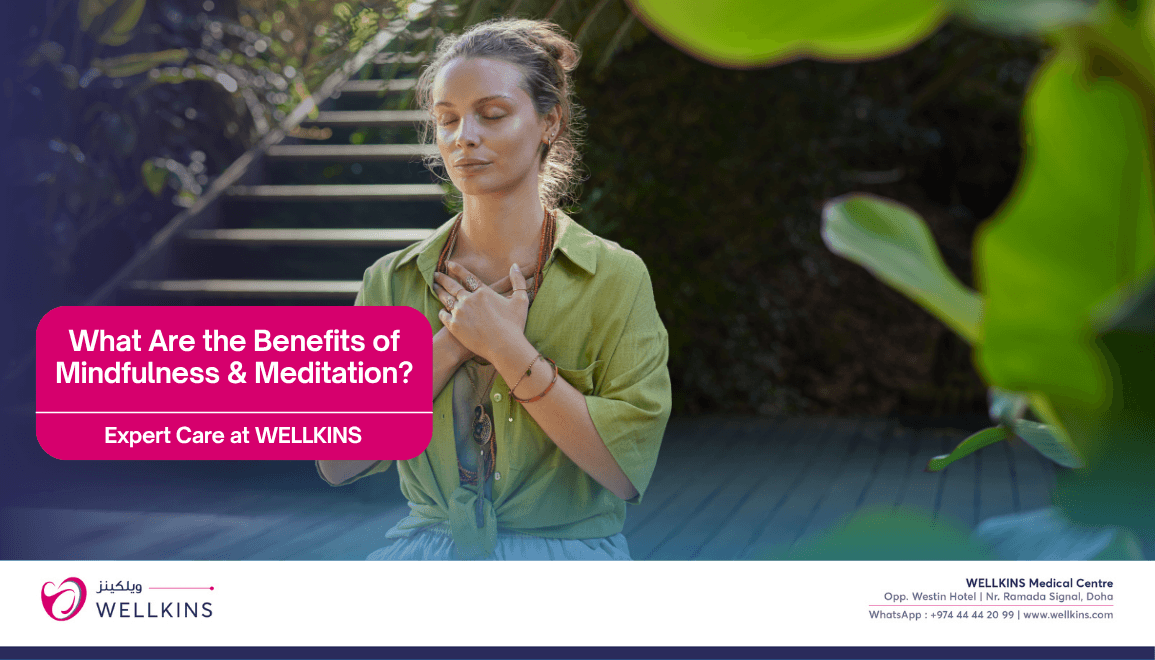
One of the biggest misconceptions is that meditation requires sitting cross-legged in silence for an hour. It does not. Mindfulness can begin with just a few minutes and can be woven into moments that already exist in your day rather than requiring dedicated additional time that many people genuinely cannot find.
You can practice by:
- Taking five slow intentional breaths before starting your working day, allowing the transition from home to work to be a conscious one rather than a rushing blur.
- Eating one meal each day without looking at your phone, attending to the experience of tasting, chewing and being nourished.
- Paying attention to the sensation of your feet touching the ground as you walk between meetings or through a car park.
- Noticing the sounds around you while waiting in Qatar’s traffic rather than immediately reaching for your phone to fill the silence.
- Taking a short deliberate pause before responding during a stressful conversation, allowing a breath to create space between stimulus and response.
Mindfulness is not only something you do during a formal meditation session. It can become a way of living that gradually shifts the quality of attention you bring to every ordinary moment of your day.
When Can Mindfulness Help?
Mindfulness can be particularly helpful if you find yourself experiencing any of the following.
- Constantly overthinking or finding that your mind rehearses and replays situations long after they have passed.
- Feeling overwhelmed by stress in a way that does not resolve with rest alone.
- Struggling to switch off at night with sleep being disrupted by an active and restless mind.
- Becoming emotionally reactive in ways that feel disproportionate and that you later regret.
- Feeling disconnected from yourself, from your relationships or from a sense of meaning in your daily life.
- Living on autopilot, going through the motions of a full and busy life without genuinely experiencing it.
Mindfulness does not remove life’s challenges. But it can meaningfully change how we respond to them, replacing automatic reactivity with deliberate and compassionate choice.
When Mindfulness Isn’t Enough
Mindfulness is a powerful and evidence-supported tool but it is not a replacement for professional mental health care. If you are experiencing persistent anxiety, depression, trauma, panic attacks or overwhelming emotional distress it is important to seek support from a qualified mental health professional rather than relying on mindfulness practice alone.
In therapy mindfulness is frequently combined with evidence-based approaches such as Cognitive Behavioral Therapy, Acceptance and Commitment Therapy or trauma-informed interventions depending on each person’s specific clinical needs. The goal in these combinations is not simply to feel calmer in the moment. The goal is to help you live a healthier, more meaningful and more connected life over time. Mindfulness supports that goal. It rarely achieves it in isolation when significant mental health difficulties are present.
A Message to Anyone Who Feels Their Mind Never Stops
If you have ever said: “I cannot stop overthinking.” “My brain never switches off.” “I am exhausted even when I have done nothing all day.” Please know that you are not alone. Many people live with minds that are constantly racing and the exhaustion that produces is entirely real even when it is not visible to the people around them.
Mindfulness does not ask you to stop thinking. It gently teaches you that you do not have to believe, chase or react to every thought that appears in your mind. Sometimes peace is not found by making the mind silent. It is found by learning to sit with the noise without letting it control you. That is a skill that can be learned. And it changes everything when it is.
Final Thoughts
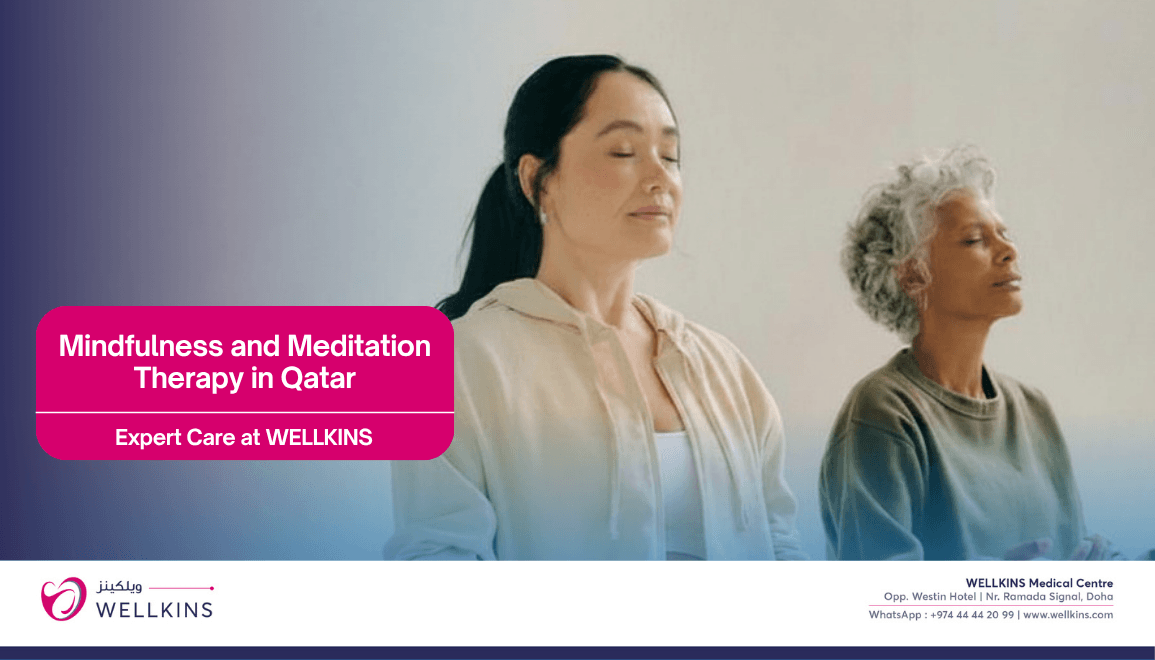
We spend so much of our lives preparing for tomorrow that we often forget to experience today. Mindfulness invites us to slow down, not because life becomes less busy but because we deserve moments of genuine calm within the busyness. It is not about escaping reality. It is about becoming more present for it.
The next time you catch yourself rushing from one task to the next, take one slow breath. Notice where you are. Notice how you feel. Sometimes healing does not begin with doing more. Sometimes it begins with simply being present.
If you would like to explore how mindfulness can be integrated into your mental health care at Wellkins Medical Centre the clinical psychology team is here to guide you in a way that is tailored to your specific needs and your life in Qatar.
To book an appointment at Wellkins Medical Centre: https://wellkins.com/nikitha
To know more about the clinical psychology at Wellkins Medical Centre, Doha: https://wellkins.com/mentalhealth