
Author: Dr. Preethi Sarma, (Specialist ENT – Wellkins Medical Centre)
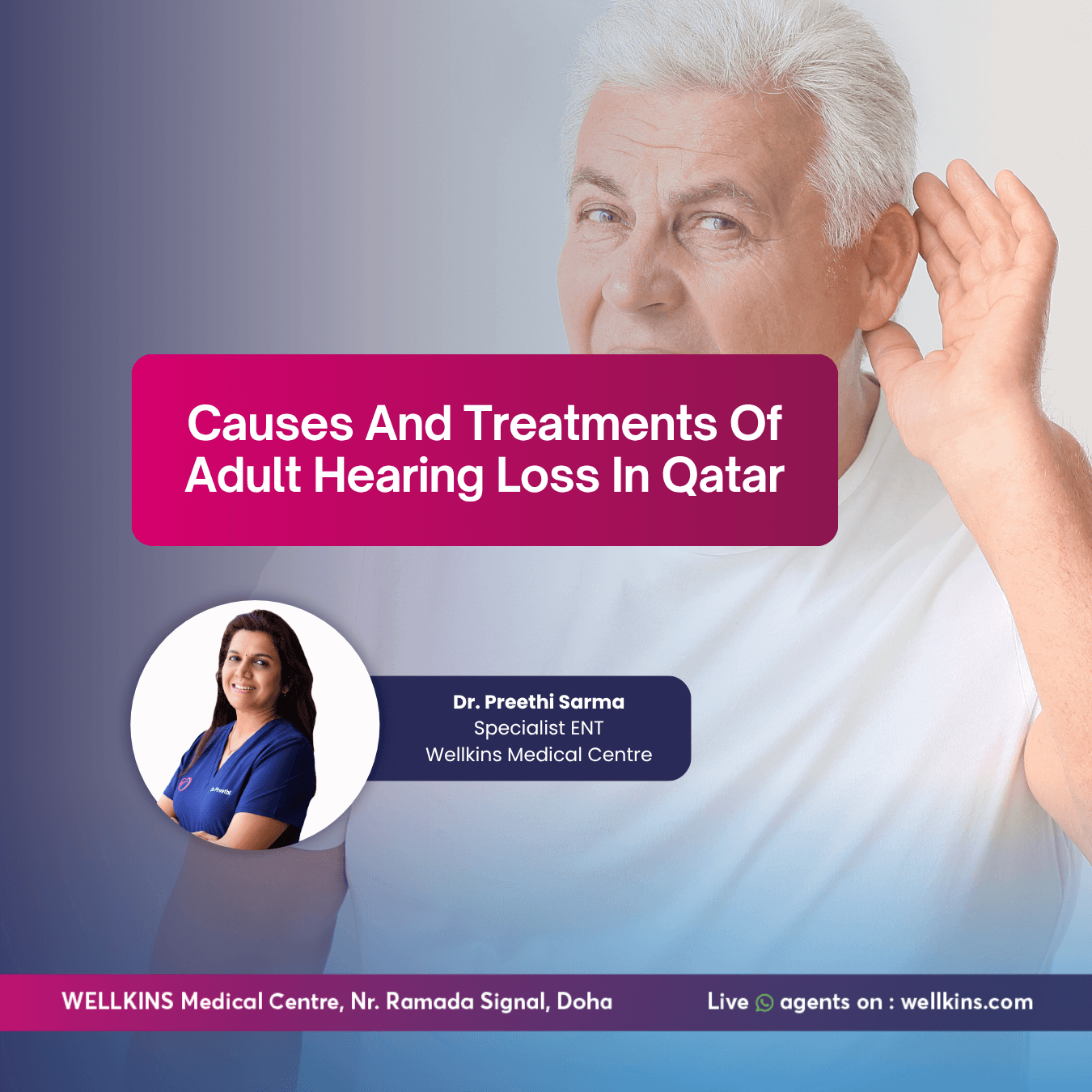
Hearing loss is one of those conditions that tends to arrive quietly. Not as a sudden crisis but as a gradual accumulation of small moments: asking people to repeat themselves more often, turning the television volume up a little higher each week, struggling to follow conversations in a noisy restaurant, missing what someone said when they were not facing you directly. By the time most adults seek an ENT assessment for hearing loss they have typically been managing these small compensations for months or even years.
In Qatar’s diverse adult population, hearing loss is more prevalent than most people realize. The combination of occupational noise exposure in the construction, industrial and hospitality sectors, the high rates of diabetes and cardiovascular disease in the region that affect the blood supply to the inner ear, the widespread use of earphones and personal audio devices across all age groups and the natural age-related changes in hearing that begin earlier than most people expect all contribute to a significant and largely under-addressed burden of hearing loss across Doha’s adult community.
Understanding the different types of hearing loss, their causes and what effective management looks like is the first step toward not simply accepting hearing difficulty as something to be lived with when treatment and support are genuinely available.
The most consistent pattern I see in adults with hearing loss is that they have delayed seeking assessment for far longer than they needed to. They attributed their difficulties to background noise, to other people speaking unclearly or to simply getting older and assumed nothing could be done. In most cases something can be done. Whether that is treating a reversible cause, fitting appropriate hearing amplification or addressing an underlying medical condition, the outcomes of early intervention are consistently better than those of long delay. If you are asking people to repeat themselves regularly, please come in. That is exactly the reason the ENT clinic exists.
People Also Ask
What are the main types of hearing loss in adults?
There are three main types of hearing loss in adults. Conductive hearing loss occurs when sound cannot travel efficiently through the outer or middle ear to the inner ear, typically due to earwax blockage, fluid in the middle ear, a perforated eardrum or problems with the small bones of the middle ear. Sensorineural hearing loss occurs when the inner ear hair cells or the auditory nerve are damaged, producing a loss that is usually permanent and is the most common type in adults. Mixed hearing loss involves elements of both conductive and sensorineural loss simultaneously. Identifying which type is present is the essential first step in determining the right management approach.
What causes sudden hearing loss in adults?
Sudden sensorineural hearing loss, defined as a rapid loss of hearing over 72 hours or less, is a medical emergency that requires urgent ENT assessment. It can result from viral infection, vascular events affecting blood supply to the inner ear, autoimmune conditions, acoustic trauma or in some cases no identifiable cause. Treatment with corticosteroids is most effective when initiated within the first 24 to 72 hours of onset, which is why urgent assessment rather than watchful waiting is essential whenever hearing loss develops suddenly. If you or someone you know experiences sudden hearing loss, seek ENT review the same day.
Is age-related hearing loss inevitable?
Age-related hearing loss, known as presbycusis, is extremely common and affects the majority of people to some degree by their seventh decade. However the rate and severity of age-related hearing loss varies considerably between individuals and is significantly influenced by cumulative lifetime noise exposure, cardiovascular health, diabetes management and genetic factors. Many people with presbycusis achieve excellent quality of life with appropriate hearing amplification and audiological support. Early assessment when changes are first noticed produces better long-term outcomes than waiting until the loss is severe.
Can hearing loss be treated or reversed?
Whether hearing loss can be treated or reversed depends entirely on its type and cause. Conductive hearing loss due to earwax, middle ear fluid or a perforated eardrum is often fully reversible with appropriate medical or surgical treatment. Sensorineural hearing loss from damaged inner ear hair cells is generally permanent and is managed with hearing aids or cochlear implants depending on severity. Sudden sensorineural hearing loss treated promptly with steroids has a meaningful chance of partial or complete recovery. This is why accurate diagnosis of the type and cause of hearing loss is the essential starting point for any management plan.

Understanding Hearing Loss: How the Ear Works

Before exploring the types and causes of hearing loss it helps to understand the pathway sound takes through the ear so that the different mechanisms of hearing loss make intuitive sense.
Sound enters the ear canal as vibrations in the air and reaches the eardrum, which vibrates in response. These vibrations are transmitted across three tiny bones in the middle ear, the malleus, incus and stapes, which amplify and transfer the sound energy to the oval window of the inner ear. Inside the inner ear, the cochlea converts these mechanical vibrations into electrical signals through thousands of tiny hair cells lining its fluid-filled chambers. These electrical signals travel along the auditory nerve to the brain where they are interpreted as sound and language.
Hearing loss can occur at any point along this pathway and the location of the problem determines both the type of hearing loss and the appropriate treatment approach.
Types of Hearing Loss in Adults
1. Conductive Hearing Loss
Conductive hearing loss occurs when sound cannot travel efficiently from the outer ear through the middle ear to the inner ear. The inner ear and auditory nerve remain functional but insufficient sound energy is reaching them due to a physical obstruction or structural problem in the outer or middle ear.
- Characteristics: Sounds are reduced in volume but not necessarily distorted in quality. People with conductive hearing loss often describe everything sounding muffled or far away rather than unclear or difficult to understand. The hearing in background noise is relatively less affected than in sensorineural loss.
- Reversibility: Conductive hearing loss is often partially or fully reversible because in many cases the underlying obstruction or structural problem can be treated directly. This distinguishes it from sensorineural hearing loss in the most clinically meaningful way.
2. Sensorineural Hearing Loss
Sensorineural hearing loss occurs when the inner ear hair cells or the auditory nerve itself are damaged and can no longer transmit sound signals to the brain with normal clarity and completeness. This is the most common type of hearing loss in adults and the most prevalent form seen in the ENT clinic at Wellkins.
- Characteristics: Reduced ability to hear high-pitched sounds is typically the earliest feature, producing difficulty distinguishing consonants such as s, f, sh and th that carry the clarity of speech. People with sensorineural loss frequently describe being able to hear that someone is speaking but not being able to make out what they are saying clearly, particularly in background noise or when the speaker is not facing them directly.
- Reversibility: Sensorineural hearing loss is generally permanent because damaged inner ear hair cells do not regenerate. Management focuses on amplification through hearing aids or in severe cases cochlear implantation rather than restoration of the original hearing.
3. Mixed Hearing Loss
Mixed hearing loss involves elements of both conductive and sensorineural hearing loss occurring simultaneously in the same ear. A patient may have an underlying sensorineural loss from noise exposure or ageing alongside a current conductive component from an ear infection or earwax accumulation. Treating the conductive component improves hearing to the level of the underlying sensorineural baseline, which may then be further managed with amplification.
Common Causes of Hearing Loss in Adults
Age-Related Hearing Loss (Presbycusis)
Presbycusis is the gradual progressive bilateral sensorineural hearing loss that results from the cumulative effects of ageing on the inner ear structures. It is the most common cause of hearing loss in adults worldwide and in Qatar’s adult population where life expectancy is high and where the contributing factors of noise exposure, diabetes and cardiovascular disease are prevalent, it represents a significant and growing clinical concern.
The hair cells of the cochlea decline in number with age and those that remain become less efficient at transducing sound. The decline typically begins in the high frequency range and progresses over years. Most people begin to notice the early effects in their fifties though the changes begin earlier. By age 65 a significant proportion of adults have measurable hearing loss. By age 75 the majority do.
Noise-Induced Hearing Loss
Noise-induced hearing loss is the second most common cause of sensorineural hearing loss in adults and one of the most preventable. It results from damage to the cochlear hair cells caused by exposure to sounds above approximately 85 decibels, either in a single intense exposure such as an explosion or a gunshot, or through prolonged cumulative exposure to lower-level noise such as machinery, heavy traffic or loud music.
In Qatar, occupational noise exposure is a significant risk in the construction, manufacturing and oil and gas sectors. The widespread and often prolonged use of earphones at high volumes across all age groups, particularly with in-ear devices that deliver sound directly to the ear canal, is a growing contributor to noise-induced hearing loss in younger adults. Unlike age-related hearing loss, noise-induced loss can affect younger people significantly and is entirely preventable with appropriate hearing protection.
Earwax Blockage (Cerumen Impaction)
Earwax blockage is the most common and most immediately reversible cause of conductive hearing loss in adults. The ear canal normally clears wax through a self-cleaning mechanism but in some people wax accumulates faster than it clears, or is pushed deeper into the canal by cotton bud use or earphone insertion, eventually creating a blockage that reduces the transmission of sound to the eardrum.
In Qatar, the widespread cultural habit of ear cleaning with cotton buds, which counterproductively pushes wax deeper rather than removing it, is a consistent contributor to cerumen impaction in the clinic population. Professional microsuction or irrigation performed by an ENT specialist clears impacted wax safely without the risks associated with self-cleaning attempts.
Middle Ear Infections and Fluid
Chronic or recurrent middle ear infections and the persistence of fluid in the middle ear following infection are common causes of conductive hearing loss in adults, particularly in those with a history of childhood ear disease. Perforation of the eardrum from infection, trauma or previous surgical intervention can also produce conductive hearing loss that may be amenable to surgical repair.
Otosclerosis
Otosclerosis is a condition in which abnormal bone growth around the stapes, one of the three middle ear bones, restricts its movement and progressively reduces the transmission of sound to the inner ear. It produces a slowly progressive conductive or mixed hearing loss that typically begins in the twenties and thirties. Otosclerosis is hereditary and more common in women. It is effectively treated with a surgical procedure called a stapedectomy or managed with hearing amplification.
Sudden Sensorineural Hearing Loss
Sudden sensorineural hearing loss is defined as a loss of 30 decibels or more across three adjacent frequencies occurring over 72 hours or less. It is a medical emergency. Causes include viral infection, vascular compromise of the cochlear blood supply, autoimmune inner ear disease and acoustic trauma. In a significant proportion of cases no cause is identified. Treatment with systemic or intratympanic corticosteroids has the best evidence for partial or complete recovery and must be initiated as early as possible, ideally within 24 to 72 hours of symptom onset.
Diabetes and Cardiovascular Disease
Both diabetes and cardiovascular disease damage the small blood vessels that supply the inner ear, contributing to sensorineural hearing loss through vascular insufficiency. Qatar has among the highest rates of diabetes in the world and the associated hearing loss burden is clinically significant. Adults with diabetes should include hearing assessment as part of their routine health monitoring, particularly when other diabetes-related complications are identified.
Ototoxic Medications
Certain medications are toxic to the inner ear hair cells and can produce sensorineural hearing loss as a side effect. These include some chemotherapy agents, high-dose loop diuretics, certain antibiotics including aminoglycosides and high-dose aspirin. Patients on long-term or high-dose courses of these medications benefit from baseline audiological assessment and monitoring for early changes in hearing.
How Hearing Loss Is Assessed at Wellkins
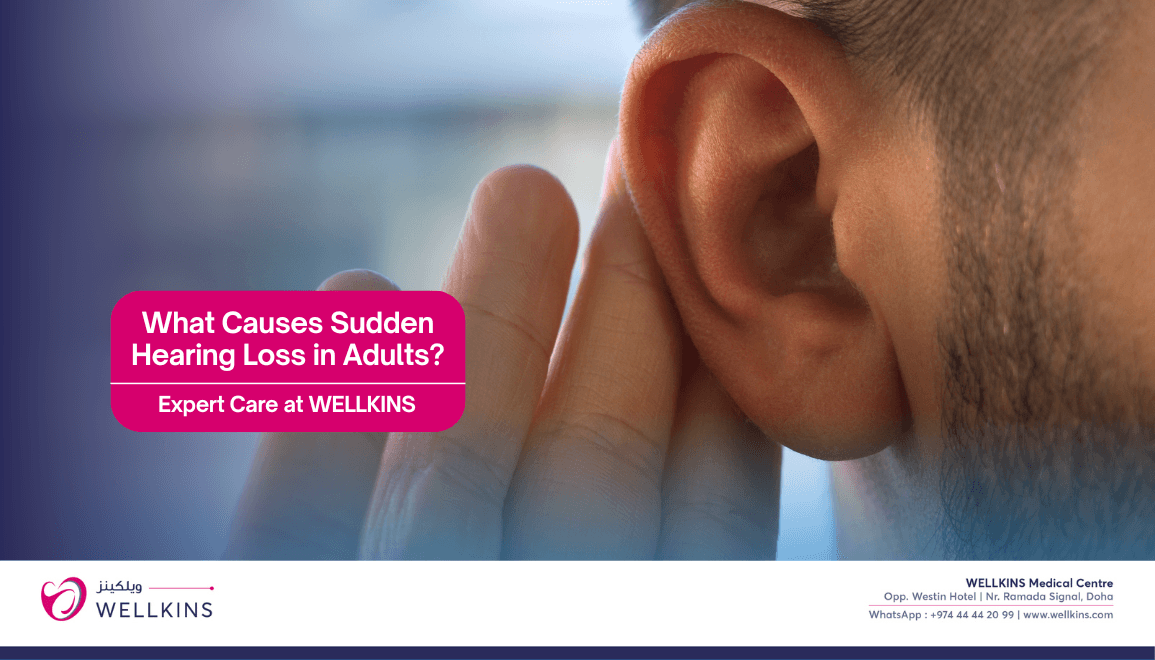
When an adult presents to the ENT clinic at Wellkins Medical Centre with hearing concerns, the assessment follows a structured pathway designed to identify the type of hearing loss, its severity and its most likely cause.
- Clinical History: A detailed history covers the onset and progression of hearing changes, whether one or both ears are affected, the presence of tinnitus or vertigo alongside the hearing loss, occupational and recreational noise exposure history, relevant medical conditions and current medications. The pattern of the history provides important diagnostic information before any examination begins.
- Otoscopic Examination: Direct examination of the ear canal and eardrum identifies earwax blockage, signs of infection, eardrum perforation or structural abnormalities in the outer and middle ear.
- Pure Tone Audiometry: A formal hearing test in which the patient responds to tones of different frequencies and volumes presented through headphones. The results are plotted on an audiogram that maps the degree and frequency profile of the hearing loss and distinguishes between conductive and sensorineural components.
- Tympanometry: A test that measures the movement of the eardrum and the pressure in the middle ear, identifying middle ear fluid, perforation or Eustachian tube dysfunction that would not be visible on direct examination alone.
- Speech Discrimination Testing: Assesses how well the patient understands speech at different volume levels, which is particularly relevant for fitting and programming hearing amplification and for identifying the specific functional impact of the hearing loss.
- Further Investigations Where Indicated: Including imaging for asymmetric hearing loss, blood tests where a systemic cause is suspected and specialist referral where surgical management or cochlear implantation is being considered.
Managing Hearing Loss: What Are the Options?
Management of hearing loss is always guided by the type and cause identified on assessment. There is no single approach that applies to all presentations.
- Treatment of Reversible Causes: Earwax removal, treatment of middle ear infections, management of otitis media with effusion and repair of eardrum perforations where appropriate can fully or partially restore hearing in conductive hearing loss.
- Hearing Aids: Modern hearing aids are significantly more advanced than the devices of previous generations and are the most effective and most widely applicable management for sensorineural hearing loss. They are available in a range of styles from completely-in-canal devices to behind-the-ear options and are programmed to the individual’s specific audiogram profile. Early fitting when the loss is mild to moderate produces better long-term benefit than delaying until the loss is severe.
- Surgical Management: Stapedectomy for otosclerosis, tympanoplasty for eardrum repair and cochlear implantation for severe to profound sensorineural loss are all surgical options available for appropriate candidates discussed and referred from the ENT clinic at Wellkins.
- Sudden Hearing Loss Protocol: Prompt corticosteroid treatment initiated urgently when sudden sensorineural hearing loss is identified, with close monitoring of recovery over the subsequent weeks.
- Hearing Protection Counselling: For patients with noise-induced hearing loss or significant occupational or recreational noise exposure, personalized guidance on hearing protection strategies prevents further deterioration.
When to Seek ENT Assessment at Wellkins
You should seek an ENT assessment at Wellkins Medical Centre if any of the following apply.
- You are asking people to repeat themselves regularly or finding that you mishear words or parts of conversations.
- You have turned up the television volume to a level that others find too loud.
- You struggle to follow conversations in group settings or in environments with background noise.
- You have experienced sudden or rapid hearing loss in one or both ears. This requires same-day urgent assessment.
- You have ringing, buzzing or other sounds in one or both ears alongside hearing changes.
- You have a history of significant noise exposure at work or through recreational activities.
- You have diabetes, cardiovascular disease or are on long-term medication and have not had your hearing assessed as part of your regular health monitoring.
- You have had previous ear infections, ear surgery or a history of childhood hearing difficulties that you have not had reviewed as an adult.
Hearing connects us to the people and the world around us in ways that are easy to take for granted until the connection begins to fray. The earlier hearing changes are assessed the wider the range of effective options available and the better the long-term outcome for both hearing and the quality of life that depends on it.
To book an appointment at Wellkins Medical Centre: https://wellkins.com/drpreethi
To know more about the ENT services at Wellkins Medical Centre: https://wellkins.com/ent