
Author: Dr. Joanne Mae J Villanueva, (Specialist Pediatrics – Wellkins Medical Centre)
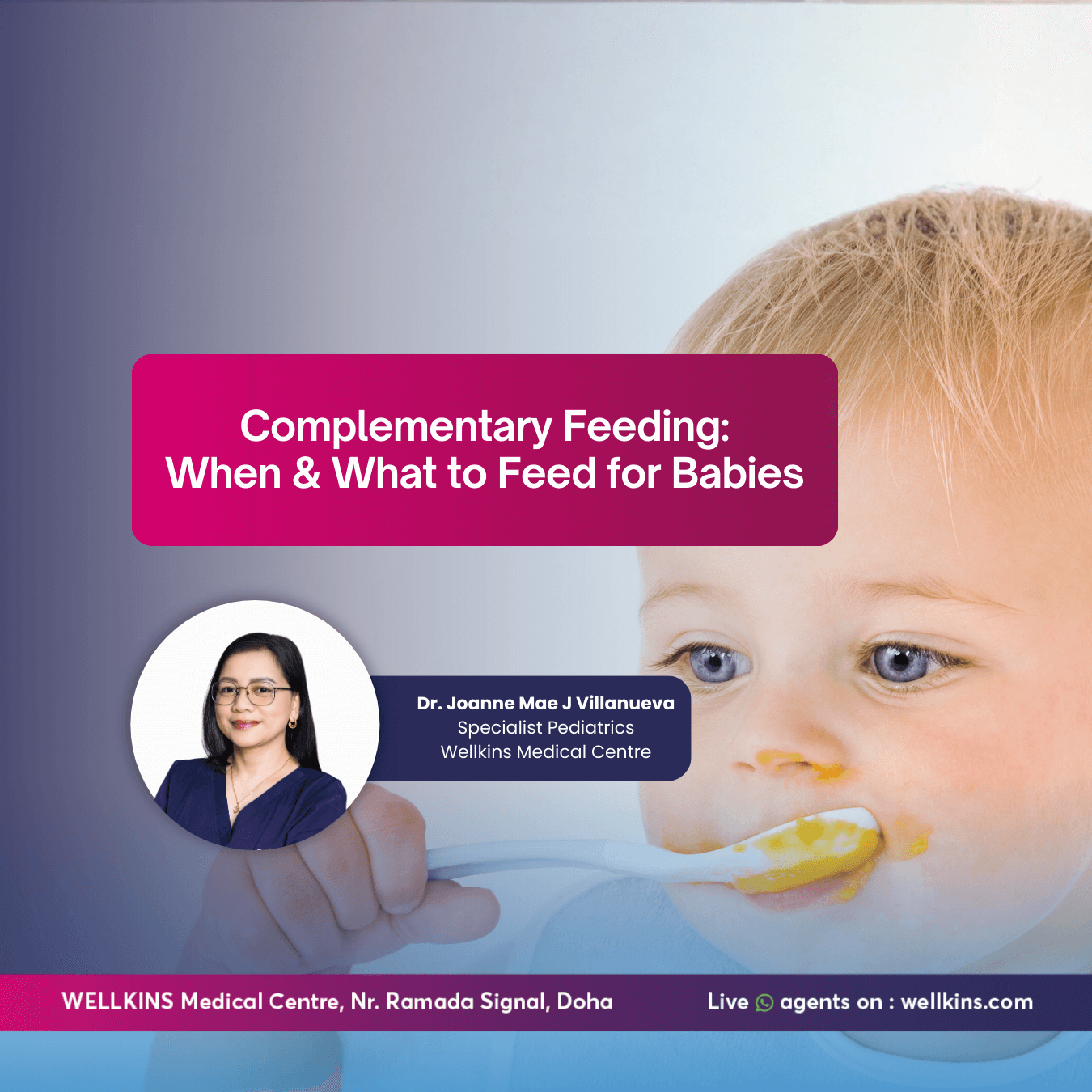
The transition from an all-liquid diet to solid foods is one of the most exciting and often confusing milestones in your baby’s first year. At Wellkins Medical Centre, our department is frequently asked: “When is the right time?” and “What should I offer first?” Complementary feeding is defined as the process starting when breast milk or formula alone is no longer sufficient to meet the nutritional requirements of infants; therefore, other foods and liquids are needed along with breast milk or a breast milk substitute.
Starting solids is an exciting milestone, but it often comes with questions about timing, food choices, and readiness. As babies grow, their nutritional needs expand beyond milk, making complementary feeding an important step in healthy development. At Wellkins Medical Centre, we guide parents through this transition with safe, balanced, and age-appropriate advice helping turn first bites into a confident and positive feeding journey.
When is Your Baby Ready?
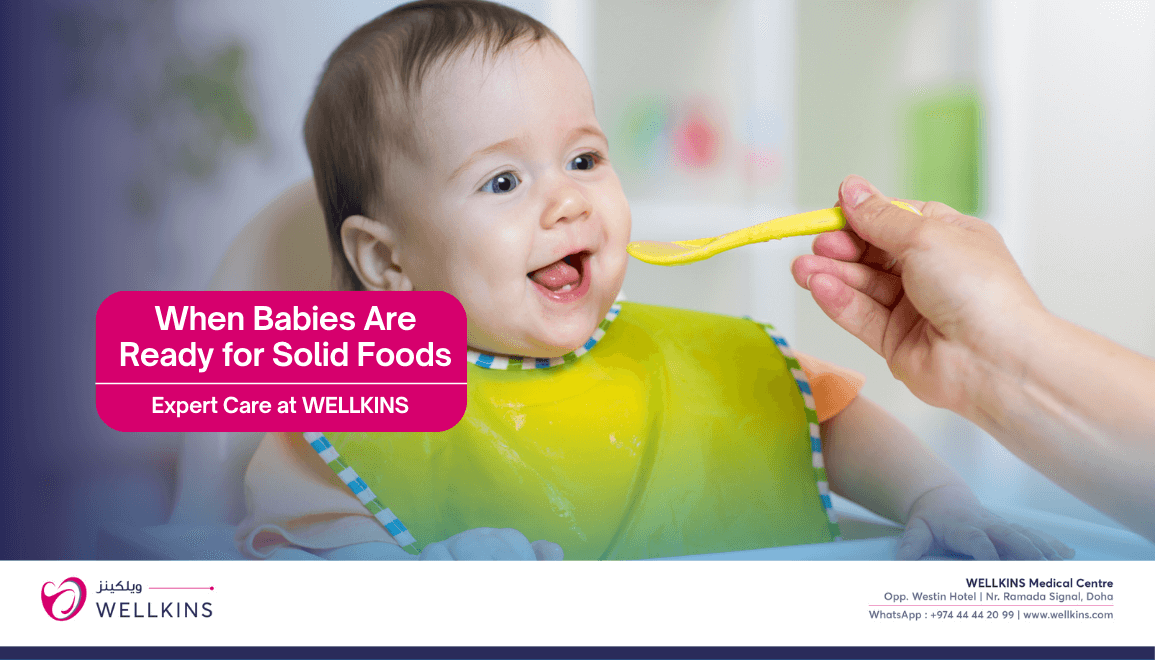
Six months is the ‘sweet spot’ for introducing solids! By this age, your baby’s digestive system is developed enough to break down the proteins, fats and starches found in real food.
Look for these developmental signs of readiness:
- Head Control: Your baby can sit with little or no support and hold their head steady.
- The “Tongue-Thrust” Reflex: They have stopped automatically pushing food out of their mouth with their tongue.
- Curiosity: They watch you eat, reach for your food, or open their mouth when a spoon approaches.
- Coordination: They can move food from the front of the mouth to the back to swallow.
Why 6 Months is the “Golden Window”
Introducing solids too early (before 4 months) can increase the risk of allergies and choking, while waiting too long (after 7 months) can lead to nutritional deficiencies and feeding aversions.
- Iron Stores: Around 6 months, a baby’s natural iron stores built up during pregnancy begin to deplete. Since breast milk is low in iron, complementary foods must fill this gap.
- Oral Motor Skills: This window is critical for learning how to chew and manage different textures, which supports speech development later on.
- Diverse Microbiome: Introducing various flavors early can help develop a healthier gut and reduce the likelihood of “picky eating” in toddlers.
What to Feed: The Nutritional Essentials
There is no “perfect” first food, but the focus should be on nutrient density. In Qatar, we encourage a mix of local and global healthy options.
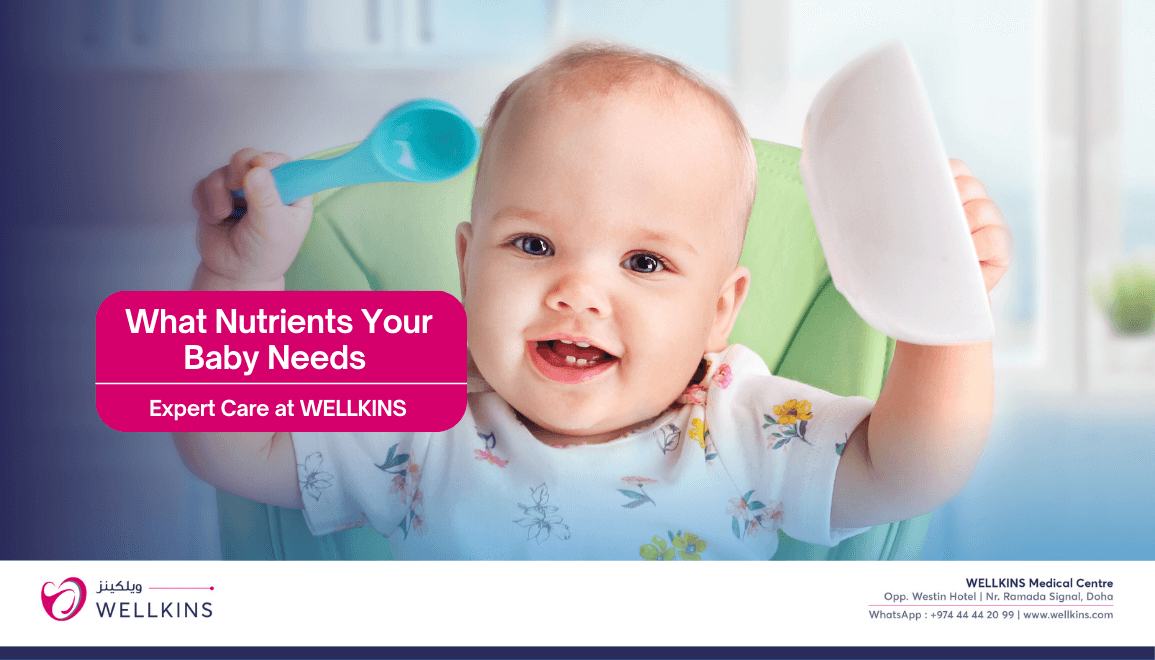
- Iron-Rich Foods: This should be the priority. Options include pureed lentils (daal), iron fortified cereals, finely mashed meat, or egg yolks.
- Energy Density: Since babies have tiny stomachs, every bite counts. Incorporate healthy fats like mashed avocado or a teaspoon of olive oil in vegetable purees.
- Fruits and Vegetables: Start with single-ingredient purees like carrots, sweet potatoes, pears, or bananas to identify any sensitivities.
- The Rule of Three: Introduce one new food at a time and wait 2–3 days before introducing another to monitor for allergic reactions (hives, vomiting, or diarrhea).
Textures and Safety
As your baby grows, their ability to handle textures evolves quickly.
- 6 Months: Smooth purees or well-mashed foods.
- 7–8 Months: Thicker purees, “lumpy” textures and soft finger foods (e.g., steamed carrot sticks).
- 9–12 Months: Small bite-sized pieces of family meals, encouraging self-feeding.
Foods to Avoid Until 12 Months:
- Honey: Risk of infant botulism.
- Salt & Sugar: Can strain developing kidneys and cause tooth decay.
- Whole Nuts/Grapes: Serious choking hazards.
- Cow’s Milk: Should not be the primary drink as it lacks sufficient iron and nutrients for infants.
Responsive Feeding: Trust Your Baby
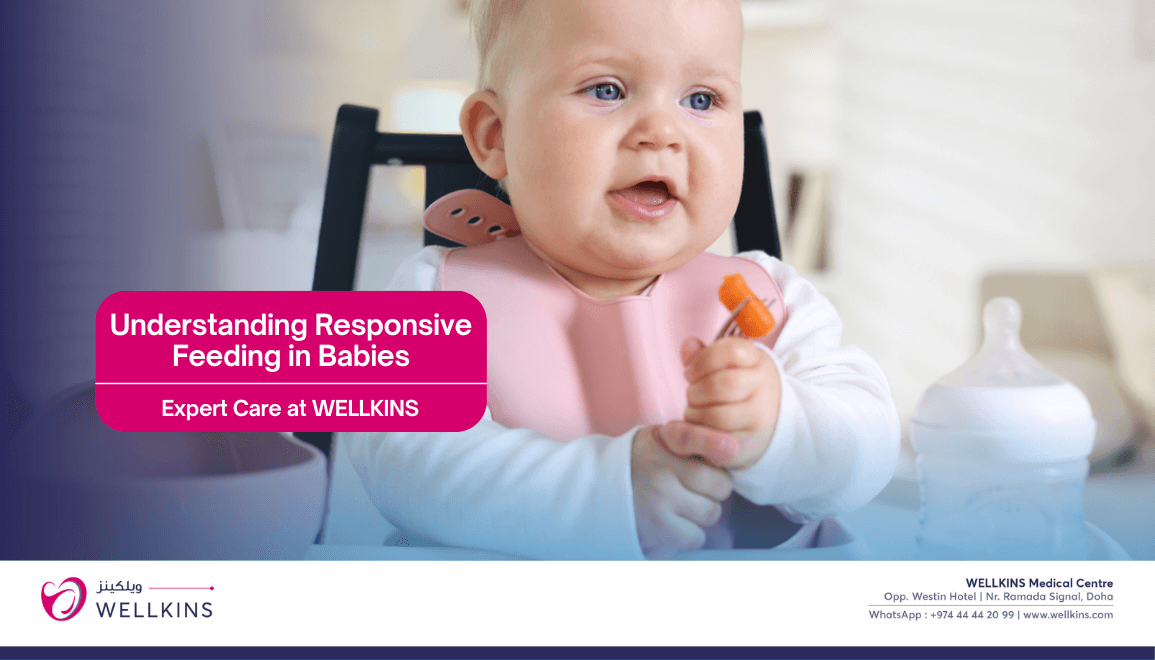
At Wellkins, we advocate for Responsive Feeding. This means recognizing your baby’s cues for hunger and fullness.
- Hunger Cues: Reaching for the spoon, getting excited when seeing food.
- Fullness Cues: Turning the head away, pushing the spoon, or closing the mouth tightly.
Never force-feed your child. The goal of the first few months is exploration and education, not just calorie intake. Breast milk or formula remains the primary source of nutrition until age one.
How Wellkins Supports Your Journey
Starting solids can feel like a daunting task, but you don’t have to do it alone. At Wellkins Medical Centre, we provide:
- Growth Monitoring: To ensure your baby is thriving on their new diet.
- Nutritional Counseling: Specialized advice for vegetarian, vegan, or allergy prone families.
- Anemia Screening: Checking iron levels around the 9–12 month mark.
- Allergy Management: Expert guidance if you suspect a food sensitivity.
Final Thought
Complementary feeding is the bridge to your child’s future health. By focusing on iron-rich, whole foods and following your baby’s lead, you are setting the foundation for a lifetime of healthy eating habits.
Starting solids is about more than just nutrition; it’s about inviting your baby to the family table. By waiting until six months to ensure their digestive system is ready, you are setting the foundation for a lifetime of healthy eating habits. At Wellkins Medical Centre, we’re honored to walk alongside you during these precious milestones. Whether you’re curious about baby-led weaning or traditional purees, our specialist is always available to ensure your little one’s nutritional journey gets off to the best possible start.
To book an appointment at Wellkins Medical Centre: https://wellkins.com/visit