
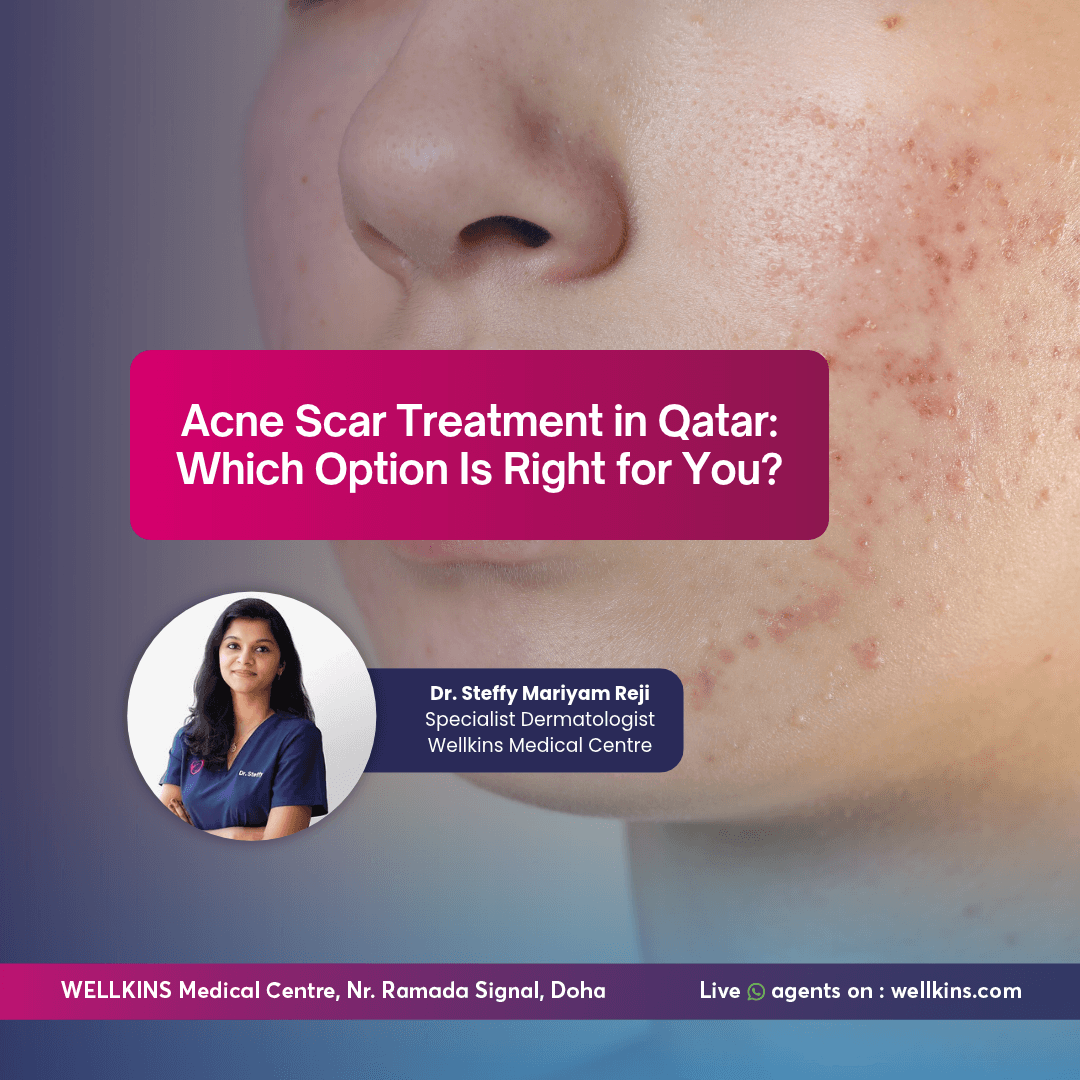
Author: Dr. Steffy Mariyam Reji, (Specialist Dermatologist – WELLKINS Medical Centre)
Introduction
Acne can settle while leaving behind changes in skin colour, texture or contour. Some people develop flat dark marks while others notice deep pits, shallow depressions or raised scars.
These changes do not all respond to the same treatment. A chemical peel may help with superficial pigmentation while a deeper depressed scar may require collagen stimulating treatment or a procedure that releases the scar from underlying tissue.
The first step is therefore not choosing a popular procedure. It is identifying whether the concern is active acne, pigmentation or a true scar and determining which type of scar is present.
“Acne scar treatment should be selected according to the scar rather than according to the latest treatment trend. Ice pick, boxcar, rolling and raised scars behave differently and may need different procedures. We also need to control active acne before beginning scar treatment because continuing breakouts can create new scars. The most effective plan is often a staged combination that considers scar depth, skin tone, pigmentation risk, recovery time and realistic treatment goals.”
People Also Ask
Can acne scars be removed completely?
Acne scar treatments can make scars less noticeable and improve skin texture, but complete removal cannot be guaranteed. The degree of improvement depends on scar type, depth, skin response and the treatment plan.
What is the best treatment for acne scars?
There is no single best treatment for every acne scar. Microneedling may be suitable for some depressed scars while ice pick, rolling or raised scars may require different procedures or a combination approach.
Are dark marks after acne actually scars?
Flat brown, red or grey marks are often post inflammatory pigmentation rather than true scars. These marks may gradually fade and may respond to sun protection, topical treatment or selected resurfacing procedures.
Should active acne be treated before acne scars?
Yes. Active acne should usually be controlled before beginning a scar treatment programme. Otherwise new breakouts may continue creating inflammation, pigmentation and additional scars.
How many sessions are needed for acne scars?
The number varies according to scar type, procedure and treatment response. Many collagen stimulating treatments require a course of sessions followed by time for the skin to remodel.
What Are Acne Scars?
Acne scars form when inflammation damages the deeper layers of the skin. During healing the body produces collagen to repair the affected area.
If too little collagen is produced, the healed area may sit below the surrounding skin and form a depressed scar. If too much collagen is produced, a raised hypertrophic scar or keloid may develop.
The risk of scarring is generally higher with deep and painful acne such as nodules or cysts. Picking, squeezing or scratching breakouts can increase inflammation and further raise the risk.

Acne Marks and Acne Scars Are Not the Same
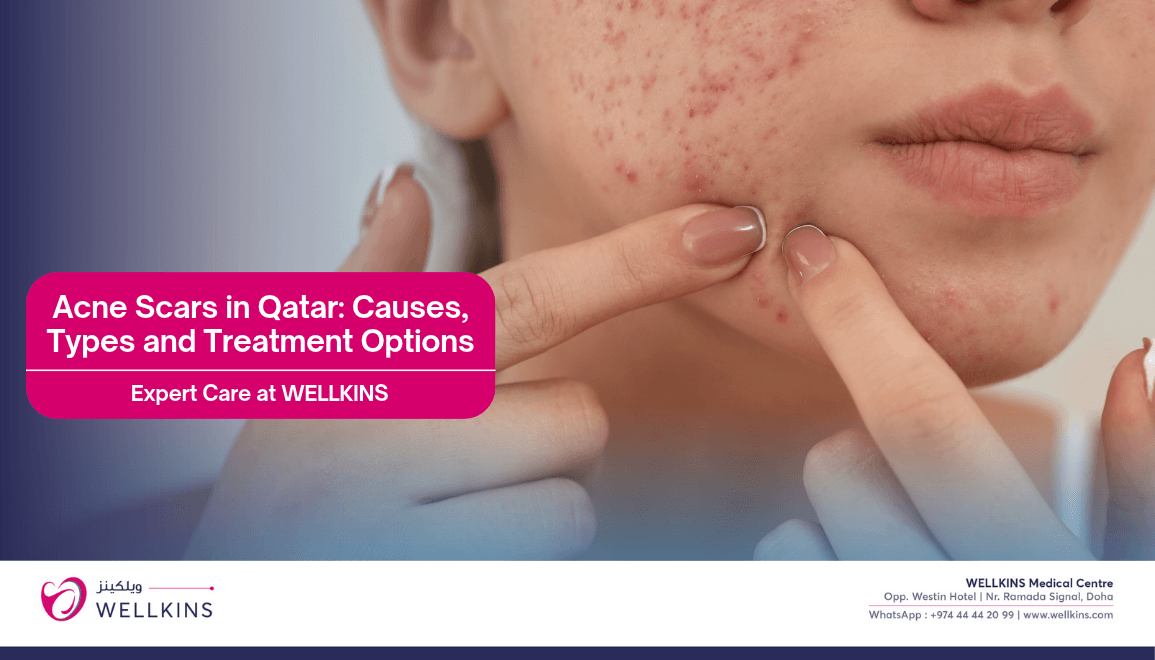
Many people use the term acne scars for any mark left after a breakout. However, flat changes in colour are not always true scars.
Post inflammatory hyperpigmentation produces brown, dark brown or grey marks after inflammation settles. Post inflammatory erythema may produce pink or red areas.
These marks do not usually change the texture of the skin. True scars create a change in the skin’s structure which may be depressed, raised or uneven.
A dermatologist can determine whether the concern is pigmentation, vascular redness, scarring or a combination. This distinction helps prevent unnecessary or unsuitable treatment.
Why Identifying the Scar Type Matters
Each type of acne scar has a different shape and depth. A treatment that improves a broad rolling scar may have limited effect on a narrow and deep ice pick scar.
Many patients have more than one scar type on the same area of skin. They may also have active acne, enlarged pores and pigmentation at the same time.
A personalised treatment plan may therefore use different procedures at different stages rather than relying on one treatment for every concern.
Common Types of Acne Scars
Acne scars can be divided into depressed scars and raised scars. Depressed scars are also called atrophic scars and sit below the surrounding skin.
The three commonly recognised depressed scar patterns are ice pick, boxcar and rolling scars.
1. Ice Pick Scars
Ice pick scars are narrow and deep. They may look like small punctures or enlarged pores but extend further into the skin than their surface opening suggests.
Because of their depth, superficial treatments may not produce enough improvement. A dermatologist may consider a targeted technique that reaches the deeper part of the scar.
Several sessions or a combination with a broader resurfacing procedure may be recommended when other scar types are present.
2. Boxcar Scars
Boxcar scars are round or oval depressions with more defined edges. They may be shallow or deep and are commonly seen on the cheeks or temples.
Shallow boxcar scars may respond to collagen stimulating or resurfacing procedures. Deeper scars may require a more targeted approach.
The depth of the scar and the sharpness of its edges influence which treatment is likely to be suitable.
3. Rolling Scars
Rolling scars are broad and shallow with sloping edges. Multiple rolling scars can create a wavy or uneven appearance when light moves across the skin.
Some rolling scars are tethered to deeper tissue by fibrous bands. Surface treatment alone may produce limited improvement when this tethering remains present.
A procedure designed to release the scar from the underlying tissue may be considered before or alongside collagen stimulating treatment.
4. Hypertrophic Scars and Keloids
Raised scars form when the body produces excess collagen during healing. A hypertrophic scar remains within the boundary of the original inflamed area while a keloid may grow beyond it.
Raised acne scars commonly affect the jawline, shoulders, chest or back. They may feel firm, itchy, tender or painful.
These scars need a different approach from depressed scars. Treatments intended to stimulate more collagen may not be appropriate for an active raised scar.
Acne Scar Types and Possible Treatment Approaches
The following table provides a general comparison. The final recommendation should be based on an individual dermatology assessment.
| Skin concern | Typical appearance | Possible treatment approaches |
|---|---|---|
| Post inflammatory pigmentation | Flat brown, grey or dark marks without a depression | Sun protection, topical treatment and selected chemical peels |
| Ice pick scars | Narrow and deep pits | Targeted chemical reconstruction, punch techniques or combination treatment |
| Shallow boxcar scars | Round or oval depressions with defined edges | Microneedling, fractional resurfacing or selected peels |
| Deep boxcar scars | Deeper depressions with sharper borders | Targeted scar procedures followed by resurfacing |
| Rolling scars | Broad and shallow depressions with a wavy appearance | Subcision, microneedling, fractional resurfacing or combination treatment |
| Raised scars | Firm and elevated scars that may itch or hurt | Prescription treatment, injections, laser treatment or other scar specific procedures |
Treat Active Acne Before Treating Scars
Scar treatment usually begins after active acne has been brought under control. Continuing inflammation can create new scars while existing scars are being treated.
Active acne may need topical medicine, oral treatment, hormonal assessment or another personalised approach. The correct plan depends on acne severity, age, medical history and pregnancy considerations.
Patients should also tell the dermatologist about acne medicines used recently. Some procedures may need to be delayed or modified depending on current or previous treatment.
The Dermatology Department at WELLKINS Medical Centre provides medical acne management as well as procedures for selected acne marks and scars.
Which Treatment Might Be Suitable for Acne Scars?
Treatment is chosen according to scar type, depth, skin tone, active acne, previous procedures and the amount of downtime the patient can manage.
Some scars respond to one main procedure while mixed scarring often benefits from a staged combination plan.
Microneedling for Acne Scars
Microneedling uses fine sterile needles to create controlled channels in the skin. This stimulates a healing response and encourages new collagen and elastin production.
It may be considered for selected rolling scars, shallow boxcar scars, enlarged pores and uneven skin texture. It is not usually the only treatment needed for deep ice pick scars or prominent raised scars.
Improvement develops gradually because collagen remodelling takes time. A course of sessions may be recommended rather than expecting a complete result after one appointment.
Patients can read the WELLKINS guide explaining how microneedling works and what to expect.
Dermapen Treatment at WELLKINS
Dermapen is a form of precision microneedling offered through the WELLKINS Dermatology Department. It is designed to stimulate the skin’s natural collagen response through controlled microchannels.
Suitability depends on the type of acne scar and whether active acne, infection or another skin condition is present. Treatment settings must also be adapted to the area and the patient’s skin.
Temporary redness, sensitivity or mild swelling may occur after treatment. Patients should follow all aftercare and sun protection instructions provided by the dermatologist.
Chemical Peels for Acne Marks and Superficial Scarring
A chemical peel applies a carefully selected solution to produce controlled exfoliation at a specific skin depth. Peels vary considerably in strength and intended effect.
Superficial peels may help improve post inflammatory pigmentation, uneven tone and some surface texture. They do not lift every deep or tethered acne scar.
Stronger peels involve more recovery and a greater risk of irritation or pigmentation changes. Peel type and depth should be selected by a qualified clinician according to skin tone and the concern being treated.
For further information, patients can read the WELLKINS guide to chemical peel treatments in Qatar.
Targeted Chemical Reconstruction for Ice Pick Scars
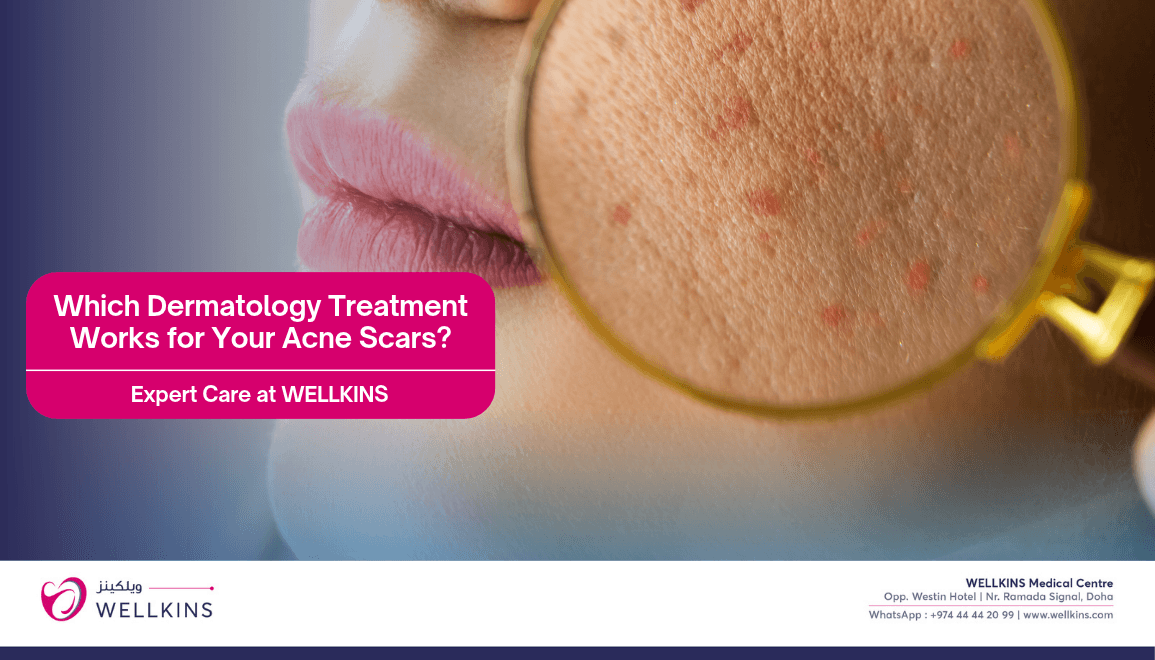
Some deep ice pick scars may be treated using a small amount of a specialised chemical solution placed directly into the scar. This is different from applying a chemical peel over the entire face.
The controlled treatment encourages remodelling within the narrow scar. More than one session may be needed and temporary crusting or pigmentation changes can occur.
This approach is not suitable for every patient. The dermatologist must consider scar depth, skin tone, healing history and the risk of post inflammatory pigmentation.
Subcision for Rolling or Tethered Scars
Subcision is a procedure used for selected depressed scars that are pulled down by fibrous bands. A sterile instrument is passed beneath the scar to release the tethering.
Releasing the band allows the skin surface to rise and creates a healing response that can support collagen formation. Bruising, swelling and temporary tenderness may occur.
Subcision is often combined with another treatment such as microneedling, PRP, resurfacing or a suitable filler. It is not appropriate for every scar pattern.
Fractional Laser Resurfacing
Fractional laser treatment creates controlled treatment zones in the skin while leaving surrounding areas available to support healing. It can stimulate collagen and improve selected acne scars and textural changes.
Different laser technologies have different depths, recovery periods and risks. The choice must take skin tone into account because some patients have a higher risk of temporary or persistent pigmentation changes.
Strict sun protection is particularly important before and after laser procedures in Qatar. Recent tanning, active acne, infection or certain medicines may affect treatment timing.
Platelet Rich Plasma for Acne Scars
Platelet rich plasma or PRP uses a concentrated portion of the patient’s own blood. It contains platelets and growth factors involved in tissue repair.
PRP may be used as an addition to another procedure such as microneedling rather than as a universal treatment for every scar. Its purpose may be to support healing and enhance the response to collagen stimulating treatment.
The benefit depends on scar type and the procedure with which it is combined. Patients should receive a realistic explanation of expected improvement before treatment.
WELLKINS provides PRP and microneedling as separate or selected combined approaches following dermatological assessment.
Dermal Fillers for Selected Depressed Scars
A suitable filler may be placed beneath selected depressed scars to replace lost volume and raise the skin surface. Rolling scars may respond better than narrow ice pick scars.
Results depend on the product, technique and scar characteristics. Many fillers are temporary and may require repeat treatment to maintain improvement.
Fillers may be combined with subcision when a scar is tethered. They should be administered by a qualified medical professional who can manage potential complications.
Punch Techniques for Deep Scars
Very deep ice pick or sharply defined boxcar scars may not respond adequately to surface resurfacing. A dermatologist may consider a minor procedure that removes, closes or elevates the individual scar.
These techniques target selected scars rather than treating the entire face. Resurfacing may be considered after healing to blend the treated area with the surrounding skin.
Suitability depends on scar number, size, location and the patient’s tendency to form raised scars.
Treatment for Raised Acne Scars
Raised scars require a different strategy because they result from excess collagen rather than collagen loss. Possible treatments may include:
- Prescription topical treatment
- Silicone based scar therapy
- Medication injected into the scar
- Selected laser procedures
- Cryotherapy in suitable cases
- Surgical treatment combined with measures to reduce recurrence
Keloids can return after treatment. A combined plan and realistic discussion about recurrence risk are important.
Why Combination Treatment Is Often Recommended
Many patients have ice pick, boxcar and rolling scars together. One treatment may improve surface texture but leave deeper or tethered scars largely unchanged.
A staged plan might first treat active acne and pigmentation. The dermatologist may then target deep scars before performing broader collagen stimulating or resurfacing treatment.
Combination treatment does not mean that every available procedure is necessary. Each step should have a clear purpose based on the patient’s scar pattern and priorities.
Acne Scar Treatment and Different Skin Tones
Every skin tone can develop acne scars, but the risk of post inflammatory pigmentation after a procedure may differ. Medium and darker skin tones may be more likely to develop temporary darkening after inflammation.
This does not mean that procedures cannot be performed. It means treatment depth, device settings, preparation and aftercare need to be selected carefully.
A dermatologist may recommend controlling pigmentation or preparing the skin before a procedure. Sun protection remains essential throughout the treatment course.
Why Sun Protection Matters in Qatar
Qatar has strong ultraviolet exposure throughout much of the year. Sun exposure can darken post inflammatory marks and increase the risk of uneven pigmentation after resurfacing procedures.
Patients undergoing acne scar treatment may be advised to use a suitable broad spectrum sunscreen, seek shade and avoid tanning. The exact product should be compatible with acne prone skin.
For more guidance, read the WELLKINS article on skin protection and other dermatology concerns in Qatar.
Who May Need to Delay Acne Scar Treatment?
A procedure may need to be postponed or modified if the patient has:
- Active inflammatory acne
- An active bacterial, viral or fungal skin infection
- Open wounds or significant irritation
- Recent tanning or sunburn
- A tendency to form keloids
- A recent procedure that has not fully healed
- Certain medical conditions affecting healing
- Pregnancy or breastfeeding when the planned treatment is unsuitable
- Recent use of medication that affects procedure safety
Patients should disclose current medicines, supplements, allergies and previous aesthetic treatments before beginning a scar programme.
What Happens During an Acne Scar Consultation?
The dermatologist examines the skin under suitable lighting and identifies each scar type. Photographs may be taken with consent to document the starting point and monitor progress.
The consultation may include questions about:
- Current acne activity
- Previous acne medicines
- Procedures already attempted
- History of keloid formation
- Skin sensitivity and pigmentation
- Daily sun exposure
- Available recovery time
- Budget and treatment priorities
- Expected level of improvement
A personalised plan can then be developed according to which scars are most noticeable and which treatments offer a reasonable balance of benefit, downtime and risk.
What Results Can You Realistically Expect?
Acne scar treatment aims to make scars less noticeable and improve the overall texture of the skin. Complete removal or perfectly smooth skin should not be promised.
Collagen based improvement develops gradually. Results may continue changing for several months after a treatment course as the skin remodels.
The final outcome depends on:
- Scar type and depth
- Number of scars
- Age of the scars
- Skin tone and healing response
- Control of active acne
- Treatment selected
- Adherence to aftercare
- Sun exposure
Standardised before and after photographs are more useful than judging the skin under different lighting conditions.
How Many Sessions Will You Need?
There is no universal session number. Superficial pigmentation may respond differently from deep and mixed scars.
Microneedling and other collagen stimulating procedures usually require a course because each session builds on the previous healing response. Targeted scar procedures may be performed over fewer visits but may still need broader resurfacing afterwards.
The treatment plan should be reviewed according to progress rather than committing every patient to the same number of sessions.
What Is the Recovery Like?
Downtime varies considerably. A superficial peel may cause mild dryness or flaking while deeper resurfacing may cause several days of redness, swelling and peeling.
Microneedling commonly causes temporary redness and sensitivity. Subcision may produce bruising and swelling while targeted chemical treatment may create small crusts over treated scars.
Patients should follow the procedure specific instructions provided by the dermatologist. Picking, rubbing or removing peeling skin can increase the risk of infection and pigmentation.
Skin Care After Acne Scar Treatment
Aftercare may include:
- Using a gentle cleanser as advised
- Applying the recommended moisturiser
- Using broad spectrum sun protection
- Avoiding direct sun and tanning
- Not picking or scratching treated skin
- Avoiding strong active products until permitted
- Temporarily avoiding swimming, steam rooms or intense exercise when advised
- Waiting before applying makeup according to the procedure
- Continuing acne prevention treatment when recommended
Contact the clinic if redness, pain or swelling is becoming worse rather than gradually settling.
Can Home Skin Care Remove Acne Scars?
Home skin care can support the treatment of acne, pigmentation and overall skin health. However, creams cannot fully release tethered rolling scars or lift deep ice pick scars.
Selected prescription products may improve mild texture and post inflammatory pigmentation over time. Daily sun protection can prevent marks from becoming darker and help maintain procedural results.
Harsh scrubs, home rollers and strong unregulated peels can cause irritation, infection and pigmentation. They may make the skin concern more difficult to treat.
How Can New Acne Scars Be Prevented?
Preventing new scars is an essential part of treatment. Helpful steps include:
- Treating acne early
- Following the prescribed acne plan consistently
- Avoiding squeezing, scratching or picking spots
- Seeking care for deep and painful acne
- Using suitable noncomedogenic skin products
- Protecting the skin from excessive sun exposure
- Attending follow up appointments
Acne that is causing nodules, cysts or early scarring should be assessed promptly rather than managed through repeated product changes.
When Should You See a Dermatologist?
Arrange a dermatology consultation when:
- Acne is leaving pits or raised scars
- Dark marks are not improving
- You are uncertain whether the concern is pigmentation or scarring
- You have active acne alongside existing scars
- Scars are painful or itchy
- Raised scars are becoming larger
- Home treatments have irritated the skin
- Scarring is affecting confidence or emotional wellbeing
- You want to understand the likely benefits and downtime of treatment
The Dermatology Department at WELLKINS Medical Centre provides assessment for active acne, post acne pigmentation and different types of acne scars.
Acne Scar Treatments at WELLKINS Medical Centre
WELLKINS provides dermatologist led treatment options including Dermapen microneedling, chemical peels and PRP for suitable patients.
The appropriate procedure is selected only after assessing the scar type, active acne, skin tone and treatment goals. Some patients may benefit from one treatment while others may need a staged combination approach.
Dr. Steffy Mariyam Reji, (Specialist Dermatologist – WELLKINS Medical Centre) provides medical and procedural care for acne, pigmentation and acne scarring.
Conclusion
Acne scars are not all the same. Ice pick scars are narrow and deep, boxcar scars have more defined edges and rolling scars create a broader wavy texture. Raised scars form because of excess collagen and need a different treatment strategy.
Microneedling, chemical peels, targeted scar procedures, subcision, fractional resurfacing, PRP and other options may be considered according to the individual scar pattern. Active acne should usually be controlled before scar treatment begins.
The goal is realistic improvement rather than complete scar removal. A dermatology consultation can identify which concerns are likely to respond and create a treatment plan that considers skin tone, downtime and pigmentation risk.
To book an appointment with Dr. Steffy Mariyam Reji at Wellkins Medical Centre: https://wellkins.com/drsteffy
To know more about the dermatology services at Wellkins Medical Centre: https://wellkins.com/dermatology
This article is intended for general education and does not replace an individual dermatology consultation. Acne scar treatment should be selected after assessing scar type, active acne, skin tone and medical history.