
Author: Dr. Rahmathunnisa AM, (Dentist – Wellkins Medical Centre)
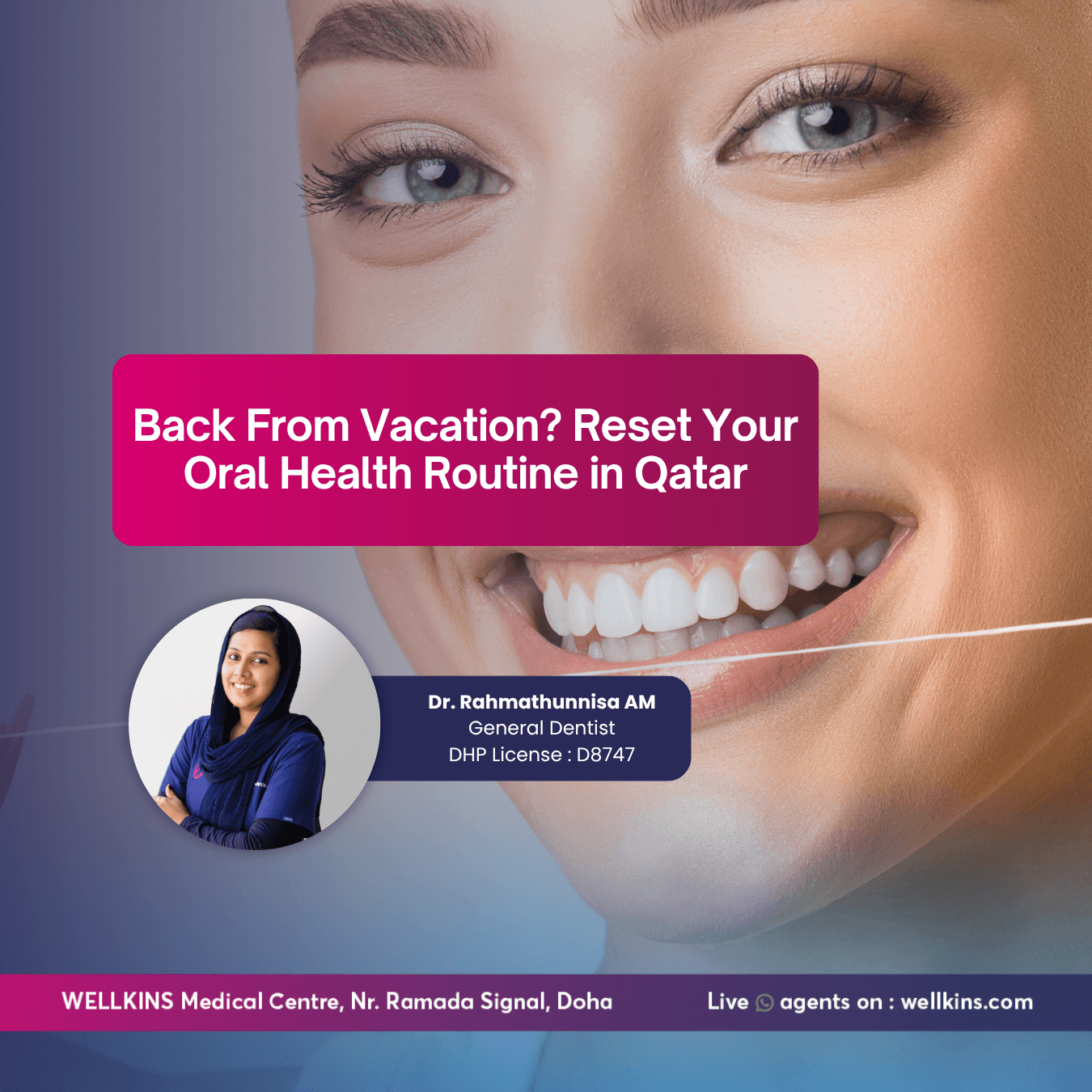
Back from vacation and getting back into your usual routine? Summer holidays often bring restaurant meals, sweet treats, cold drinks, late-night snacks and changes to regular brushing. These moments are part of a well-deserved break but your teeth and gums may need some extra attention when you return.
Travel can make even simple oral-care habits less predictable. A different schedule, long journeys or falling asleep after a busy day may mean brushing is rushed or occasionally missed. Frequent snacking can also expose the teeth to sugar and acid more often than usual.
As work, school and family routines restart in Qatar, this is a practical time to reset your dental habits. A few consistent steps can help protect enamel, control plaque and bring small symptoms to your attention before they become more difficult to manage.
Holiday habits can temporarily change how often we brush, what we eat and how frequently our teeth are exposed to sugar or acid. The best response is not guilt but a calm return to consistent daily care. Brush thoroughly with fluoride toothpaste, clean between the teeth and pay attention to symptoms such as persistent sensitivity, bleeding or swelling. If something feels different after your trip, a dental examination can identify the cause and help us recommend care that suits your individual oral health needs.
People Also Ask
How can I reset my dental routine after a vacation?
Restart brushing twice daily for about two minutes with fluoride toothpaste and clean between your teeth every day. Reduce frequent sugary snacks, choose water more often and arrange a dental assessment if you noticed pain, sensitivity or gum changes while travelling.
Can holiday eating cause cavities?
Eating more sugary foods does not automatically mean you will develop a cavity. However, frequent exposure gives plaque bacteria more opportunities to produce acids that weaken enamel so how often you snack and drink matters as well as what you consume.
Should I visit a dentist if my toothache has stopped?
A toothache that settles can still have an underlying cause such as decay, a cracked tooth or irritation around the gums. If the pain returns or was accompanied by swelling, pain when biting or temperature sensitivity, book a dental examination rather than waiting for it to become severe.
Why do my gums bleed after missing my routine?
Plaque can collect along the gumline when brushing and interdental cleaning are inconsistent. This may contribute to gum inflammation and bleeding but persistent or recurring bleeding should be assessed by a dentist to determine the cause.

Vacation habits can affect your teeth
During holidays, normal routines can easily change. You may eat more frequently, try unfamiliar foods, drink more soft drinks or juices and snack between meals more often. Each sugary exposure can support acid production by plaque bacteria while acidic drinks can directly soften the tooth surface.
The pattern matters because teeth need time between eating and drinking occasions for saliva to help neutralise acids. Sipping a sweet or acidic drink over several hours can create repeated exposure even when the total amount seems modest. This includes regular soft drinks, fruit juices, energy drinks and some flavoured beverages.
This does not mean you need to avoid every holiday favourite. Once your routine resumes, keep sweet foods and drinks mainly with meals and choose plain water between them. After acidic food or drink, rinsing with water and allowing saliva time to work is gentler than brushing immediately.
How Holiday Foods and Drinks Affect Your Smile
Sweet snacks feed the bacteria that contribute to tooth decay while acidic drinks may gradually wear the enamel surface. Returning to regular mealtimes and choosing water more often can reduce repeated exposure without making food feel restrictive.
In Qatar’s warm climate, keeping water readily available can also make it easier to stay hydrated without repeatedly reaching for sweetened or acidic drinks. Water does not replace brushing but it is a tooth-friendly everyday choice.
Don’t ignore that small dental problem
A minor toothache, sensitivity to hot or cold, bleeding gums or persistent bad breath can be easy to dismiss when you are busy catching up with work and family responsibilities. These symptoms do not always indicate a serious condition but they can be signs that your mouth needs professional attention.
Sensitivity may relate to exposed dentine, enamel wear, decay, a damaged filling or another issue. Bleeding gums can occur when plaque irritates the gumline while bad breath may have several dental or non-dental causes. An examination is the appropriate way to understand what is happening rather than trying to diagnose the problem from one symptom.
If discomfort started during your trip or has returned since you came home, avoid repeatedly postponing care. Seek prompt dental advice for ongoing pain, swelling, fever, a bad taste in the mouth, facial swelling or difficulty opening the mouth. Severe swelling that affects breathing or swallowing requires urgent medical attention.
Reset your oral-care routine
Getting back to good oral habits does not have to be complicated. Start with a routine that is realistic enough to repeat every day:
- Brush twice a day: Use fluoride toothpaste and brush for about two minutes each time. Clean every surface gently and pay particular attention to the gumline.
- Clean between your teeth: A toothbrush may not reach all the spaces where plaque collects. Use floss or an interdental aid recommended for your needs once a day.
- Watch frequent snacking: Keep sugary foods and drinks mainly to mealtimes instead of consuming them repeatedly throughout the day.
- Choose water more often: Water supports hydration and reduces repeated contact with sweet or acidic drinks.
- Don’t forget your tongue: Gently cleaning the tongue may support oral hygiene and fresher breath.
- Replace your toothbrush when needed: Change it when the bristles become worn, splayed or damaged because worn bristles may not clean as effectively.
If your routine slipped during vacation, avoid brushing aggressively to compensate. Firm scrubbing can irritate the gums and may contribute to wear over time. Gentle technique and daily consistency are more helpful than extra force.
Simple Steps for a Stronger Oral-Care Routine
Place your toothbrush, fluoride toothpaste and interdental cleaner where they are easy to see and use. Linking oral care to reliable parts of your morning and bedtime routines can make the habit easier to maintain after travel.
Parents can help children restart by brushing together, supervising technique when appropriate and keeping water accessible. A calm family routine is usually more sustainable than trying to change every holiday habit in one day.
A dental check-up can be a useful post-vacation reset
You do not have to wait for severe pain before visiting a dentist. A routine dental examination can help identify early signs of tooth decay, gum inflammation, worn restorations, cracked teeth and other oral health concerns. Your dentist can also assess whether professional cleaning or further treatment is appropriate.
If you have been away for several weeks or noticed a change in your oral health, returning to your daily routine can be a useful reminder to schedule an appointment. The timing of regular check-ups should be personalised because risk levels and oral health needs differ from one person to another.
For families, the post-vacation period is also an opportunity to make sure children have returned to regular brushing, sensible snacking and dental-care habits before school becomes busy. Mention any pain, sensitivity, mouth injury or change in eating to the dentist even if a child is no longer complaining about it.
Planning Your Dental Check-Up in Qatar
Before your visit, note when each symptom began, what triggers it and whether it has changed since your holiday. This information can help your dentist focus the examination and decide whether dental X-rays or other assessments are needed.
Bring details of any dental treatment received while travelling and mention changes to your health or medicines. Clear information helps your dentist plan safe and appropriate care.
Your holiday can end. Your healthy habits shouldn’t.
Vacations are meant to be enjoyed. There is no need to feel guilty about an occasional dessert, restaurant meal or favourite holiday drink. What matters most is the pattern you follow consistently after returning home.
As work, school and everyday life restart, focus on a manageable reset: brush twice daily, clean between the teeth, drink water often and limit repeated sugary or acidic exposures. These small actions support oral health throughout the year and make it easier to notice when something is not right.
Your teeth may have travelled with you but holiday habits do not have to come home. Enjoy the memories, return to your routine and keep your smile healthy.
If you have persistent tooth pain, sensitivity, bleeding gums, swelling or another dental concern, consult a dentist for a proper evaluation rather than delaying care.
To book an appointment at Wellkins Medical Centre: https://wellkins.com/drrahmath
To know more about the Dental services at Wellkins Medical Centre: https://wellkins.com/dental-care