
Author: Dr. Reneesh, (Consultant Orthopedician, Wellkins Medical Centre)
Returning to exercise after a break is one of the most common reasons patients arrive at the orthopedic clinic at Wellkins Medical Centre in Doha, Qatar. After weeks of travelling, relaxing and spending time with family, many of us are now getting back to our usual routines. Children are returning to school. Work schedules are becoming busy again. Gym sessions are restarting. Weekend activities are picking up.
Even simple routines such as walking more, driving longer distances or spending more time on your feet can suddenly place new demands on bones, joints and muscles that have been resting. For your musculoskeletal health, this transition matters far more than most people realize at the time.
As an orthopedic specialist in Qatar I see a predictable rise in knee pain, heel pain, lower back discomfort and muscle strains in the weeks that follow the summer travel period. The cause is almost never a single dramatic injury. It is a few weeks of reduced activity followed by an immediate attempt to train at the previous level. This blog explains what changes in your body during a break, how to rebuild activity safely in Qatar’s climate and the specific symptoms that mean it is time to seek specialist care.
The body does not lose fitness overnight and it does not regain it overnight either. Muscles, tendons and joints adapt to load gradually. When a patient goes from four weeks of sitting on flights and sofas straight back into an hour of heavy training, the tissue has simply not been prepared for that demand. Most of the knee pain, heel pain and lower back complaints I see after the travel season are not the result of one bad movement. They are the result of too much, too soon. A structured return of two to three weeks prevents the large majority of them.
People Also Ask
How soon can I return to my normal workout routine after a vacation?
Plan to rebuild over two to three weeks rather than resuming at full intensity in the first session. Start at roughly half your previous volume, keep the intensity comfortable, then increase gradually each week as long as you are recovering well between sessions. If you stayed reasonably active during a short break the return will be quicker. If you were largely sedentary for several weeks, take the full ramp. The principle is simple: give the tissue time to catch up with your intentions.
Why do my knees hurt after restarting exercise?
During a period of reduced activity the muscles that support and control the knee, particularly the quadriceps and hip stabilizers, lose conditioning. When you return to running, jumping or stair based training the joint absorbs loads that the surrounding muscles are no longer managing efficiently. This produces pain around or beneath the kneecap, or a deep ache after activity. In most cases it settles with a gradual build and targeted strengthening, but pain that persists, swells or causes the knee to give way requires an orthopedic assessment.
Is it normal to have back and neck pain after a long flight?
Stiffness and mild discomfort after prolonged sitting are common and usually settle within a few days once you return to normal movement. Long flights combine a fixed posture, limited movement and often awkward luggage handling, all of which load the spine and the surrounding muscles. What is not normal is pain that radiates down a leg or arm, pain associated with numbness, tingling or weakness, or pain that is worsening rather than improving after several days. Those symptoms warrant a proper evaluation.
Is it safe to exercise outdoors in Qatar during the hot months?
Outdoor activity during the hottest part of the day carries added risk, because heat increases physiological strain and brings on fatigue sooner, and fatigued muscles protect joints less effectively. Train during the early morning or the evening, hydrate before and during activity and move strenuous sessions indoors during the peak summer months. This matters most in the first weeks of a return to training, when your conditioning is already at its lowest point.
When should I see an orthopedic doctor for pain after returning to activity?
Seek assessment if pain persists beyond one to two weeks of sensible rest and gradual return, if it limits your daily activities, if there is visible swelling, if the joint feels unstable or gives way, if you experience numbness, tingling or weakness, or if the same pain returns predictably every time you become active. That last pattern in particular usually indicates an underlying issue that will not resolve on its own and is considerably easier to correct early.

1. Do Not Go From Rest to Full Activity Overnight
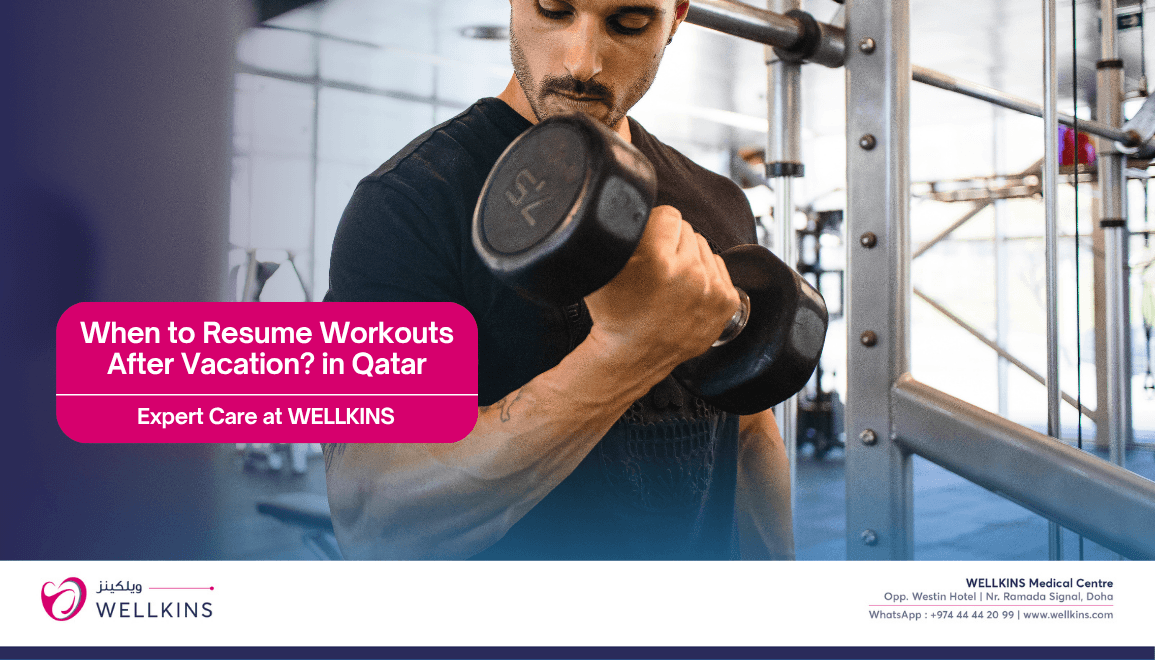
During a vacation our activity patterns change in ways we rarely track. We may walk less, exercise irregularly, sleep differently or spend long periods sitting during flights and road journeys. The body adapts to that lower demand, which is entirely normal. The problem arises on return, when the previous routine is resumed as though nothing changed, or when people try to compensate for lost time with unusually intense workouts. That is when preventable aches and injuries occur.
A. What Actually Changes During a Break
- Reduced Muscle Conditioning: Strength and endurance decline measurably within a few weeks of reduced training. The stabilizing muscles around the knee, hip and shoulder are usually affected first, which is why those joints tend to complain first.
- Reduced Tendon Load Tolerance: Tendons adapt more slowly than muscles do. They need a longer runway before they tolerate running, jumping and heavy lifting again, which explains why Achilles and knee tendon pain appear early in a return to training.
- Prolonged Static Postures: Long flights, extended road journeys and hours of sitting leave the hips, hamstrings and spinal muscles stiff and poorly prepared for sudden demand.
- Disrupted Sleep and Recovery: Irregular sleep during travel slows tissue recovery, which matters at exactly the point when you are asking the body to adapt to new loads.
B. Why the First Two Weeks Carry the Most Risk
A sudden increase in physical activity places extra stress on muscles, tendons, joints and the spine at precisely the moment their capacity is lowest. The gap between what you are asking the body to do and what it is currently prepared to do is widest in the first two weeks back. Knee pain after restarting exercise, ankle and foot problems, lower back discomfort and muscle strains are the predictable consequences.
The answer is not to avoid activity. The answer is to return to it gradually.
2. Common Complaints We See After a Period of Rest
The five most frequent presentations at the orthopedic clinic at Wellkins Medical Centre following a break from routine activity are as follows.
- Knee Pain on Restarting Exercise: Typically felt around or beneath the kneecap, or as a dull ache after running and stair use. It reflects reduced muscular support around a joint that is being loaded at the previous intensity.
- Heel, Ankle and Foot Pain: Often linked to a sudden jump in walking or running volume, unsupportive holiday footwear or a rapid return to impact activity on hard surfaces.
- Lower Back Discomfort: Frequently traced to prolonged sitting during travel, heavy luggage handling or an abrupt return to lifting and gym work without preparation.
- Muscle Strains: Usually affecting the calf, hamstring or shoulder, occurring when intensity is restored before conditioning is.
- Neck and Shoulder Stiffness: Common as office hours resume, particularly where the workstation setup was never corrected in the first place.
Most of these settle with a sensible return and time. A minority do not, and those are the ones worth bringing to an orthopedic specialist early rather than late.
3. Start Moving, But Start Smart
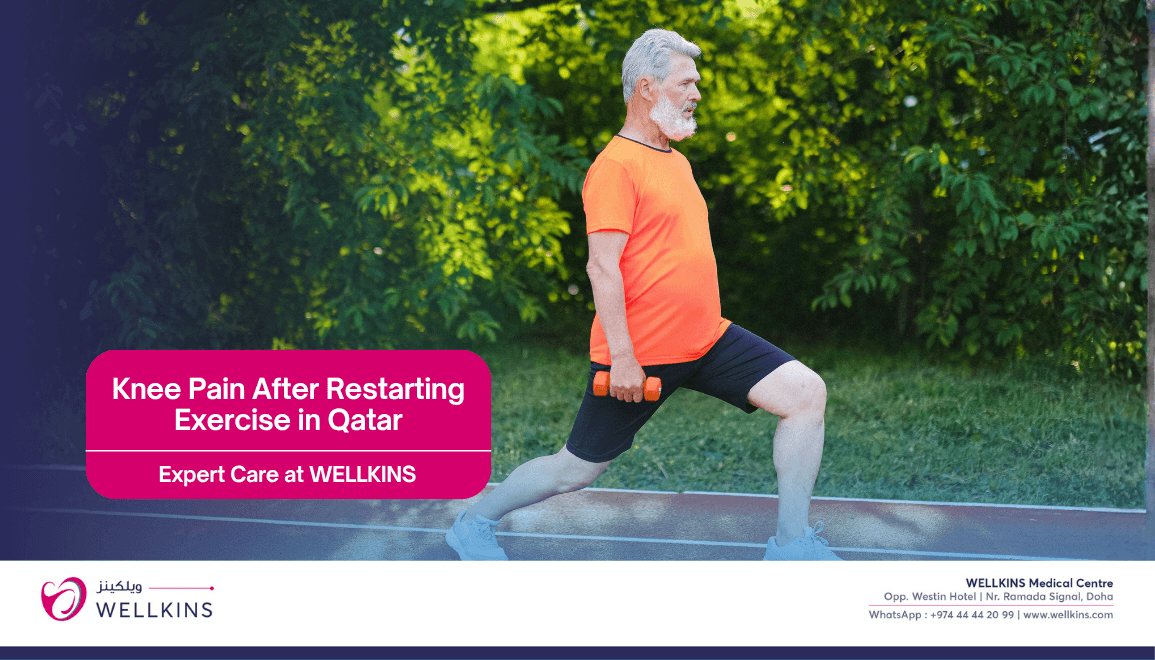
If you are returning to exercise after a break, give your body time to adjust. The sequence below is what I recommend to most patients restarting training.
A. Warm Up Properly Before Every Session
- Raise the Temperature Before You Raise the Load: Begin each session with a gradual rise in heart rate rather than going straight into the main activity, then move progressively through the joints you are about to load. This prepares muscle and tendon for work and reduces the risk of strain.
- Cool Down Afterwards: A short period of easy movement and stretching at the end of a session helps the transition back to rest, particularly in the early weeks when you are asking the body to adapt quickly.
B. Walk Before You Run
- Reintroduce Load at a Manageable Level: Walking is the simplest and safest way to restart regular movement. It rebuilds the habit of daily activity and gives you an honest reading of how your body is responding before you add impact.
- Use the Cooler Hours: In Doha, the shaded loops at Aspire Park and the Corniche walkway are practical options during the early morning and evening.
C. Build Over Three Weeks Rather Than One Session
- Week One, Reintroduce Movement: Brisk walking, mobility work and light bodyweight exercise at roughly half your previous volume. Avoid running, jumping, heavy lifting and competitive sport entirely.
- Week Two, Rebuild Duration: Extend your sessions at a comfortable intensity and add two strength sessions covering the major muscle groups. Do not add speed or load in the same week that you add time.
- Week Three, Rebuild Intensity: Reintroduce running, heavier resistance or sport specific work, progressing session by session rather than testing your maximum.
- Week Four Onward, Maintain: Settle into a consistent weekly routine spread across several days. The World Health Organization recommends 150 to 300 minutes of moderate intensity activity each week, or 75 to 150 minutes of vigorous activity, plus muscle strengthening on two or more days. That is the destination, not the starting point.
D. Do Not Simply Push Through Pain
- Normal Adaptation: Mild muscle soreness that eases within a day or two is a normal part of adapting to activity and is not a reason to stop.
- A Signal to Stop: Sharp pain, pain localized to a joint, pain accompanied by swelling and pain that worsens during the session are different signals entirely. Pain is not always something you should push through.
4. Your Daily Routine Matters Too
Orthopedic health is not only about sports and gym workouts. Long hours at a desk, poor sitting posture, prolonged driving and insufficient movement across the day all contribute to musculoskeletal discomfort, often more than a single weekly gym session ever does. As work and school routines become busy again, small habits make a measurable difference.
- Take regular movement breaks during long periods of sitting.
- Pay attention to your posture while working and set your screen and chair height properly.
- Use appropriate footwear for the activity you are actually doing rather than whatever is nearest the door.
- Avoid suddenly lifting heavy loads after a long period of inactivity.
- Stay active across the week rather than relying on one intense weekend workout.
- Give your body adequate rest between demanding activities.
5. Exercising Safely in Qatar’s Climate
Qatar’s hot climate is a genuine variable in how a return to exercise goes, not a footnote. Heat places additional stress on the body, particularly during strenuous physical activity and it compounds the demand you are already placing on muscles and joints that are returning to work. Outdoor training at midday during the summer months raises cardiovascular strain and accelerates fatigue, and fatigued muscles protect joints poorly.
Staying well hydrated and avoiding strenuous exercise during the hottest part of the day are important precautions, consistent with World Health Organization guidance on physical activity. Air conditioned gyms, indoor courts, early morning walks and evening sessions are the practical alternatives available across Doha.
Qatar National Sport Day in February is a further point worth planning for. Every year we see patients who have not trained for months take part in a full day of sport and present afterwards with knee, ankle and muscle injuries. The same rule applies there as anywhere else: prepare in the weeks beforehand rather than treating the day itself as the starting line.
6. What About Those Aches That Started During Vacation?
Travel itself contributes to musculoskeletal discomfort more often than people expect. Long flights and extended periods of sitting leave the back, neck and legs feeling stiff. Carrying luggage, walking extensively during sightseeing or trying unfamiliar activities can place unexpected stress on joints and muscles that are not conditioned for them.
Most minor aches improve with appropriate rest and a gradual return to normal activity. Persistent or worsening pain is a different matter and should not be ignored.
7. When to Seek an Orthopedic Assessment

- Pain That Persists or Worsens: Discomfort that has not improved after one to two weeks of rest and a graded return to activity.
- Pain That Limits Daily Function: Difficulty walking, climbing stairs, sleeping, driving or working because of the symptoms.
- Swelling or Instability: Visible swelling around a joint, or a sense that the knee, ankle or shoulder is giving way.
- Numbness, Tingling or Weakness: Symptoms suggesting nerve involvement, which should always be assessed promptly rather than monitored at home.
- Pain That Recurs With Every Return to Activity: A repeating pattern usually points to an underlying issue that rest alone will not resolve.
Wellkins Medical Centre provides orthopedic consultations alongside on site radiology and physiotherapy at The WELLKINS Building, opposite the Westin Hotel, Ramada Signal, Doha, so assessment, imaging and rehabilitation can be arranged in one place.
Prevention Tips
- Plan a two to three week ramp back into training instead of resuming at full intensity.
- Warm up before every session and allow time to cool down afterwards.
- Increase either duration or intensity in a given week, not both at once.
- Build strength around the knees, hips and core before adding impact activity.
- Choose supportive footwear appropriate to the activity you are doing.
- Hydrate well and train during the cooler parts of the day in Qatar.
- Spread activity across several days rather than loading it all into the weekend.
- Treat new pain as information rather than as an obstacle to push through.
The goal is not simply to get back to your routine. It is to get back to it safely. A vacation gives us an opportunity to rest and recharge and returning to everyday life should not mean putting unnecessary stress on the body in an attempt to catch up on what was missed.
Whether you are heading back to the office, getting children ready for school, returning to the gym or simply becoming more active again, listen to your body and give it time to adapt. Move regularly. Build gradually. Do not ignore persistent pain. If you have ongoing joint, muscle, bone or spine related symptoms, consult an orthopedic specialist for an appropriate evaluation and treatment plan.
To book an appointment with Dr. Reneesh at Wellkins Medical Centre: https://wellkins.com/drreneesh
To know more about the Orthopedic services at Wellkins Medical Centre: https://wellkins.com/orthopedics