


Author: Dr. Nikitha Fernandez, (Clinical Psychologist – Wellkins Medical Centre)
“Just five more minutes.”
If you are a parent you have probably heard this more times than you can count. “Just one more game.” “I am almost done.” “Everyone else is online.” Five minutes often becomes an hour. Before you know it the day is over, homework is unfinished, dinner has gone cold and everyone ends up frustrated.
As a Clinical Psychologist I meet many parents in Qatar who ask me the same question: “Is my child addicted to screens?” The truth is that technology is not the enemy. Our children are growing up in a world where learning, friendships, entertainment and even school assignments happen through screens. The challenge is not teaching children to avoid technology. It is teaching them how to use it without letting it take over their lives. That distinction matters enormously and it shapes everything about how we approach this conversation as parents and clinicians.
One thing I have learned from working with children and teenagers is that children rarely become attached to screens for no reason. Sometimes a screen becomes a place where they feel successful when they do not feel successful elsewhere. Sometimes it is where they escape from loneliness or from something difficult at school or at home. Sometimes it is simply because they are bored and screens are always available. If we only take the device away without understanding why our child needs it so much, we are treating the symptom rather than the cause. The most effective work I do with families around screen use always starts with that question: what is the screen doing for this child that nothing else currently is?
People Also Ask
How much screen time is too much for children in Qatar?
The World Health Organization recommends no screen time for children under two years other than video calling, no more than one hour per day for children aged two to four and consistent limits for school-age children with a focus on the quality and content of screen use rather than time alone. In Qatar’s specific context where the intense summer heat reduces outdoor activity and schools use digital learning platforms extensively, the total daily screen exposure for many children significantly exceeds these thresholds. The most useful question is not simply how many hours but what the screen time is replacing and whether it is affecting sleep, physical activity, social connection or emotional wellbeing.
What are the signs that my child’s screen use has become a problem?
The most consistent signs that screen use is becoming unhealthy include becoming angry or distressed when asked to stop, staying awake late gaming or scrolling, losing interest in hobbies and activities they previously enjoyed, spending less time with family, struggling to concentrate at school, becoming anxious when they cannot access their device and consistently choosing screens over spending time with friends in person. One sign alone is not sufficient to conclude there is a problem. When several occur together consistently over weeks it is worth taking a closer look at what is driving the pattern.
How do I limit my child’s screen time without constant arguments?
The most effective approach to reducing screen conflict is to build clear consistent expectations before conflict arises rather than negotiating in the moment when a child is already engaged with a screen. Family agreements about screen-free times, charging devices outside the bedroom at night and replacing screen time with specific enjoyable alternatives are more effective than simply removing devices without substitution. Children are significantly more cooperative when they feel understood rather than controlled, which means conversations about why you are setting limits and curiosity about what they enjoy about their screen use both reduce the resistance that accompanies purely punitive approaches.
When should I seek professional help for my child’s screen use?
Professional support is worth seeking when screen use is consistently affecting your child’s sleep, school performance, friendships, behavior or emotional wellbeing over a sustained period. It is also worth seeking when you suspect the screen use is how your child is coping with something deeper including anxiety, social difficulties, loneliness or low self-esteem and when the approaches you have tried at home are not producing meaningful change. Therapy in this context supports both the child and the parents, helping the family understand what is driving the behavior and build healthier routines together.

A Childhood That Looks Very Different

Think back to your own childhood. After school you probably went outside to play. You knocked on a friend’s door instead of sending a message. You came home when the streetlights came on. Today’s children are growing up in a completely different world.
Instead of playgrounds many meet their friends through online games. Instead of waiting for cartoons on television they have endless videos available instantly. Technology has changed childhood in ways that are genuine and irreversible. And while it has created incredible opportunities for learning, connection and creativity it has also created new challenges for families navigating a landscape that no previous generation of parents had to manage.
In Qatar this shift is particularly pronounced. Schools use digital learning platforms extensively. Families separated across continents stay connected through smartphones. The intense heat during much of the year means children spend significantly more time indoors than their peers in cooler climates, making screens an easy and often default source of entertainment and social connection. Screens are now part of childhood. But they should not replace it.
What Do the Numbers Tell Us?
Research shows that children and teenagers are spending more time on screens than ever before. According to the World Health Organization too much sedentary screen time is linked to poorer sleep, reduced physical activity and lower overall wellbeing in children. Many international studies show that adolescents spend several hours every day using phones, tablets, gaming consoles and social media, often well beyond what experts recommend for recreational screen use.
Here in Qatar, technology is woven into every aspect of everyday life. The same devices that deliver school assignments in the morning deliver gaming and social media in the evening and the distinction between productive and recreational screen time is genuinely difficult for children to manage without adult guidance. The numbers reflect a global pattern but Qatar’s specific combination of indoor lifestyle, digital infrastructure and the particular pressures on expatriate children navigating both academic expectations and social lives across online platforms makes the challenge locally specific as well as universal.
When Should Parents Be Concerned?
Many parents tell me: “My son loves gaming” or “My daughter is always on social media.” Enjoying games or online connection does not automatically mean a child has a problem with screen use. The real question is always: what is screen time replacing?
Is it replacing sleep? Family conversations? Outdoor play? Reading? Friendships that happen face to face? If the answer is yes to several of these it is time to pay attention rather than dismiss the concern as a normal part of modern childhood. The goal is not to eliminate screen time. It is to ensure that the fundamentally important developmental experiences of childhood, physical play, face-to-face connection, boredom and its creative resolution, rest and family relationship, are not being consistently displaced by screen engagement.
Sometimes the Screen Isn’t the Real Problem
Children rarely become attached to screens for no reason. Sometimes a screen becomes a place where they feel successful when school or social life has not been offering that feeling. Sometimes it is where they escape from loneliness, from anxiety about friendships or from the social complexity of school. Sometimes it is how they cope with bullying or with low self-esteem in a context where the online environment offers a fresh start and a different social identity. Sometimes it is simply because they are bored and screens are available at every moment of the day.
If we only take the device away without understanding why our child needs it so much we are treating the symptom rather than the cause. The behavior changes temporarily and the underlying need remains unaddressed. In clinical practice the most meaningful and most lasting changes in children’s screen use come from understanding what need the screen is meeting and finding healthier ways to meet it rather than from simple restriction alone.
Signs That Screen Use May Be Becoming Unhealthy
You may notice your child showing some of the following signs. It is important to look at the overall pattern rather than any single indicator in isolation.
- Becoming angry or significantly distressed when asked to stop using a device, beyond the ordinary reluctance any child would show.
- Staying awake late into the night scrolling or gaming, with visible fatigue and mood effects the following day.
- Losing interest in hobbies, sports or activities they previously enjoyed and showed enthusiasm for.
- Spending noticeably less time with family members or withdrawing from family life.
- Struggling to concentrate at school or completing homework to a lower standard than previously.
- Becoming anxious or distressed when they do not have access to their phone or device for normal periods.
- Consistently choosing screen engagement over spending time with friends in person when both options are available.
One sign alone does not indicate a problem. When several occur together and consistently over a period of weeks it is worth paying attention and having a conversation rather than waiting to see if things improve on their own.
Why Is It So Hard for Children to Stop?
Parents often ask: “Why cannot they just put the phone down?” The answer lies in how the apps and games children use are specifically designed. Imagine reading a book where every few seconds someone handed you a surprise gift. That is what many apps and platforms are designed to do. Notifications, likes, messages, rewards and new videos each give the brain a small burst of dopamine-driven excitement that encourages children to keep coming back for the next hit.
For young brains that are still developing the prefrontal cortex systems responsible for impulse control and delayed gratification, resisting that pull is genuinely and neurologically difficult. This is not a character weakness in a child who cannot stop gaming. It is a young brain competing against technology that has been engineered specifically to prevent disengagement. That is why children need adults to help them build healthy habits, not because they are weak but because they are still developing the internal regulation capacity that most adults take for granted.
Setting Limits Without Constant Battles
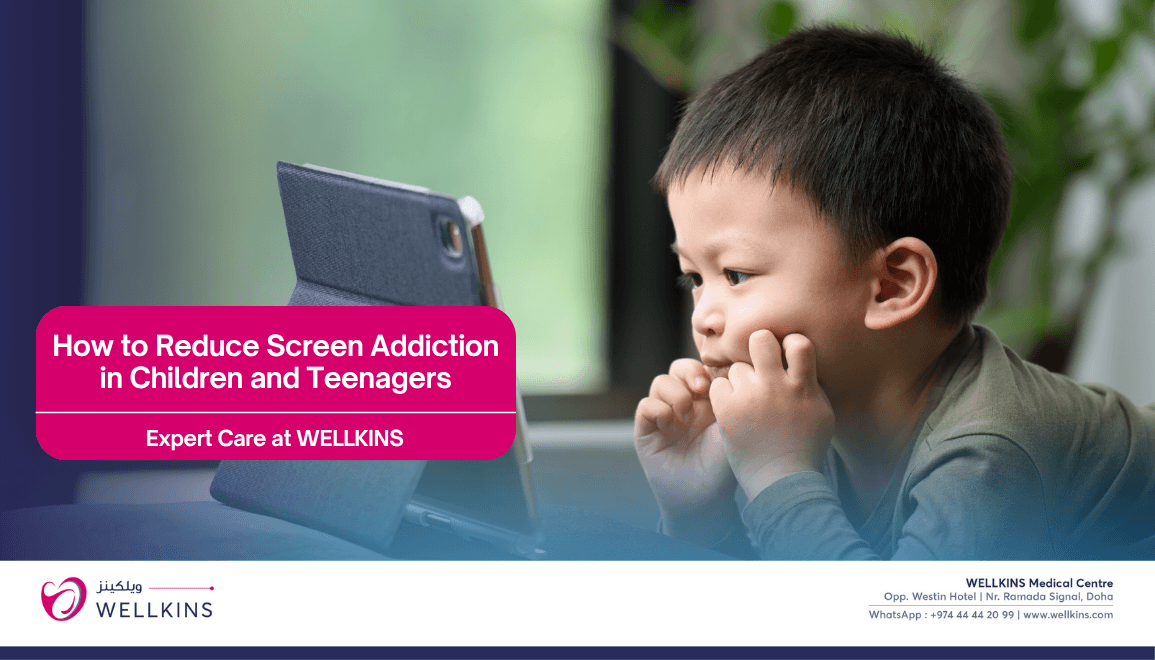
The goal of setting screen limits is not to win arguments. It is to build healthy habits that serve children well beyond the current device and the current platform. The following approaches work well for many families navigating this challenge in Qatar’s specific context.
Make Family Time Screen-Free
Meals, car journeys and the thirty minutes before bedtime are the easiest and most valuable windows to protect as screen-free family time. Even thirty minutes of uninterrupted conversation each day strengthens family relationships in ways that have a measurable protective effect on children’s emotional wellbeing. In Qatar’s family-focused culture this aligns with values that are already present. Creating the structural conditions for those connections to happen is the practical work.
Let Your Child See You Disconnect Too
Children notice far more than we realize. If we ask them to put away their phones while we continue scrolling through ours the message becomes confusing and the request loses its moral authority. Healthy digital habits begin with adults. When parents model the boundary they are asking children to maintain it shifts from a rule that is enforced to a value that is shared.
Replace Screen Time: Do Not Just Remove It
Children are much more willing to leave their screens when something genuinely enjoyable takes its place rather than simply being required to sit with nothing. Go for a walk together. Bake something. Play a board game. Visit one of Qatar’s parks or corniche areas during the cooler months. Read together. Connection is almost always the most effective replacement for screen time because it addresses the underlying need for engagement and belonging that screens so efficiently simulate.
Be Curious Not Controlling
Instead of saying “You have been on your phone all day” try asking: “What do you enjoy most about that game?” or “Who are you talking to?” or “What is happening in your favorite series right now?” These conversations help children feel understood rather than judged and they give parents valuable information about what the screen is doing for the child that informs a much more effective response than simple restriction.
When Is It Time to Seek Help?
If your child’s screen use is affecting their sleep, learning, friendships, behavior or emotional wellbeing over a sustained period it may be helpful to speak with a mental health professional. Sometimes the issue is not the screen itself. The screen is simply where the child has gone to cope with something else that has not yet been named or addressed. Anxiety, social difficulties, academic pressure, family stress and loneliness are among the most common drivers of escalating screen use in children and adolescents in Qatar’s clinical population.
Therapy in this context helps us understand what is happening underneath the behavior and supports both children and parents in building healthier routines together. The conversation in the therapy room is never about the device. It is always about the child and what they need that they are currently not finding anywhere else.
A Message to Every Parent
If you have found yourself arguing about phones, tablets or gaming you are not alone. Almost every family in Qatar is navigating some version of this challenge. Parenting in today’s digital world is genuinely different from parenting twenty years ago and there is no established playbook for it.
There is no perfect parent. There is no perfect child. The goal is not to raise children who never use screens. The goal is to raise children who know that life is bigger than a screen. Who know the joy of real conversations, real friendships and real adventures. Because years from now your child probably will not remember every video they watched or every game they played. But they will remember the evenings you laughed together, the bedtime stories, the family dinners, the road trips and the moments when they felt truly seen. And those are the memories that shape a childhood.
Final Thoughts

Technology will continue to evolve but one thing will never change: children need connection more than they need Wi-Fi. As parents we cannot control every app, every game or every trend. But we can create homes where conversation is valued, where relationships come first and where technology has its place rather than the whole space.
Helping our children build a healthy relationship with screens today is one of the most important investments we can make in their emotional wellbeing tomorrow. If you need support in navigating this for your family the clinical psychology team at Wellkins Medical Centre is here to help.
To book an appointment at Wellkins Medical Centre: https://wellkins.com/nikitha
To know more about the clinical psychology at Wellkins Medical Centre, Doha: https://wellkins.com/mentalhealth