
Author: Dr. Nikitha Fernandez, (Clinical Psychologist – Wellkins Medical Centre)
“I know it does not make sense… but I cannot stop.”
This is something I hear quite often from people living with Obsessive-Compulsive Disorder. Many people think OCD is simply about being neat, organized or liking things in a particular way. It is not. Real OCD is much more than wanting a clean room or a color-coded wardrobe. It is waking up every day with thoughts you never wanted, spending hours trying to reduce anxiety and feeling trapped in a cycle that seems impossible to escape.
The most painful part? Many people with OCD know that their fears are irrational. But knowing that does not make the anxiety disappear.
If you or someone you love is struggling with OCD, the good news is this: OCD is one of the most treatable mental health conditions when the right therapy is provided. At Wellkins Medical Centre in Doha, individuals living with OCD are supported through evidence-based psychological treatment by a clinical psychologist who understands both the clinical complexity of the condition and the specific pressures of living with it in Qatar’s demanding environment.
One of the things I want people in Qatar to understand is that OCD is not a personality trait or a quirk. It is a recognized psychological condition that causes genuine suffering and that responds extremely well to the right treatment. The people who come to me with OCD have often spent years hiding their rituals, dismissing their own distress or believing they simply have to live this way. They do not. With ERP therapy delivered in a safe and collaborative therapeutic relationship, recovery is not just possible. It is the expected outcome for most people who commit to the process.
People Also Ask
What is OCD and how is it different from being organized or particular?
OCD is a clinical condition involving unwanted intrusive thoughts called obsessions that cause significant anxiety and repetitive behaviors or mental rituals called compulsions that are performed to relieve that anxiety temporarily. It is fundamentally different from a preference for order or cleanliness because the person with OCD does not want the thoughts and cannot simply choose to stop them or to resist the compulsions without professional support. The distress is genuine, the time consumed is significant and the interference with daily functioning is real. A person who likes a tidy desk is not expressing OCD. A person who cannot leave the house until they have checked every appliance fifteen times and is late for work daily is describing it.
What is ERP therapy and does it work for OCD?
Exposure and Response Prevention therapy is the gold standard psychological treatment for OCD and is recommended by international clinical guidelines including NICE in the UK and the American Psychological Association. ERP works by gradually and safely exposing the person to situations that trigger their obsessive anxiety while supporting them to resist performing the compulsion that would normally follow. Over repeated practice the brain learns that the feared outcome does not occur and the anxiety diminishes naturally without the ritual. Research consistently shows that ERP produces significant reductions in OCD symptoms and meaningful improvement in quality of life for the majority of people who complete treatment.
Is OCD common in Qatar?
OCD affects approximately two to three percent of people worldwide meaning roughly one in every forty people will develop it at some point in their lives. In Qatar this translates to a significant number of individuals across every community including students, professionals, parents and children. Awareness of OCD in Qatar has grown substantially over the past decade and as more people seek psychological support it has become clear that OCD affects individuals from every nationality, profession and background in Doha. Cultural and religious themes including Scrupulosity OCD involving fear of offending God are particularly relevant presentations within Qatar’s diverse faith communities.
When should I seek help for OCD?
You should consider speaking with a clinical psychologist if your intrusive thoughts feel impossible to control, if rituals are taking more than one hour each day, if anxiety from OCD is affecting your work, relationships or studies, if you are avoiding situations or places because of OCD-related fears or if you feel trapped in repetitive behaviors despite understanding intellectually that they are not necessary. You do not need to wait until symptoms become severe. Early intervention consistently produces better outcomes and the sooner the right treatment begins the shorter the path to meaningful recovery.

OCD: More Common Than Most People Think

Obsessive-Compulsive Disorder affects millions of people worldwide. According to the World Health Organization, OCD is among the leading causes of disability related to mental health in young adults. Research suggests that around two to three percent of people worldwide will experience OCD at some point in their lives. That means approximately one in every forty people may develop OCD during their lifetime.
In Qatar, awareness of OCD has increased significantly over the past decade. As more people seek psychological support we are seeing that OCD affects individuals from every background including students, healthcare professionals, engineers, teachers, business owners, parents and children. OCD does not discriminate by age, gender, nationality or profession. The person struggling with it in Doha may be a nurse at the end of a long shift, a student preparing for exams, a parent managing a household or a corporate professional outwardly performing at their highest level while privately consumed by the condition.
What Exactly Is OCD?
OCD consists of two interconnected parts that together create a cycle of distress that is difficult to break without appropriate clinical support.
Obsessions
These are unwanted, repetitive thoughts, images or urges that create intense anxiety. Examples include:
- “What if I accidentally hurt someone?”
- “What if I forgot to lock the door?”
- “What if my hands are contaminated?”
- “What if I offended God without realizing it?”
These thoughts feel intrusive and deeply distressing. People with OCD do not want these thoughts. In fact they often find them frightening and are profoundly disturbed by the fact that their own mind is producing them. This is one of the most important and most misunderstood aspects of OCD: the person is not expressing a desire or an intention through their obsessions. They are experiencing an involuntary intrusion that their brain cannot dismiss.
Compulsions
Compulsions are behaviors or mental rituals performed to reduce the anxiety caused by obsessive thoughts. These may include:
- Repeated hand washing
- Checking doors or appliances again and again
- Repeating prayers or words silently
- Counting rituals
- Seeking reassurance from family
- Avoiding situations that trigger anxiety
These behaviors provide temporary relief. But unfortunately they also strengthen OCD over time. Each compulsion confirms to the brain that the threat was real and that the ritual was necessary, making the next obsessive thought more powerful and the urge to perform the compulsion more urgent.
What Does OCD Feel Like?
Imagine your brain acting like a smoke alarm. A normal smoke alarm rings when there is real danger. With OCD the alarm keeps ringing even when there is no fire. The person knows the house is not burning. Yet their brain keeps saying: “Check one more time.” “Wash your hands again.” “What if something terrible happens?”
Living like this every day can be profoundly emotionally exhausting. The person is not overreacting. They are responding to a nervous system that has learned to treat harmless things as dangerous and that cannot yet be calmed through logic alone. Understanding this is essential both for the person living with OCD and for the people around them who may not understand why reassurance does not seem to help for more than a few minutes.
Common Types of OCD
Many people are surprised to learn that OCD can look very different from person to person. The specific content of the obsessions varies widely but the underlying mechanism is consistent across all presentations. Some common forms seen in clinical practice at Wellkins include the following.
- Contamination OCD: Fear of germs, illness, chemicals or dirt. Compulsions typically involve repeated hand washing, avoidance of surfaces or objects perceived as contaminated and elaborate cleaning rituals.
- Checking OCD: Repeatedly checking doors, gas stoves, locks, emails or switches. The person knows they checked moments ago but cannot resist the urge to verify again because the doubt remains.
- Harm OCD: Fear of accidentally harming yourself or someone else despite having no desire to do so. This presentation is often particularly distressing because the person fears their own thoughts and may withdraw from loved ones to avoid the anxiety of their presence.
- Religious or Moral OCD (Scrupulosity): Excessive guilt or fear of offending God or behaving immorally. In Qatar’s faith-diverse population this presentation is clinically significant and requires a psychologist who understands the distinction between sincere religious practice and OCD-driven compulsive ritual.
- Relationship OCD: Constant doubts about the quality of a relationship or the depth of one’s feelings despite genuinely loving their partner. The person analyses every interaction for evidence that something is wrong.
- Symmetry and Ordering OCD: Feeling that everything must be arranged “just right” and experiencing significant distress rather than simple preference when it is not.
What Causes OCD?
There is no single cause. Research suggests OCD develops because of a combination of factors that vary between individuals.
- Genetics: People with a family history of OCD may have a higher risk of developing it themselves. OCD tends to run in families though having a family member with OCD does not mean a person will develop it.
- Brain Function: Studies have shown differences in the brain circuits involved in decision-making, habit formation and emotional regulation in people with OCD. These differences help explain why logic and reassurance alone are insufficient to interrupt the OCD cycle and why targeted psychological treatment produces lasting neurological change.
- Learning Experiences: Stressful life events, trauma or certain environmental experiences may contribute to the onset of symptoms in individuals who are already vulnerable. Major life transitions including relocating to a new country, beginning a demanding new role or navigating significant personal stress can be triggers for the first appearance of OCD symptoms in predisposed individuals.
Importantly, OCD is not caused by being weak, lazy or lacking willpower. It is a recognized psychological condition with a clear neurological and psychological basis that responds to evidence-based treatment.
Living With OCD in Qatar
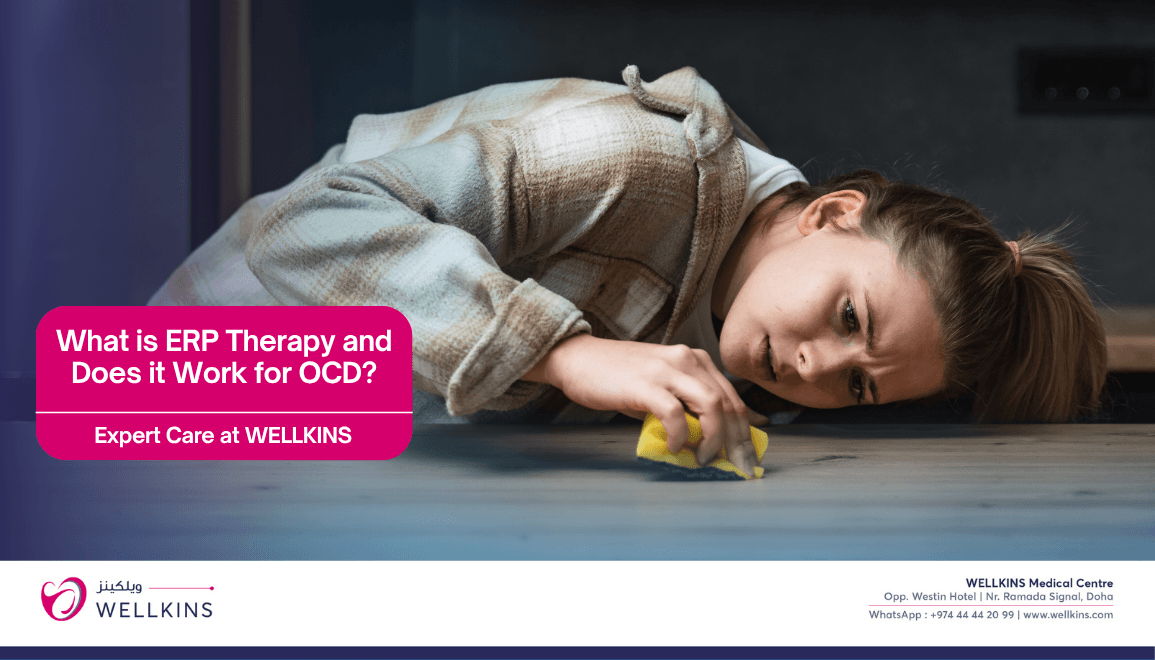
Life in Qatar can be fast-paced and demanding. Professionals often balance demanding careers, family responsibilities, financial commitments and adjusting to life away from home. For someone with OCD these everyday pressures can sometimes make symptoms more noticeable, more frequent and harder to manage.
Unfortunately many people delay seeking help because they worry about being judged or misunderstood. Some spend years hiding their rituals from family, friends or colleagues. In Qatar’s diverse multicultural communities where mental health stigma remains a real barrier across many cultural and national backgrounds, reaching the point of seeking support can require overcoming significant internal and external resistance.
But OCD is nothing to be ashamed of. It is not a reflection of character, faith or personal failure. The earlier treatment begins the better the chances of recovery and the smaller the portion of a person’s life that OCD gets to consume.
The Gold Standard Treatment: ERP Therapy
One of the most effective treatments for OCD is Exposure and Response Prevention therapy. It is considered the gold standard psychological treatment for OCD and is recommended by international clinical guidelines.
At first ERP may sound intimidating. But it is actually about helping your brain learn something very important: anxiety naturally decreases without performing compulsions.
How Does ERP Work?
Imagine someone has contamination OCD. They may feel they must wash their hands repeatedly after touching a door handle. In ERP therapy the person is gradually and safely exposed to situations that trigger anxiety. Instead of immediately washing their hands they learn with guidance from their psychologist to delay or resist the compulsion.
Initially anxiety rises. But over time something remarkable happens. The brain begins to realize: “Nothing dangerous happened.” The anxiety naturally comes down. With repeated practice the brain slowly stops treating harmless situations as dangerous.
ERP is not about forcing someone into frightening situations. It is a carefully planned collaborative process that moves at a pace the individual can manage. The exposure hierarchy is built together with the psychologist beginning with situations that produce manageable anxiety and progressing gradually as the person’s confidence and tolerance build. Every step is taken with consent and collaboration.
Does ERP Really Work?
Yes. Research consistently shows that ERP is one of the most effective psychological treatments for OCD. Many people experience a significant reduction in symptoms and improved quality of life when they complete treatment.
The goal is not to eliminate every intrusive thought. The goal is to help people stop living in fear of those thoughts. OCD loses its power not when the thoughts disappear but when the person is no longer compelled to act on them. That shift, from a person controlled by OCD to a person who can observe the thoughts without being driven by them, is what ERP produces.
When Should You Seek Help?
Consider speaking with a mental health professional if:
- Your thoughts feel impossible to control.
- Rituals take more than an hour each day.
- Anxiety is affecting work, relationships or studies.
- You avoid places or situations because of fear.
- You feel trapped in repetitive behaviors.
You do not have to wait until symptoms become severe. Early intervention often leads to better outcomes. If any of the above resonate with your experience the clinical psychology team at Wellkins Medical Centre is experienced in the assessment and treatment of OCD in Doha’s diverse adult and adolescent population.
A Message to Anyone Living With OCD

If you have OCD, remember this:
You are not “crazy.” You are not dangerous. You are not your intrusive thoughts. And you are certainly not alone.
Many people spend years believing they simply have to live this way. They do not. With evidence-based treatment, patience and support, recovery is possible. The first step is often the hardest but it is also the most important.
Final Thoughts
OCD is not about being overly clean or wanting things to be perfect. It is a condition that can quietly affect every part of a person’s life including their relationships, their work, their faith and their sense of who they are.
The encouraging news is that OCD responds extremely well to the right treatment. If you recognize these symptoms in yourself or someone you care about, do not suffer in silence. Seeking help is not a sign of weakness. It is the beginning of taking your life back.
To book an appointment at Wellkins Medical Centre: https://wellkins.com/nikitha
To know more about the clinical psychology at Wellkins Medical Centre, Doha: https://wellkins.com/mentalhealth