
Author: Hafisa Hassankutty (Clinical Psychologist – WELLKINS Medical Centre)
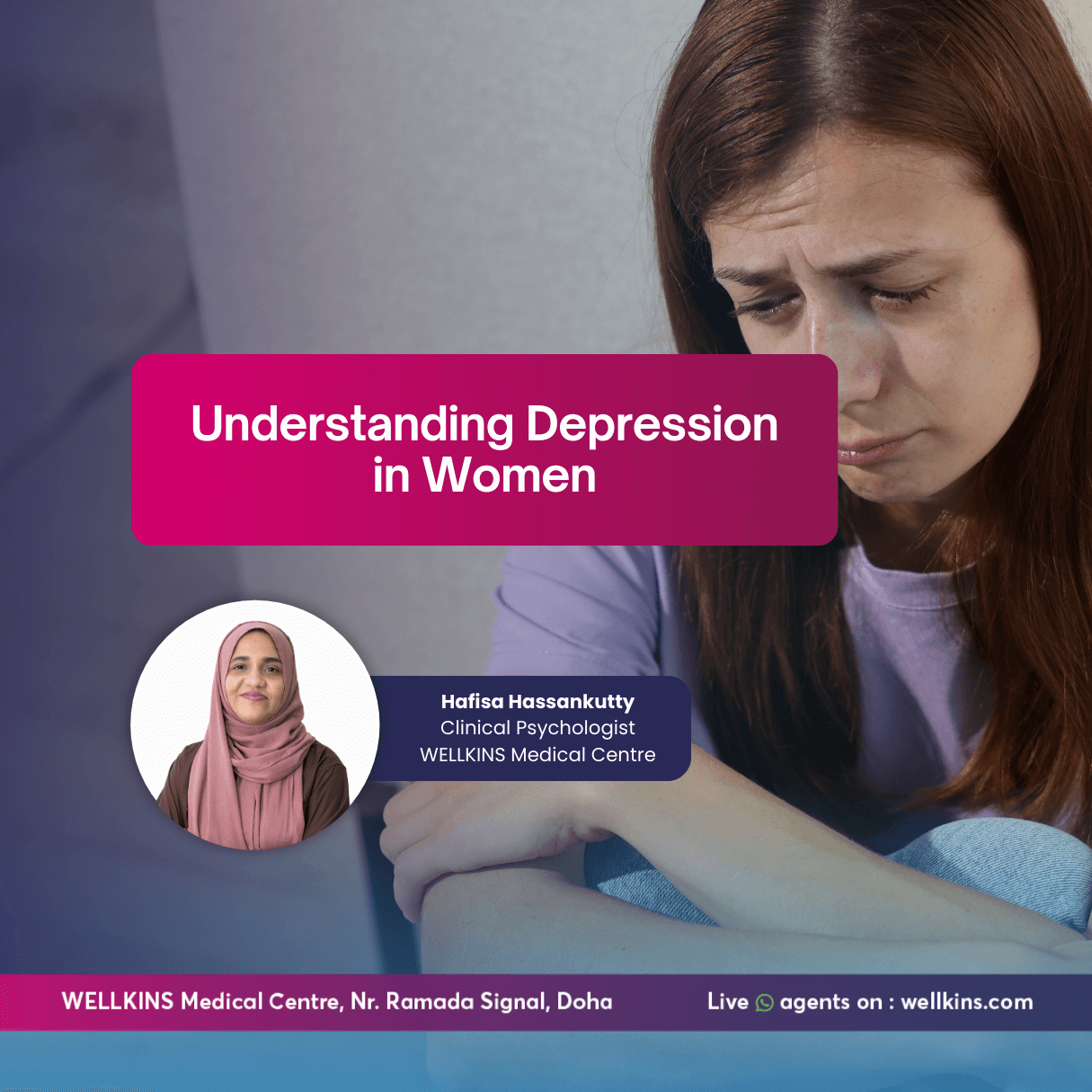
Research consistently shows that women are nearly twice as likely as men to experience depression at some point in their lives. This statistical gap is seen across cultures and age groups, highlighting a significant public health priority. At WELLKINS Medical Centre, we recognize that this difference does not reflect weakness or reduced resilience. Instead, it reflects the combined influence of biological, psychological and social factors that uniquely affect women throughout their development. Understanding why women may be more vulnerable helps reduce self-blame and encourages timely, compassionate support. By acknowledging the unique hurdles women face, we can move away from stigma and toward proactive mental wellness.
It is essential that women experiencing persistent emotional distress such as depression, anxiety, mood changes, or psychological strain related to hormonal transitions, life stressors, or role overload undergo a complete psychological assessment. Psychotherapy, provided by qualified mental health professionals, offers structured, evidence-based care to help women understand emotional patterns, build healthy coping strategies, and restore psychological balance. With appropriate support and when needed, medical collaboration, effective treatment can significantly improve emotional well-being and overall quality of life.
Why Are Women More Vulnerable to Depression?
The vulnerability to depression in women is rarely caused by a single factor. It is often a “perfect storm” of external pressures and internal shifts.
Social and Cultural Expectations
Across many cultures, women are expected to manage multiple responsibilities while remaining emotionally strong and resilient. The “superwoman” role is often expected, normalized and even praised in society. Because of this, constant emotional strain, exhaustion and self neglect frequently go unquestioned and unnoticed both by others and by women themselves. Over time, this normalization of coping without support can contribute to emotional burnout and increase vulnerability to depression. In a fast-paced environment like Doha, these pressures can be magnified for both local and expat women who are navigating career growth alongside deep-rooted family traditions.
Women often carry:
- Caregiving responsibilities: Managing the needs of children, elderly parents and extended family members simultaneously.
- Emotional labor within families: Acting as the “emotional glue” that holds the household together and resolving interpersonal conflicts.
- Relationship and in-law dynamics: Navigating the complex social expectations and obligations tied to marriage and extended family networks.
- Work–life balance pressures: Striving for professional success while maintaining a perfect home environment.
- Expectations to remain composed despite stress: The pressure to hide struggle to avoid being labeled as “emotional” or “incapable.”
Biological and Hormonal Factors
Women experience significant hormonal changes across different phases of life, which can influence mood regulation, energy levels and emotional sensitivity. These fluctuations affect the neurotransmitters in the brain, such as serotonin, which are responsible for stabilizing our moods.
Increased vulnerability to depression may occur during:
- Menstrual cycles and premenstrual phases: The sharp rise and fall of estrogen and progesterone can trigger mood instability.
- Pregnancy and the period after childbirth: The most dramatic hormonal shift a human body can experience occurs within hours of delivery.
- Perimenopause and menopause: As reproductive hormones decline, the brain must recalibrate, often leading to increased anxiety and low mood.
Hormonal changes alone do not cause depression, but they can increase emotional sensitivity, especially when combined with stress, sleep disturbance, or limited support.
How Depression May Present in Women
Depression does not always look the same in every woman. Some women continue functioning while feeling emotionally depleted inside a state often referred to as “high functioning depression.” They may still go to work and care for their children, but the internal cost is immense.
Common experiences may include:
- Persistent low mood or emotional numbness: Feeling “flat” or unable to experience joy even during happy occasions.
- Loss of interest or pleasure: Activities that once brought excitement now feel like a chore.
- Feeling overwhelmed or emotionally exhausted: A sense that the smallest task is an insurmountable mountain.
- Excessive guilt or self criticism: An internal voice that constantly highlights perceived failures.
- Difficulty concentrating or making decisions: “Brain fog” that makes daily planning feel impossible. Physical and behavioral changes may include:
- Fatigue or low energy: A heavy, physical tiredness that sleep does not seem to fix.
- Sleep or appetite changes: Either sleeping/eating too much or being unable to do either.
- Frequent headaches or body aches: Unexplained physical pain that doesn’t respond to standard treatment.
- Reduced motivation: Finding it difficult to start even simple daily routines.
- Social withdrawal: Canceling plans and preferring to be alone to avoid the effort of interaction.
These symptoms become clinically significant when they persist over time and interfere with daily functioning.
When Depression Feels Different in Certain Life Situations
Sometimes depression may feel more “situation-specific,” and certain phases of life can increase emotional vulnerability or worsen existing symptoms. These transitions require specialized clinical attention and understanding.
After childbirth (postpartum period): The postpartum period involves major changes such as hormonal shifts, sleep deprivation, physical recovery, emotional adjustment, identity changes and increased responsibility. This is a time of immense vulnerability where “baby blues” can transition into clinical depression. When depression develops during this time, thoughts may sound like:
- “I’m not a good mother.”
- “I’m not doing enough for my baby.”
- “My baby deserves better than me.”
During perimenopause and menopause: Hormonal fluctuations, sleep disturbance, hot flashes, fatigue and physical discomfort can affect emotional stability. This phase often coincides with the “empty nest” or increased career pressure, creating a multifaceted challenge. During this phase, depression may present as persistent low mood, irritability, reduced motivation, anxiety, or feeling emotionally “not like myself.” Many women also report reduced confidence and increased emotional sensitivity, especially when combined with life stressors and caregiving responsibilities.
Under role overload (home and work responsibilities): Many women feel pressure to manage both home and work responsibilities while staying emotionally strong. This “double burden” leads to a chronic state of fight-or-flight. Over time, this constant load can contribute to exhaustion and worsen depressive symptoms, often experienced as:
- “I’m trying my best, but it still feels like I’m failing everywhere.”
- “I have no space to rest and I can’t switch off mentally.”
During premenstrual phases (PMS/PMDD): PMS is not depression, but it can involve mood changes such as irritability, emotional sensitivity, or low mood. Premenstrual Dysphoric Disorder (PMDD) is a more severe form that requires medical management. In some women, these symptoms may overlap with depressive symptoms and may worsen existing depression, especially when stress levels are already high.
Why Depression in Women Is Often Missed
Despite its prevalence, depression in women is frequently overlooked because:
- Emotional distress is often normalized: Society expects women to be “emotional,” so genuine suffering is dismissed as “just a phase.”
- Women may continue fulfilling responsibilities despite suffering: Because she is still working and cooking, others assume she is “fine.”
- Symptoms may be attributed to stress, hormones, or personality: It is often brushed off as “just stress” or “being moody.”
- Women may minimize their own needs: Putting everyone else first often means their own mental health is the last priority.
As a result, many women delay seeking help until symptoms become more severe, which can prolong the recovery process.
Support and Treatment
At Wellkins Medical Centre, we believe that depression is treatable and recovery is possible with the right combination of medical and psychological care. Our approach is holistic, ensuring we look at both the mind and the body.
Psychological support helps women:
- Understand emotional patterns: Identifying the triggers that lead to low mood.
- Reduce self-blame: Recognizing that depression is a medical condition, not a personality flaw.
- Manage emotional overload: Learning practical boundaries and “saying no” without guilt.
- Rebuild balance and confidence: Rediscovering their sense of self outside of their roles as mothers, wives, or employees.
In some cases, medication may be recommended alongside psychotherapy, depending on individual needs. Treatment is always personalized and collaborative, involving a dialogue between the patient and our specialists.
When to Seek Professional Guidance
It can be difficult to know when “feeling down” has become something more serious. Professional support may be helpful if:
- Low mood persists for weeks: Specifically, if you feel this way most of the day, nearly every day, for two weeks or more.
- Daily functioning becomes difficult: Tasks like showering, working, or grocery shopping feel exhausting.
- Emotional distress feels overwhelming: You feel like you are constantly on the verge of tears or an emotional breakdown.
- Relationships or responsibilities are affected: You are snapping at loved ones or missing deadlines at work.
Seeking help is a sign of awareness and self-care, not failure. It is the first step toward taking back control of your life.
Final Thought
Depression in women is not a reflection of strength, capability, or resilience. Many women carry emotional burdens quietly while continuing to care for others, but you do not have to carry this alone. Understanding, timely support and compassionate care allow women to reconnect with their emotional well being and restore balance in their lives. By addressing the biological and social roots of depression, we can pave the way for a healthier, more vibrant future. You are welcome to reach out at Wellkins Medical Centre for more guidance. Our team of psychologists and physicians is here to provide a safe, confidential space for your healing.
Read more: https://wellkins.com/mentalhealth
Disclaimer: This blog is for informational purposes only and should not replace professional medical advice.