

Author: Dr. Steffy Mariyam Reji, (Specialist Dermatologist – Wellkins Medical Centre)
Walk into any aesthetic clinic in Doha and two names come up repeatedly in conversations about skin rejuvenation: mesotherapy and PRP. Both are minimally invasive. Both are designed to refresh and revitalize the skin. Both have become genuinely popular among patients in Qatar who want results without the recovery time of more aggressive procedures.
But they are not the same treatment and they are not right for the same person or the same goal. The choice between them depends on what your skin actually needs, and understanding how each one works is the foundation of making that choice well.
At Wellkins Medical Centre, mesotherapy and PRP are among the most requested aesthetic treatments and one of the most common conversations in the dermatology clinic is helping patients understand which approach is better suited to what they are trying to achieve. This guide covers both treatments clearly and honestly so you can arrive at a consultation already informed.
The question I hear most often is which one is better. The honest answer is that neither is universally better. They work through completely different mechanisms and they address different aspects of skin ageing and skin quality. Mesotherapy is fundamentally about nourishing and hydrating the skin from within. PRP is about stimulating the skin’s own repair system to rebuild structure and firmness. Understanding this distinction changes the conversation from which treatment is superior to which treatment is right for what you are trying to achieve. In some cases the answer is both, used together as complementary approaches that address different layers of the same problem.
People Also Ask
What is the difference between PRP and mesotherapy for the face?
Mesotherapy delivers a blend of external nutrients including hyaluronic acid, vitamins and peptides directly into the middle layer of the skin to improve hydration, circulation and collagen production. PRP uses your own blood, specifically the platelet-rich plasma separated from a small blood sample, to stimulate the skin’s natural repair and regeneration system through growth factors. Mesotherapy adds what the skin may be missing from outside. PRP activates what the skin already has the capacity to do from within.
Which lasts longer: PRP or mesotherapy?
PRP typically produces longer-lasting results than mesotherapy because it triggers a structural rebuilding process within the skin’s collagen framework rather than simply replenishing nutrients. Mesotherapy results build progressively across a series of sessions and require maintenance treatments to sustain. PRP results develop more slowly but the collagen and tissue improvements it produces tend to last longer between maintenance sessions. For patients seeking immediate hydration and glow, mesotherapy delivers more quickly. For patients prioritising lasting firmness and structural improvement, PRP is the stronger long-term investment.
Can PRP and mesotherapy be combined?
Yes and combining them is an approach that some patients benefit from significantly. Mesotherapy addresses the surface quality of the skin by improving hydration, brightness and texture. PRP works at a deeper structural level by stimulating collagen production and tissue renewal. Used together they can address both dimensions simultaneously. A dermatologist consultation determines whether a combined approach is appropriate for your specific skin concerns and the right sequencing and spacing of the two treatments.
Is PRP or mesotherapy better for dehydrated skin in Qatar’s climate?
For patients primarily managing dehydration from Qatar’s air conditioning, heat and low-humidity indoor environments, mesotherapy with hyaluronic acid is the more directly targeted treatment. It replenishes the hydration and nutrient levels that Qatar’s climate consistently depletes and produces a visible improvement in skin plumpness and radiance relatively quickly. PRP is more appropriate when the goal goes beyond hydration to include improving skin firmness, elasticity and overall structural quality. Many patients in Qatar benefit from beginning with mesotherapy to restore baseline hydration and then incorporating PRP as a structural maintenance treatment.
Mesotherapy
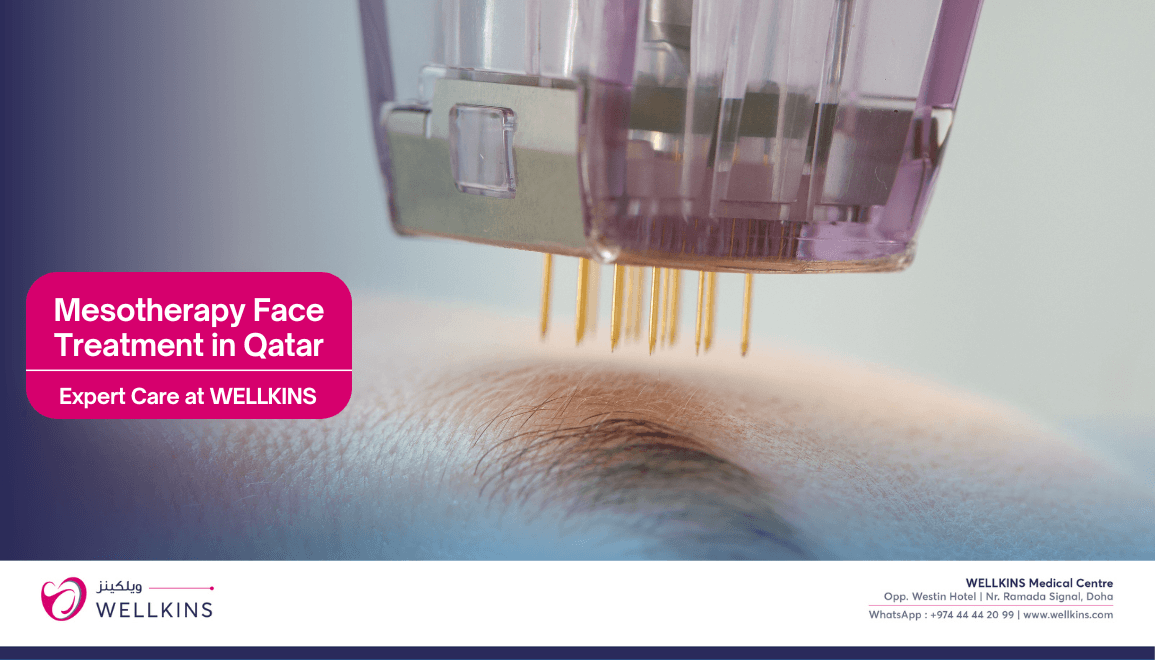
Mesotherapy is often described as a nutrient cocktail delivered directly where the skin needs it most. Very fine injections place a specially formulated blend into the middle layer of the skin, the dermal layer where circulation is active and where cell function can be most directly influenced.
This delivery method is clinically important. Creams and serums, however well formulated, work primarily on the skin’s surface. They cannot penetrate to the depth where the biological processes that maintain skin quality actually take place. Mesotherapy bypasses this limitation entirely by placing the active ingredients precisely where they need to be.
What the formula typically contains:
- Hyaluronic Acid: The primary hydrating ingredient that draws moisture into the skin and maintains it there. Hyaluronic acid in mesotherapy delivers significantly deeper hydration than topical application can achieve, plumping the skin from within and improving the fullness and smoothness of the surface.
- Vitamins and Antioxidants: Vitamin C, vitamin B complex and other antioxidants support cellular function, brighten uneven skin tone and protect against the oxidative damage that accumulates from sun exposure and pollution. In Qatar’s high UV environment this protective function is particularly relevant.
- Peptides: Short-chain amino acids that signal the skin’s fibroblasts to increase collagen production. Peptides in mesotherapy contribute to the gradual firming and texture improvement that develops across a course of treatments.
- Minerals: Trace minerals including zinc and copper that support enzyme function within the skin and contribute to the overall cellular renewal process.
When these nutrients reach the deeper skin layer the skin begins to hold moisture better, regain elasticity and take on a fresher more stable appearance over time. The treatment itself does not take long, is considered minimally invasive and most patients resume normal activities the same day. Mesotherapy is most commonly applied to the face and neck.
The results are not immediate. They build gradually across a series of sessions, typically four to six treatments spaced two to three weeks apart, until the skin looks brighter and more consistently nourished. A maintenance session every two to three months sustains the results thereafter.
The combination of intense air conditioning, high outdoor temperatures and year-round UV exposure creates a skin environment that is chronically depleted of the moisture and nutrients that mesotherapy directly restores. Many patients in Doha describe their skin as consistently looking more tired and dull than it used to, and this is a presentation that mesotherapy addresses very directly.
PRP
PRP, or platelet-rich plasma, is built on the body’s own healing intelligence rather than on the introduction of external ingredients. It is one of the most clinically compelling aesthetic treatments available because the biological mechanism behind it is grounded in the same repair process the body uses to heal wounds and regenerate tissue.
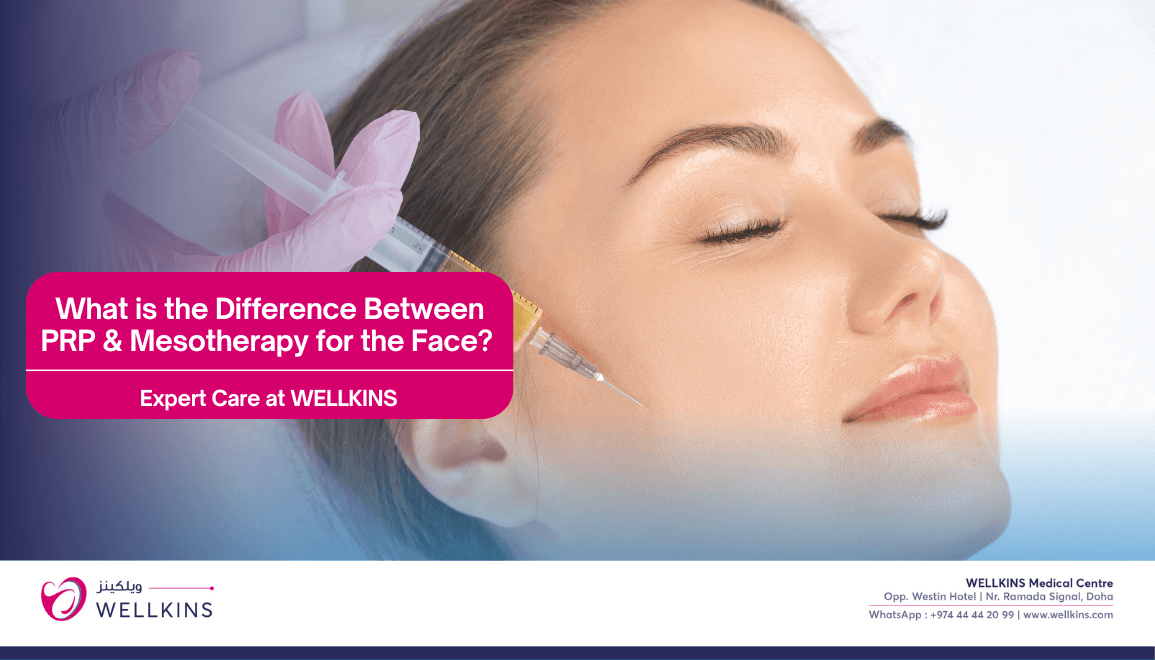
The process begins with a small blood draw, typically two to four vials, taken at the start of the session. The blood is placed in a centrifuge and spun at high speed. This separates the blood into its components and concentrates the platelets into the plasma fraction. The resulting platelet-rich plasma contains a concentration of growth factors several times higher than what is present in normal circulating blood.
When this concentrated plasma is injected back into the skin, the growth factors are released into the tissue and send a clear biological signal: repair is needed here. The skin responds by increasing collagen production, stimulating fibroblast activity and initiating a tissue renewal process that develops and matures over the weeks following treatment.
What PRP does within the skin:
- Collagen Stimulation: Growth factors directly activate the fibroblasts responsible for producing collagen and elastin, the structural proteins that give skin its firmness and resilience. The collagen produced in response to PRP is genuine new collagen that integrates into the skin’s existing framework and contributes to lasting structural improvement.
- Tissue Renewal: Beyond collagen, PRP stimulates broader cellular regeneration including the improvement of skin texture, the reduction of fine lines and the gradual improvement of skin tone and pigmentation irregularities.
- Natural Process With No Foreign Ingredients: Because PRP uses only the patient’s own blood with nothing else added, the risk of allergic reaction or rejection is essentially absent. This makes it suitable for patients with sensitive skin who cannot tolerate certain injectable ingredients.
Over the weeks following treatment the skin gradually feels firmer and looks smoother. Because PRP initiates a biological process rather than immediately filling or hydrating the skin, results take longer to appear than mesotherapy. Most patients begin to see meaningful improvement four to six weeks after treatment and continue to see progression for several months as collagen remodeling matures.
How Mesotherapy and PRP Work
Mesotherapy Mechanism
Mesotherapy works by adding what the skin may be missing. The injected nutrients improve hydration and circulation within the tiny blood vessels of the dermis. When cells have the right nutritional environment they function more efficiently and collagen production follows naturally as part of that improved cellular activity. The skin over time looks softer, more hydrated and more vibrant. The mechanism is one of supplementation: giving the skin what it lacks from outside and allowing it to use those resources more effectively.
PRP Mechanism
PRP works through stimulation rather than supplementation. When platelets release their growth factors into the skin tissue the body’s repair cascade is activated. Collagen fibers form gradually, the skin’s structural matrix strengthens and the improvements compound over months as the remodeling process continues. The mechanism is entirely internal: nothing is added except the concentrated signal that tells the skin’s own biology to repair and renew. This is why PRP results, while slower to appear, tend to last longer than the results of nutrient-based treatments.
Key Differences Between Mesotherapy and PRP
Ingredients Used
Mesotherapy brings in external nutrients: blends of vitamins, minerals, peptides and hyaluronic acid formulated specifically for the skin concerns being addressed. The formula can be customised for each patient and adjusted across a course of treatment as the skin responds.
PRP is entirely internal. It uses only the patient’s own plasma concentrated with platelets with nothing else added. The active ingredients are the patient’s own growth factors, meaning the treatment outcome is influenced by the individual biology of each person’s blood.
Purpose and Effect
Mesotherapy is chosen primarily for hydration, improved skin tone and a visible glow effect. Skin feels more nourished and looks fresher and more radiant after a course of sessions. It is particularly effective for addressing the dullness, dehydration and early fine lines that reflect nutrient and moisture depletion rather than significant structural ageing.
PRP is less about surface radiance and more about rebuilding the underlying structure of the skin. It improves firmness and resilience, reduces the appearance of fine lines and early sagging and produces results that last longer between maintenance treatments. It is more appropriate for patients whose primary concern is skin laxity and structural decline rather than simply hydration and brightness.
Timeline of Results
Mesotherapy produces visible improvement within a course of four to six sessions with results becoming progressively more noticeable across the treatment period. Maintenance sessions every two to three months sustain the results.
PRP results develop more slowly with the most significant improvement appearing four to eight weeks after treatment and continuing to progress for up to six months as collagen remodeling matures. A course of two to three sessions spaced four to six weeks apart is typically recommended followed by annual or biannual maintenance.
Which Treatment Is Better for You?
The right treatment depends entirely on what your skin needs and what you are trying to achieve. There is no universally superior option between these two approaches.
- Choose Mesotherapy if: Your primary concern is hydration, dullness or a loss of the healthy glow your skin used to have. Mesotherapy is ideal for dry or tired-looking skin, for patients managing the dehydrating effects of Qatar’s air conditioning and heat and for those who want visible improvement across a relatively short treatment course.
- Choose PRP if: Your goal is firmness, improved skin structure and deeper repair. PRP is better suited to patients who have noticed a loss of skin density, increased fine lines or a softening of facial contours and who are willing to wait for results that develop gradually and last longer.
- Consider combining both if: You want to address both surface quality and structural integrity simultaneously. Mesotherapy brightens and nourishes the surface while PRP strengthens from underneath. Used as part of a planned treatment programme this combination can be among the most comprehensive approaches to non-surgical skin rejuvenation available.
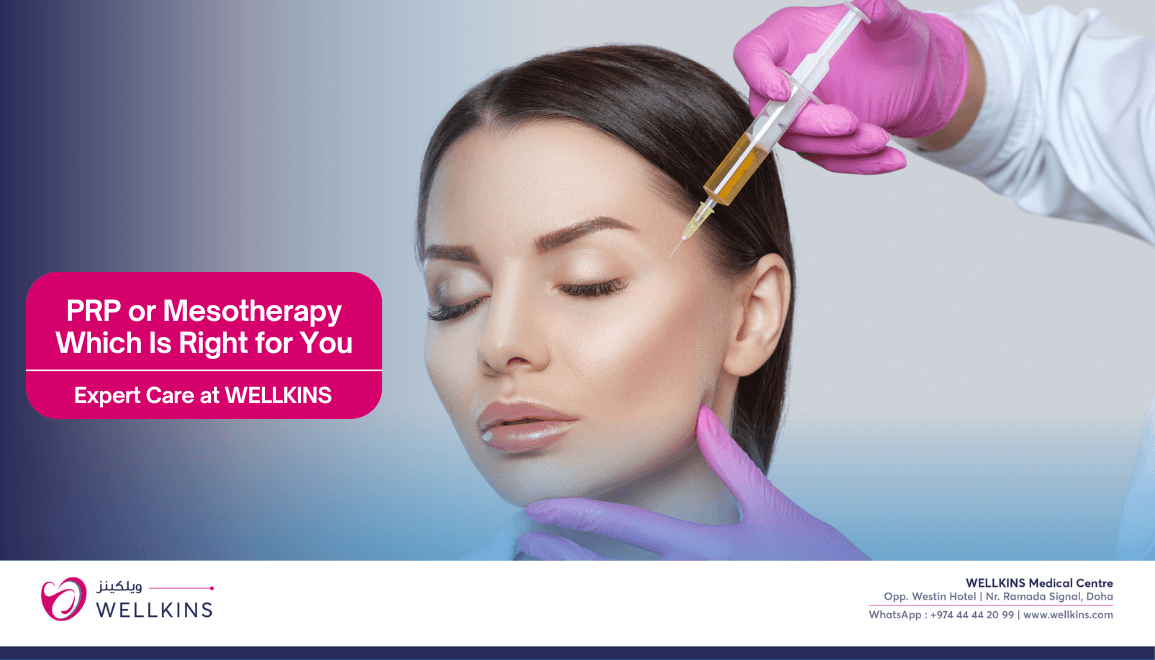
A dermatologist consultation at Wellkins Medical Centre is the starting point for making this decision well. Your skin, your concerns and your goals are assessed individually and the treatment recommendation is based on what is genuinely most appropriate for you rather than a standard protocol applied to everyone.
Skin that looks healthy is skin that has been given what it actually needs. The first step is knowing what that is.
To book an appointment at Wellkins Medical Centre: https://wellkins.com/dermatology