
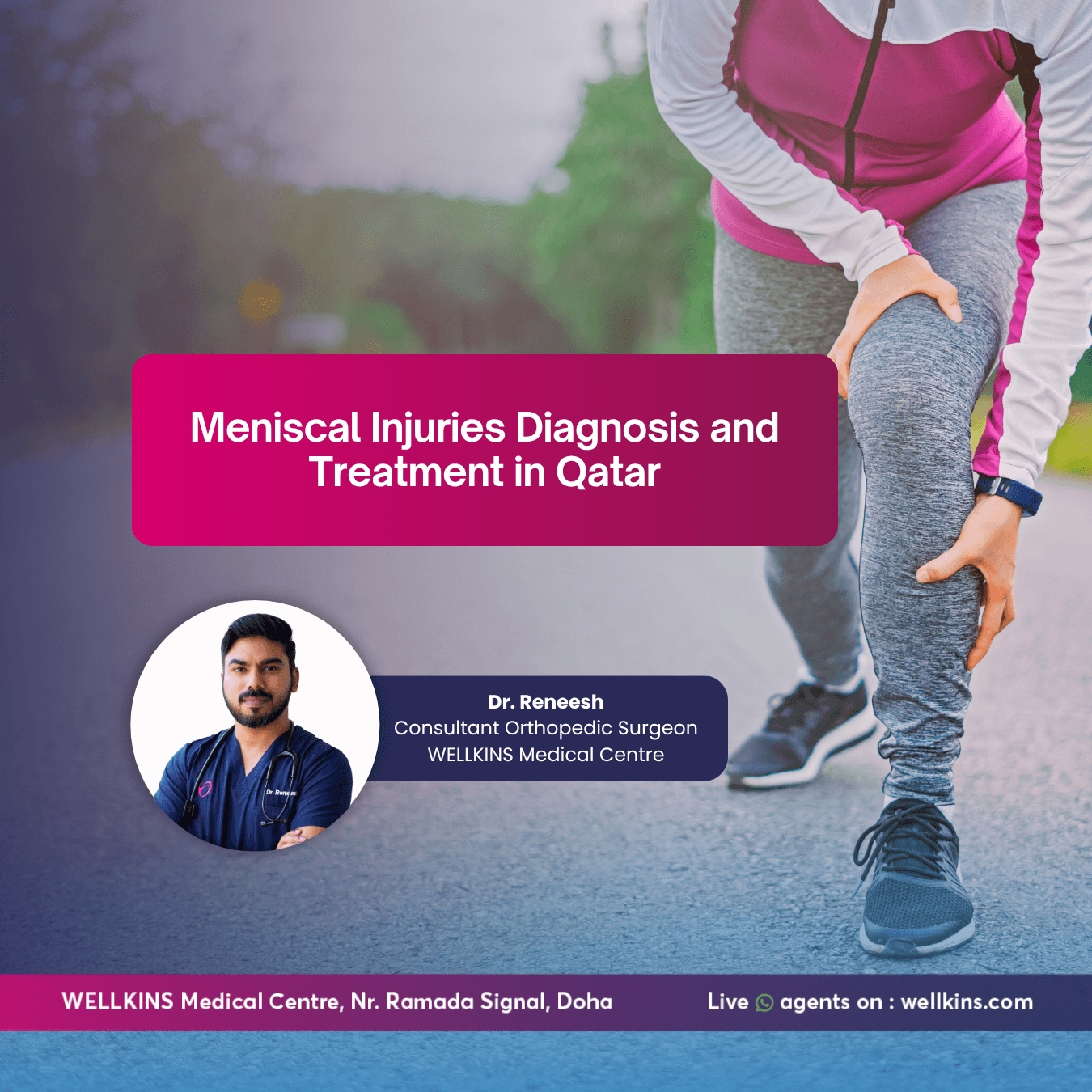
Author: Dr. Reneesh, (Consultant Orthopedic Surgeon – Wellkins Medical Centre)
Knee pain is one of the most common reasons patients visit an orthopedic clinic and among the many structures that can be responsible for it, the meniscus is one of the most frequently injured and most frequently misunderstood. Patients arrive having been told they have a torn meniscus and often have little understanding of what that actually means for their knee, their activity and their long-term joint health.
Meniscal injuries are among the most common causes of knee pain encountered in orthopedic practice. The menisci are two crescent-shaped fibrocartilaginous structures sitting between the femur and tibia in the knee joint. The medial meniscus sits on the inner side and the lateral meniscus on the outer side. Together they play a crucial role in load transmission, shock absorption, joint stability and lubrication. Without healthy menisci, the cartilage surfaces of the knee are exposed to forces they are not designed to bear alone.
In Qatar’s active population, which includes athletes, gym-goers, weekend football players and the physically demanding working environments of many residents, meniscal injuries are a consistent and significant clinical presentation at Wellkins Medical Centre.
The meniscus plays a vital role in knee health but is often overlooked. Many patients do not realize how important it is to preserve as much meniscal tissue as possible for long term joint function. Treating a meniscal injury requires balancing symptom relief and long term outcomes. Care that is too conservative can lead to further damage while unnecessary removal can also harm the joint. The right approach depends on accurate diagnosis and a treatment plan tailored to each patient.
People Also Ask
How do I know if I have a meniscal tear?
The most common indicators of a meniscal tear are pain along the inner or outer joint line of the knee, swelling that develops within hours or days of an injury, a locking or catching sensation during movement and a feeling of the knee giving way under load. However, symptoms vary significantly between individuals and between tear types, which is why a clinical examination and imaging are necessary for an accurate diagnosis rather than relying on symptoms alone.
Can a meniscal tear heal without surgery?
Yes, in many cases. Small stable tears particularly in younger patients and degenerative tears in middle-aged adults often respond well to conservative management including physiotherapy, activity modification and anti-inflammatory treatment. The location of the tear within the meniscus is critically important because tears in the well-vascularised outer zone have a genuine capacity to heal while tears in the inner avascular zone do not have a blood supply to support natural repair.
How long does recovery from a meniscal injury take?
Recovery time varies considerably depending on the type of tear, the treatment approach and the individual patient’s age and overall health. Conservative management may allow a return to normal activity within six to twelve weeks. Surgical meniscal repair requires a longer and more structured rehabilitation period of three to six months. Partial meniscectomy typically allows a faster functional return but the long-term implications for joint health must be considered as part of the overall management plan.
Does a meniscal tear lead to arthritis?
An untreated or poorly managed meniscal tear does increase the risk of early-onset knee osteoarthritis because the loss of meniscal tissue reduces the shock-absorbing capacity of the joint and exposes the cartilage to greater compressive forces. The risk is highest when a significant portion of the meniscus is removed surgically or when a tear is left to progress without appropriate management. Preserving meniscal tissue wherever possible is the guiding principle of modern orthopedic care for meniscal injuries.

Causes and Risk Factors
Meniscal injuries occur through two distinct mechanisms that reflect very different patient populations and require different management approaches.
1. Traumatic Tears
Traumatic meniscal tears are common in younger individuals and athletes. They typically result from a twisting injury to the knee while the foot is planted on the ground, generating a rotational force across the joint that the meniscus cannot withstand. Sports that involve cutting movements, sudden direction changes and contact are the most frequent contexts for these injuries.
- Sport-Specific Risk in Qatar: Football is by far the most common sporting context for traumatic meniscal tears at Wellkins. The combination of hard artificial turf surfaces, sudden pivoting movements and high-speed contact creates a consistent environment for the twisting mechanism that produces meniscal tears. Padel, basketball and martial arts also contribute significantly to the traumatic tear population at this clinic.
- Associated Ligament Injuries: Traumatic meniscal tears frequently occur alongside ligament injuries, most commonly the anterior cruciate ligament. A combined ACL and meniscal tear is a more complex clinical scenario that requires careful planning for both structures during any surgical intervention.
- Mechanism Matters: The specific direction and force of the twisting injury influences which meniscus is torn and what type of tear pattern develops. Understanding the mechanism of injury is an important part of the clinical assessment because it guides both imaging interpretation and surgical planning.
2. Degenerative Tears
Degenerative meniscal tears are seen more frequently in middle-aged and older patients. They occur due to age-related deterioration of the fibrocartilaginous tissue that progressively weakens the meniscal structure over years. Even minimal stress or routine activities such as squatting, stepping down from a kerb or rising from a low chair may trigger a tear in a degenerated meniscus.
- Gradual Onset: Unlike traumatic tears which have a clear precipitating event, degenerative tears often present with a gradual onset of symptoms without a memorable injury. Patients frequently report that the pain simply appeared one day during a routine movement and has persisted since.
- Association With Osteoarthritis: Degenerative meniscal tears and early knee osteoarthritis frequently coexist. In these cases determining whether the meniscal tear or the arthritis is the primary driver of symptoms is a clinically important question because it significantly influences whether surgical intervention is likely to be beneficial.
Additional Risk Factors:
- Ligament Instability: Pre-existing ACL deficiency creates abnormal rotational and translational forces within the knee during activity that significantly increase the risk of secondary meniscal injury over time.
- Obesity: Excess body weight increases the compressive load on the knee joint with every step, accelerating degenerative changes in both the meniscus and the articular cartilage. In Qatar where obesity rates are among the highest in the region this is a particularly relevant contributing factor in the clinic population.
- Poor Muscle Strength: Weakness of the quadriceps and hamstring muscles reduces the dynamic stability of the knee joint, transferring greater load to the passive stabilising structures including the menisci during activity.
- Repetitive Stress: Occupations or activities that involve repeated squatting, kneeling or heavy lifting place chronic compressive and rotational stress on the menisci that accumulates over years of exposure.
Recognising the Symptoms
The clinical presentation of meniscal injury varies depending on the type, location and extent of the tear. Understanding what symptoms to look for and when to seek assessment avoids the delayed diagnosis that allows tears to progress unnecessarily.
- Joint Line Pain: Pain localised to the inner or outer joint line of the knee is the most consistent and diagnostically useful symptom of a meniscal tear. Pressing on the joint line during examination reproduces this pain reliably in most patients with a significant tear.
- Swelling: Swelling of the knee may develop rapidly within hours of a traumatic tear or gradually over days. Significant swelling shortly after an injury suggests blood within the joint, which indicates a more severe structural injury including possible ACL involvement alongside the meniscal tear.
- Locking or Catching: A mechanical locking sensation in which the knee becomes stuck and cannot be fully straightened is a characteristic feature of a displaced bucket-handle meniscal tear and represents an orthopedic urgency requiring prompt specialist assessment. A catching or clicking sensation during movement without true locking may indicate a less displaced tear that still warrants investigation.
- Restricted Range of Motion: Inability to fully flex or extend the knee due to pain, swelling or mechanical obstruction from displaced torn tissue significantly impairs daily function and is a consistent indicator of a clinically significant injury.
- Giving Way or Instability: A feeling that the knee is unreliable or may give way under load is particularly common in traumatic tears and in those associated with ligament laxity. This symptom carries both functional and safety implications for active patients.
- Symptoms in Degenerative Tears: Degenerative meniscal tears often produce more subtle and chronic symptoms including a background ache that worsens with activity, morning stiffness that eases during the day and a general sense of the knee being less reliable than it used to be. These presentations are easy to normalize and delay seeking assessment for.
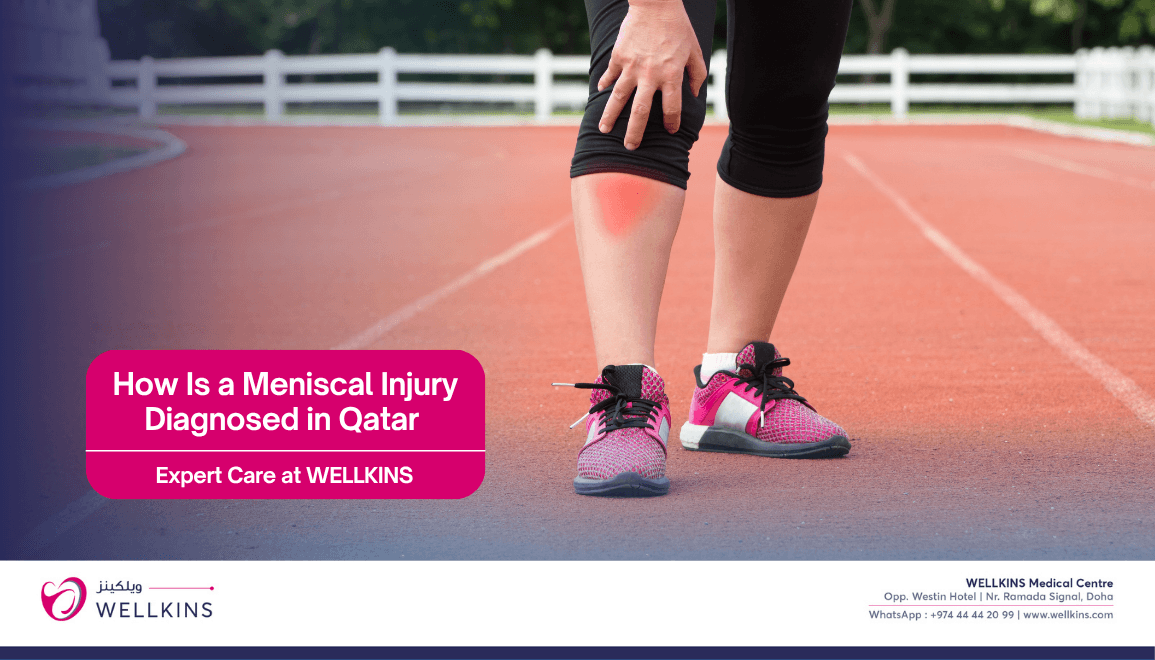
Diagnosis and Investigations at Wellkins
Accurate diagnosis of meniscal injury requires a structured assessment combining clinical examination with appropriate imaging. At Wellkins, Dr. Reneesh uses a systematic clinical approach before determining the investigation and management pathway for each patient.
- Clinical Examination: A thorough clinical examination remains the cornerstone of diagnosis. Specific provocative tests including McMurray’s test, Thessaly’s test and the Apley grind test assess meniscal integrity through controlled movement patterns that reproduce the mechanical stress on the torn tissue. A positive clinical examination in a patient with a consistent history provides strong diagnostic confidence even before imaging is obtained.
- Assessment of Associated Structures: Ligament stability testing, assessment of the patellofemoral joint and evaluation of overall knee alignment are performed alongside meniscal-specific testing because associated injuries and mechanical factors significantly influence treatment planning.
- X-Rays: Plain radiographs are useful to rule out associated bony pathology, assess joint space narrowing that would indicate underlying osteoarthritis and identify calcification within the meniscus in older patients. X-rays do not visualise soft tissue and cannot directly confirm a meniscal tear.
- MRI: Magnetic resonance imaging is the gold standard for diagnosing meniscal injuries. It provides detailed visualisation of the tear type, location within the meniscus, the vascular zone of the tear and any associated ligament, cartilage or bone injuries. The quality of the MRI and its interpretation in clinical context are both important. An MRI finding must always be correlated with the clinical picture because incidental meniscal changes are common in older patients and do not always represent the source of symptoms.
Treatment Options: From Conservative Care to Surgery
Management of meniscal injuries depends on the patient’s age, activity level, the type and location of the tear and any associated injuries. There is no single correct approach and the decision between conservative and surgical management requires careful clinical judgment.
Conservative Management
Conservative management is indicated for small stable tears, degenerative tears in middle-aged patients and symptomatic tears in patients whose activity demands or medical comorbidities make surgery inappropriate.
- RICE Protocol: Rest, ice, compression and elevation form the immediate management of an acute meniscal injury. This reduces swelling and pain in the early post-injury period and allows the inflammatory response to settle before physiotherapy-based rehabilitation begins.
- Anti-Inflammatory Medication: Non-steroidal anti-inflammatory drugs reduce pain and swelling and allow patients to engage more effectively with rehabilitation exercises. They are most useful in the acute and subacute phases of injury management rather than as a long-term strategy.
- Physiotherapy: Structured physiotherapy focused on quadriceps strengthening, hamstring flexibility, proprioceptive training and graduated return to activity is the cornerstone of conservative meniscal management. A well-designed rehabilitation programme addresses not only the injury but the muscle weakness and movement patterns that contributed to it.
- Activity Modification: Avoiding the specific movements and activities that load the torn meniscus excessively during the recovery period allows symptoms to settle and reduces the risk of the tear extending before healing has progressed.
- Intra-Articular Injections: In degenerative tears associated with early osteoarthritis, corticosteroid or hyaluronic acid injections can provide meaningful symptom relief and support rehabilitation when conservative measures alone are insufficient. These are not a long-term solution but can be a valuable component of a staged management plan.
Surgical Management
Surgical management is considered when symptoms persist despite appropriate conservative management, when the tear is large or unstable, when there is significant mechanical symptoms such as locking or when the tear pattern is one that is unlikely to heal without operative intervention.
- Arthroscopic Meniscectomy: Partial meniscectomy involves the removal of the torn and unstable meniscal fragment under arthroscopic guidance. It provides reliable and often rapid symptom relief but removes meniscal tissue permanently. The long-term implications for joint health mean that meniscectomy is reserved for tears that cannot be repaired and for patients in whom the symptomatic benefit clearly outweighs the risk of accelerated cartilage wear.
- Meniscal Repair: Repair is preferred over meniscectomy wherever the tear characteristics and patient factors allow it. It is most appropriate in younger patients with traumatic tears located in the well-vascularised outer zone of the meniscus where blood supply supports biological healing. Repair preserves meniscal tissue and its protective function for the long-term health of the joint. It requires a longer and more structured rehabilitation period than meniscectomy.
- Combined Procedures: When a meniscal tear is associated with an ACL rupture, both injuries are typically addressed at the same operative intervention. The surgical sequence and technique are planned to optimise outcomes for both structures.
Complications of Untreated or Poorly Managed Injuries
Meniscal injuries that are not appropriately diagnosed and managed carry a meaningful risk of progression to more significant and difficult-to-treat conditions.
- Chronic Knee Pain: Persistent low-grade pain from an untreated tear that continues to be mechanically loaded during daily activity is one of the most common outcomes of delayed management.
- Early Onset Osteoarthritis: Loss of meniscal function removes a critical component of the knee’s shock-absorbing system, exposing the articular cartilage to compressive forces it was not designed to bear independently. The accelerated cartilage wear that follows is the most significant long-term complication of meniscal loss or persistent meniscal dysfunction.
- Mechanical Symptoms: A displaced meniscal fragment that is not addressed surgically can cause persistent locking, catching and giving-way that progressively impairs function and quality of life.
- Post-Surgical Complications: Surgical complications are uncommon but include infection, joint stiffness, incomplete symptom resolution and in the case of meniscal repair the possibility of re-tear if rehabilitation protocols are not followed correctly.
Prevention: Protecting the Knee in Qatar’s Active Environment
While not all meniscal injuries are preventable, several evidence-based measures significantly reduce the risk particularly for active individuals in Qatar’s sports-focused community.
- Quadriceps and Hamstring Strengthening: Strong muscles around the knee joint reduce the mechanical load transferred to the passive stabilizing structures including the menisci during activity. A consistent lower limb strengthening programme is the single most effective injury prevention measure for active individuals.
- Proper Warm-Up and Stretching: Adequate warm-up before physical activity prepares the neuromuscular system for the demands of sport and reduces the risk of the sudden uncoordinated movements that produce meniscal tears. Static stretching after activity maintains the hamstring and calf flexibility that supports healthy knee mechanics.
- Avoiding High-Risk Movement Patterns: Training in neuromuscular control specifically addresses the cutting, pivoting and landing mechanics that generate the rotational forces responsible for traumatic meniscal tears. Sports-specific movement training is particularly valuable for football and paddle players in Qatar.
- Appropriate Footwear: Footwear that is matched to the playing surface reduces the torsional forces generated at the knee during sport. Firm ground cleats used on hard artificial turf, which is the predominant surface across Qatar’s sports facilities, significantly increase rotational knee stress compared to turf-specific footwear.
- Maintaining a Healthy Body Weight: Reducing excess body weight decreases the compressive load on the knee joint during everyday activity and significantly reduces the rate of degenerative meniscal change over time.

Prognosis and Long-Term Outcomes
The prognosis for meniscal injuries is generally favorable with timely and appropriate management. Small stable tears managed conservatively often settle significantly with physiotherapy and activity modification. Surgical outcomes for both meniscal repair and partial meniscectomy are excellent in properly selected patients with realistic expectations.
Long-term outcomes depend on the type and extent of the tear, associated injuries, the amount of meniscal tissue preserved during any surgical intervention and the patient’s adherence to rehabilitation. Early intervention consistently produces better functional recovery and reduces the risk of degenerative progression compared to delayed or inadequate management.
The key principle that guides every management decision is meniscal preservation. The more meniscal tissue that can be retained and maintained in a functional state, the better the long-term health of the knee joint. This guides the preference for repair over meniscectomy, the commitment to conservative management where it is appropriate and the attention given to rehabilitation in every case.
When to Book an Orthopedic Consultation at Wellkins
You should seek a specialist assessment at Wellkins Medical Centre without delay if:
- Your knee locked during movement and you were unable to fully straighten it.
- You sustained a twisting injury to your knee and have developed pain and swelling that has not settled within forty-eight to seventy-two hours.
- You have chronic knee pain along the joint line that worsens with squatting, climbing stairs or sport without a clear diagnosis.
- You have been told you have a meniscal tear but have not yet had a structured management plan or follow-up assessment.
- Your knee feels unreliable, gives way unexpectedly or you have lost confidence in it during everyday activities.
- You have had previous knee surgery and are experiencing new or returning symptoms that suggest a recurrent or new meniscal problem.
Meniscal injuries require a tailored approach to diagnosis and management. A combination of clinical expertise, appropriate imaging and individualized treatment planning ensures the best possible outcomes for the knee and for the patient’s long-term activity and quality of life.
The knee you protect today is the one that carries you through the decades ahead. Do not wait until it is telling you something louder.
To book an appointment at Wellkins Medical Centre: https://wellkins.com/orthopedics/