

Author: NIKITHA FERNANDEZ (Clinical Psychologist – WELLKINS Medical Centre)
Exam periods are a time of intense focus, but for many students, they are also a source of significant distress. Exam anxiety shows up in many unique and challenging ways and every student experiences this internal pressure differently. Some students notice their mind becoming flooded with racing thoughts jumping from one worry to another, replaying endless “what if” scenarios, or vividly imagining the worst possible outcome. Others describe the terrifying experience of going completely blank while studying or writing the actual exam, even when they know the material perfectly well upon initial review. This mental overload makes it exceedingly hard to focus, retain, remember information, or organize thoughts clearly under pressure.
Physical symptoms are also very common because the body reacts to the stress of an exam just as it would to a real physical danger, triggering the ‘fight or flight’ response. Students may experience sweaty palms, shaking, a fast, pounding heartbeat, debilitating stomach discomfort, or feeling light-headed and dizzy. Sleep often becomes severely disrupted some students cannot fall asleep at all, others wake up frequently in the middle of the night and many feel perpetually restless the night before the exam. Emotionally, exam anxiety brings pronounced irritability, sudden frustration and a chronic sense of being overwhelmed. Students may snap easily, feel overly sensitive to small comments, or withdraw from others. Behaviorally, they might avoid studying entirely because the task feels too stressful, or conversely, they may over-study for hours without breaks, feeling immense guilt whenever they rest. These symptoms together create a heavy, exhausting burden that negatively affects both preparation quality and actual performance.
“It is observed that everyday pressure often presents as minor worry or last-minute jitters before a test, but in students experiencing Clinical Exam Anxiety, the distress is fundamentally different and requires clinical intervention. This is not simply motivational nervousness or the transient fear of failure (a temporary stressor that dissipates after the test); it is a powerful, persistent emotional disorder characterized by physical symptoms (nausea, pounding heart, muscle tension), cognitive shutdown (mental blankness, inability to retrieve information), intense avoidance and, critically, an impaired ability to demonstrate learned knowledge. Clinical Exam Anxiety is a medical condition demanding specialized psychological care.”
What Exactly Is Exam Anxiety?
Exam anxiety occurs when the student’s brain perceives the high stakes environment of an exam as a “threat” to their future, their self worth, or their safety, thereby triggering the body’s natural stress response. Instead of feeling appropriately motivated and focused, the student becomes overwhelmed mentally, emotionally and physically, leading to a breakdown in functioning. This is not a choice; it is a physiological reaction.
Common Signs of Exam Anxiety Include:
- Racing or scattered thoughts that prevent concentration and memory recall.
- Going blank during study sessions or, critically, in the exam hall itself.
- Irritability, restlessness, or emotional sensitivity with family and friends.
- Trouble falling asleep or staying asleep (insomnia) despite feeling exhausted.
- Sweaty palms, fast heartbeat, stomach discomfort (nausea, pain).
- Avoiding studying because facing the material triggers too much stress or panic.
- Perfectionistic tendencies leading to unnecessary pressure and self-criticism.
Many students describe it perfectly: “I know everything at home, but the moment I enter the exam hall, my mind freezes.”

Why Do Students Develop Exam Fear?
Exam fear is rarely caused by one single factor. It’s a complex psychological phenomenon shaped by deep-seated experiences, learned societal expectations and emotional patterns that build up over many years of schooling.
1. Pressure to Perform
Students often feel that they are required to “prove themselves” and their worth through their marks and grades. This intense pressure may come from multiple sources:
- Parents: Whose aspirations for their children are often high.
- Teachers: Whose feedback is sometimes focused only on numerical results.
- Siblings: When comparing past academic achievements.
- Society: Where success is often equated with academic excellence.
- Or even their own self imposed expectations of what they “should” achieve.
When a student’s self-worth and future identity become inextricably linked to their marks, exams naturally become terrifying high-stakes events.
2. Fear of Failure
The deep-seated fear of failure drives avoidance and anxiety. This is often fueled by catastrophic thoughts:
- “What will everyone think of me if I fail?”
- “What if I disappoint my family, whose sacrifices depend on me?”
- “My entire future depends on this single grade and I cannot afford to mess up.”
These extreme, all-or-nothing fears make the exam feel overwhelmingly bigger than it objectively is.
3. Poor Preparation Habits
A lack of fundamental, effective study skills is a common source of anxiety. Cramming, lack of planning, or disorganized study routines naturally raise anxiety levels because the student lacks genuine confidence in their preparedness. Learning effective time management and study strategies is a key solution.
4. Past Negative Experiences
A history of receiving a bad grade, a highly stressful exam experience, or a previous “blank out” episode can create strong emotional conditioning. The brain begins to associate the exam environment itself with panic and failure, making the student anxious before they even start studying for the next test.
5. Perfectionism
Students who rigidly believe that “I must get full marks,” or that “Anything less than perfect is failure,” end up placing an unrealistic and debilitating amount of pressure on themselves. This mindset removes any sense of self-compassion, leading to chronic anxiety and fear of making any mistake.
6. Social Comparison
Constantly seeing peers who appear to study more, score higher, or project flawless academic success especially on social media creates immense self doubt and fuels the cycle of pressure. This often leads to feelings of inadequacy and isolation.
Emotionally, chronic anxiety can lead to deep discouragement, persistent frustration and a significant drop in foundational confidence. Students may begin to internalize the belief that they are “not good enough” or that they will never perform well, even when they demonstrably possess the intellectual ability. Motivation may sharply decline; studying starts to feel like an exhausting, obligatory chore and the genuine joy of learning disappears. Socially, students might isolate themselves or constantly compare their progress with others, which only increases pressure and loneliness. In the long run, repeated negative exam experiences may solidify a fear-based, avoidant relationship with academics, reducing lifelong engagement, lowering overall performance and severely impacting emotional well-being. As psychologists, we see how untreated exam anxiety can affect not just marks, but the student’s self confidence, identity and entire emotional development.
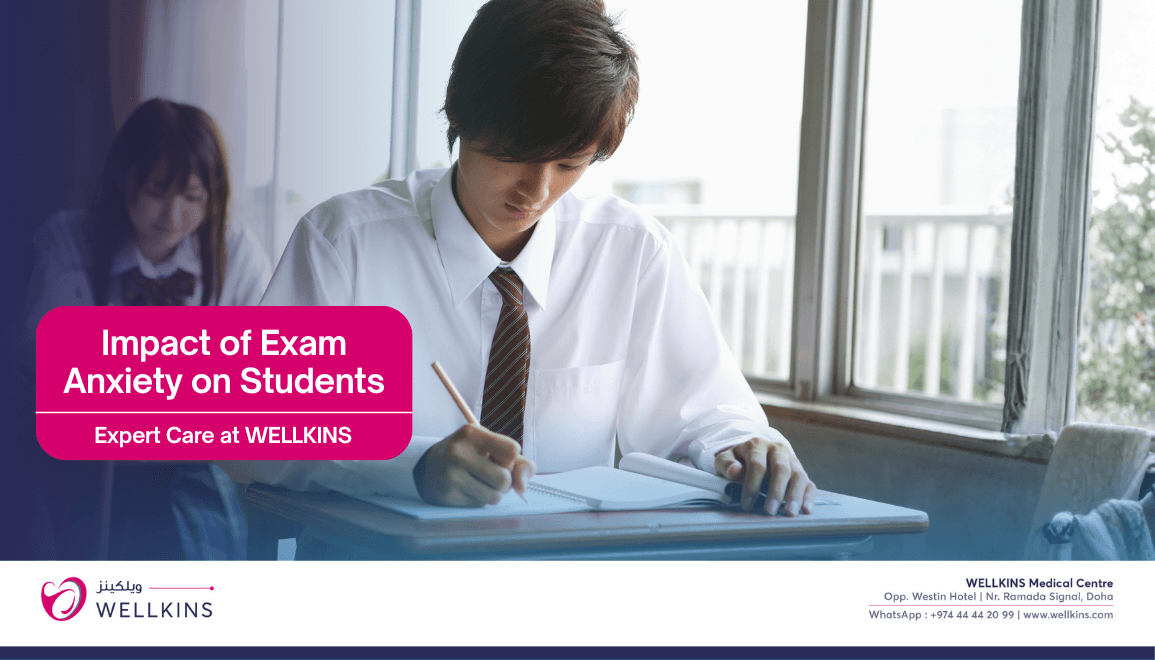
Impact of Exam Anxiety on Students
The effects of uncontrolled exam anxiety are profound and multi layered, hitting performance, health and well-being.
1. Academic Performance
- Trouble recalling information (The “blank-out” phenomenon) due to acute stress hormone interference.
- Slow writing or reading because of rigid thinking and fear of making mistakes.
- Small, careless mistakes (errors of haste) due to time pressure and mental overload.
- Difficulty understanding instructions fully, leading to off-topic answers.
- Poor organization of essay points or answers under time constraints.
2. Emotional Well-Being
- Low confidence that persists long after the exam is over.
- Feeling overwhelmed or discouraged about future academic goals.
- Irritability or mood changes that strain relationships with family and friends.
- Increased feelings of worthlessness tied to numerical results.
- Generalized anxiety that spreads to other areas of life.
3. Behavior & Lifestyle
- Disturbed sleep patterns (insomnia, poor quality sleep).
- Irregular eating habits (stress eating or loss of appetite).
- Avoiding friends or study routines, leading to isolation and poor preparation.
- Increased reliance on caffeine or other stimulants to compensate for fatigue.
- Procrastination driven by fear and avoidance.
4. Long-Term Effects
- Fear of learning and reduced intellectual curiosity.
- Avoiding new challenges or advanced academic courses out of fear of failure.
- Lower academic self-esteem that can carry over into career self-doubt.
- Chronic stress and generalized anxiety extending beyond school years.
Final Thoughts
Exam anxiety is emphatically not a sign of weakness, irresponsibility, or poor intellectual ability it is a natural, often intense, emotional and physiological reaction to internal and external pressure, expectations and the primal fear of failure. Every student has a unique learning journey and their struggles with anxiety deserve compassion, understanding and targeted professional support rather than judgment. When we, as teachers, parents, or caregivers, truly understand the deep emotional weight that exams carry, we are better equipped to support students in navigating these challenges with strength and resilience.
As a parent, teacher, or caregiver, your most crucial role is to help students feel seen, understood, and emotionally supported. At Wellkins Medical Centre, our clinical psychologists provide evidence-based strategies, including Cognitive Behavioral Therapy (CBT), relaxation techniques and psychoeducation, to address the root causes of exam anxiety. With the right professional guidance, students can learn to effectively manage their anxiety, build healthier, less frantic study habits and develop deep, lasting confidence in themselves not just for one exam, but for their entire future. Exams will always be a part of life, but debilitating anxiety doesn’t have to be. With awareness, early support and professional emotional care, students can learn not only to perform better academically but to feel calmer, stronger and more capable inside and outside the exam hall.
Read more: https://wellkins.com/mentalhealth
Disclaimer: This blog is for informational purposes only and should not replace professional medical advice.