
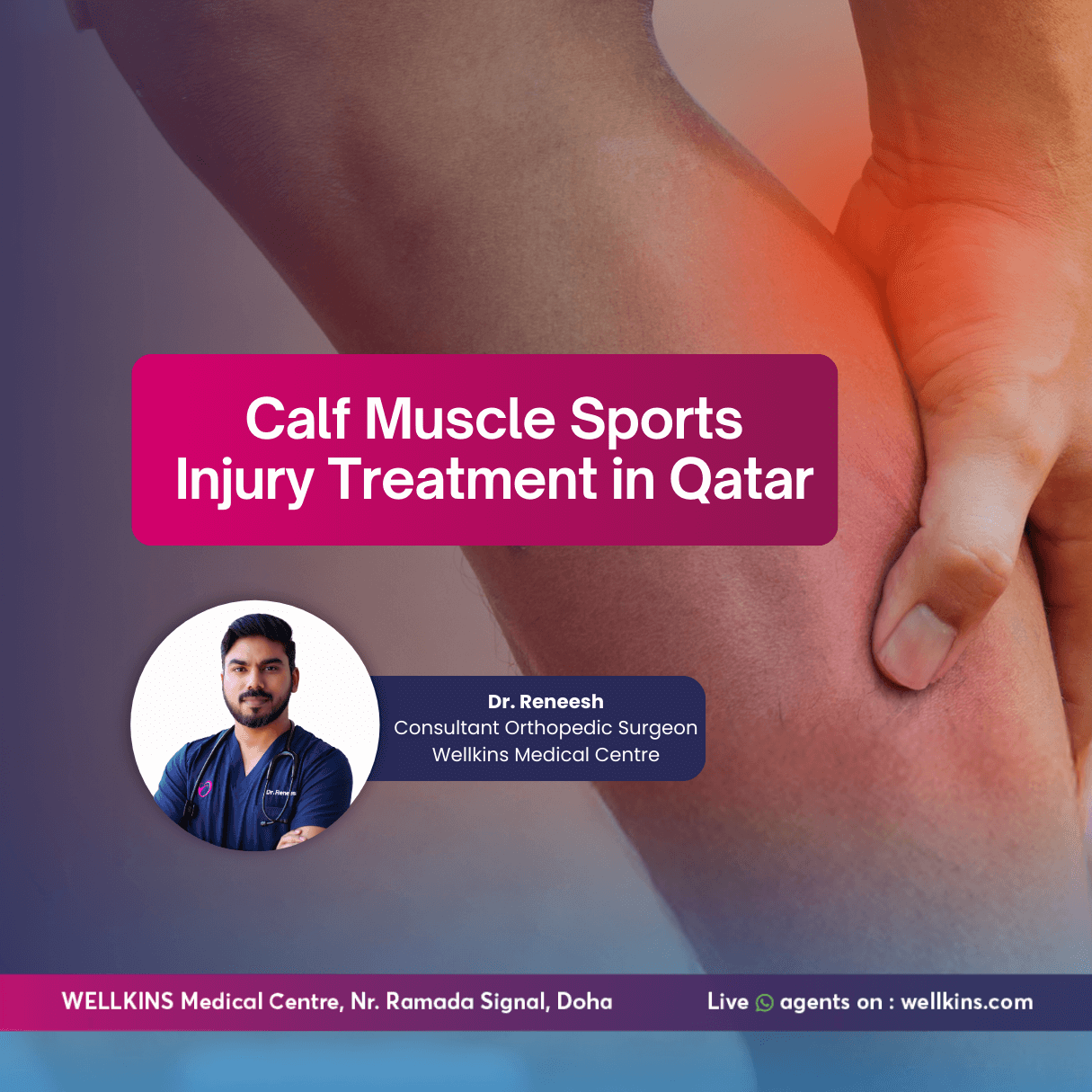
Author: Dr. Reneesh (Consultant Orthopedic Surgeon – Wellkins Medical Centre)
Introduction
Calf muscle injuries are among the most frequent complaints seen in orthopedic and sports medicine clinics. Whether you are a professional athlete, a weekend warrior, or someone performing sudden movements in daily life, the calf is under constant demand. The calf is composed mainly of the gastrocnemius and soleus muscles, which work together to provide the power needed for walking, running, and jumping. At Wellkins Medical Centre, we often see these injuries occur during “stop-start” sports, a condition frequently referred to as “Tennis Leg.” Understanding the mechanics of these muscles is the first step toward effective recovery and long-term mobility.
For athletes and active individuals undergoing calf muscle sports injury treatment in Qatar, proper post-treatment care plays a crucial role in recovery and long-term muscle health. From a sports medicine perspective, monitoring muscle response, movement load and inflammation is essential during the healing phase. Guided rehabilitation, including controlled activity progression, targeted stretching, strengthening and hydration, helps reduce pain, restore flexibility and prevent re-injury ensuring effective recovery rather than short-term symptom relief.
Calf muscle injuries usually occur due to excessive strain, overstretching, or a sudden forceful contraction while the muscle is already under tension. In the high-intensity sports culture of Qatar, these injuries are particularly prevalent during padel, football and sprinting.
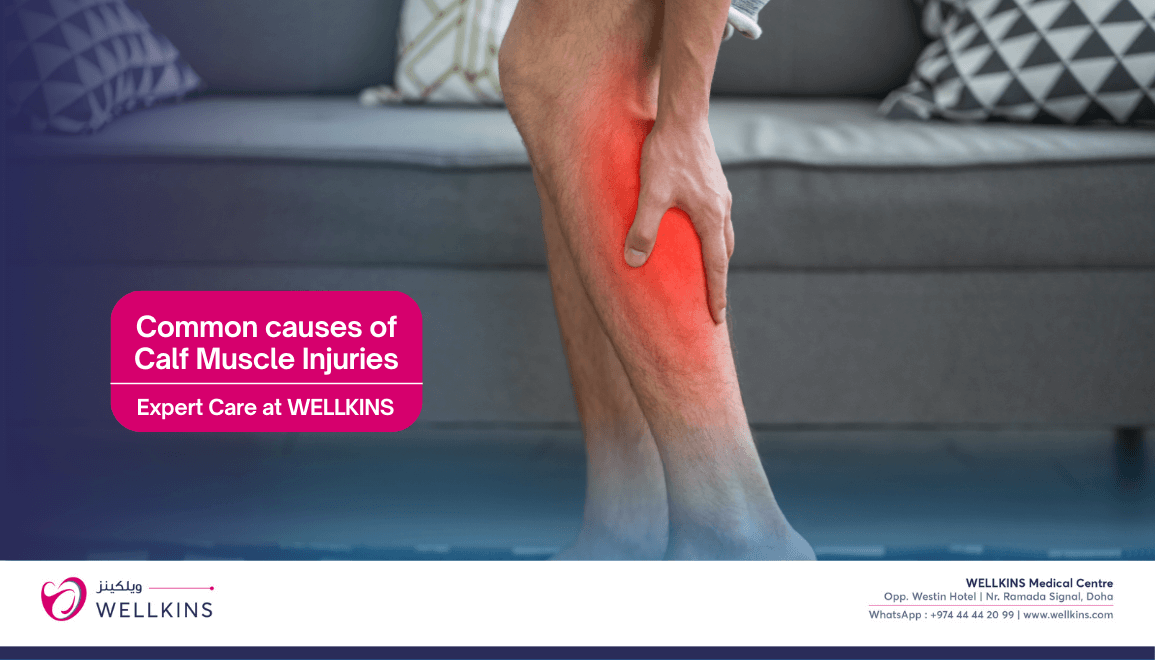
Common causes include:
- Sudden acceleration or jumping: Forcing the muscle to contract rapidly from a stationary position.
- Sprinting or abrupt stopping: Common in court sports where quick changes in direction are required.
- Overuse: Repetitive strain during sports such as football, basketball, tennis, or long distance running without adequate rest.
- Inadequate warm-up: Attempting high-intensity movement while the muscle fibers are “cold” and less elastic.
- Muscle fatigue or dehydration: In Qatar’s heat, electrolyte imbalances can lead to cramping, which predisposes the muscle to tearing.
- Direct trauma: Impact or a kick directly to the back of the leg.
- Poor conditioning: Muscle imbalances between the front (shin) and back (calf) of the leg.
Symptoms
The symptoms of a calf injury vary significantly depending on the “Grade” of the strain (Grade 1 being a minor stretch, Grade 3 being a complete rupture).
- Sudden sharp pain: Often described as being “kicked in the back of the leg” or “hit
by a stone.” - Swelling and tenderness: The area may feel warm to the touch and appear puffy.
- Muscle stiffness or tightness: Difficulty fully straightening the leg or flexing the
foot. - Bruising or discoloration: This may appear hours or even days after the injury as
blood pools near the surface. - Difficulty walking: Specifically, a sharp pain when trying to stand on tiptoes or
during the “push-off” phase of walking. - Weakness: A noticeable loss of strength when trying to move the foot downward.
- The “Popping” Sensation: In severe Grade 3 tears, patients often report hearing or
feeling a distinct pop at the moment of injury.
Investigations
While a clinical examination by a Wellkins orthopedic specialist is the primary tool for diagnosis, imaging is often necessary to determine the exact location and extent of the tear.
- Ultrasound scan: An excellent, cost-effective tool for detecting muscle tears and hematoma (blood collection) in real-time.
- MRI scan: The “Gold Standard” for orthopedic imaging; it provides high resolution details of deep-seated tears and helps in grading the injury precisely.
- Doppler ultrasound: This is critical for ruling out Deep Vein Thrombosis (DVT), as the symptoms of a blood clot in the leg can closely mimic a calf strain.
- X-ray: While X-rays do not show muscle tissue, they are performed to rule out any associated fractures or rare calcification within the muscle.
Treatment
At Wellkins, our treatment philosophy focuses on reducing inflammation early and then progressively loading the muscle to ensure it heals with strength, not just scar tissue.
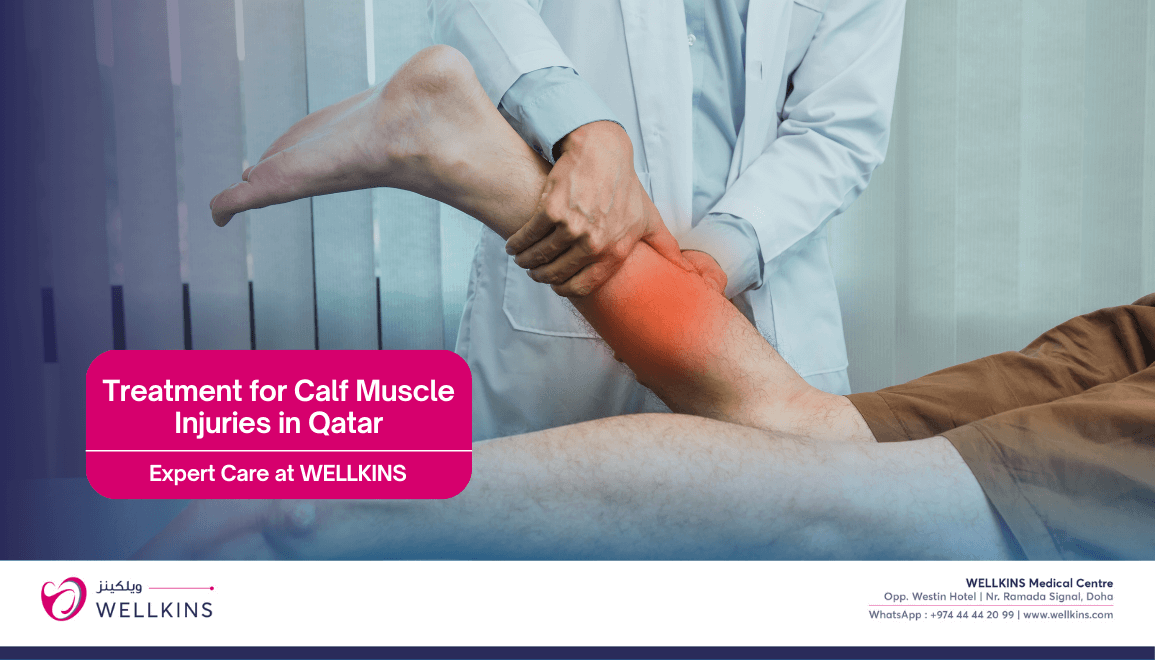
1. Conservative Treatment (Most Cases)
- Rest and activity modification: Avoiding any activity that triggers pain to prevent the tear from widening.
- The R.I.C.E Protocol: Ice application for pain, compression bandages to control swelling and limb elevation to assist drainage.
- Medication: Non-steroidal anti-inflammatory drugs (NSAIDs) may be prescribed to manage acute pain.
- Physiotherapy: A structured program involving gentle stretching and, eventually, eccentric strengthening exercises to remodel the tissue.
- Gradual return: Slowly reintroducing weight-bearing activities under professional guidance.
2. Interventional / Surgical Treatment
- PRP (Platelet-Rich Plasma) Injection: Using the patient’s own concentrated platelets to accelerate the natural healing process in selected partial tears.
- Surgical repair: Though rare, surgery may be required for a complete muscle tendon rupture, particularly in elite athletes who need to return to high-power performance.
Complications If Not Treated
Neglecting a calf injury can lead to long-term functional deficits that affect your entire “kinetic chain.”
- Chronic pain and stiffness: Resulting from improperly healed muscle fibers.
- Muscle weakness: A permanent reduction in “spring” or power during walking and running.
- Recurrent muscle tears: A poorly healed calf is much more likely to tear again in the same spot.
- Scar tissue formation: Thick, inelastic scar tissue can permanently reduce the flexibility of the ankle.
- Altered gait: Compensating for calf pain can lead to secondary issues in the knee,
hip, or lower back. - Misdiagnosis risks: Failing to identify an underlying DVT or compartment syndrome, which are medical emergencies.
Prognosis and Recovery
The timeline for return-to-sport depends entirely on the severity of the initial damage and the consistency of the rehabilitation.
- Mild strain (Grade 1): Recovery in 1–3 weeks with rest and light stretching.
- Moderate tear (Grade 2): Recovery in 4–8 weeks; usually requires dedicated physiotherapy.
- Severe tear (Grade 3): May take 3–6 months or longer, especially if surgical intervention or extensive bracing is required.
Early diagnosis at Wellkins Medical Centre significantly improves these outcomes and ensures you don’t return to the field too early, which is the leading cause of re-injury
Prevention Tips
Preventing a recurrence is just as important as the initial treatment.
- Prioritize the Warm-up: Spend at least 10 minutes on dynamic movements before any sport.
- Strengthen the Calf: Incorporate eccentric heel drops into your weekly gym routine.
- Stay Hydrated: Ensure you are consuming electrolytes, especially during the humid months in Doha.
- Listen to your body: If your calf feels “tight” or “heavy,” it is a warning sign to stop before a tear occurs.
- Footwear: Wear shoes that provide adequate arch support and heel cushioning specific to your sport.
- Gradual Progression: Never increase your running distance or intensity by more than 10% per week.
Conclusion
Calf muscle injuries are a common hurdle, but they are highly treatable when diagnosed early and managed correctly. A “wait and see” approach often leads to chronic stiffness and a higher risk of future tears. Proper rehabilitation and preventive strategies are essential to restore your full range of motion and power. If you have experienced a sudden “pop” in your leg, or if calf pain is making it difficult to walk, don’t wait for the symptoms to worsen. Consult with the specialist at Wellkins Medical Centre today to begin your journey back to full health.
To book an appointment at Wellkins Medical Centre: https://wellkins.com/orthopedics/