
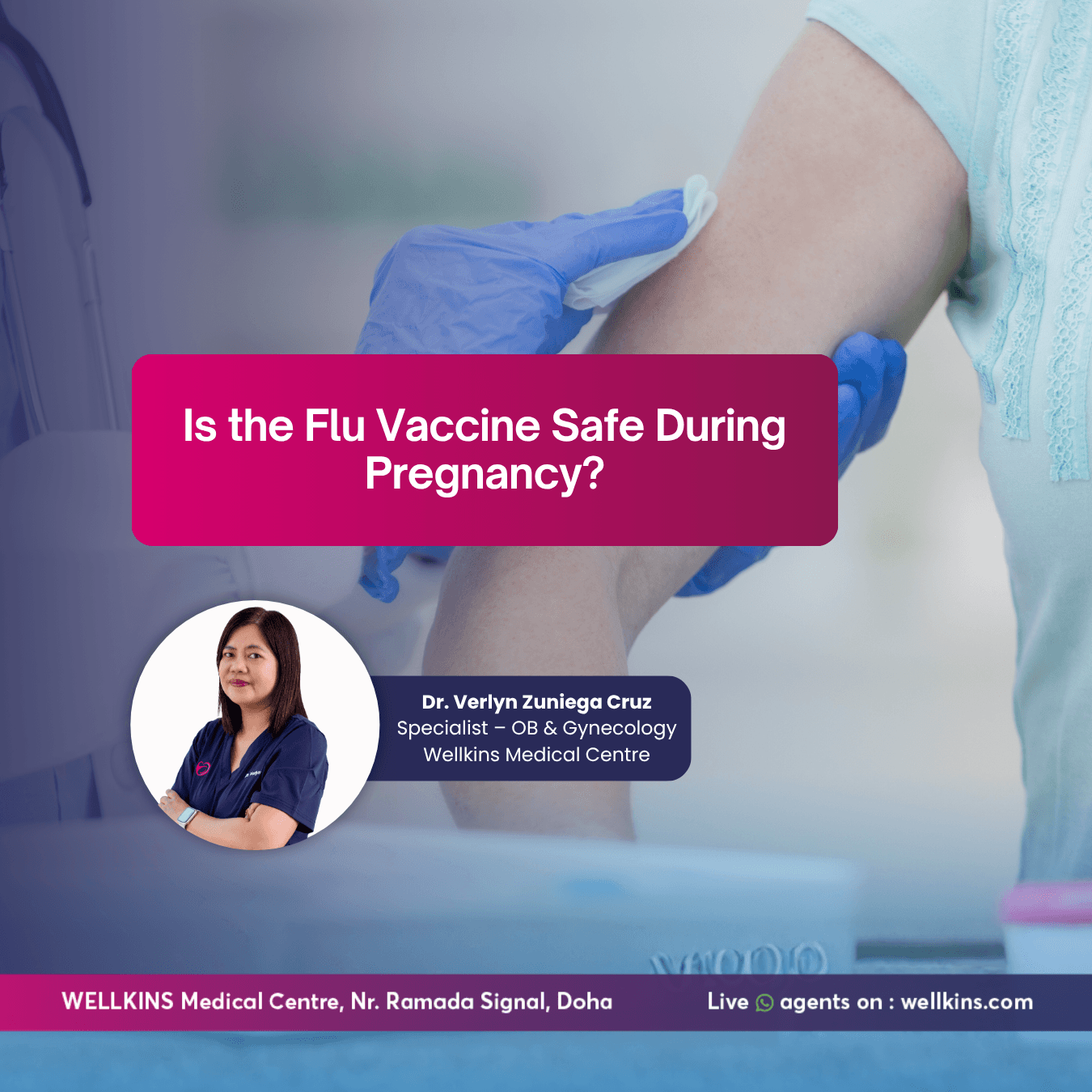
Author: Dr. Verlyn Zuniega Cruz, (Specialist Obstetrician and Gynaecologist – WELLKINS Medical Centre)
Pregnancy often changes the way a woman thinks about everyday health decisions. A medicine or vaccine that once felt routine may suddenly raise questions about safety for the growing baby. The seasonal flu shot is one of the most common examples and many expectant mothers ask whether it is better to receive it or wait until after delivery.
The short answer is that health authorities recommend an injectable flu vaccine during pregnancy unless an individual medical reason prevents it. Pregnancy changes the immune system, heart and lungs in ways that can make influenza more serious. Vaccination helps reduce the mother’s chance of severe flu while also passing protective antibodies to the baby before birth.
This is particularly relevant in Qatar where residents live, work and study within a highly connected international community. Influenza can spread through homes, offices, schools and busy indoor public spaces. Air-conditioned environments may also keep people close together for long periods. A conversation with your obstetrician can help you choose the right timing and confirm which vaccine is suitable for you.
The injectable flu vaccine can be given during any trimester of pregnancy and offers protection for both mother and baby. Each pregnancy is unique so discuss your health history, allergies and previous vaccine reactions with your obstetrician before vaccination.
People Also Ask
Is the flu shot safe during pregnancy?
The injectable flu vaccine has an established safety record during pregnancy and is recommended by major health authorities. It does not contain live influenza virus and cannot give you the flu.
Which trimester is best for a flu shot?
The flu shot can be given during the first, second or third trimester. Timing usually depends on seasonal vaccine availability, local influenza activity and your individual health circumstances.
Does a flu shot during pregnancy protect the baby?
Yes. Antibodies produced by the mother cross the placenta and can help protect the newborn during the first months of life when the baby is too young to receive a flu vaccine.
Can a pregnant woman receive the nasal spray flu vaccine?
The nasal spray vaccine contains live attenuated influenza virus and is not recommended during pregnancy. Pregnant women should receive an age-appropriate injectable flu vaccine after discussing it with their healthcare professional.

Why Flu Can Be More Serious During Pregnancy

Influenza is more than a heavy cold. It can cause sudden fever, cough, sore throat, muscle pain, headache and profound tiredness. During pregnancy, changes in immune response and increased demands on the heart and lungs can raise the risk of complications. Pregnant women with flu are more likely to need hospital care than healthy women of the same age who are not pregnant.
Complications may include pneumonia, dehydration and worsening of conditions such as asthma. High fever during pregnancy also deserves prompt medical attention. Prevention is therefore valuable even for someone who is generally healthy and has experienced mild flu in the past.
Flu Protection for Mother and Baby
A flu shot during pregnancy supports the mother’s health while helping protect her baby through antibodies passed before birth. This shared protection is especially valuable during the newborn’s first months when the baby is vulnerable to respiratory infections and too young for routine influenza vaccination.
When Can You Get the Flu Shot During Pregnancy?
The injectable flu vaccine may be given during any trimester including the first trimester. You do not need to wait until a particular week solely because you are pregnant. In most cases, the practical goal is to be vaccinated before influenza is circulating widely while using the vaccine prepared for the current season.
If you become pregnant after receiving that season’s flu vaccine, you usually do not need another dose simply because pregnancy began. A seasonal flu vaccine is generally recommended each year because circulating strains and vaccine formulations can change. Your obstetrician can advise you when pregnancies or flu seasons overlap in an unusual way.
Which Flu Vaccine Should Pregnant Women Receive?
Pregnant women should receive an injectable flu vaccine that is appropriate for their age and health status. These flu shots use inactivated virus or approved non-live technology. They cannot cause influenza because they do not contain live virus capable of producing the illness.
The nasal spray flu vaccine is different. It uses live attenuated influenza virus and should not be used during pregnancy. If you are offered a vaccine outside your usual clinic, tell the healthcare professional that you are pregnant and ask them to confirm that it is an injectable vaccine suitable for pregnancy.
How the Flu Shot Protects Your Baby
After vaccination, the mother’s immune system creates antibodies against the influenza strains included in that season’s vaccine. Some of these antibodies cross the placenta. This gives the baby a layer of protection that continues for several months after birth.
This matters because infants younger than six months cannot receive a routine flu vaccine and can become seriously unwell from influenza. Maternal vaccination also lowers the chance that the mother will develop flu and pass it to her newborn. Vaccination is not a perfect shield but it can reduce the likelihood and severity of illness.Choosing the Right Flu Vaccine in Pregnancy
The correct vaccine type matters during pregnancy. An obstetrician can review the available injectable flu vaccine, your medical history and any previous reactions so that vaccination is planned safely and confidently.
Common Side Effects After a Flu Shot
Most side effects are mild and settle within one or two days. The injection site may feel sore or look slightly red. Some people experience tiredness, a mild headache, muscle aches or a low fever as the immune system responds.
Rest, hydration and a cool compress over the injection area may help. Ask your obstetrician which medicine is suitable if you develop discomfort or fever because not every over-the-counter product is appropriate during pregnancy. Seek urgent help for difficulty breathing, swelling of the face or throat, widespread hives, severe dizziness or another sign of a serious allergic reaction.
Who Should Speak to a Doctor Before Vaccination?
Every pregnant woman can mention vaccination during prenatal care. A focused discussion is especially important if you previously had a severe allergic reaction to a flu vaccine or one of its ingredients. Tell your doctor about any serious reaction after an earlier vaccination and any history of Guillain-Barré syndrome.
If you are moderately or severely unwell on the planned vaccination day, your healthcare professional may advise waiting until you improve. A mild illness does not always require postponement. Egg allergy also does not automatically rule out influenza vaccination but the appropriate product and setting should be chosen with professional guidance.
Flu Shot Myths That Can Cause Unnecessary Worry
- Myth: The flu shot can give me influenza. Injectable flu vaccines do not contain live influenza virus that can cause flu.
- Myth: Vaccination must wait until the second trimester. The recommended flu shot can be administered during any trimester.
- Myth: Healthy pregnant women do not need protection. Pregnancy itself increases the risk of serious flu complications even when a woman has no chronic condition.
- Myth: One flu shot protects for every future season. Flu vaccines are updated and annual vaccination is generally recommended.
What If You Develop Flu Symptoms While Pregnant?
Vaccinated people can still occasionally develop influenza. Contact your healthcare provider promptly if you are pregnant and develop fever, cough, body aches, sore throat or marked tiredness. Early medical advice matters because antiviral treatment may be recommended for suspected flu during pregnancy and works best when started promptly.
Do not self-medicate with leftover antibiotics or unapproved cold remedies. Antibiotics do not treat influenza and some combination products contain ingredients that may not be suitable during pregnancy. Seek urgent medical care for breathing difficulty, chest pain, confusion, persistent vomiting, dehydration, reduced baby movements or symptoms that are rapidly worsening.
Vaccination as Part of Prenatal Care
Vaccination decisions should form part of a complete prenatal care plan rather than being considered in isolation. Regular appointments give your obstetrician an opportunity to review your trimester, current health and seasonal risks in Qatar before offering individual advice.
Practical Flu Prevention for Families in Qatar
Vaccination works best alongside sensible infection-control habits. Wash your hands regularly, cover coughs and sneezes and avoid close contact with people who are acutely unwell. Improve indoor ventilation where practical and clean frequently touched surfaces when someone at home has respiratory symptoms.
Encourage eligible household members and caregivers to receive their seasonal flu vaccines too. This can help create a safer environment around the mother and newborn. In a multicultural city such as Doha where families may travel frequently or welcome visitors from abroad, shared prevention reduces opportunities for flu to reach a vulnerable baby.
Making an Informed Decision With Your Obstetrician
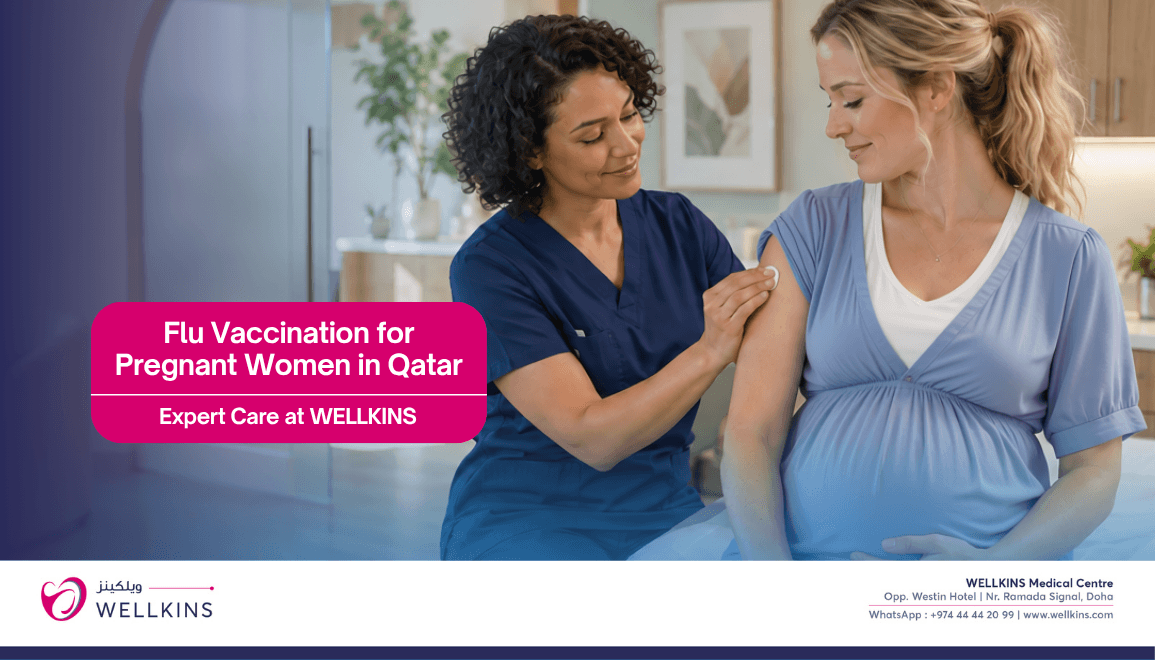
Bring your vaccination record to a prenatal appointment if it is available. Tell your obstetrician about allergies, previous reactions, current illness and any medical conditions or medicines. Your doctor can confirm the correct vaccine and help coordinate it with other pregnancy vaccines when appropriate.
For most pregnant women, receiving the recommended flu shot is a straightforward step that protects two people at once. A brief appointment can replace uncertainty with a decision based on your trimester, health history and the current flu season in Qatar. With individual medical guidance, you can make vaccination part of a thoughtful prenatal care plan.
To book an appointment with Dr. Verlyn Zuniega Cruz at WELLKINS Medical Centre: https://wellkins.com/drverlyn
To know more about the OB & Gynecology services at WELLKINS Medical Centre: https://wellkins.com/gynecology