
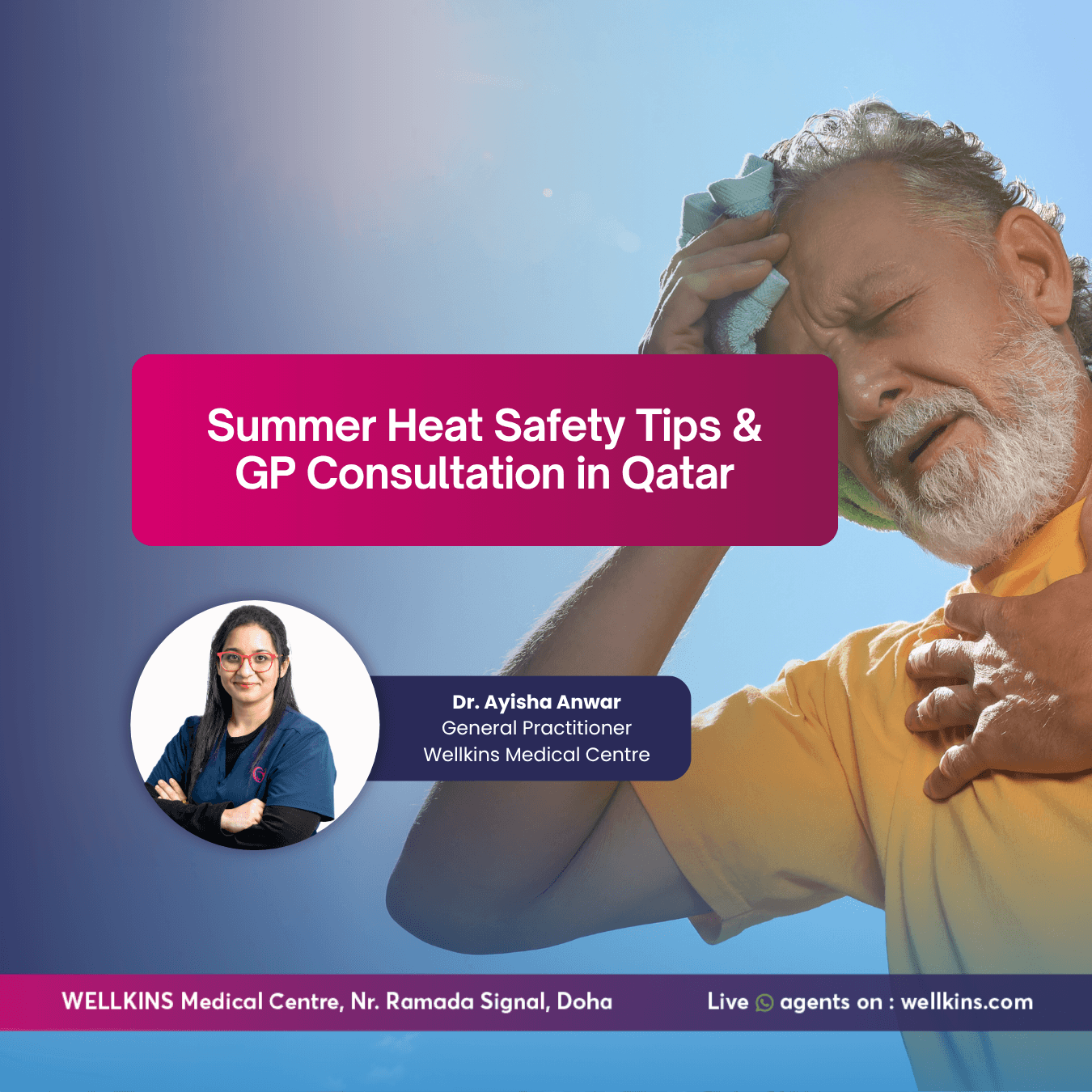
Author: Dr. Ayisha Anwar, (General Practitioner – Wellkins Medical Centre)
Qatar’s summer is not simply hot. It is one of the most extreme heat environments inhabited by a large human population anywhere on Earth. Temperatures regularly exceed 45 degrees Celsius through June, July and August. Humidity levels in the coastal areas around Doha can reach 90 percent in the early morning hours, making the heat index what the body actually experiences rather than the thermometer reading significantly higher than the air temperature alone. UV index values exceed 11, the extreme threshold, for months at a stretch.
For most of the people living and working in Qatar, summer is a season to be survived rather than simply experienced differently. And for the hundreds of thousands of outdoor workers who continue building, maintaining and operating the infrastructure of one of the world’s fastest-growing economies regardless of what the thermometer reads, summer is a genuine occupational health emergency that plays out one heat-related illness at a time across clinics and emergency departments throughout Doha.
At Wellkins Medical Centre, heat-related presentations rise sharply from May onward. The good news is that heat stroke, heat exhaustion and dehydration are almost entirely preventable when people understand how the body responds to extreme heat, what the warning signs look like and what to do when they or someone around them begins to show them.
The cases that concern me most in summer are not the dramatic heat stroke presentations that arrive by ambulance. They are the people who come in having been quietly heat-exhausted for days, who attributed their headache, their fatigue and their reduced urination to being busy or stressed, who did not realise that their body was already in a state of significant heat stress. Understanding the early signs matters as much as knowing what to do in a crisis. Heat illness is a spectrum and catching it early is what keeps it from progressing to a medical emergency.
People Also Ask
What is the difference between heat exhaustion and heat stroke?
Heat exhaustion and heat stroke are two points on the spectrum of heat-related illness. Heat exhaustion occurs when the body is significantly stressed by heat and is struggling to maintain its temperature through sweating and circulation but has not yet lost the ability to regulate its own temperature. The person sweats heavily, feels weak, dizzy and nauseous and their core temperature may be elevated but remains below 40 degrees Celsius. Heat stroke is a medical emergency in which the body’s temperature regulation system has failed. Core temperature exceeds 40 degrees Celsius and the brain is directly affected, producing confusion, loss of coordination and altered consciousness. Heat stroke requires emergency cooling and immediate medical treatment without delay.
How much water should I drink in Qatar’s summer?
The minimum hydration target during Qatar’s summer months is approximately three to four litres of water per day for a sedentary adult in an air-conditioned environment. For anyone doing moderate outdoor activity this increases to four to six litres per day and for people doing heavy physical work in the outdoor heat the requirement can exceed eight litres per day with additional electrolyte replacement needed. The most practical daily guide is urine colour. Pale straw-coloured urine indicates adequate hydration. Dark yellow or amber urine means you are already behind on your fluid intake and need to drink more immediately.
Can dehydration cause long-term health problems?
Yes. Chronic mild dehydration that persists across weeks and months, which is genuinely common in Qatar’s working population even among people who believe they drink enough, contributes to kidney stone formation, impaired kidney function, recurrent urinary tract infections, constipation, reduced cognitive performance and increased risk of heat illness during heat stress events. For people with existing conditions including diabetes, hypertension and kidney disease, the consequences of chronic dehydration compound significantly. Treating hydration as a daily health priority rather than something to address only when thirsty produces measurable long-term health benefits.
Who is most at risk of heat-related illness in Qatar?
The highest-risk groups for heat illness in Qatar are outdoor workers including construction, landscaping and cleaning workers who have no choice but to remain in the heat during working hours, elderly people whose thermoregulatory capacity is reduced, young children whose smaller bodies heat up faster than adults, people with chronic conditions including diabetes cardiovascular disease and kidney disease that impair the body’s ability to adapt to heat and people who are new to Qatar and have not yet acclimatised to the extreme temperature environment. Anyone taking medications including diuretics antihistamines and certain antidepressants that affect sweating or fluid balance is also at elevated risk.

Understanding Qatar’s Summer Heat: Why It Is Different
To understand why Qatar’s summer creates such significant health risks it helps to understand how the human body manages heat normally and where those mechanisms break down under extreme conditions.
The body maintains its core temperature within a very narrow range through two primary mechanisms: sweating which cools the skin through evaporation and increasing circulation to the skin surface which transfers heat from the core to the periphery where it can radiate away. Both mechanisms require adequate fluid and electrolyte status. When fluid reserves are depleted sweat production drops and circulation to the skin surface becomes less effective. Core temperature then begins to rise.
The two factors that make Qatar’s summer so particularly challenging are the combination of extreme temperature and high humidity. Sweat evaporation, the body’s primary cooling mechanism, requires the sweat to evaporate off the skin surface into the surrounding air. When humidity is high the air is already saturated with water vapour and sweat cannot evaporate efficiently. The body continues to produce sweat but the cooling effect is dramatically reduced while fluid and electrolyte losses continue at the same rate. This is why Qatar’s coastal humid heat is physiologically more demanding than equivalent temperatures in dry desert climates.
Dehydration: The Foundation of Heat Illness
Dehydration is not simply feeling thirsty. By the time thirst registers as a conscious sensation, the body is already one to two percent dehydrated. In Qatar’s summer heat, that deficit accumulates rapidly. The consequences of progressive dehydration extend far beyond discomfort.
- One to Two Percent Dehydration: Thirst, mild headache, slightly reduced concentration. These are the early warning signs that most people notice and dismiss as a normal part of a busy day.
- Three to Four Percent Dehydration: Significant reduction in physical performance, impaired concentration, increased effort of physical tasks, headache worsening and dark urine. At this level, heat illness risk increases substantially.
- Five to Six Percent Dehydration: Dizziness, muscle cramps, significantly reduced urine output, nausea, fatigue disproportionate to activity and in some people confusion beginning to emerge. This level warrants prompt medical assessment if it occurs in a heat environment.
- Seven Percent or More Dehydration: Severe physiological impairment that constitutes a medical emergency. Core temperature rises, the brain is affected and without aggressive fluid replacement and cooling the situation can progress to heat stroke and multi-organ injury.
Practical dehydration prevention in Qatar’s summer:
- Begin every day with a full glass of water before any other beverage and before leaving air-conditioned spaces.
- Carry a minimum one-litre water bottle at all times and set reminders to drink if you do not naturally remember throughout a busy day.
- Do not rely on thirst as your hydration cue. By the time you are thirsty in Qatar’s summer you are already dehydrated.
- Replace electrolytes as well as fluid after significant sweating. Water alone does not replace the sodium, potassium and magnesium lost in sweat and drinking large volumes of plain water without electrolyte replacement during heavy outdoor work can cause hyponatraemia, a dangerous drop in blood sodium.
- Limit caffeine and alcohol during summer months as both have diuretic effects that worsen fluid losses.
- Check urine colour before every bathroom visit during the summer. This is the most reliable real-time hydration gauge available without any equipment.
Heat Cramps: The Body’s First Warning
Heat cramps are painful involuntary muscle contractions that typically affect the legs, arms and abdomen during or after exercise or physical work in the heat. They are caused by the loss of electrolytes, particularly sodium and potassium, in sweat rather than by dehydration alone.
- Who gets them: Most commonly outdoor workers and athletes who sweat heavily over several hours and replace their fluid losses with plain water rather than electrolyte-containing fluids.
- Management: Cessation of activity, moving to a cool environment, oral electrolyte replacement through an oral rehydration solution or a sports drink and rest until the cramping resolves. Massaging the affected muscle and gentle stretching can reduce acute discomfort.
- When to seek care: Heat cramps that do not resolve within an hour of rest and fluid replacement, cramps accompanied by nausea, vomiting or dizziness or cramps in a person with a cardiac or kidney condition warrant medical assessment.
Heat Exhaustion: Recognising the Emergency Before It Becomes One
Heat exhaustion is the clinical state that precedes heat stroke and the point at which urgent intervention is most effective. It occurs when the body’s compensatory mechanisms are significantly strained but have not yet failed. Recognising heat exhaustion allows treatment before it progresses to the life-threatening emergency of heat stroke.
Symptoms of heat exhaustion:
- Heavy sweating even in a cool environment as the body attempts to shed accumulated heat
- Cool, pale and clammy skin from the redirection of circulation to the skin surface
- Rapid weak pulse
- Nausea and sometimes vomiting
- Weakness and fatigue that feel disproportionate to the activity performed
- Dizziness and lightheadedness particularly on standing
- Headache
- Muscle cramps
- A core temperature that may be elevated, typically between 37.5 and 40 degrees Celsius
What to do for heat exhaustion:
- Move the person immediately to a cool air-conditioned environment. This is the single most important intervention.
- Loosen or remove excess clothing.
- Apply cool wet towels to the skin, particularly to the neck, armpits and groin where large blood vessels pass close to the surface.
- Give cool water or an oral rehydration solution to drink if the person is conscious and not vomiting.
- Monitor closely. If symptoms do not improve within fifteen to thirty minutes of cooling and hydration or if the person’s condition worsens, call for emergency medical assistance immediately.
Heat Stroke: A Medical Emergency
Heat stroke occurs when the body’s temperature regulation system fails and the core temperature rises above 40 degrees Celsius. At this temperature the brain and vital organs are directly threatened by heat injury. Heat stroke is a medical emergency requiring the most rapid possible response. Every minute of delay in cooling worsens the prognosis.
There are two forms of heat stroke with important clinical differences.
- Classic Heat Stroke: Develops over hours to days of exposure to extreme heat, most commonly in elderly people, children and those with chronic medical conditions. Sweating may be absent in classic heat stroke because the thermoregulatory system has failed. The skin is often hot and dry rather than wet.
- Exertional Heat Stroke: Develops rapidly during intense physical activity in the heat, most commonly in young outdoor workers and athletes. Sweating is usually still present because the failure is in the body’s ability to dissipate heat fast enough rather than in the sweating mechanism itself.
Symptoms that indicate heat stroke rather than heat exhaustion:
- Core temperature above 40 degrees Celsius
- Confusion, disorientation or altered consciousness
- Slurred speech or loss of coordination
- Aggressive or unusual behaviour
- Seizure
- Loss of consciousness
- Hot skin that may be dry or still sweating depending on the type of heat stroke
Emergency response for heat stroke:
- Call 999 immediately. Heat stroke is a life-threatening emergency. Emergency medical services must be activated without delay while cooling is initiated.
- Cool aggressively and immediately. Ice water immersion, applying ice packs to the neck, armpits and groin and spraying with cool water while fanning are all effective rapid cooling methods. The goal is to reduce the core temperature as quickly as possible. Do not wait for the ambulance to begin cooling.
- Do not give fluids orally to a person who is confused or unconscious. This risks aspiration. Intravenous fluid replacement is required in clinical settings.
- Position correctly. If the person is unconscious place them in the recovery position. If they are having a seizure protect them from injury and maintain the airway.
UV Exposure and Sun Safety in Qatar
Qatar’s summer UV index exceeds 11 throughout the peak months, a level at which unprotected skin burns in less than ten minutes at midday. The cumulative UV exposure accumulated across years of living in Qatar without adequate sun protection is a significant contributor to photoageing, hyperpigmentation and skin cancer risk. Sun safety is not a cosmetic concern. It is a health priority.
- Avoid outdoor exposure between 10 AM and 4 PM during summer months when UV intensity is at its highest. If outdoor activity cannot be avoided during these hours, protective measures become mandatory rather than optional.
- Wear protective clothing. Long sleeves and long trousers in lightweight breathable fabrics provide more reliable UV protection than sunscreen alone. Light-coloured loose-weave fabric in cotton or moisture-wicking synthetics also helps manage body temperature by reflecting heat.
- Apply broad-spectrum SPF 50 sunscreen to all exposed skin at least twenty minutes before sun exposure and reapply every two hours. In Qatar’s summer heat where sweating is continuous, reapplication frequency matters significantly for maintaining protection.
- Wear a wide-brimmed hat that shades the face, ears and back of the neck, all areas where skin cancer commonly develops.
- Use UV-protective sunglasses. Qatar’s UV intensity causes cumulative damage to the cornea and lens that contributes to cataracts and pterygium over years. Sunglasses with UV400 protection worn whenever outdoors provide meaningful protection.
Special Considerations for High-Risk Groups in Qatar’s Summer
- Outdoor Workers: Qatar’s labour laws mandate a midday work ban for outdoor workers during the summer months. Workers should be encouraged to maximise shade during all outdoor work, drink at least one litre of fluid per hour of outdoor work and report symptoms of heat illness to supervisors immediately. Employers and supervisors should be trained to recognise heat exhaustion and heat stroke in their workforce.
- Elderly Residents: The thermoregulatory capacity of older adults is significantly reduced. Sweating is less efficient, thirst perception is blunted and medications commonly taken by older adults including diuretics, beta-blockers and antihistamines further impair the body’s response to heat. Elderly people in Qatar should remain in air-conditioned environments during peak heat hours, have their fluid intake actively monitored and have their medications reviewed for heat-related interactions during summer.
- Children: Children’s bodies produce more heat relative to their size than adults and their sweating capacity is lower. Young children depend entirely on caregivers to ensure adequate fluid intake and to make decisions about heat exposure. Children should never be left unattended in a car in Qatar’s summer heat under any circumstances, even briefly. A car interior can reach fatal temperatures within minutes in summer conditions.
- People With Chronic Conditions: Diabetes impairs the sweating response and also makes dehydration more immediately dangerous through its effect on blood glucose regulation. Cardiovascular disease limits the circulatory adaptations that help manage heat. Kidney disease makes dehydration particularly harmful to organ function. People with these conditions should discuss summer heat management specifically with their doctor at Wellkins and have a clear plan for staying safe during the hottest months.
When to Visit Wellkins Medical Centre During Summer
You should visit Wellkins Medical Centre promptly if you or someone in your family experiences any of the following during Qatar’s summer months.
- Persistent headache, fatigue or nausea following outdoor exposure or significant physical activity in the heat that does not resolve with rest and hydration within a few hours.
- Dark urine that does not improve after increasing fluid intake over several hours.
- Muscle cramps that do not resolve with rest and electrolyte replacement within an hour.
- Dizziness or lightheadedness particularly on standing from a seated or lying position.
- Sunburn that is blistering, extensive or accompanied by fever and chills, which indicates severe sunburn requiring medical management.
- Symptoms of heat exhaustion including heavy sweating, weakness, nausea and rapid pulse that have not fully resolved after thirty minutes of appropriate cooling and hydration.
Call 999 immediately for any signs of heat stroke including confusion, altered consciousness, seizure or core temperature above 40 degrees Celsius. Do not drive a person with suspected heat stroke to a clinic. They need emergency services and immediate aggressive cooling.
Qatar’s summer is demanding but manageable with the right knowledge and the right habits. Stay hydrated, stay shaded during peak hours, respect the warning signs your body sends and do not hesitate to seek medical assessment when something does not feel right. The heat is predictable. The risk is preventable. The time to build those habits is before the peak of summer arrives rather than in the middle of it.
To book an appointment at Wellkins Medical Centre: https://wellkins.com/drayisha
To know more about the General Medicine services at Wellkins Medical Centre: https://wellkins.com/general-medicine