
Author: Dr. Ayisha Anwar, (General Practitioner – Wellkins Medical Centre)
Kidney stone pain is described by those who have experienced it as among the most severe pain a person can feel. Sudden, colicky, radiating from the flank to the groin, it arrives without warning and can stop a person entirely within minutes. For patients in the acute phase, the question is simply how to make it stop. But the more important clinical conversation, and the one that prevents a second stone from forming, is what caused the first one.
In Qatar, kidney stones are one of the most prevalent urological conditions encountered in internal medicine practice. The combination of intense heat, a significant proportion of the working population spending the hottest months in outdoor and physically demanding environments, dietary patterns high in sodium and animal protein across many of the cultures represented in Doha and chronic mild dehydration that is remarkably common even among people who believe they are drinking enough creates conditions that are close to optimal for kidney stone formation. Qatar’s stone season, the period of highest stone presentations, correlates directly with the summer months when dehydration risk is at its peak.
Understanding what causes kidney stones, how to manage the pain and most importantly how dietary and lifestyle modification prevents recurrence is the essential clinical conversation for anyone who has experienced a stone or who carries risk factors for developing one.
Kidney stones are one of the most preventable conditions I manage in internal medicine practice and one of the most reliably recurrent when prevention is not addressed. The recurrence rate for kidney stones without dietary and lifestyle modification is around fifty percent within five years. With appropriate guidance on hydration, diet and where indicated specific medical management, that risk is substantially and measurably reduced. The first stone is the warning. What we do with that warning determines whether there is a second one.
People Also Ask
What causes kidney stones in Qatar?
The most common cause of kidney stones in Qatar is chronic dehydration combined with dietary factors including high sodium intake, high animal protein consumption and in some individuals excessive dietary oxalate. Qatar’s extreme summer heat dramatically increases fluid loss through sweat and when this is not adequately replaced the urine becomes highly concentrated, creating the conditions in which stone-forming minerals crystallise and aggregate. Calcium oxalate stones are the most common type overall, accounting for around 80 percent of all kidney stones. Uric acid stones, which are particularly associated with high meat intake and dehydration, are also highly prevalent in Qatar’s clinical population.
How do I know if I have a kidney stone?
The classic presentation of a kidney stone is sudden severe pain in the flank, the area between the lower rib and the hip on one side, that radiates to the groin and inner thigh. This pain comes in waves, intensifying and easing as the stone moves through the ureter. It is frequently accompanied by nausea and vomiting and in some cases visible blood in the urine producing a pink, red or brown discolouration. Some stones produce no symptoms at all and are discovered incidentally on imaging performed for another reason. Any presentation of severe flank pain accompanied by nausea or blood in the urine warrants urgent medical assessment.
How much water should I drink to prevent kidney stones in Qatar?
The clinical target for kidney stone prevention in a hot climate like Qatar is producing at least two to two and a half litres of urine per day. In Qatar’s summer heat where fluid loss through sweat is significant, achieving this typically requires total daily fluid intake of three to four litres or more depending on the individual’s activity level and environment. A practical daily check is urine colour. Pale straw-coloured or very light yellow urine indicates adequate hydration. Dark yellow or amber urine indicates that the kidneys are concentrating urine significantly and stone-forming risk is elevated.
Can kidney stones be dissolved without surgery?
It depends on the type of stone. Uric acid stones are the only common type that can be dissolved through medical management, specifically by alkalinising the urine with potassium citrate under medical supervision alongside significant hydration. Calcium oxalate stones, the most common type, cannot be dissolved and must either pass spontaneously or be removed through urological procedures. Small stones of five millimetres or less pass spontaneously in around 68 percent of cases with adequate hydration and pain management. Stones larger than ten millimetres are unlikely to pass without intervention. Shockwave lithotripsy, ureteroscopy and in larger stones percutaneous nephrolithotomy are the most commonly used removal procedures depending on stone size and location.

Understanding Kidney Stones: What They Are and Why They Form
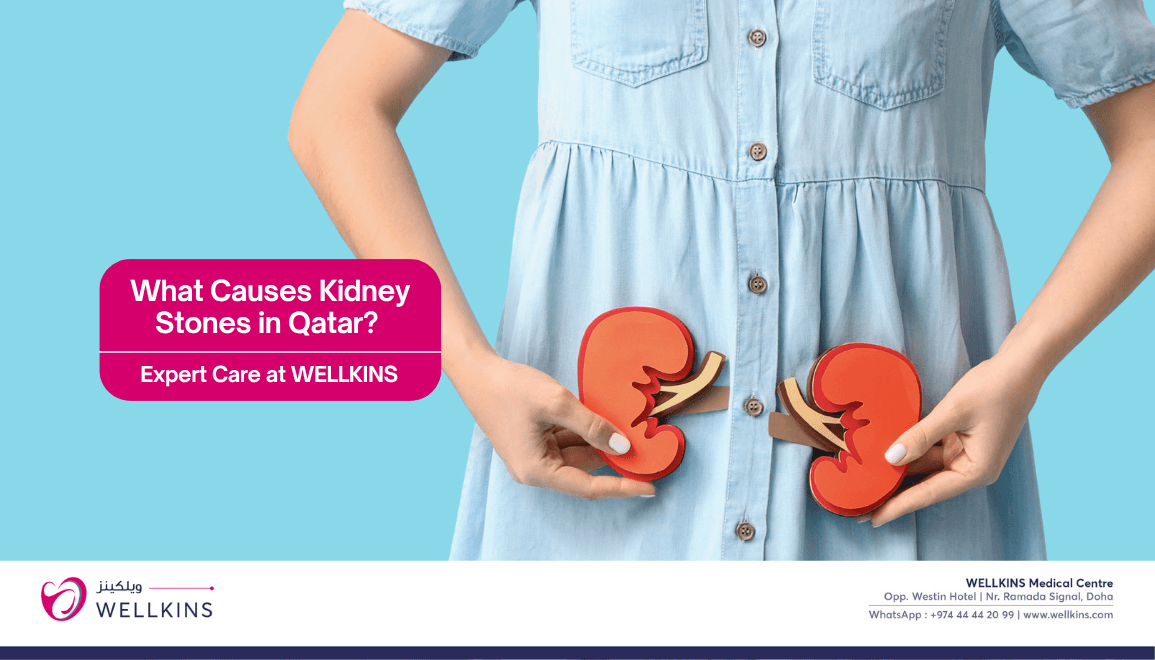
Kidney stones are hard crystalline deposits that form inside the kidneys when the urine becomes oversaturated with minerals and salts that then precipitate out of solution and aggregate into a solid mass. The kidney itself is a remarkable filtration system but it cannot keep stone-forming minerals soluble indefinitely when the urine is consistently too concentrated or when the balance of stone-promoting and stone-inhibiting substances in the urine is disrupted.
There are four main types of kidney stones each with distinct causes and slightly different prevention approaches.
- Calcium Oxalate Stones: The most common type worldwide and in Qatar, accounting for approximately 80 percent of all kidney stones. They form when calcium and oxalate levels in the urine are both elevated or when urinary volume is too low to keep these minerals in solution. Despite the name, reducing dietary calcium is not the recommended prevention strategy and can actually worsen oxalate absorption. The primary target is reducing oxalate intake and ensuring adequate hydration.
- Uric Acid Stones: Form when the urine is consistently acidic, typically in people with high animal protein intake, gout, metabolic syndrome or chronic dehydration. Uric acid stones are the only common stone type amenable to medical dissolution through urine alkalinisation. They are particularly prevalent in Qatar’s clinical population given the combination of high meat consumption and dehydration that is common across many of Doha’s communities.
- Struvite Stones: Form in the setting of recurrent urinary tract infections with specific urea-splitting bacteria. They can grow rapidly into large staghorn calculi if the underlying infection is not controlled. Struvite stones require both urological stone removal and treatment of the underlying infection.
- Calcium Phosphate and Cystine Stones: Less common and often associated with specific underlying metabolic or genetic conditions that require specialised investigation and management beyond standard dietary modification.
Why Qatar Creates Ideal Conditions for Kidney Stone Formation
Qatar sits in one of the world’s highest kidney stone belts. The geographic areas with the highest global prevalence of kidney stones correspond closely with hot arid and semi-arid climates and Qatar’s combination of extreme heat, low humidity and a predominantly indoor workforce that transitions repeatedly between air-conditioned interiors and outdoor heat creates a specific and consistent dehydration risk that drives stone formation year-round.
- Extreme Heat and Sweat Loss: Qatar’s summer temperatures exceeding 45 degrees Celsius produce extreme sweat rates, particularly for outdoor workers in construction, landscaping and logistics who represent a very large proportion of Qatar’s workforce. Even people who work in air-conditioned offices lose significant fluid through the transitions between environments throughout the day. This fluid loss, when not adequately replaced, concentrates the urine and dramatically elevates stone risk.
- Chronic Underhydration: Multiple studies in Qatar and across the Gulf region have identified chronic mild dehydration as endemic even among people who report drinking what they believe to be adequate fluid. Many adults in Qatar replace lost fluid with tea, coffee, sweetened beverages and juices rather than water, none of which provide the pure hydrating effect of water and some of which, including sweetened drinks high in fructose, directly increase uric acid production and stone risk.
- High Animal Protein Diets: Qatar’s diverse food culture includes traditions from South Asian, Arab, African and Southeast Asian communities that all feature substantial quantities of red meat, poultry and fish. High animal protein intake increases urinary calcium excretion, reduces urinary citrate, which is the body’s natural stone inhibitor, and increases uric acid production. All three effects raise kidney stone risk.
- High Sodium Intake: Sodium is a major driver of kidney stone formation because it directly increases the amount of calcium excreted in the urine. Qatar’s food culture, including the widespread use of processed and packaged foods with high sodium content, restaurant meals prepared with generous salting and the sodium content of preserved and cured meats common across many communities, creates a chronic high sodium dietary environment for much of the population.
- Low Calcium Dietary Patterns in Some Groups: Counterintuitively, diets low in calcium increase rather than decrease oxalate absorption from the gut, raising urinary oxalate and calcium oxalate stone risk. Some dietary patterns represented in Qatar’s population that restrict dairy or other calcium-rich foods may contribute to this mechanism in susceptible individuals.
Recognising Kidney Stone Pain: Symptoms and When to Seek Urgent Care
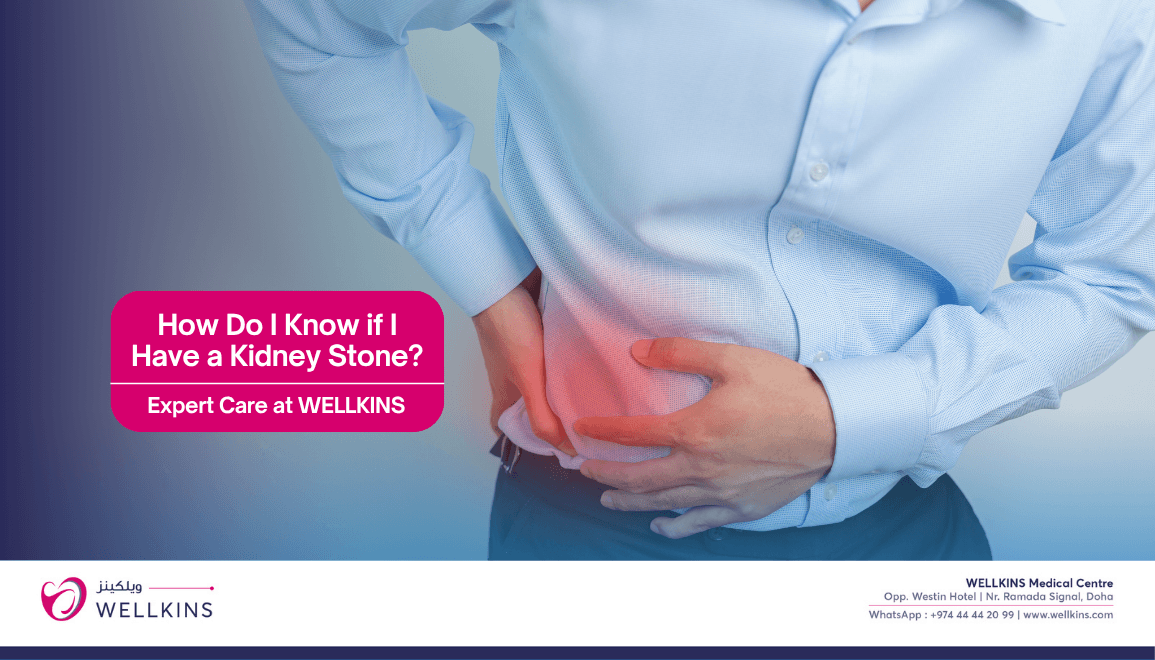
Kidney stone pain is distinctive in its character and location. Understanding what it feels like helps patients recognise it promptly and seek appropriate assessment rather than attributing it to muscle strain, indigestion or another cause.
- Renal Colic: The characteristic pain of a kidney stone moving through the ureter is called renal colic. It is a severe colicky pain, waxing and waning in intensity, typically originating in the flank and radiating toward the groin, inner thigh and in men toward the testicle on the affected side. It is often described as the worst pain the person has experienced and it typically prevents them from finding a comfortable position. Unlike muscular pain which is eased by staying still, renal colic drives patients to move restlessly in search of a position that reduces the pain.
- Haematuria: Blood in the urine, producing a pink, red or brown discolouration, accompanies kidney stones in a significant proportion of cases as the stone scratches the delicate lining of the ureter during its passage. Microscopic haematuria visible only on urine testing is present in an even larger proportion of cases.
- Nausea and Vomiting: Frequently accompany renal colic due to the shared nerve pathways between the ureter and the gastrointestinal tract. Severe nausea that prevents oral fluid and pain medication intake is one of the indications for intravenous management.
- Urinary Urgency and Frequency: As the stone approaches the bladder junction it can produce symptoms resembling a urinary tract infection including urgency, frequency and discomfort with urination.
Seek urgent medical assessment if:
- Pain is severe and not adequately controlled with oral analgesia.
- You have a fever alongside flank pain, which may indicate an infected obstructed kidney requiring urgent intervention to prevent sepsis.
- You have only one functioning kidney and are experiencing stone symptoms.
- You are unable to keep any fluids or medication down due to vomiting.
- Pain has not improved after 24 to 48 hours of conservative management.
Pain Relief and Medical Management of an Acute Stone Episode
The medical management of an acute kidney stone episode at Wellkins Medical Centre addresses three goals simultaneously: pain control, facilitation of stone passage and identification of any complications requiring urgent urological referral.
- Non-Steroidal Anti-Inflammatory Drugs (NSAIDs): NSAIDs are the first-line analgesic for renal colic when there are no contraindications, including renal impairment or gastrointestinal bleeding risk. They are highly effective for stone pain and also reduce ureteric spasm, facilitating stone passage. Diclofenac and ketorolac are the most commonly used agents in this context.
- Alpha-Blockers (Medical Expulsive Therapy): Tamsulosin and other alpha-adrenergic blockers relax the smooth muscle of the distal ureter, widening the passage through which a stone must travel and significantly increasing the spontaneous passage rate for stones of five to ten millimetres. Medical expulsive therapy is standard practice for eligible patients with distal ureteric stones.
- Hydration: Adequate fluid intake during a stone episode maintains urine flow and helps move the stone along the ureter. Intravenous hydration is used when the patient cannot maintain oral intake or when additional fluid push is clinically appropriate.
- Imaging: A CT scan of the kidneys, ureters and bladder without contrast (CT KUB) is the most sensitive imaging investigation for kidney stones and identifies the stone’s size, location and any associated obstruction or hydronephrosis that would indicate urgent urological referral. Ultrasound is an appropriate first-line investigation in pregnancy and in patients with radiation exposure concerns.
- Urological Referral: Stones larger than ten millimetres, stones causing complete ureteric obstruction, stones in a patient with a single kidney, a concurrent urinary tract infection with obstruction and failure to pass after four to six weeks of conservative management are all indications for urological intervention.
Prevention Diet: How to Reduce Kidney Stone Risk in Qatar
The most important long-term management of kidney stones is preventing the next one. Dietary modification in Qatar’s specific food environment addresses the most clinically relevant risk factors for the most common stone types.
The Single Most Important Step: Drink More Water
Achieving a daily urine output of at least two to two and a half litres requires total fluid intake of approximately three to four litres per day in Qatar’s climate and more during the summer months or with significant physical activity. Water is the preferred fluid. Lemon water provides the additional benefit of citrate, which inhibits calcium oxalate and calcium phosphate crystal formation. Citrus juices particularly fresh-squeezed lemon juice in water are among the most evidence-supported dietary additions for stone prevention.
- Carry a one-litre water bottle and refill it at least three times across the working day.
- Drink a full glass of water immediately on waking before any other beverage.
- Add fresh lemon juice to water as a practical and evidence-supported citrate supplement.
- Check urine colour before bed. If it is not pale straw coloured, drink another glass of water before sleeping.
Reduce Sodium Intake
Dietary sodium is one of the most directly modifiable drivers of urinary calcium excretion and stone risk. Reducing sodium intake to below 2,000 mg per day, equivalent to approximately five grams of salt, is a cornerstone recommendation for calcium stone formers.
- Reduce salty snacks, crisps, processed meats and preserved foods that are high in hidden sodium.
- Choose lower-sodium versions of commonly used condiments including soy sauce, stock cubes and canned foods.
- Season food with herbs, spices and lemon rather than additional salt at the table.
- Be aware that restaurant meals, particularly in fast food contexts that are widespread in Doha, typically contain very high sodium levels.
Moderate Animal Protein Intake
High animal protein consumption increases urinary calcium, reduces urinary citrate and raises uric acid production, all of which promote stone formation. The target for stone prevention is reducing animal protein to approximately 0.8 to 1.0 grams per kilogram of body weight per day rather than the significantly higher intakes common in Qatar’s meat-heavy food culture.
- Limit red meat to two to three servings per week rather than daily consumption.
- Replace some animal protein meals with plant-based protein alternatives including lentils, chickpeas and beans that are widely available and culturally familiar across many of Qatar’s communities.
- Choose fish and poultry as lower-risk protein sources compared to red and processed meats for most stone types.
Manage Dietary Oxalate for Calcium Oxalate Stone Formers
For patients with confirmed calcium oxalate stones, reducing high-oxalate foods is a specific and targeted recommendation.
- High-oxalate foods to limit: Spinach, which is very high in oxalate, nuts particularly almonds and cashews, chocolate, tea brewed from black tea leaves, beetroot and rhubarb.
- Pair oxalate-containing foods with calcium: Consuming calcium-containing foods such as dairy alongside oxalate-rich foods allows the calcium to bind to oxalate in the gut and reduce its absorption into the bloodstream, lowering urinary oxalate excretion. This is why the recommendation is to moderate rather than eliminate oxalate foods and to ensure adequate calcium intake rather than restricting it.
Maintain Adequate Calcium Intake
Counterintuitively, adequate dietary calcium intake from food protects against calcium oxalate stones by binding oxalate in the gut and preventing its absorption. The target is two to three servings of dairy or calcium-rich food per day from dietary sources rather than calcium supplements, which have been associated with increased stone risk when taken in large amounts without food.
Limit Sweetened Beverages and Fructose
Sweetened soft drinks, fruit juices and beverages high in fructose including many of the sugary drinks widely consumed in Qatar increase uric acid production and urinary calcium excretion, raising risk for both uric acid and calcium stones. Replacing these beverages with water or unsweetened drinks is a high-impact and straightforward dietary change for stone prevention.
When to See an Internal Medicine Doctor at Wellkins
You should book a consultation at Wellkins Medical Centre for kidney stone-related concerns if any of the following apply.
- You have passed a kidney stone and want a full metabolic evaluation to understand the type of stone and the specific dietary changes most relevant to your individual stone composition.
- You have had more than one kidney stone episode and have not yet had a structured prevention plan.
- You have a family history of kidney stones and want to assess your own risk and the preventive steps appropriate for your diet and lifestyle in Qatar.
- You experience recurrent flank pain or blood in the urine without a confirmed diagnosis.
- You have a known stone currently on imaging and want guidance on facilitating its passage and preventing new stone formation.
- You have conditions associated with stone risk including gout, inflammatory bowel disease, parathyroid disease or recurrent urinary tract infections and want your stone risk assessed as part of your overall medical management.
Kidney stones in Qatar are common but they are far from inevitable and far from unmanageable. The combination of adequate hydration, targeted dietary modification and appropriate medical management when indicated reduces recurrence risk substantially and protects kidney health over a lifetime. The first stone is a warning worth taking seriously. The steps that follow it determine whether it becomes the last one.
To book an appointment at Wellkins Medical Centre: https://wellkins.com/drayisha
To know more about the General Medicine services at Wellkins Medical Centre: https://wellkins.com/general-medicine