
Author: Dr. Joanne Mae J Villanueva, (Specialist Pediatrics – Wellkins Medical Centre)
Walk into any pharmacy in Qatar and you will find entire shelves dedicated to children’s supplements. Colorful gummy vitamins, multivitamin syrups, omega-3 drops, iron tonics, immune boosters and products promising to make children healthier, taller and smarter line every display. The marketing is compelling and the parental instinct to give a child every possible advantage is completely understandable.
It is no surprise then that one of the most common questions I hear in the pediatric clinic at Wellkins Medical Centre is: “Doctor, should my child be taking vitamins every day?”
My honest answer is this: not every child needs vitamin supplements. For many healthy children who eat a reasonably balanced diet and are growing well, daily multivitamins provide little additional benefit. However, some children genuinely do need specific vitamins or mineral supplements and choosing the right one for the right reason is very different from reaching for the most colorfully packaged option on the shelf.
The question I ask parents when they bring me a supplement they are already giving their child is always the same: what specific need are we trying to meet with this? If the answer is “I want them to be healthier” or “they keep catching colds” then we have a conversation about nutrition and lifestyle because no supplement replaces those foundations. If the answer is “their vitamin D came back low” or “they follow a vegan diet and I’m worried about B12” then we have a very different conversation about the right supplement at the right dose for a specific documented need. Supplements are a backup plan. A good diet is the main plan.
People Also Ask
Do healthy children in Qatar need a daily multivitamin?
Most healthy children who are growing normally, eating a reasonably varied diet that includes fruits, vegetables, grains, protein and dairy and have no underlying medical condition are getting the nutrients they need from food. A daily multivitamin adds little for these children beyond peace of mind. Supplements are most appropriately thought of as a targeted backup for a specific documented deficiency or a specific dietary gap rather than a general health-boosting strategy. A pediatric assessment including growth monitoring and where indicated blood tests is the right basis for any supplement decision.
Is vitamin D deficiency common in children in Qatar?
Yes, and this is one of the most consistently observed nutritional findings in Qatar’s child population despite the country’s abundant sunshine. Children in Qatar spend the majority of their time indoors in air-conditioned environments particularly during the intensely hot summer months. When children are outdoors, sun protection including clothing and sunscreen appropriately reduces direct UV skin exposure. The combination of indoor lifestyle and sun protection means that despite living in one of the sunniest countries in the world, vitamin D insufficiency is genuinely common and specific supplementation is frequently indicated, particularly in exclusively breastfed infants.
Do immune-boosting vitamins actually prevent children from getting sick?
No. There is no supplement that prevents children from catching colds, viral illnesses or seasonal bugs. A healthy immune system in children is built through adequate sleep, nutritious meals, regular physical activity, up-to-date vaccinations and good hand hygiene. While adequate nutrition including sufficient zinc and vitamin C supports normal immune function, supplements cannot compensate for deficits in these fundamental habits and they do not provide immune protection beyond what a good diet already provides in a well-nourished child.
Are gummy vitamins as effective as regular children’s vitamins?
Not always. Children love gummy vitamins because they taste like sweets and this makes them easy to give, but parents should be aware that gummy formulations often contain added sugar, may deliver lower quantities of key nutrients than traditional tablet or liquid formulations and can be accidentally overeaten if left within a child’s reach. Some gummy products also omit certain key minerals including iron because they do not formulate well in gummy form. If a supplement is genuinely indicated for your child, the formulation should be chosen based on nutritional adequacy rather than palatability alone.
Why Parents Worry About Their Child’s Nutrition
The instinct to supplement is almost always driven by a genuine concern rather than a careless decision. Parents commonly become worried about their child’s nutrition when they observe the following patterns.
- Eating only a few foods: A child who will eat only a narrow range of foods across weeks and months naturally raises concern about whether they are receiving adequate nutritional breadth from their diet.
- Refusing vegetables consistently: Vegetables are among the most nutrient-dense foods in a child’s diet and persistent refusal across all presentations and preparations concerns parents reasonably.
- Appearing smaller than classmates: Height and weight differences between children of the same age are normal but visible in a classroom and are a frequent trigger for parental concern about nutritional adequacy.
- Frequent colds and infections: Parents naturally seek something active they can do when their child seems to catch every illness circulating in their nursery or school and immune-boosting supplements fill that psychological need even when the evidence for them is limited.
- High activity levels: Active children who seem to burn through everything they eat raise parental concern that their energy intake is not keeping up with their expenditure.
- Not finishing meals: Young children have small stomachs and variable appetites. The toddler who ate enthusiastically yesterday refusing everything today is a universally stressful parental experience that often drives supplement use.
These concerns are understandable but it is important to recognize that supplements are not a substitute for good nutrition or for the healthy eating habits that take time and consistency to establish. A vitamin capsule cannot replace the fiber, beneficial plant compounds, healthy fats and complete nutritional matrix that food provides.
Most Healthy Children Do Not Need a Daily Multivitamin
If your child is growing normally along their expected growth curve, eats a reasonably varied diet that includes foods from the main food groups, has no chronic medical condition affecting their nutritional needs and has no documented deficiency then they are very likely getting the nutrients they need from food.
This is a reassuring message that can be difficult to hear against the backdrop of pharmacy shelves full of supplements targeted specifically at parents of young children. But the evidence supporting daily multivitamin supplementation in well-nourished children without specific deficiencies is not strong. Think of vitamins as a backup plan for specific gaps rather than the main source of nutritional support.
Children Who May Genuinely Benefit From Supplements
There are specific circumstances in which a pediatrician may recommend supplements after an individual assessment. These include children who fall into any of the following categories.
- Very picky eaters: Children whose diet is severely restricted in variety over a prolonged period, not simply the typical toddler food refusal phase, may have genuine nutritional gaps that warrant specific supplementation guided by dietary assessment.
- Children following vegetarian or vegan diets: Plant-based diets excluding animal products carry specific risks of deficiency in vitamin B12, iron, zinc, calcium, iodine and omega-3 fatty acids. Supplementation guided by dietary assessment and monitoring is important for these children.
- Premature babies: Infants born preterm have specific and well-documented nutritional needs that often include iron, vitamin D and vitamin K supplementation beyond what term infants require.
- Children with food allergies restricting the diet: A child who cannot eat dairy, eggs, nuts or multiple food groups due to confirmed allergy may have genuine nutritional gaps depending on how their restricted diet is compensated through alternative foods.
- Children with absorption conditions: Conditions including coeliac disease, inflammatory bowel disease and certain gut infections impair the absorption of multiple nutrients regardless of dietary intake.
- Children with documented deficiencies: This is the clearest indication for supplementation. A child with a blood test confirming low vitamin D, iron deficiency anemia or other specific deficiency benefits from targeted treatment at the appropriate dose and duration.
- Children drinking excessive cow’s milk: Large volumes of cow’s milk, particularly more than 500ml per day in toddlers, can displace iron-rich foods from the diet and increase the risk of iron deficiency anemia through both dietary displacement and mild gastrointestinal blood loss in some sensitive children.
What About Vitamin D?
Vitamin D deserves specific attention in the Qatar context because its situation is counterintuitive to most families. Qatar is one of the sunniest countries in the world. Yet vitamin D deficiency and insufficiency are genuinely common among both children and adults across Qatar’s population.
The explanation lies in lifestyle. Qatar’s summer temperatures regularly exceed 45 degrees, making outdoor activity genuinely dangerous for extended periods and driving children and families indoors for the majority of the day. When children are outdoors, appropriate sun protection in the form of clothing, hats and sunscreen significantly reduces the UV skin exposure needed for vitamin D synthesis. The combination of an indoor lifestyle and appropriate but vitamin-D-blocking sun protection means that despite abundant sunshine, the conditions for adequate vitamin D production through skin exposure rarely exist for most of Qatar’s children.
Infants who are exclusively or predominantly breastfed are at particular risk as breast milk, while nutritionally excellent in almost every other respect, does not contain adequate vitamin D to meet an infant’s needs independently. Vitamin D supplementation from the first days of life is recommended for breastfed infants and should be continued until the infant’s diet provides adequate alternative sources.
Older children with low vitamin D levels or with risk factors for deficiency including limited outdoor time, darker skin pigmentation that requires more UV exposure for equivalent vitamin D synthesis and use of full sun protection should be assessed and supplemented under pediatric guidance at the appropriate dose.

Does My Child Need an Iron Supplement?
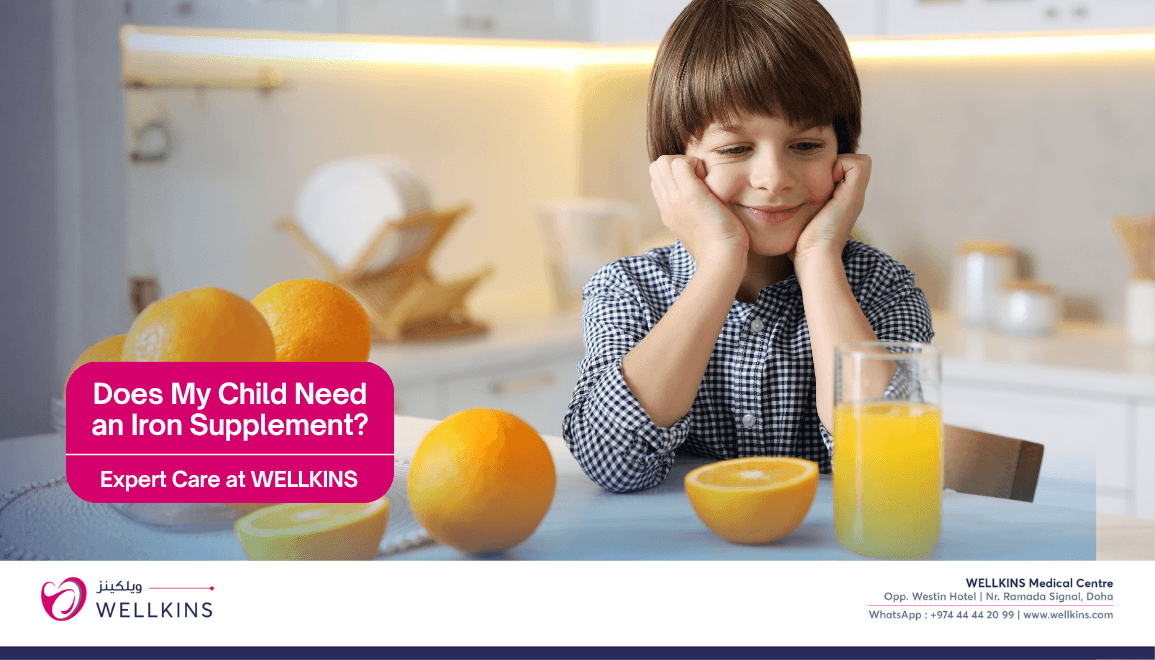
Not necessarily. Iron is a nutrient where giving supplements without a clear medical indication is not only unnecessary but potentially harmful. Excessive iron intake can cause gastrointestinal discomfort, constipation and in large doses toxicity. Iron supplementation should only be initiated when there is a specific medical reason to do so.
If your child appears pale, is unusually tired for their age, has a poor appetite, has been described as having poor concentration, has a history of prolonged exclusive milk feeding without iron-rich food introduction or is in a group known to be at higher risk of iron deficiency, your pediatrician may recommend a blood test to check hemoglobin and iron stores before making any supplementation decision. Treating a confirmed deficiency with the right dose of iron for the right duration is very different from giving iron supplementation preventively without evidence of need.
Iron-rich foods including lean meat, fish, eggs, beans, lentils and fortified cereals alongside foods rich in vitamin C that enhance iron absorption should be the first strategy for iron nutrition in most children whose diets allow it.
Do Immune-Boosting Vitamins Really Work?
One of the most consistent requests in the pediatric clinic, particularly at the start of the school year when children in Qatar’s nurseries and international schools begin sharing close spaces and circulating viruses, is for vitamins that will “boost” the immune system and keep the child from getting sick.
The honest answer is that there is no supplement that prevents children from catching colds, flu or the many viral illnesses that circulate through school communities. A healthy and appropriately responsive immune system in a child is built and maintained through adequate sleep which is when immune consolidation occurs, nutritious varied meals that provide the micronutrients supporting immune cell function, regular physical activity, up-to-date vaccinations and consistent good hand hygiene.
Vitamins cannot replace these habits. Where a child has a genuinely deficient diet that is low in zinc or vitamin C there may be some benefit to correcting that specific deficiency, but supplementing above adequate levels provides no additional immune benefit. The conversation in the clinic is always about the foundations first.
Are Gummy Vitamins Better?
Children love gummy vitamins because they taste like sweets. This makes them easy to administer and reduces the daily conflict that can accompany vitamin syrups or chewable tablets. But palatability is not the same as nutritional quality.
Parents should be aware of the following considerations when evaluating gummy vitamin products for their child.
- Gummies typically contain added sugar which is an unnecessary daily addition to a child’s diet particularly in Qatar where sweet snack consumption is already high in many children’s dietary patterns.
- Gummy vitamins left within a child’s reach can be accidentally overeaten as the child treats them as sweets. Vitamin toxicity from overconsumption of fat-soluble vitamins including vitamins A and D is a genuine safety consideration.
- Many gummy formulations contain lower amounts of certain important nutrients than traditional liquid or tablet formulations and may omit minerals including iron entirely because they do not formulate effectively in gummy form.
If a supplement is genuinely indicated for your child, choose the formulation based on nutritional adequacy at the correct dose rather than on the product your child is most enthusiastic about consuming.
Food First: Supplements Second
Whenever possible nutrients should come from food rather than supplements. This is not simply a general principle but a practical one: food provides nutrients within a complex matrix of fiber, beneficial plant compounds, healthy fats and protein that supplements cannot replicate. A vitamin C tablet provides ascorbic acid. An orange provides ascorbic acid alongside flavonoids, fiber and dozens of other compounds that interact with each other in ways that support health beyond the isolated nutrient alone.
Encouraging children to eat a colorful variety of foods across all food groups is the most effective nutritional strategy available.
- Fruits: Fresh seasonal fruits provide vitamin C, potassium and a broad range of antioxidant compounds. In Qatar’s food environment dates, mangoes, citrus fruits and berries are all excellent and widely available choices.
- Vegetables: Leafy greens, carrots, broccoli and colorful vegetables provide vitamins A, C and K alongside folate and iron. Presenting vegetables in different preparations including raw, roasted and blended into sauces increases acceptance in younger children.
- Whole grains: Oats, whole wheat bread, brown rice and quinoa provide B vitamins, fiber and sustained energy that refined grain products do not.
- Eggs: One of the most nutritionally complete single foods available and well accepted by most children. Eggs provide protein, iron, zinc, choline and vitamins D and B12.
- Fish: Oily fish including salmon and sardines provide omega-3 fatty acids that support brain development alongside protein and vitamin D. In Qatar’s abundant seafood market, fresh fish is widely available and culturally familiar across many of the community’s dietary traditions.
- Lean meat: Chicken and lean red meat provide haem iron, the most bioavailable form, alongside zinc and complete protein.
- Beans and lentils: Excellent plant-based sources of iron, protein and fiber, particularly important for children whose families follow vegetarian or largely plant-based dietary patterns.
- Dairy products: Milk, yoghurt and cheese provide calcium and vitamin D in fortified forms alongside protein and iodine.
When Should You See a Pediatrician?

A conversation with your pediatrician rather than a supplement purchase is the appropriate first step when any of the following apply.
- Your child is not growing as expected or has dropped across percentile lines on their growth chart.
- Your child is extremely selective with food beyond typical toddler food refusal, eating only a very narrow range of foods across months.
- Your child has persistent fatigue that is unusual for their age and activity level.
- Your child appears pale or has been described as pale by a teacher or other observer.
- Your child has repeated fractures or complains of bone pain that seems disproportionate to their activity.
- Your child has chronic digestive problems including persistent diarrhea, bloating or discomfort after eating that raises concern about absorption.
- Your child has a diagnosed medical condition or food allergy that restricts their diet significantly.
- You are considering starting a supplement and want to know whether it is appropriate, which specific product is best and at what dose.
Your pediatrician can determine whether blood tests or specific supplements are genuinely needed rather than relying on guesswork or trying multiple over-the-counter products without a clear target.
The bottom line for parents in Qatar is straightforward. Good nutrition, regular physical activity, quality sleep and routine pediatric checkups are far more important for most healthy children than a daily multivitamin. When supplements are needed they should be chosen for a specific reason, at the right dose and under the guidance of a pediatrician who knows your child’s individual growth pattern and health history.
The best vitamin for your child is a healthy lifestyle and the right supplement only when it is truly needed.
To book an appointment with Dr. Joanne Mae J Villanueva at Wellkins Medical Centre: https://wellkins.com/drjoanne
To know more about the Pediatric services at Wellkins Medical Centre: https://wellkins.com/pediatrics