
Author: Dr. Asha Anne Jacob (Consultant Ophthalmologist – WELLKINS Medical Centre)
Qatar is a country of contrasts. Outside, the air sits thick and heavy with heat for much of the year. Inside, powerful air conditioning works overtime to make life comfortable. It is this relentless back and forth between dry, chilled indoor air and hot, dusty outdoor conditions that quietly takes a toll on one of the most sensitive and overlooked parts of your body: your eyes.
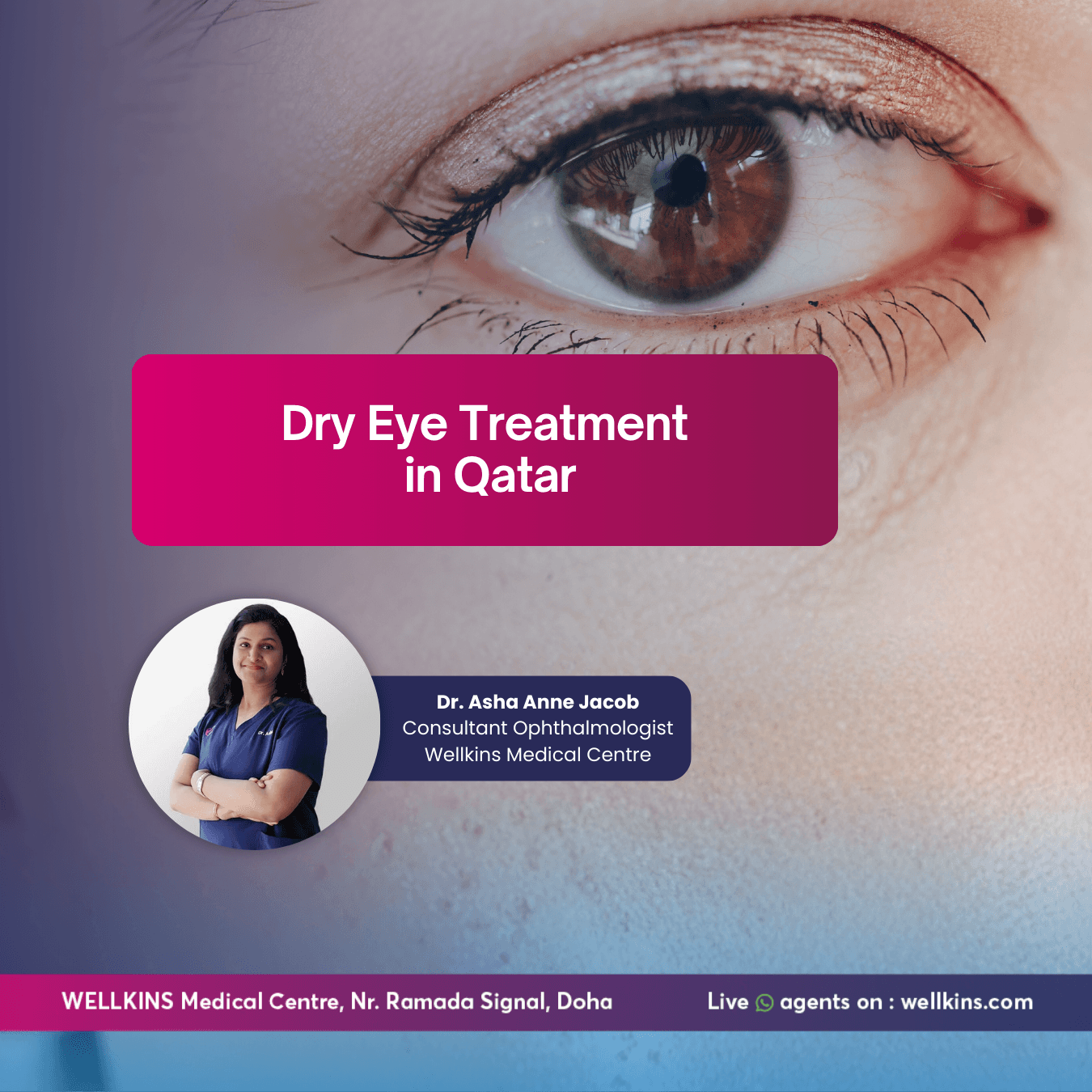
Dry eye disease is one of the most frequently diagnosed conditions at Wellkins Medical Centre, and for good reason. Qatar’s climate, lifestyle habits and long screen hours create a near-perfect recipe for tear film instability. The reassuring part is that dry eye is very well understood, and with the right care plan, most patients see real and lasting relief.
Dry eye in Qatar is not simply a nuisance. For many patients it is a daily quality-of-life issue that affects their ability to work, drive and sleep comfortably. What concerns me is how often people dismiss the symptoms as tiredness or allergies and carry on without seeking help. A proper diagnosis makes all the difference, because dry eye has several distinct subtypes and the treatment that works brilliantly for one type can do very little for another. Please do not self-treat for months without professional guidance.
Why Qatar’s Environment Puts Your Tear Film Under Pressure
A healthy tear film is a delicate, three-layered structure. It is the balance of all 3 layers of tear film that provides clear vision and ocular comfort. Several features of life in Qatar actively work against this balance.
- Air Conditioning Exposure: Qatar has some of the most consistent indoor air conditioning use in the world. Cold, recycled air dramatically reduces ambient humidity, accelerating tear evaporation from the ocular surface throughout the working day and at night.
- Desert Dust and Particulates: Shamal winds carry fine sand and dust that settle on the ocular surface, triggering inflammation and disrupting the lipid layer of the tear film that normally slows evaporation.
- Screen-Heavy Lifestyles: Whether it is remote work, school homework or leisure scrolling, prolonged screen use reduces the blink rate significantly. Fewer blinks mean the tear film is refreshed less often, leading to patchy drying across the cornea.
- Contact Lens Wear: A large proportion of patients in Qatar wear contact lenses. Extended wear in low-humidity environments accelerates water loss from the lens surface and from the underlying cornea.
- Vitamin D Paradox: Despite abundant sunlight, Vitamin D deficiency is genuinely common in Qatar because people spend limited time outdoors without sun protection. Emerging research links Vitamin D deficiency with reduced tear secretion and increased ocular surface inflammation.
Recognising the Symptoms: What Dry Eye Actually Feels Like
Dry eye does not always present as a dry sensation. Many patients describe their eyes as feeling wet, irritated or watery, which causes considerable confusion. The condition is more nuanced than the name suggests.
- Burning or Stinging: A persistent burning sensation, particularly in air-conditioned offices or during screen use, is among the most common early complaints.
- Watery Eyes: Paradoxically, reflex tearing is a classic dry eye symptom. The eye detects surface stress and floods itself with tears, but these emergency tears lack the correct composition to provide lasting relief.
- Blurred Vision That Clears With Blinking: Fluctuating vision that briefly improves when you blink is a hallmark sign of tear film instability rather than a refractive problem.
- Grittiness or Foreign Body Sensation: Patients often feel as though something is lodged in the eye. This is the corneal surface reacting to poor lubrication.
- Eye Fatigue and Light Sensitivity: Difficulty driving at night or using screens for extended periods, along with sensitivity to bright light, frequently accompanies chronic dry eye.
Understanding the Two Main Types of Dry Eye
An accurate diagnosis at Wellkins begins by identifying which subtype a patient has, because the treatment pathway differs considerably between them.
1. Aqueous-Deficient Dry Eye
The lacrimal glands are not producing a sufficient volume of tears to maintain adequate coverage of the ocular surface.
- Common Causes: Certain medications including antihistamines and antidepressants, autoimmune conditions like Sjogren’s syndrome and age-related gland changes are leading contributors.
- In Qatar: Antihistamine use for allergic rhinitis is extremely prevalent here, and this is a frequently overlooked trigger for aqueous-deficient dry eye in younger patients.
2. Evaporative Dry Eye
This is by far the more common subtype globally and in Qatar. Here, tear volume is normal but the lipid-secreting meibomian glands along the eyelid margins are blocked or dysfunctional, causing tears to evaporate far too quickly.
- Meibomian Gland Dysfunction (MGD): Clogged or thickened meibum is the primary driver. This condition is worsened by screen use, contact lens wear, mascara and eyeliner use near the lash line and chronic inflammation from dust exposure.
- The Hidden Connection: Blepharitis, a low-grade bacterial colonisation along the eyelid margin, frequently coexists with MGD and drives chronic inflammation that the patient may not even be aware of.
3. Mixed Dry Eye
Many patients in practice present with features of both subtypes simultaneously. This is important because treating only one component while ignoring the other leads to incomplete and frustrating results.
4. Dry Eye Secondary to Allergic Conjunctivitis
Qatar’s high pollen counts and desert dust mean allergic conjunctivitis is exceptionally common. Chronic allergic inflammation damages goblet cells on the ocular surface, reducing the mucin layer of the tear film and contributing directly to dry eye symptoms.
- The Overlap Problem: Allergy drops containing preservatives, used long term, can themselves worsen dry eye. This is why a specialist review is essential before committing to a long-term eye drop regimen.
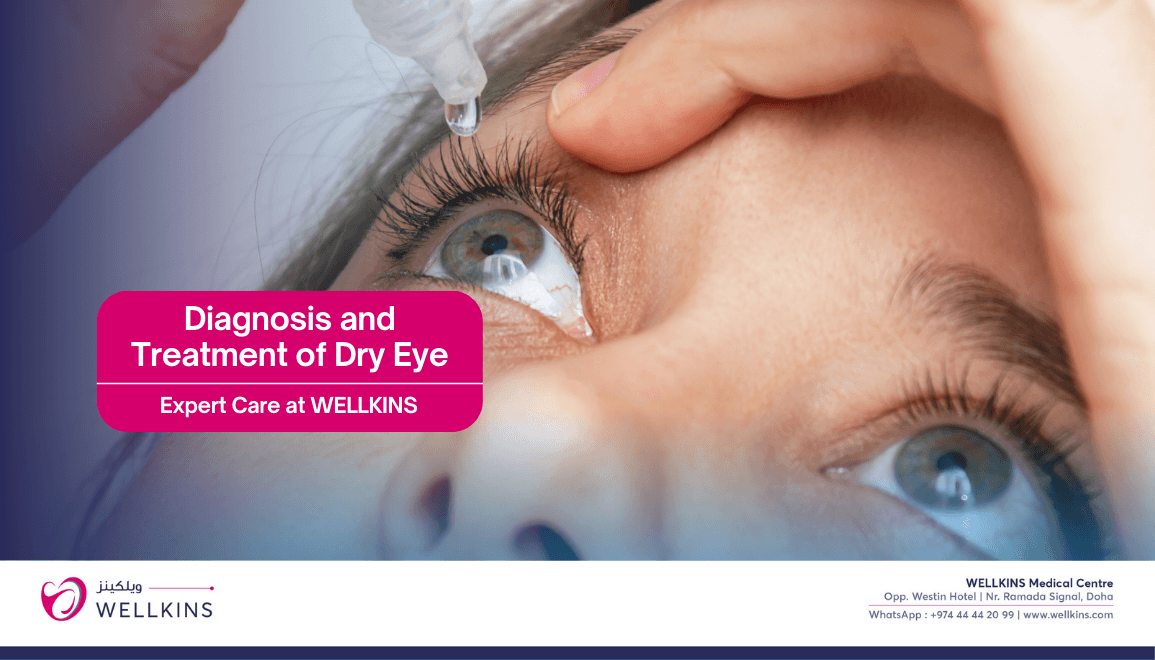
Dry Eye Diagnosis and Treatment at Wellkins Medical Centre
Dry eye is a clinical diagnosis supported by several objective tests. At Wellkins, our ophthalmology team uses a structured assessment process to identify the subtype and severity before recommending any treatment plan.
- Tear Break-Up Time (TBUT): A small amount of fluorescein dye is placed in the eye and we observe under the slit lamp how long the tear film takes to develop dry patches. A short break-up time confirms instability.
- Schirmer’s Test: A thin strip of paper is placed at the lower eyelid for five minutes to measure tear secretion volume directly.
- Meibomian Gland Evaluation: We assess the quality and expressibility of meibum from the eyelid glands to confirm or rule out MGD as a primary driver.
- Ocular Surface Staining: Rose bengal or lissamine green dyes reveal areas of cellular damage on the cornea and conjunctiva that are invisible without specialist examination.
Treatment Strategies
The various treatment strategies are:
- Preservative-Free Artificial Tears: The foundation of mild to moderate dry eye management. Preservative-free formulations are essential for patients using drops more than four times daily, as preservatives themselves damage the ocular surface with frequent use.
- Warm Compresses and Lid Hygiene: For evaporative dry eye and MGD, a daily routine of warm compresses softens blocked meibum followed by gentle lid massage and lid scrubs to clear debris from the lash line. This is the most underrated and most effective long-term self-care strategy for the majority of dry eye patients in Qatar.
- Omega-3 Supplementation: High-quality oral omega-3 fatty acids help improve the quality of meibum secretion from within. Several clinical studies support their use as an adjunct therapy in evaporative dry eye.
- Topical Anti-Inflammatory Drops: For moderate to severe cases, short-term steroid drops or longer-term cyclosporine-based drops reduce the chronic inflammation that perpetuates the dry eye cycle.
- Punctal Plugs: In patients with aqueous deficiency, tiny silicone plugs can be inserted into the drainage channels of the eyelids to retain natural tears on the ocular surface for longer. The procedure is quick and painless.
- In-Clinic MGD Treatments: Advanced options including thermal pulsation therapy and intense pulsed light treatment are available for patients with significant meibomian gland dysfunction who have not responded adequately to at-home management.
The Qatar Dry Eye Prevention Plan: Daily Habits That Protect Your Eyes
Living and working in Qatar’s environment means building specific eye-friendly habits into your daily routine. These steps are simple but genuinely make a meaningful difference.
- The 20-20-20 Rule: Every 20 minutes of screen use, look at something 20 feet away for 20 seconds. This allows a complete set of blinks and partial tear film recovery.
- Humidify Your Space: Place a desktop humidifier at your workstation. Raising the ambient humidity even slightly reduces the evaporation rate of your tear film during long working hours.
- Redirect Air Vents: Air conditioning vents directed at the face are one of the most consistent triggers in Doha’s offices. Angle them upward or sideways so the airflow does not cross the ocular surface.
- Wear Wraparound Sunglasses Outdoors: Protective eyewear shields the tear film from wind and dust during outdoor activities and the daily commute, particularly during Shamal conditions.
- Hydrate Consistently: Adequate systemic hydration supports tear production. Given Qatar’s heat, deliberate water intake throughout the day is important for overall mucosal health including the ocular surface.
- Review Your Medications: If you take regular antihistamines, blood pressure medications or antidepressants, speak to your doctor about whether your dry eye symptoms may be medication-related. A simple switch in formulation can sometimes bring notable relief.
When to Visit Your Ophthalmologist at Wellkins
Many people delay seeking care for eye discomfort, assuming it will resolve on its own. You should book a specialist review if:
- Eye discomfort or burning is affecting your concentration at work or school.
- Over-the-counter lubricating drops are providing only short-term relief and symptoms keep returning.
- Your vision fluctuates or feels blurry despite a current glasses or contact lens prescription.
- You experience persistent redness, discharge or crusting along the eyelid margins.
- You have been diagnosed with rheumatoid arthritis, lupus or another autoimmune condition, as these carry a significantly elevated risk of severe dry eye.
Prevention of Dry Eye in Qatar
Dry eye is not a condition you simply have to live with. In a city like Doha where the environment and lifestyle both conspire against tear film stability, proactive eye care is not a luxury but a genuine necessity for comfort and long-term ocular health.
At Wellkins Medical Centre, Dr. Asha Anne Jacob and the ophthalmology team bring specialist-level diagnostics and a personalised treatment approach to every patient. Whether your symptoms are mild and recently onset or you have been managing persistent discomfort for years, the right investigation will reveal the exact cause and guide a targeted plan that works.
Your eyes work every waking moment. They deserve the same level of care and attention you give to every other part of your health. Start that journey today.
To book an appointment at Wellkins Medical Centre: https://wellkins.com/visit