
Author: Dr. Steffy Mariyam Reji, Specialist Dermatologist Wellkins Medical Centre
Qatar’s unique environment offers a high quality of life, but it also provides a near-perfect breeding ground for microscopic neighbors: dermatophyte fungi and yeasts. During the summer months, when temperatures often soar past 40°C and humidity levels in coastal areas like Doha become intense, the human skin becomes a warm, moist microenvironment where fungi thrive.
At Wellkins Medical Centre, we see a significant seasonal surge in fungal presentations from May through September. Whether it’s from the gym, the pool, or simply the daily commute in humid weather, these infections are a common reality. The good news? With expert diagnosis and a disciplined approach to hygiene, these conditions are entirely manageable and curable.
Fungal skin infections are remarkably common in Qatar and the numbers spike predictably every summer. Heat, humidity, sweat and tight clothing create the perfect environment for fungi to thrive. What I want patients to understand is that these infections are very effectively treatable with the correct diagnosis and the right antifungal, but self-treatment with the wrong product is a frequent cause of prolonged infections and unnecessary discomfort. If a skin rash is not improving after a week of over-the-counter treatment, please see a dermatologist the cause may not be what you assumed.
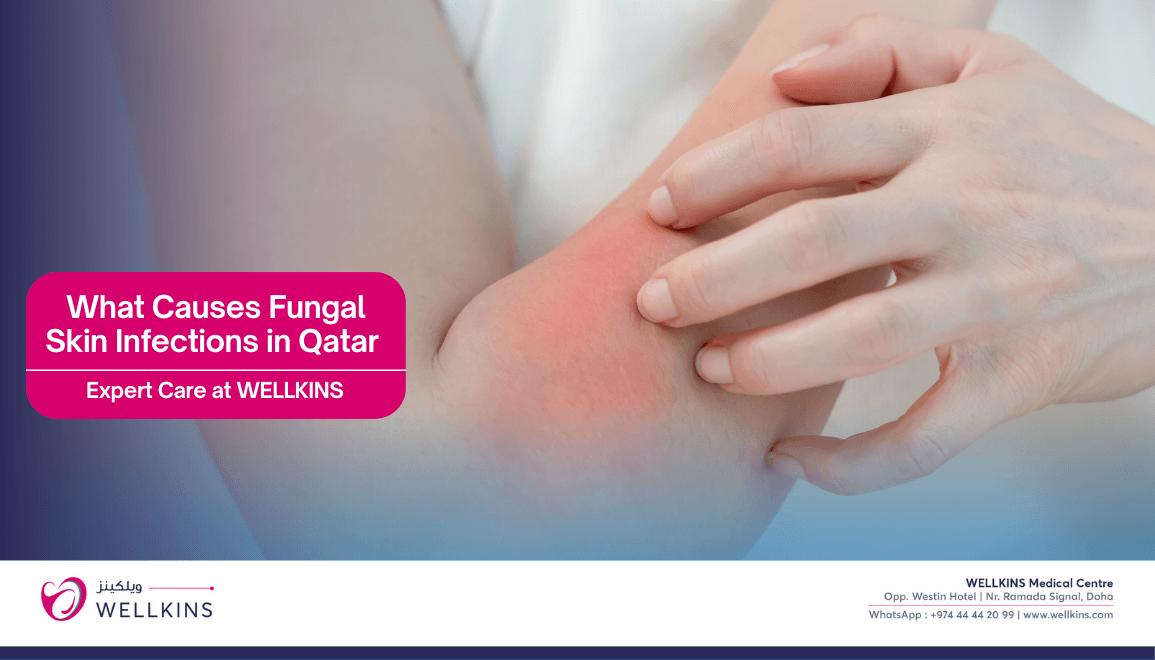
Why the Gulf Climate is a “Fungal Paradise”
Fungi require two main ingredients to proliferate: warmth and moisture. Qatar’s climate provides both in abundance.
- Sweat Retention: Tight, synthetic fabrics often worn during physical activity or under traditional clothing trap sweat against the skin, macerating the protective barrier and allowing fungi to take root.
- Shared Spaces: High-traffic areas like swimming pools, gym showers and communal changing rooms are hotspots for transmission.
- The “Damp” Cycle: Constant transitioning between extreme outdoor heat and chilled indoor air conditioning can lead to persistent skin dampness that many people overlook.
Understanding the Culprits: Dermatophytes vs. Yeasts
Fungal infections are generally categorized into two groups: Dermatophytes (which feed on keratin in skin, hair and nails) and Yeasts (which are part of the normal microbiome but overgrow under stress).
1. Tinea Pedis (Athlete’s Foot)
The most prevalent fungal infection globally, it targets the soles and the spaces between the toes.
- The Experience: Intense itching, burning and scaling, particularly between the fourth and fifth toes.
- The Risk: If untreated, it can lead to “moccasin-type” scaling across the entire sole or painful fissures that invite secondary bacterial infections like cellulitis.
2. Tinea Corporis (Ringworm)
Despite the name, there are no worms involved. It appears as circular, red, scaly patches with a raised border and a “clear” center.
- Transmission: It spreads through direct skin-to-skin contact or by sharing towels and items with infected individuals or pets (especially cats and dogs).
3. Tinea Cruris (Jock Itch)
A common summer visitor for adult men in Qatar, affecting the groin and inner thighs.
- The Trigger: Friction combined with moisture in skin folds.
- Pro Tip: Tinea pedis and tinea cruris often occur together, as the fungus is frequently moved from the feet to the groin while pulling on underwear or trousers.
4. Tinea Versicolor (The “Summer Spots”)
Caused by an overgrowth of yeast naturally present on the skin, it creates light or dark patches on the back, chest and shoulders.
- Cosmetic Impact: These patches don’t tan, making them highly visible during the summer. While not contagious, the skin’s color may take months to return to normal even after the fungus is cleared.
5. Onychomycosis (Nail Fungus)
A stubborn infection that turns nails thick, yellow and brittle.
- The Challenge: Because nails grow slowly, treatment is a marathon, not a sprint, often requiring several months of consistent care to see a healthy new nail emerge.
6. Candidal Intertrigo
Overgrowth of Candida yeast in deep skin folds (armpits, under breasts, or the groin).
- The “Satellite” Sign: Characterized by bright red patches with tiny “satellite” spots at the edges. In many cases at Wellkins, recurrent Candida infections serve as an early clinical indicator of undiagnosed or poorly managed diabetes.
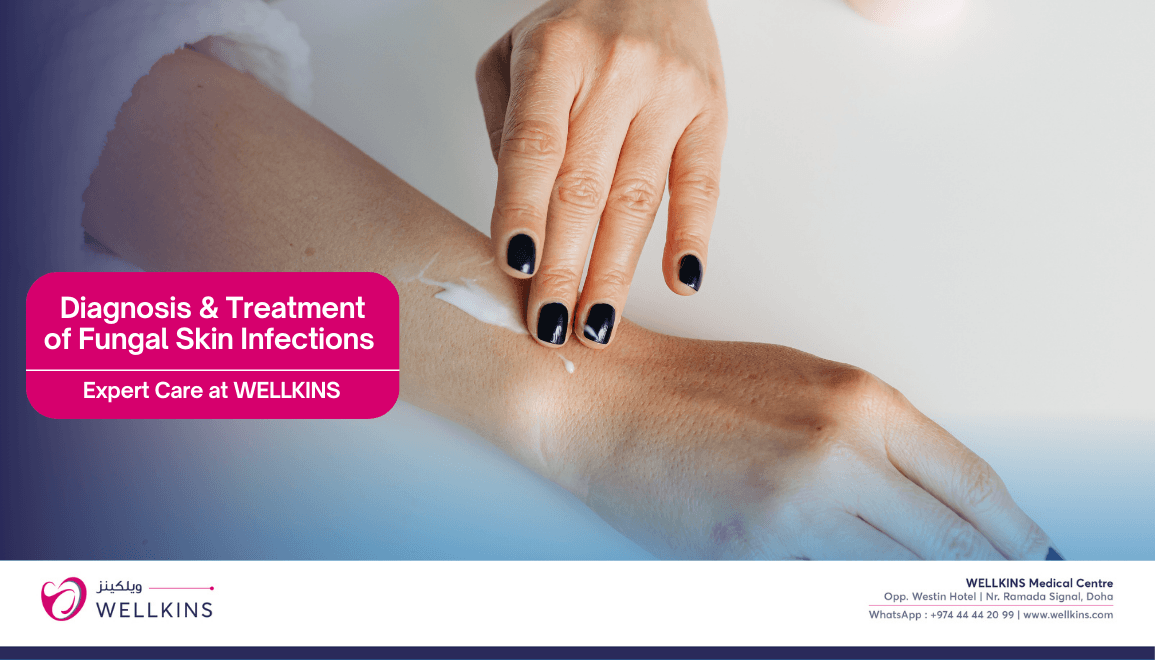
Diagnosis and Treatment at WELLKINS Medical Centre
A common mistake is assuming every red, itchy rash is fungal. Applying antifungal creams to conditions like eczema or psoriasis can actually aggravate the skin. Our dermatologists prioritize an accurate diagnosis through:
- Clinical Examination: Assessing the specific pattern and distribution of the rash.
- Skin Scrapings: In persistent cases, we examine skin cells under a microscope to confirm the presence of fungal hyphae or spores.
Treatment Strategies
We tailor the approach based on the severity and location of the infection:
- Topical Therapy: For mild to moderate skin infections, we prescribe specialized antifungal creams, lotions, or powders to be applied for two to four weeks. For yeast overgrowth on the body, medicated shampoos are often used as a body wash.
- Systemic (Oral) Therapy: For nail infections, scalp involvement, or widespread skin cases, oral antifungal tablets are required. These are highly effective but must be taken exactly as prescribed to ensure the infection doesn’t return.
The Prevention Plan: Practical Steps
Living in a humid climate requires a proactive defense strategy. To keep your skin fungus-free, follow these essential steps:
- The “Dryness” Rule: Thoroughly pat dry all skin folds, especially between the toes and under the arms, immediately after showering or swimming.
- Fabric Choice: Switch to moisture-wicking, breathable cotton fabrics. Avoid tight-fitting synthetic undergarments that trap heat.
- Footwear Hygiene: Never walk barefoot in communal gym showers or pool changing rooms always wear flip-flops.
- No Sharing: Towels, nail clippers and footwear are personal items. Sharing them is the fastest way to transmit dermatophytes.
- Diabetes Management: If you are diabetic, keep your blood sugar well-controlled, as high sugar levels in sweat provide “food” for yeast growth.
When to Visit Your Dermatologist
While many minor skin issues can be managed at home, you should seek professional help at WELLKINS Medical Centre if:
- The rash is spreading or involving the face and scalp.
- You notice changes in the color or thickness of your nails.
- Over-the-counter treatments have failed after one week.
- You have a weakened immune system or diabetes.
Fungal infections may be persistent, but they are not invincible. With the right clinical approach and a few changes to your daily routine, you can enjoy Qatar’s summer without the discomfort of a skin infection. By prioritizing proactive skin hygiene and seeking professional advice at the first sign of a persistent rash, you can prevent a minor irritation from becoming a season-long struggle.
At Wellkins Medical Centre, our specialists provide the precise diagnostic tools and personalized care needed to keep your skin healthy and resilient, even during the most intense humidity. Your skin is your body’s primary shield; let’s work together to ensure it stays strong and comfortable so you can focus on making the most of life in Doha.
To book an appointment at Wellkins Medical Centre: https://wellkins.com/visit