
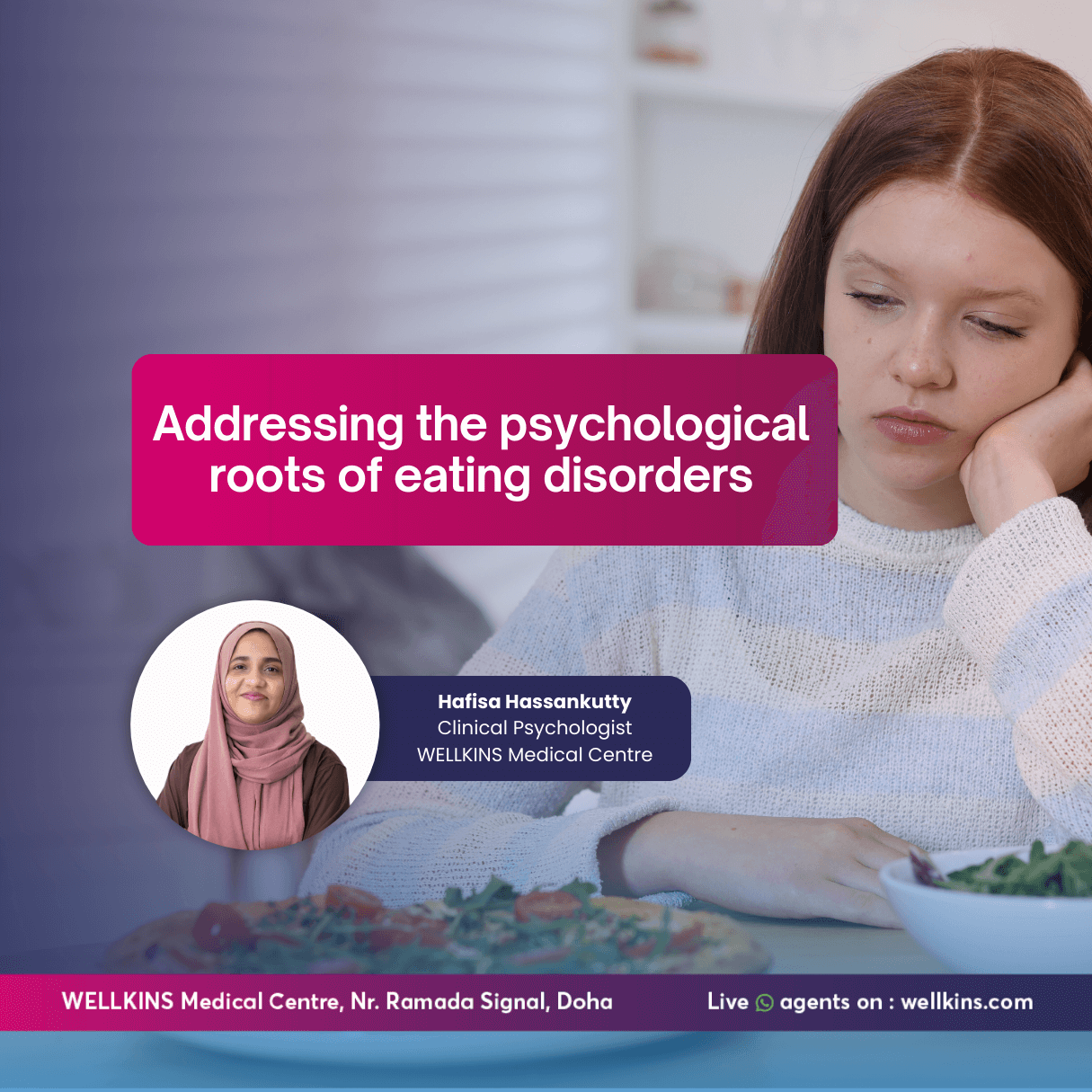
Author: Hafisa Hassankutty (Clinical Psychologist – WELLKINS Medical Centre)
Eating Disorders: More Than Food, Weight, or Willpower
When people hear the term eating disorder, they often imagine extreme dieting or being severely underweight. In reality, eating disorders are far more complex than their outward physical manifestations. They are not simply about hunger, nutrition, or body size; they are deep-seated medical and psychological challenges that require a specialized approach to healing.
At WELLKINS Medical Centre, we understand that these conditions are often used as a way to navigate difficult emotions or life transitions. Eating disorders are psychological conditions where food, eating patterns and body image become strongly connected to emotional well-being, self-worth and a sense of control. A person may appear physically “fine” on the outside, yet experience significant distress internally. They may excel in their careers or studies while fighting a silent, exhausting battle every time they sit down for a meal. Understanding eating disorders clearly helps reduce stigma and encourages people to seek support early without shame.
It is essential that individuals experiencing disordered eating behaviors linked to emotional distress, body image concerns, anxiety, depression, or chronic stress undergo a complete psychological assessment. Eating disorders are often rooted in complex psychological factors, including distorted thought patterns, emotional regulation difficulties and self esteem issues. Psychotherapy, delivered by qualified mental health professionals, provides structured, evidence-based support to help individuals understand underlying triggers, develop healthier relationships with food, and build effective coping strategies. With appropriate psychological care and, when necessary, coordinated medical and nutritional support, treatment can significantly improve mental health, physical stability, and long-term quality of life.
What Is an eating disorder?
Eating disorders are serious, often chronic, brain-based illnesses. They involve persistent difficulties related to:
- Eating behaviors: Such as severe restriction, bingeing, or compensatory actions.
- Thoughts and emotions about food: Constant mental “chatter” or obsessive planning around meals.
- Body image and self esteem: An internal lens that views one’s worth solely through the prism of appearance.
- Fear, guilt, or distress linked to eating or weight: A persistent feeling of “doing something wrong” when consuming food.
Eating disorders are not a lifestyle choice and they are not simply “lack of discipline.” In fact, they often involve an over-application of discipline to a harmful degree. They can affect:
- Teenagers and adults: Though often starting in puberty, they can develop at any age.
- Men and women: While statistics vary, men are increasingly seeking help for these conditions.
- People of all body shapes and weights: You cannot tell if someone has an eating disorder just by looking at them.
Common Types of Eating Disorders
Eating disorders can present in different ways, often overlapping or shifting from one type to another over time.
- Anorexia Nervosa: Significant restriction of food intake with intense fear of weight gain, often accompanied by a distorted body perception.
- Bulimia Nervosa: Repeated episodes of overeating (bingeing) followed by compensatory behaviors such as vomiting, laxative misuse, or excessive exercise to “undo” the calories.
- Binge Eating Disorder: Episodes of overeating with a sense of loss of control, usually followed by intense distress, guilt, or physical discomfort, but without regular compensatory behaviors.
- ARFID (Avoidant/Restrictive Food Intake Disorder): Avoidance or restriction of food due to sensory sensitivity, fear of choking/vomiting, or low interest in eating not driven by body image concerns, but by the physical or sensory experience of food.
- OSFED (Other Specified Feeding or eating disorder): Significant eating-related distress and symptoms that do not fit neatly into one specific category but still require professional attention. This includes “Atypical Anorexia,” where a person has all the symptoms of anorexia but is not underweight.
Common Signs That May Need Attention
Eating disorders can look different from person to person. Some signs may be visible, while others are internal and hidden, often referred to as “silent” symptoms.
Eating and behavior-related signs may include:
- Strict food rules or avoidance of certain foods: Categorizing foods as “good” vs. “bad” or “safe” vs. “unsafely.
- Frequent guilt, shame, or anxiety after eating: Feeling like a meal has “ruined” the day.
- Skipping meals or persistent restriction: Finding frequent excuses to miss social dining events.
- Episodes of overeating with a sense of loss of control: Feeling unable to stop eating even when painfully full.
- Eating in secret or hiding eating habits: Hiding wrappers or waiting until others are asleep to eat.
Body image and emotional signs may include:
- Constant dissatisfaction with body shape or weight: A hyper-fixation on specific body parts.
- Fear of weight gain even with regular eating: An irrational anxiety regarding the scale.
- Frequent comparison with others: Constantly measuring oneself against peers or social media images.
- Self-worth strongly tied to weight or appearance: Feeling that one’s value as a person depends on their size.
- Mood changes linked to eating or body image: Feeling “good” only when the diet is perfect.
Daily functioning impact may include:
- Reduced social life due to food-related anxiety: Avoiding restaurants or gatherings where food is present.
- Difficulty concentrating: “Brain fog” caused by malnutrition or constant mental preoccupation with food.
- Increased irritability or emotional distress: Short temperedness often caused by hunger or internal stress.
- Excessive exercise as a way to “compensate” for eating: Exercising through injury, illness, or fatigue to “earn” food.
Why Eating Disorders Develop
Eating disorders usually develop due to a combination of genetic, biological and environmental factors. They are rarely about the food itself, but rather about what the food represents.
- Body image pressure and appearance-based comparisons: The “thin-ideal” perpetuated by media and peers.
- Perfectionism or high self expectations: A personality trait often seen in high achievers.
- Stress, anxiety, or emotional overload: Using food behaviors to numb or distract from life’s pressures.
- Low self-esteem: A deep seated feeling of not being “good enough.”
- Difficulty coping with emotions: Lack of tools to process sadness, anger, or loneliness.
- Past experiences such as bullying, criticism, or trauma: Using the body as a battleground for past hurts.
- Family and cultural beliefs about weight, beauty, or food: Growing up in an environment where dieting is normalized.
For some individuals, controlling food becomes a way to cope with difficult emotions or regain a sense of control during stressful periods, such as moving to a new country or starting a new job.
Eating Disorders Can Exist at Any Weight
One of the most important points to understand is that eating disorders are not defined only by body weight. This is a dangerous myth that prevents many from seeking help.
- Atypical Presentations: Someone in a larger body can be suffering from severe malnutrition and organ strain due to restrictive eating.
- Medical Risks: Normal weight and normal blood results do not always mean a person is emotionally well around food; the heart and brain can be under stress long before it shows up in a basic blood test.
- Internal Distress: The mental agony of an eating disorder is present regardless of what the scale says.
This is why emotional patterns, behaviors and distress levels matter not appearance alone.
Impact on Daily Life
When food and body image become a constant mental struggle, the “mental real estate” taken up by these thoughts leaves little room for anything else.
- Academic or work performance: Reduced focus and creativity due to nutritional deficits or obsessive thoughts.
- Relationships and family life: Increased isolation as the eating disorder becomes the “primary relationship.”
- Self-confidence and emotional stability: A volatile sense of self that fluctuates with every meal.
- Physical health over time: Risks include heart irregularities, bone density loss (osteoporosis) and digestive issues.
Untreated eating disorders may also increase the risk of anxiety, depression and emotional exhaustion, creating a cycle that is difficult to break without professional help.
Support and Treatment
Eating disorders are treatable and recovery is possible. At Wellkins Medical Centre, we utilize a multidisciplinary approach that may involve psychologists and general practitioners.
Psychological support can help individuals:
- Understand emotional triggers around eating: Learning the “why” behind the “what.”
- Reduce guilt and fear linked to food: Gradually reintroducing “fear foods” in a safe environment.
- Improve body image and self-worth: Finding value beyond physical appearance.
- Develop healthier coping skills: Learning to sit with difficult emotions without using food as a shield.
- Build a more balanced relationship with eating: Moving toward intuitive eating and flexibility.
Depending on the situation, treatment may involve collaboration with medical professionals and dietitians to support both mental and physical health, ensuring the body is safe while the mind heals.
When to Seek Professional Guidance
Professional help is recommended when the struggle feels too heavy to carry alone. Early intervention is the strongest predictor of long-term recovery.
- Eating patterns feel difficult to control: If you feel “possessed” by your rituals or urges.
- Food or body image causes significant distress: If these thoughts are the first thing you think of when you wake up.
- Daily functioning is affected: If you are missing work, school, or social events.
- Stuck in cycles: If you feel trapped in restriction, overeating, or guilt.
- Physical health begins to be impacted: Noticing hair loss, constant coldness, or irregular heartbeats.
Seeking help early can prevent symptoms from becoming more severe and makes recovery more manageable.
Final Thought
Eating disorders often develop from a complex mix of emotional, psychological and social factors, not personal failure. Early recognition, compassionate support and evidence based treatment can make a life changing difference. At Wellkins Medical Centre, we guide you for achieving a recovery that is possible with patience, therapy and the right guidance, individuals can heal both mentally and physically, regaining balance, strength and a renewed sense of self-worth.
Read more: https://wellkins.com/mentalhealth
Disclaimer: This blog is for informational purposes only and should not replace professional medical advice.