

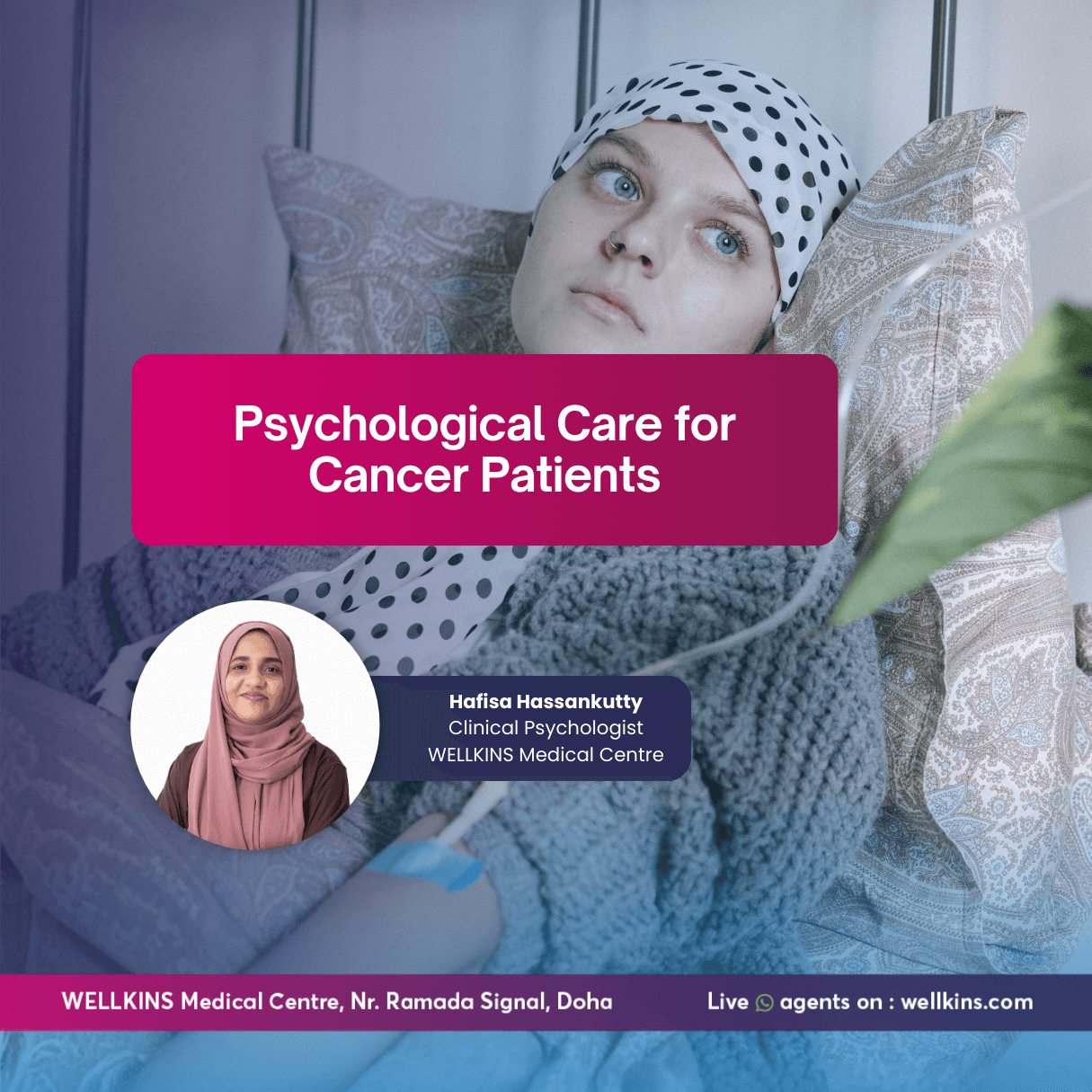
Author: Hafisa Hassankutty (Clinical Psychologist – WELLKINS Medical Centre)
A cancer diagnosis is a seismic event that changes life immediately and fundamentally. It instantly introduces a complex landscape of urgent medical decisions, debilitating physical symptoms and a massive wave of emotions fear, grief, anger and sadness that can feel heavy, confusing and sometimes utterly overwhelming. Cancer is harsh; not only does it attack the body, but its effects deeply impact the mind, disrupt relationships and cripple daily functioning. While the medical oncology team focuses rightly on treating the physical illness, the often-overlooked emotional side of cancer desperately needs dedicated understanding, specialized compassion and professional support.
A Note from My Clinical Experience in Qatar
With extensive clinical experience supporting patients at the National Center for Cancer Care and Research (NCCCR) and across various oncology settings in Qatar, I have personally seen how deeply cancer infiltrates and affects a person’s emotional world. These years of experience have solidified a core belief: psychological support is not an optional extra it is a crucial, non-negotiable part of complete cancer care and treatment.
Many people silently struggle with cancer-related depression, cancer related anxiety, or severe adjustment difficulties, often believing they should be “strong” or that these emotions are a sign of failure. They do not realize how profoundly common these psychological reactions are or how much clarity, relief and renewed resilience psychological support through specialized therapy can bring.
This is precisely where the specialized field of psycho-oncology becomes essential for holistic care provided at WELLKINS Medical Centre.
It is essential that patients experiencing persistent emotional distress such as depression, anxiety, adjustment difficulties, or psychological strain related to cancer diagnosis and treatment be assessed through a complete psychological evaluation. Psychotherapy, delivered by a qualified mental health professional, provides structured, evidence-based support to help patients process emotional challenges, develop effective coping strategies and improve overall psychological wellbeing during and after cancer care.
The Emotional Impact of Cancer
Living with cancer touches and changes every single part of life. It violently disrupts daily routines, forces change in roles (patient, partner, worker), impacts physical ability and self identity, strains relationships and permanently shifts life priorities. Therefore, profound and complex emotional reactions to cancer are entirely expected, valid and understandable.
1. Cancer and Depression
It is common for people living with cancer and often those in remission to experience symptoms of clinical depression. This often includes:
- Persistent sadness or a pervasive low mood that lasts for weeks.
- Profound fatigue and lack of energy that is not solely attributable to the cancer
itself (known as “cancer-related fatigue”). - Loss of interest or pleasure (anhedonia) in activities that were once enjoyable.
- Changes in sleep or appetite (insomnia or oversleeping; weight loss or gain).
- Hopelessness about the future or about the effectiveness of treatment.
- Withdrawal from others or avoiding social contact, which can increase isolation.
This form of depression does not reflect personal or emotional weakness it is a clear reflection of the extreme emotional and physical demands of cancer treatment, the chronic pain and its overwhelming impact on everyday life and future certainty.
2. Cancer and Anxiety
Cancer-related anxiety often stems from very real and unavoidable life concerns, making it distinct from typical generalized anxiety. These concerns include:
- Treatment outcomes and worry about whether the treatment is working.
- Scan results (often called “scanxiety”) around follow-up appointments.
- Physical symptoms and side effects of chemotherapy, radiation, or surgery.
- Responsibilities at home and worries about supporting the family.
- Financial pressures due to medical bills and time lost from work.
- The pervasive uncertainty ahead regarding prognosis and future health.
This anxiety is entirely rooted in realistic medical stress, not in imagined or irrational fear.
3. Adjustment Difficulties
Following a diagnosis or during active treatment, a significant number of people struggle with adjustment. The signs of this struggle may include:
- Emotional overload where feelings become too intense to manage.
- Irritability or a short fuse, often directed at loved ones.
- Difficulty concentrating or focusing on tasks (often referred to as “chemobrain”).
- Disrupted sleep and a difficulty establishing any predictable routine.
- Feeling disconnected from one’s own body, life, or identity.
- Difficulty managing routine and self-care tasks due to lack of motivation or energy.
Cancer disrupts life rapidly and violently and giving the emotional self-time and professional tools for adjustment is critical for mental stability.
4. Fear of Recurrence
Even after successful treatment and being deemed “cancer-free,” many survivors live with the ever-present, haunting fear of recurrence (FoR). This anxiety is chronic and may intensify significantly around key medical milestones, such as follow-up appointments, mandatory scans, or whenever they notice any unusual physical change in their body.
5. Body-Image and Identity Changes
The physical effects of cancer and its treatment such as hair loss, surgical scars, weight fluctuations, chronic fatigue, or physical limitations can severely affect self-image, self worth and overall confidence. These profound effects can also significantly influence social interactions, intimacy within a relationship and the patient’s core sense of identity.
6. Family and Caregiver Stress
Cancer is a family disease. Caregivers often feel immense pressure to appear strong, leading them to constantly hide or suppress their own emotions. This chronic suppression frequently results in profound caregiver burnout, severe anxiety, emotional exhaustion and sometimes resentment, making support for them just as vital as for the patient.
Cancer Anxiety Is Different From Everyday Anxiety
It is important to therapeutically differentiate cancer-related anxiety from anxiety seen in everyday clinical practice:
In many everyday situations, anxiety stems from fears that feel subjectively threatening (like a presentation or social interaction) but may not be truly dangerous or life-altering. With cancer, the anxiety comes from a realistic, existential medical threat actual physical symptoms, invasive medical procedures, chronic pain and the genuine uncertainty about survival. These feelings are deeply understandable and rooted in reality. At the same time, this medical stress can also lead to:
- Persistent, uncontrollable worry that extends beyond the immediate medical task.
- Worst-case thinking that catastrophizes every small symptom or delay.
- Sleepless nights dominated by rumination.
- Emotional exhaustion that interferes with the ability to participate in life.
Therapy, guided by principles of psycho-oncology, helps patients gently and systematically understand:
- What is a genuine, real medical concern that needs attention and
- What is psychological fear amplifying due to chronic stress, fatigue, or hopelessness.
This clarity is the first step toward reducing emotional distress while fully respecting the gravity and reality of the cancer diagnosis.
How Psychotherapy Supports People Living With Cancer
Psychotherapy creates a safe, confidential and private space where patients can express their raw, honest emotions anger, despair, guilt without the fear of burdening their loved ones who are already struggling. It provides a structured approach to supporting emotional regulation, enhancing coping mechanisms and strengthening overall resilience throughout the unpredictable cancer journey.
1. Managing Cancer-Related Depression
Therapy helps manage depression symptoms by working to reduce negative and hopeless thinking patterns, gently rebuild interest and pleasure in life, strengthen motivation for self care and activities and provide necessary emotional validation for the grieving process.
2. Reducing Cancer-Related Anxiety
Specialized psychotherapy helps to calm excessive worry, provide tools to manage uncertainty and gently reduce overwhelming fear and panic attacks while fully acknowledging the immediate medical reality and risks.
3. Supporting Adjustment
Therapy offers essential structure, emotional grounding and consistent support during the rapidly changing and highly unstable phases of cancer diagnosis, treatment and immediate post-treatment.
4. Strengthening Emotional Resilience
Patients learn to consciously identify their existing strengths, maintain a clear identity beyond the illness (seeing themselves as a person, not just a patient) and adapt to new, difficult realities with more internal stability and acceptance.
5. Addressing Body-Image Concerns
Counselling provides focused support for patients navigating the trauma of physical changes, working toward improving self-acceptance, managing scars and improving comfort with their body’s new form.
6. Supporting Families and Caregivers
Family sessions or individual caregiver support help improve communication clarity, reduce hidden emotional tension within the family unit and provide vital support to caregivers who may be struggling silently with burnout and grief.
CBT in Cancer Care Adapted for Real Life
Cognitive Behavioral Therapy (CBT) is a highly effective, evidence-based modality for cancer patients, but it must be adapted for the unique context of chronic illness and medical reality, distinguishing it from how it’s used for everyday anxiety disorders.
In oncology-adapted CBT, the focus is pragmatic and centered on daily coping:
- Coping with pervasive uncertainty rather than seeking absolute guarantees.
- Managing the fear of recurrence through structured thinking and action plans.
- Reducing excessive overthinking and emotional hijacking.
- Improving sleep quality through behavioral interventions.
- Balancing rest and activity to manage energy and fatigue.
- Reducing emotional overload through mindfulness and grounding techniques.
The goal is explicitly not to challenge the reality of cancer-related concerns the concerns are real. The goal is to help patients respond to these realities in healthier, more manageable and less debilitating ways.

When to Seek Psychological Support
Emotional care and psycho-oncology support can provide significant benefit at any stage whether it is immediately before treatment, during active treatment, following the completion of treatment, or years later during survivorship.
Support may be particularly helpful if you experience:
- Persistent sadness or tearfulness lasting two weeks or more.
- Constant, uncontrollable worrying that impacts sleep and appetite.
- Difficulty coping with medical procedures or appointments.
- Disrupted sleep or chronic exhaustion that is not purely physical.
- Emotional withdrawal or isolation from support systems.
- Loss of motivation for self care or adherence to treatment.
- Overwhelming fear of recurrence (scanxiety) that dominates daily life.
- Severe caregiver burnout or emotional depletion.
There is no wrong time to seek support. Early intervention can help prevent acute distress from becoming chronic and debilitating.
A Gentle Reminder from WELLKINS Medical Centre
Cancer is undeniably harsh. It affects your body, your emotions, your family and the fabric of your daily life. But you do not have to carry the immense emotional weight of this journey alone. Psychotherapy at Wellkins Medical Centre offer specialized understanding, emotional clarity and consistent support tailored for the unique challenges of chronic illness. Therapy does not remove the difficulty of cancer but it equips you to face it with more stability, internal strength, dignity and external support. Reaching out for psychological help in the face of cancer is not a sign of weakness. It is a powerful, meaningful step toward preserving your emotional wellbeing and quality of life during one of life’s toughest, most demanding journeys.
Read more: https://wellkins.com/mentalhealth
Disclaimer: This blog is for informational purposes only and should not replace professional medical advice.