
Author: Dr. Reneesh (Consultant Orthopedic Surgeon – WELLKINS Medical Centre)
Introduction
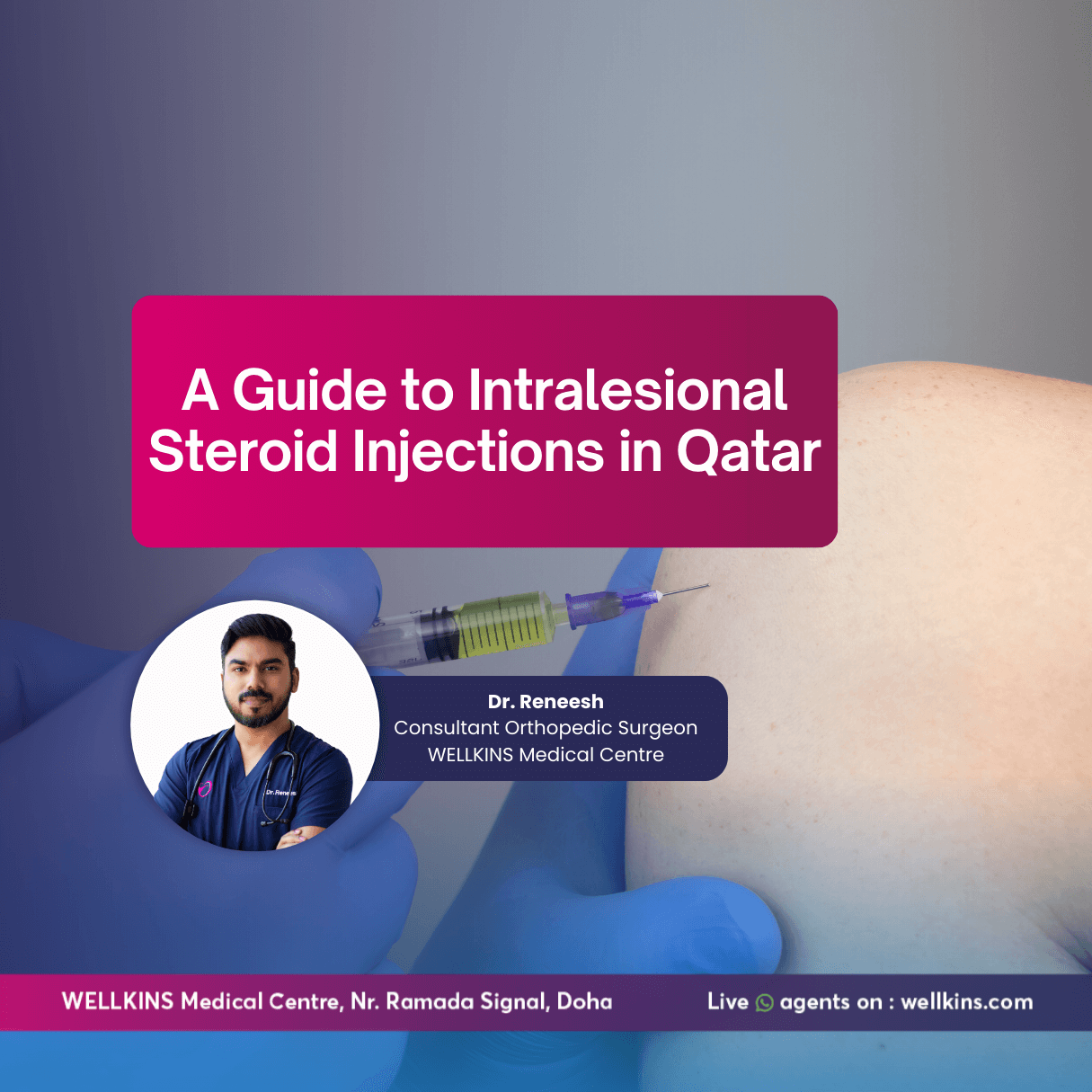
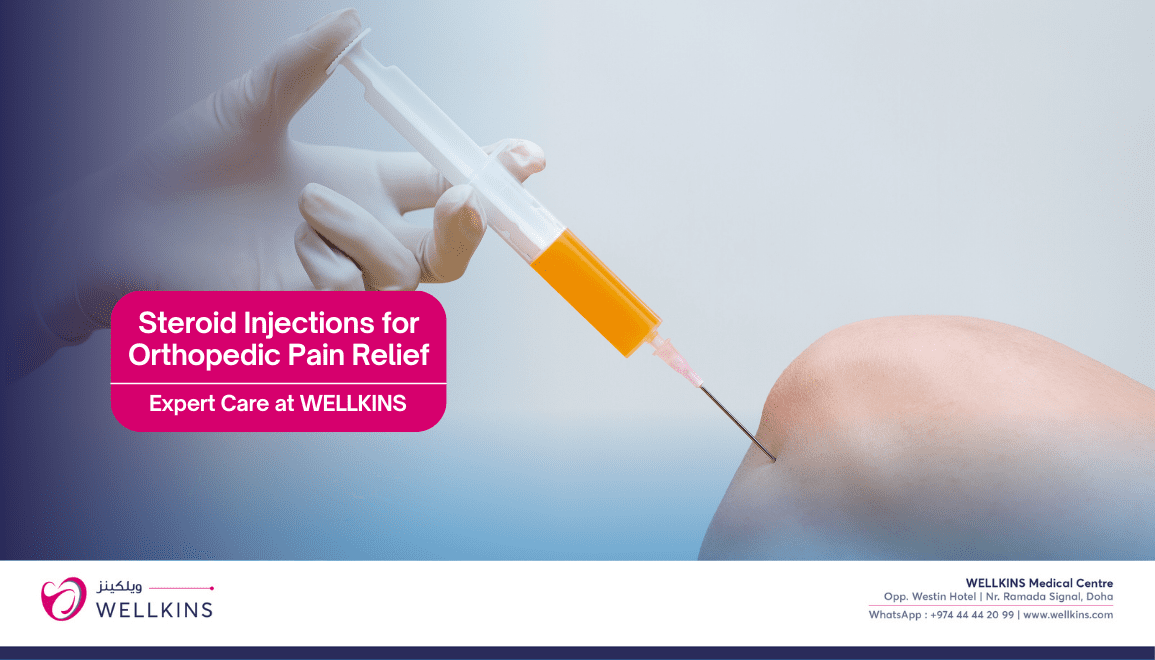
Intralesional steroid injections are a commonly used, evidence-based intervention in orthopedic practice for managing a variety of inflammatory and degenerative musculoskeletal conditions. At Wellkins Medical Centre, we often utilize this precision based approach to bypass the digestive system and deliver potent anti inflammatory relief exactly where the damage is. When used judiciously and combined with appropriate rehabilitation, they can provide significant symptom relief, improve function, and facilitate a faster return to daily activities. This blog outlines the indications, post-procedure care, do’s and don’ts, onset and duration of effect, number of sessions, rehabilitation phases and return-to activity guidelines from an orthopedic surgeon’s perspective.
For individuals in Qatar with localized pain and inflammation, intralesional steroid injections provide targeted relief by delivering anti inflammatory medication directly to the affected area. When used appropriately, this treatment helps reduce swelling, improve mobility and support long-term recovery as part of a comprehensive orthopedic care plan.
- Mechanism: The goal is to reduce inflammation, pain and local tissue irritation at the source.
- Precision: By injecting directly into the bursa, tendon sheath, or joint, we achieve a high local concentration while minimizing systemic side effects.
Indications in Orthopedics
Intralesional steroid injections may be indicated in the following conditions when conservative treatments like rest and oral medication haven’t provided sufficient relief:
- Tendinopathies and enthesopathies: Such as lateral epicondylitis (Tennis Elbow), plantar fasciitis and Achilles insertional bursitis.
- Bursitis: Common in the subacromial (shoulder), trochanteric (hip), olecranon (elbow) and prepatellar (knee) regions.
- Tenosynovitis: Effectively treating Trigger Finger and De Quervain’s tenosynovitis of the wrist.
- Inflammatory joint conditions: Managing synovitis and early-stage osteoarthritis flare-ups.
- Soft-tissue inflammatory lesions: Targeting ganglion related inflammation and post traumatic localized swelling.
Post-Procedure Care
Proper post-injection care is essential to maximize the therapeutic benefit and minimize minor complications like “steroid flares.”
- Observation: We observe the patient for 15–30 minutes after the injection to ensure no immediate adverse reactions.
- Expectations: Mild pain or a feeling of “fullness” at the injection site is common for 24 48 hours as the medication settles.
- Cold Therapy: Apply ice packs intermittently for the first 24 hours to soothe the area and reduce the risk of a flare.
- Hygiene: Keep the injection site clean and dry for at least 24 hours to prevent rare infections.
- Pain Management: Simple analgesics such as paracetamol may be used if required during the initial transition period.
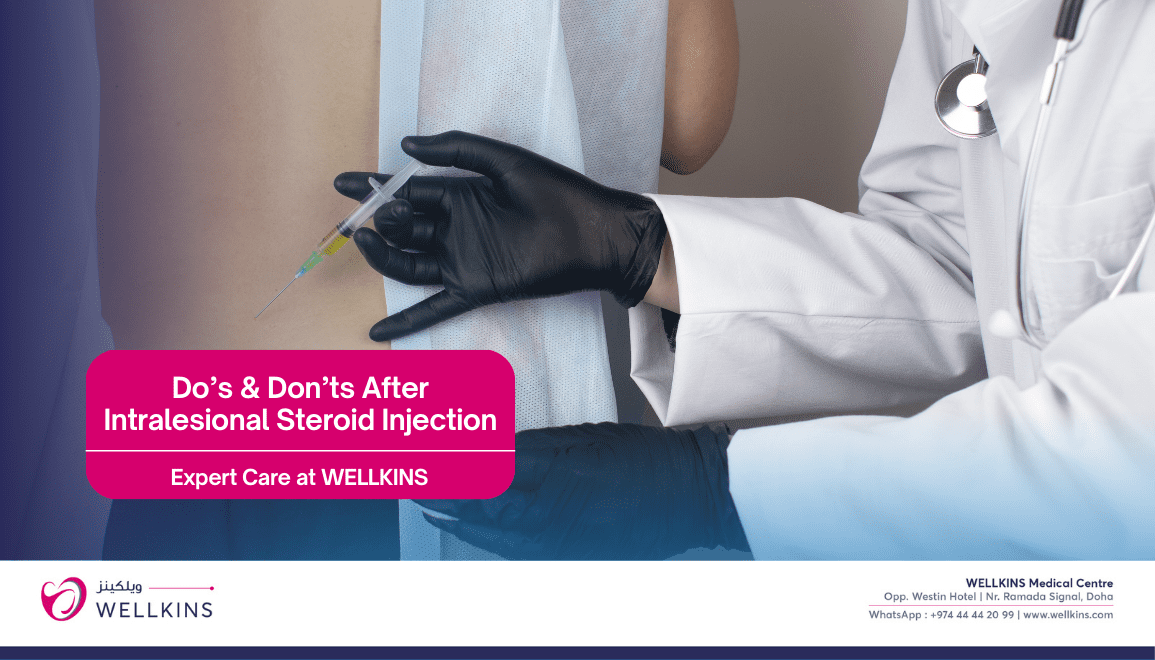
Do’s and Don’ts After Injection
Do’s:
- Relative Rest: Allow the injected area to rest for 24–72 hours to let the medication absorb properly.
- Follow-through: Adhere strictly to your prescribed physiotherapy and rehabilitation protocols.
- Vigilance: Monitor for warning signs such as increasing pain, spreading redness, or unusual swelling.
- Communication: Maintain regular follow-up with your treating orthopedic surgeon at Wellkins to track progress.
Don’ts:
- Overexertion: Avoid strenuous activity, heavy lifting, or sports immediately after the injection, even if you feel “instantly better” due to the anesthetic.
- Manipulation: Do not massage or apply heat over the injected area for 48 hours, as this can disperse the steroid too quickly.
- Frequency: Avoid repeated injections at short intervals without a clear clinical indication.
- Neglect: Do not ignore persistent or worsening symptoms; early intervention is key if a complication arises.
Onset of Effect
It is important to understand that a steroid injection is rarely an “instant fix.” The timeline of relief usually follows this trajectory:
- Local anesthetic effect: Immediate relief (within minutes to hours), which may wear off before the steroid kicks in.
- Steroid anti-inflammatory effect: Begins working within 24–72 hours.
- Peak benefit: Usually seen within 5–7 days post-injection.
Note: Some patients may experience a transient post-injection flare (a temporary increase in pain), which typically settles within 48 hours as the anti-inflammatory properties take over.
Number of Sessions
Steroid injections are a powerful tool, but they must be used sparingly to protect the integrity of your tendons and cartilage.
- Effectiveness: Most conditions respond significantly to just 1 injection.
- Intervals: If required, injections may be repeated after 4–6 weeks, but only after a thorough reassessment.
- Annual Limit: Generally, no more than 2–3 injections per site per year are recommended to reduce the risk of tissue thinning or damage.
- Clinical Guidance: Clinical judgment and your specific patient response should always guide the decision for repeat injections.
Duration of Symptom Relief
The duration of relief varies depending on the underlying pathology and your adherence to lifestyle changes:
- Short-term relief: Often lasts from weeks to months, providing a “window of opportunity” for healing.
- Long-term relief: Becomes possible when the injection is combined with dedicated rehabilitation and activity modification to address the root cause of the inflammation.
Rehabilitation Phases
The injection treats the inflammation, but rehabilitation treats the cause. We follow a structured four-phase recovery plan:
Phase 1: Protection and Pain Control (0–1 week)
- Prioritize relative rest to allow the steroid to work.
- Engage in pain-free range-of motion exercises.
- Utilize ice therapy and gentle mobilization.
Phase 2: Recovery and Mobility (1–3 weeks)
- Introduction of gradual stretching exercises.
- Correction of faulty movement patterns.
- Initiation of low-load strengthening to test tissue resilience.
Phase 3: Strengthening and Conditioning (3–6 weeks)
- Transition to progressive resistance exercises.
- Emphasis on proprioception and functional training.
- Performance of activity-specific drills.
Phase 4: Maintenance and Prevention
- Commitment to ongoing strengthening and flexibility.
- Implementation of ergonomic and biomechanical corrections at work or home.
- Patient education on proper load management to prevent recurrence.
Return to Activity and Sports
Returning to activity should be gradual and supervised, guided by symptom response rather than rigid timelines.
- Daily activities: Usually resume within 2–3 days.
- Non-impact exercise: Possible within 1–2 weeks, depending on your comfort levels.
- Sports and heavy activity: Generally cleared between 3–6 weeks, once full, pain-free strength and function are achieved.
Possible Complications (Rare)
While extremely safe when performed by an expert, we believe in full transparency regarding potential side effects:
- Post-injection flare: Temporary irritation from the crystal suspension.
- Skin changes: Rare skin depigmentation or subcutaneous fat atrophy (thinning of the fat layer) at the site.
- Tissue integrity: Tendon weakening or rupture, particularly with repeated injections into the same area.
- Infection: This is a very rare risk that we mitigate using strict aseptic (sterile) techniques.
Conclusion
Intralesional steroid injections are a valuable tool in orthopedic practice when used for the right reasons and combined with structured rehabilitation. They provide effective symptom control, reduce inflammation and act as a bridge to help patients regain their lost function. However, careful patient selection and correct technique are the hallmarks of a successful outcome.
At Wellkins Medical Centre, our focus goes beyond simply relieving pain. We aim to identify and treat the underlying cause of musculoskeletal problems to achieve lasting functional improvement. By combining accurate diagnosis, evidence-based treatment and guided rehabilitation, we help patients restore movement, strength and quality of life ensuring meaningful recovery rather than temporary symptom relief.
To book an appointment at Wellkins Medical Centre: https://wellkins.com/orthopedics/