
Author: Dr. Mary Swapna Metreenj, (General Practitioner – Wellkins Medical Centre)
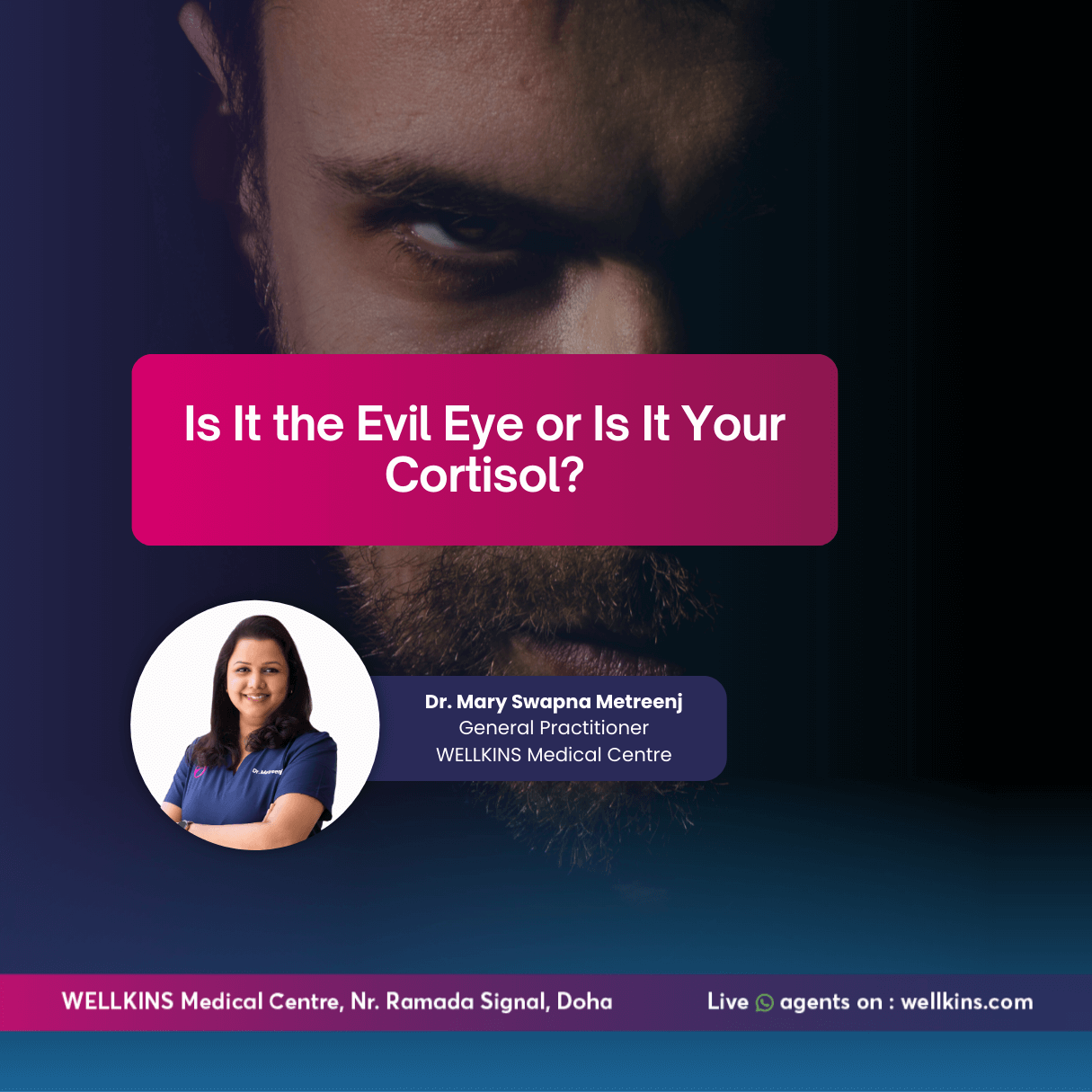
Is It the Evil Eye or Is It Your Cortisol?
Have you ever experienced a day where everything feels off? You’re unusually tired, irritable, or anxious and small problems seem magnified. Sometimes, in such moments, people instinctively wonder if they’re under the influence of the evil eye a long standing cultural belief that negative energy from others can cause harm. While these beliefs are deeply meaningful in many traditions, modern science suggests a biological explanation that is just as powerful and measurable: stress and the hormone cortisol.
Many people experience fatigue, anxiety, sleep issues, body aches, or mental fog and struggle to find the cause. While sometimes attributed to beliefs like the evil eye, these symptoms may reflect elevated cortisol from chronic stress. Understanding cortisol’s role helps shift from fear to clarity, allowing practical steps through lifestyle changes and medical support for better stress management, emotional balance and overall health. Recognizing these signs early empowers individuals to regain control over their well being. With the right guidance, both mind and body can recover and thrive. Taking action today can prevent long term health issues and restore a sense of balance and vitality.
Cortisol: The Stress Hormone That Rules Your Body
Cortisol is produced by the adrenal glands and plays a crucial role in regulating various bodily functions, including:
- Metabolism and energy production
- Immune system response
- Blood sugar levels
- Blood pressure regulation
- Mood and cognitive function
When cortisol levels are balanced, it helps you respond to daily stressors efficiently. But chronic stress or sudden spikes in cortisol can wreak havoc on both body and mind, creating symptoms that might feel mysterious or even “magical” in origin.
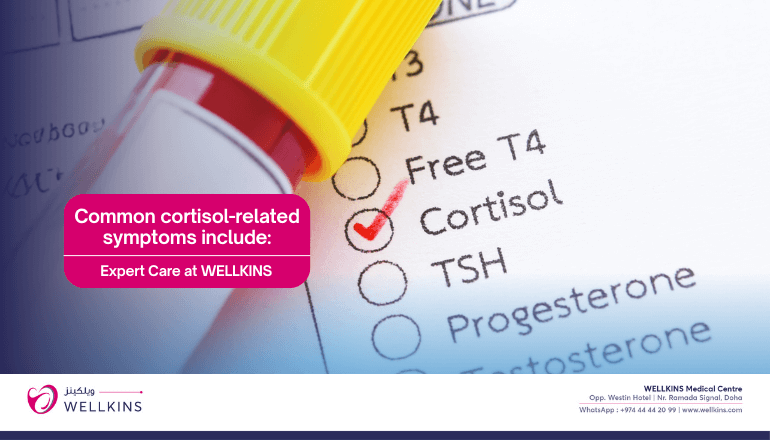
Common cortisol-related symptoms include:
- Persistent fatigue or low energy
- Anxiety, irritability, or mood swings
- Trouble falling or staying asleep
- Digestive issues such as bloating or discomfort
- Unexplained aches, headaches, or muscle tension
Notice the overlap with the symptoms people often attribute to the evil eye? That’s where biology meets tradition.
Cultural Beliefs vs. Biological Reality
The evil eye is a symbol of misfortune believed to be caused by envy or negative attention. Across cultures, it has inspired rituals, amulets and protective practices aimed at safeguarding health and fortune. While these practices can offer comfort and reassurance, they do not directly address the underlying cause of many physical and emotional complaints. Modern medicine, however, identifies stress as a major driver of these symptoms. Emotional tension, work pressure, family obligations and lifestyle changes can elevate cortisol levels. Your body reacts as if it is under “attack,” leading to many of the feelings often associated with curses or bad luck.
How to Know the Difference
While it’s tempting to attribute unusual experiences to external forces, there are ways to distinguish between cultural beliefs and biological signals:
- Symptom Pattern: Cortisol related symptoms usually appear gradually, worsen with ongoing stress and improve with lifestyle interventions.
- Physical Evidence: Chronic high cortisol can lead to measurable changes like weight gain, high blood pressure, or elevated blood sugar.
- Context: Correlate symptoms with stressors in your life. Emotional or environmental triggers often point to internal causes.
Managing Stress and Cortisol
Even if the evil eye is an important part of cultural understanding and provides comfort or a sense of protection, it’s equally important to recognize the role of cortisol and stress in our physical and mental well-being. Addressing elevated cortisol isn’t about dismissing tradition it’s about taking practical, evidence-based steps to support your body and mind. By incorporating stress-management strategies, lifestyle adjustments, and medical guidance, individuals can actively reduce the impact of chronic stress on their health. Simple yet effective measures such as mindful breathing, regular exercise, balanced nutrition, quality sleep and professional medical support work together to restore hormonal balance, improve energy levels and enhance overall resilience. These steps empower people to regain control over their well-being, complementing cultural practices with actionable tools for a healthier, more balanced life.
- Mindfulness & Meditation: Practices like deep breathing, guided meditation and yoga lower stress and help regulate cortisol levels.
- Regular Exercise: Physical activity reduces stress hormones while releasing endorphins that improve mood.
- Balanced Diet: Nutrient-rich foods stabilize energy, support adrenal health and reduce inflammation.
- Adequate Sleep: Sleep restores hormone balance and improves resilience to stress.
- Professional Guidance: Consulting a medical professional ensures that underlying health conditions aren’t overlooked and provides personalized strategies for stress management.
Integrating Tradition and Science
It’s important to recognize that cultural practices like protective rituals and belief in the evil eye serve a social and psychological purpose they provide comfort, community and a sense of control. At the same time, science offers tangible tools to improve health. Combining both can be a powerful approach: respect tradition while actively managing stress and overall well-being.

Final Thoughts
The next time you feel unusually fatigued, anxious, or “cursed,” pause and consider your body’s signals. What might seem like external negativity could actually be your body responding to chronic stress. By understanding the role of cortisol, you can take proactive steps toward restoring balance, energy and resilience.
At Wellkins Medical Centre, we help you bridge the gap between tradition and science. Our team combines medical expertise, stress management guidance and holistic wellness approaches to identify whether your symptoms are caused by stress, lifestyle factors, or underlying medical conditions and to help you regain your health and peace of mind.
To book an appointment at Wellkins Medical Centre: https://wellkins.com/visit