

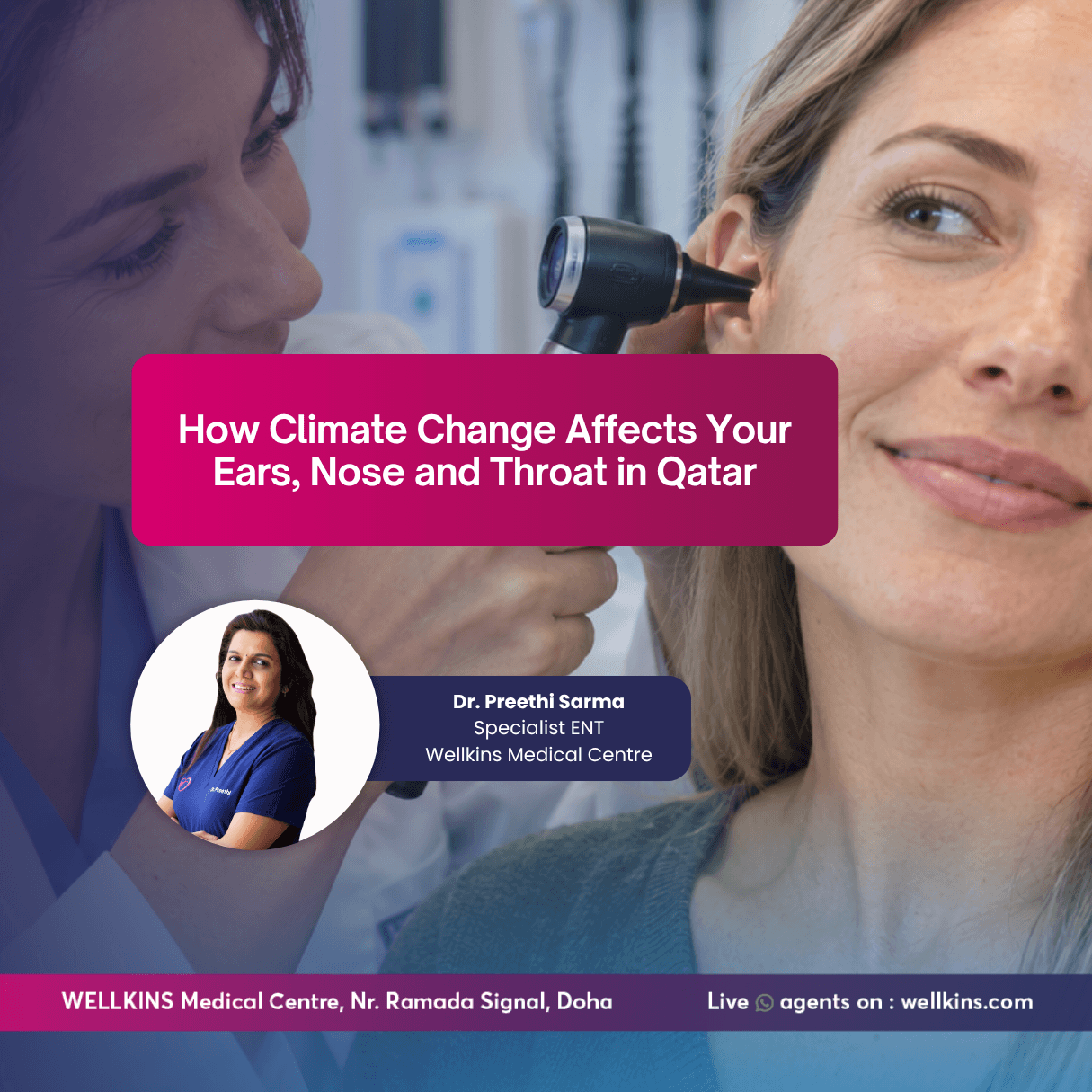
Author: Dr. Preethi Sarma, (Specialist ENT – WELLKINS Medical Centre)
As winter approaches in Qatar, cooler temperatures, shifting winds, dusty conditions and changes in humidity can influence ear, nose and throat symptoms. Frequent movement between outdoor weather and temperature-controlled indoor spaces may also contribute to nasal dryness, throat irritation and allergy flare-ups.
Climate change does not explain every blocked nose, cough or earache. However, changing environmental conditions can affect exposure to dust, airborne particles, allergens, indoor dampness and other triggers that may aggravate existing ENT conditions. People with allergic rhinitis, sinus problems, sensitive airways or recurring ear infections may notice more frequent symptoms during Qatar’s changing winter conditions. Understanding these connections can help patients reduce exposure, recognize warning signs and seek appropriate care when symptoms persist.
“As winter approaches in Qatar, changes in temperature, dust levels, humidity and increased use of air conditioning can trigger allergic rhinitis, sinus pressure, nasal dryness and throat irritation. Because similar symptoms may also result from infection, reflux or structural nasal problems, identifying when and where they worsen helps us determine the cause and create an appropriate treatment plan.”
People Also Ask
Can winter dust and cooler weather worsen sinus problems in Qatar?
Yes. As winter approaches in Qatar, increased dust exposure and changes in temperature can irritate the nasal lining, triggering allergic rhinitis, congestion and sinus pressure. However, facial pressure after dust exposure does not always indicate a bacterial sinus infection.
Can air conditioning cause nasal dryness and nosebleeds during winter?
Yes. Air conditioning and dry indoor air can reduce moisture in the nasal lining, even during Qatar’s cooler months. Frequent movement between outdoor weather and air-conditioned rooms may contribute to dryness, crusting and occasional nosebleeds.
Can changing winter humidity contribute to ear infections?
Changes in humidity do not directly cause every ear infection, but moisture can affect the ear canal and create favourable conditions for bacterial growth. This risk may be higher when water remains trapped after swimming, showering or sweating.
When should I see an ENT specialist?
Arrange an assessment when nasal blockage, sinus pressure, cough, hoarseness, nosebleeds or ear symptoms are persistent, recurrent or affecting sleep and daily activities. Sudden hearing loss, breathing difficulty, severe swelling, heavy bleeding or difficulty swallowing needs prompt medical attention.
How Climate Change and Winter ENT Health Are Connected
The ears, nose and throat are directly exposed to changes in the surrounding environment. Every breath brings the nasal lining into contact with dust, airborne allergens, temperature changes and varying moisture levels. The nose normally warms, filters and humidifies inhaled air, but frequent environmental changes can place additional pressure on these protective functions.
As winter approaches in Qatar, cooler evenings, shifting winds, dusty conditions and changes in humidity may aggravate existing ENT symptoms. Frequent movement between outdoor weather and temperature-controlled indoor spaces may also contribute to nasal dryness, throat irritation and allergy flare-ups.
Climate change does not explain every blocked nose, cough or earache. However, long-term environmental changes may influence seasonal temperatures, dust movement, air quality, humidity and allergen exposure. These effects may be more noticeable in people with allergic rhinitis, sinus problems or sensitive nasal and throat tissues.
How Dusty Winter Weather Can Affect ENT Health
Winter in Qatar may bring cooler temperatures, shifting winds and changes in dust exposure. People with allergies or sensitive airways may notice more frequent sneezing, nasal blockage, throat irritation or changes in their voice as weather conditions change.
The effects are not identical for everyone. A person with allergic rhinitis may experience sneezing and nasal congestion while someone with a sensitive larynx may develop throat discomfort, coughing or hoarseness under the same environmental conditions.
Tracking when and where symptoms become worse can reveal useful patterns. Note whether symptoms increase outdoors, after a dusty commute, inside a temperature-controlled room or in a damp area of the home.
Winter Temperature Changes and Dust Storms
Although winter in Qatar brings cooler conditions, daytime and evening temperatures can still vary considerably. Dusty weather may also continue throughout the season. Moving between cooler outdoor air, warmer daytime conditions and temperature-controlled indoor spaces can irritate sensitive nasal passages.
Long-term climate changes may influence seasonal temperature patterns, vegetation, airborne allergens and the movement of dust. However, an individual symptom cannot be attributed to climate change without an appropriate medical assessment.
During dusty winter conditions, fine particles can enter the nose and throat. In people with allergies or chronic nasal inflammation, this exposure may contribute to sneezing, itching, congestion, watery discharge, throat irritation and a sensation of mucus draining down the throat.
Winter Allergic Rhinitis Flare-Ups
Allergic rhinitis occurs when the immune system reacts to a trigger and causes inflammation inside the nose. Winter dust exposure may carry a mixture of fine particles and allergens that trigger sneezing, itching, nasal discharge and congestion.
Symptoms may continue even when flowering plants are less noticeable outdoors. House dust mites, mould, pets, indoor fragrances and other irritants can also contribute to year-round or winter allergy symptoms.
Common symptoms include repeated sneezing, an itchy nose, clear nasal discharge, congestion, watery eyes and disturbed sleep. Persistent symptoms require proper assessment because several indoor and outdoor triggers may be involved.
Sinusitis Symptoms During Dusty Winter Conditions
Dust exposure during winter can irritate the nasal lining and contribute to swelling. When the nasal tissues become inflamed, normal sinus drainage may be reduced. This can lead to congestion, facial pressure, reduced smell and thick mucus.
People with allergic rhinitis, nasal polyps or an existing sinus condition may be more likely to notice symptoms during dusty weather. However, dust-related pressure or congestion does not automatically indicate a bacterial sinus infection.
The duration of symptoms, fever, discharge pattern, pain and examination findings can help distinguish an allergy flare from a viral illness or acute or chronic sinusitis. Antibiotics are not required for every episode of sinus discomfort.
Nasal Dryness and Nosebleeds During Winter
Cooler outdoor air and dry temperature-controlled indoor environments may reduce moisture inside the nose. Frequent movement between different temperatures can contribute to nasal irritation, crusting and occasional nosebleeds in susceptible people.
Gentle saline spray, adequate fluid intake and avoiding nose picking or forceful blowing may help protect the nasal lining. A humidifier may also be helpful when indoor air is very dry, but it should be cleaned correctly to prevent mould or bacterial growth.
Recurrent nosebleeds, bleeding that is difficult to stop or nosebleeds in someone taking blood-thinning medication should be discussed with a clinician.
Winter Air Quality Changes
Air quality can be affected by particulate matter, airborne dust, smoke, traffic pollution and other environmental irritants. Shifting winter winds may change how dust and pollutants move through outdoor spaces in Doha.
Poor air quality can irritate the nose, throat and upper airway. Its effects may be more noticeable in people with allergic rhinitis, asthma, reflux or a voice that is heavily used for work.
Checking local air-quality information and observing whether symptoms worsen on dusty days can help patients identify possible environmental patterns.
Winter Throat Irritation and Voice Changes
Cooler outdoor air, indoor dryness and airborne dust can leave the throat feeling dry or scratchy. These conditions may encourage coughing or frequent throat clearing, particularly in people with allergies or post-nasal drip.
Repeated throat clearing can place additional strain on the vocal folds and contribute to irritation or hoarseness. People who use their voice heavily for teaching, customer service, public speaking or singing may notice these effects more quickly.
Hydration, short periods of voice rest and reduced exposure to dust may help relieve mild symptoms. Hoarseness that lasts longer than two to three weeks should be assessed, particularly when it occurs with pain, swallowing difficulty, a neck lump, coughing blood or breathing difficulty.
Winter Cough and Post-Nasal Drip
Winter allergies and nasal inflammation may create a sensation of mucus collecting in the throat. This is commonly described as post-nasal drip and may contribute to coughing, throat clearing or disturbed sleep.
Dust exposure and dry indoor air may make these symptoms more noticeable. However, a persistent cough may also be associated with asthma, reflux, infection or certain medications and should not automatically be blamed on winter weather.
Medical assessment is important when a cough continues, repeatedly returns or occurs with wheezing, shortness of breath, fever, chest pain, blood or unexplained weight loss.
Reducing Exposure During Poor Winter Air Quality
Symptoms that repeatedly worsen during dusty winter days may provide a useful clue, but they cannot confirm a diagnosis on their own. An ENT assessment can help identify whether the main concern is allergic rhinitis, sinus inflammation, nasal dryness, infection or another underlying condition.
Patients can monitor local air-quality information and reduce unnecessary outdoor activity when dust or pollution levels are high. Keeping windows closed during dusty conditions and maintaining indoor air filters may also help reduce exposure.
Recording when symptoms occur, where they become worse and how long they last can make a clinical consultation more precise. This information may help connect ENT symptoms with winter dust, indoor dryness, humidity or another environmental trigger.
Winter Humidity and Mold-Related ENT Symptoms in Qatar
As winter approaches in Qatar, cooler temperatures and changing humidity levels can increase condensation in some homes and indoor spaces. Reduced ventilation during cooler weather may also allow moisture to remain indoors, creating conditions that support mould growth.
Humidity can vary considerably between the outdoor environment and air-conditioned indoor rooms. Excess indoor moisture, condensation or water leaks can encourage mould growth. Mould exposure may cause nasal stuffiness, a runny nose, throat irritation or allergy symptoms in sensitive people.
A musty smell, visible staining or symptoms that consistently worsen in one room may indicate an indoor moisture problem. Cleaning the visible surface without correcting the source of the leak, condensation or poor ventilation may allow mould to return.
Winter Humidity and Mold-Related ENT Symptoms in Qatar
As winter approaches in Qatar, cooler temperatures and changing humidity levels can increase condensation in some homes and indoor spaces. Reduced ventilation during cooler weather may also allow moisture to remain indoors, creating conditions that support mould growth.
Humidity can vary considerably between the outdoor environment and air-conditioned indoor rooms. Excess indoor moisture, condensation or water leaks can encourage mould growth. Mould exposure may cause nasal stuffiness, a runny nose, throat irritation or allergy symptoms in sensitive people.
A musty smell, visible staining or symptoms that consistently worsen in one room may indicate an indoor moisture problem. Cleaning the visible surface without correcting the source of the leak, condensation or poor ventilation may allow mould to return.

Ear Infections, Humidity and Swimming
Hot weather can mean more time in pools and the sea. When water remains trapped in the outer ear canal, the moist environment can allow bacteria to multiply and lead to otitis externa, commonly called swimmer’s ear.
Typical symptoms include ear pain, itching, redness, discharge and discomfort when the outer ear is moved. Learn more about ear infections and when they need treatment.
Mold-Related Sinus Symptoms at Home
Mould does not affect everyone in the same way, but it can trigger nasal or respiratory symptoms in people who are allergic or sensitive. Reducing indoor moisture, repairing leaks and maintaining ventilation are more effective than masking a musty smell with fragrance.
If symptoms appear mainly at home or in a particular workplace, tell your doctor. The location, timing and recurrence of symptoms may help guide allergy evaluation and treatment.
What Patients Can Do During Winter in Qatar
As winter approaches in Qatar, changing temperatures, dusty conditions, lower outdoor humidity and increased time indoors may affect ear, nose and throat health. Preventive care should focus on reducing exposure while supporting nasal moisture, indoor air quality and healthy ear-care habits.
Reduce Winter Dust and Air-Quality Exposure
- Check air quality: Review local air-quality reports and reduce strenuous outdoor activity when dust or pollution levels are high.
- Close windows: Keep windows closed during dusty conditions and maintain air-conditioning filters according to the manufacturer’s guidance.
- Clean after exposure: Change clothes and wash your face after significant outdoor dust exposure.
- Use suitable protection: Consider wearing a well-fitting protective mask when exposure to dust cannot be avoided.
- Improve indoor air: Use an appropriately sized HEPA air purifier in frequently used rooms while continuing to address dust and moisture at their source.
Manage Nasal Dryness During Winter
Cooler outdoor conditions and dry indoor air can irritate the nasal lining, particularly in people with allergic rhinitis or recurring nosebleeds. A saline spray may help moisturise the nose and remove dust particles.
For a squeeze bottle or neti-pot rinse, use only distilled, sterile or previously boiled and cooled water. Follow the device instructions and clean and dry it after every use.
Do not force irrigation through a completely blocked nose. Ask a doctor before starting if you have recently had nasal surgery, experience recurrent ear problems or are unsure which method is suitable.
Control Winter Humidity and Mold
- Repair leaks: Repair plumbing leaks and areas of water ingress promptly.
- Reduce condensation: Dry moisture around windows, walls and bathrooms before mould can develop.
- Improve ventilation: Ventilate bathrooms and kitchens to prevent moisture from remaining trapped indoors.
- Control humidity: Keep indoor humidity around 30% to 50% where practical.
- Address recurring mould: Seek professional advice for extensive or recurring mould instead of repeatedly cleaning only the visible surface.
Protect Your Ears During Winter Activities
Although swimming may be less frequent during winter, heated pools and indoor water activities can still leave moisture trapped in the ear canal. Taking simple precautions may help reduce the risk of swimmer’s ear.
- Dry the ears: Gently dry the outer ear with a towel and tilt the head to allow trapped water to drain.
- Avoid inserting objects: Do not insert cotton buds, keys or other objects into the ear canal.
- Consider swimming plugs: Ask an ENT specialist whether swimming plugs are appropriate if ear infections recur.
- Use drops carefully: Do not use drying drops without medical advice if you have ear tubes, a perforated eardrum, ear discharge or a history of ear surgery.
Supporting ENT Health Throughout Qatar’s Winter
Winter-related ENT symptoms may be reduced through consistent nasal care, adequate hydration, good indoor air management and reduced exposure to dust. However, preventive measures cannot replace a proper diagnosis when symptoms persist or repeatedly return.
A seasonal care plan may include identifying personal triggers, using prescribed nasal treatment correctly and arranging a medical review when symptoms remain poorly controlled. This can help patients manage allergic rhinitis, sinus problems, throat irritation and recurring ear symptoms more effectively throughout Qatar’s cooler months.
When to See an ENT Specialist During Winter
Arrange an ENT consultation when winter-related symptoms persist despite preventive measures, repeatedly return or interfere with sleep, work, school, exercise or communication. Assessment is also recommended for recurring sinus problems, frequent nosebleeds, repeated ear infections, hearing changes or hoarseness that lasts longer than two to three weeks.
Seek urgent medical attention for sudden hearing loss, severe breathing difficulty, inability to swallow, swelling around the eye, uncontrolled nosebleeding or a severe headache accompanied by neurological symptoms.
Managing ENT Health During Winter in Qatar
Qatar’s cooler months can bring changes in temperature, humidity, dust exposure and indoor air conditions. These environmental factors may aggravate allergic rhinitis, sinus congestion, nasal dryness, throat irritation and recurring ear symptoms, but effective treatment begins with identifying the underlying condition.
At the ENT Department at WELLKINS Medical Centre, Dr. Preethi Sarma evaluates allergic rhinitis, sinusitis, throat and voice concerns, ear infections, hearing symptoms and other ENT conditions. A personalised assessment can help connect a patient’s symptoms with possible winter-related triggers and guide an appropriate treatment plan.
To book an appointment at Wellkins Medical Centre: https://wellkins.com/drpreethi
To know more about the ENT services at Wellkins Medical Centre: https://wellkins.com/ent
This article is for general educational purposes and does not replace an individual medical consultation. Treatment recommendations may vary according to age, symptoms, medical history and examination findings.