
Author: Dr. Joanne Mae J Villanueva, (Specialist Pediatrics – Wellkins Medical Centre)
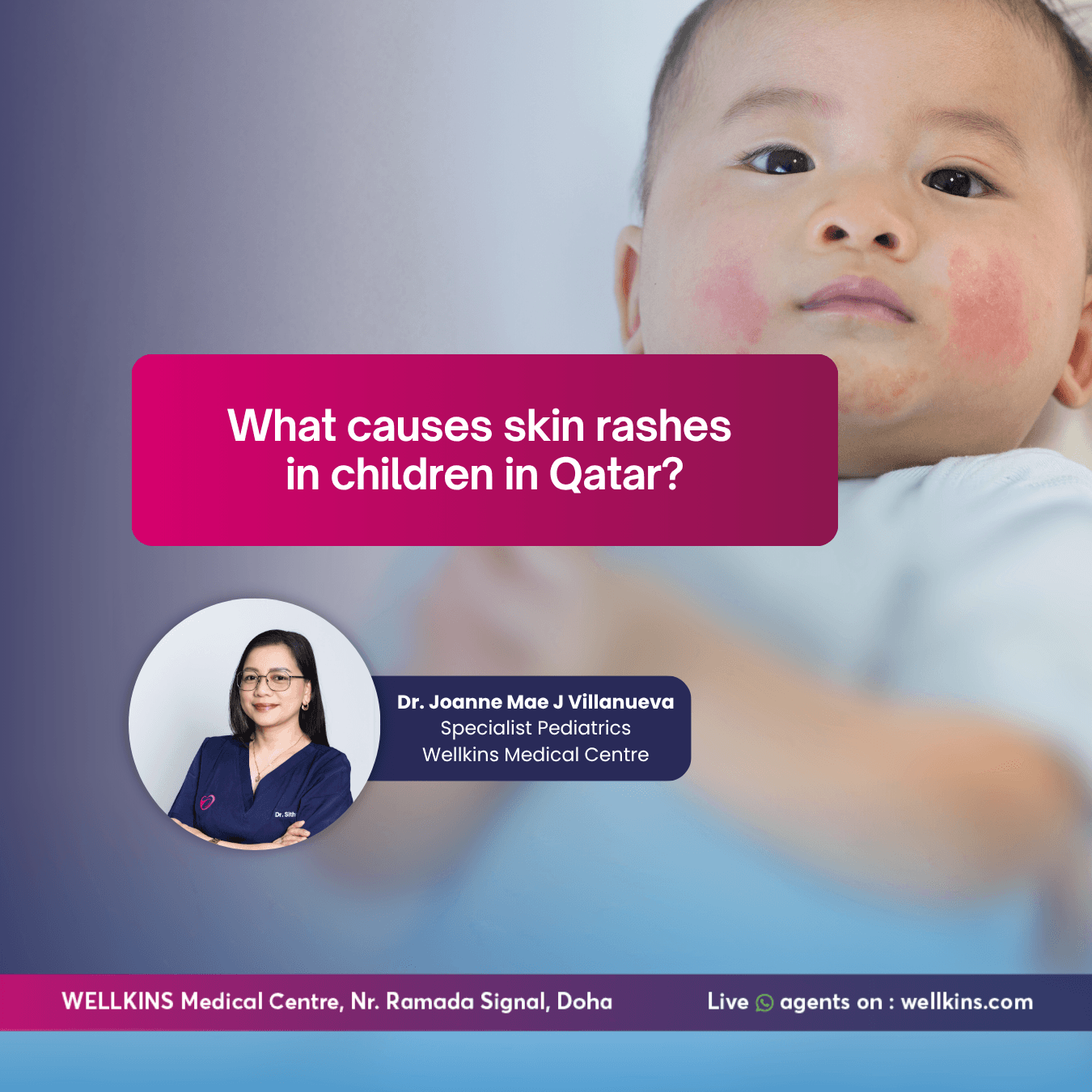
A rash on a child’s skin is one of the most common reasons parents visit a paediatric clinic and also one of the most anxiety-inducing. Rashes can appear suddenly, spread quickly and look alarming even when the cause is entirely benign. At the same time some rashes that appear mild are signs of conditions requiring prompt treatment. Knowing the difference matters enormously.
In Qatar, children face a particularly high burden of skin rashes driven by the combination of intense heat, high humidity in the coastal summer months, heavy air conditioning indoors, allergen-rich desert air and the close contact environments of nurseries and schools in Doha. The same conditions that make Qatar’s climate so distinctive create a skin environment where rashes are common, frequently recurrent and sometimes misidentified and mistreated as a result.
At Wellkins Medical Centre, skin rashes are among the most frequent presentations in the paediatric clinic. This guide covers the most commonly seen conditions in children in Qatar, what to look for in each and when a rash requires medical assessment rather than home management.
Parents in Qatar frequently come in having already tried one or two over-the-counter creams on a rash without improvement and sometimes with worsening. This is understandable but it highlights why accurate identification matters so much. A moisturiser applied to a fungal rash will not help. An antifungal applied to eczema will not help. A steroid cream applied to an infection can actively make it worse. The most important first step with any persistent or spreading rash in a child is an accurate diagnosis by a clinician who can distinguish between the many conditions that present with red or irritated skin.
People Also Ask
What causes skin rashes in children in Qatar?
Skin rashes in children in Qatar are caused by a wide range of factors including heat and sweat-related irritation, allergic reactions, viral infections, bacterial infections and fungal overgrowth. Qatar’s hot humid summers and heavily air-conditioned indoor spaces create specific conditions that make certain rashes such as heat rash, eczema and fungal infections significantly more common than in cooler climates. Close contact environments including nurseries and school classrooms also facilitate the spread of contagious rashes.
How do I know if my child’s rash needs a doctor?
A rash should be assessed by a doctor if it is spreading rapidly, is accompanied by fever, is causing significant pain or discomfort, appears on the face or near the eyes, does not improve after several days of appropriate home care or if the child seems generally unwell alongside the skin symptoms. A rash that develops alongside difficulty breathing or swallowing is a medical emergency requiring immediate attention.
Is eczema common in children in Qatar?
Yes, eczema is one of the most prevalent skin conditions in children across Qatar and the Gulf region. The combination of dry air from intensive air conditioning, high allergen exposure from dust and desert particulates and frequent transitions between heat and cold creates a skin barrier disruption environment that significantly increases both the incidence and severity of childhood eczema in this region.
Can heat rash be prevented in children living in Qatar?
Heat rash can be largely prevented through practical measures including dressing children in lightweight breathable fabrics, keeping sleeping and play environments cool during the summer months, ensuring thorough drying of skin folds after bathing and swimming and avoiding overdressing during outdoor activities. Given that Qatar’s summer temperatures make heat rash almost inevitable for many children, recognising it early and knowing how to manage it reduces both the child’s discomfort and parental anxiety.
Why Qatar’s Environment Creates a High Skin Rash Burden in Children
Before exploring specific rash conditions it is worth understanding why skin rashes are so prevalent among children in Qatar specifically rather than simply in hot climates generally.
- Extreme Heat and Sweating: Qatar’s summer temperatures regularly exceed 40 degrees Celsius. Children’s skin is thinner and their sweat glands are proportionally closer together than in adults, making them more susceptible to sweat-related skin conditions including heat rash and fungal infections in skin folds. Children who are active outdoors or in warm indoor spaces during the summer are at particularly high risk.
- Indoor to Outdoor Transitions: The dramatic temperature difference between Qatar’s air-conditioned interiors and outdoor heat means children’s skin experiences repeated cycles of warming, sweating and cooling throughout every day. These transitions disrupt the skin barrier and create conditions where moisture, bacteria and fungi can take hold more easily.
- Desert Dust and Allergens: Shamal winds carry fine particulate matter that settles on skin and clothing and acts as an irritant and allergen trigger for susceptible children. Children with a predisposition to eczema or contact dermatitis are particularly affected during periods of elevated dust.
- Communal Water Environments: Qatar’s widespread use of school and residential pools and communal water play areas creates transmission pathways for fungal infections such as tinea and viral infections such as molluscum contagiosum that thrive in warm shared water environments.
- Close Contact in Nurseries and Schools: The density of Doha’s nursery and school environments means that contagious rashes including impetigo, hand foot and mouth disease and chickenpox spread rapidly through child populations, producing cluster outbreaks that affect multiple families simultaneously.
The Most Common Skin Rashes in Children in Qatar
1. Heat Rash (Miliaria)
Heat rash is one of the most frequently seen skin conditions in young children in Qatar and is almost universal among infants and toddlers during the summer months. It occurs when sweat glands become blocked, trapping sweat beneath the skin surface and producing small red bumps or clear fluid-filled vesicles.
- Appearance: Tiny red bumps or small clear blisters appearing in clusters on the neck, chest, armpits, groin and areas covered by clothing. In infants it frequently appears across the face and forehead as well.
- Symptoms: Mild itching or prickling sensation. In most cases heat rash is uncomfortable rather than painful and does not cause the child significant distress beyond general irritability in hot conditions.
- Management: Moving the child to a cooler environment, removing excess clothing, using a gentle fan and applying a light calamine lotion resolves most heat rash within a few days. Avoiding heavy creams or ointments that further block sweat glands is important during the acute phase.
- Qatar-Specific Note: Heat rash that becomes infected due to scratching in Qatar’s warm and humid conditions can progress to bacterial impetigo and warrants clinical assessment if the skin becomes weepy, crusted or increasingly red beyond the original rash area.
2. Eczema (Atopic Dermatitis)
Eczema is a chronic inflammatory skin condition and one of the most common diagnoses in paediatric practice in Qatar. It is characterised by a dysfunctional skin barrier that allows moisture to escape and irritants and allergens to penetrate, producing cycles of inflammation, itching and scratching that worsen the barrier further.
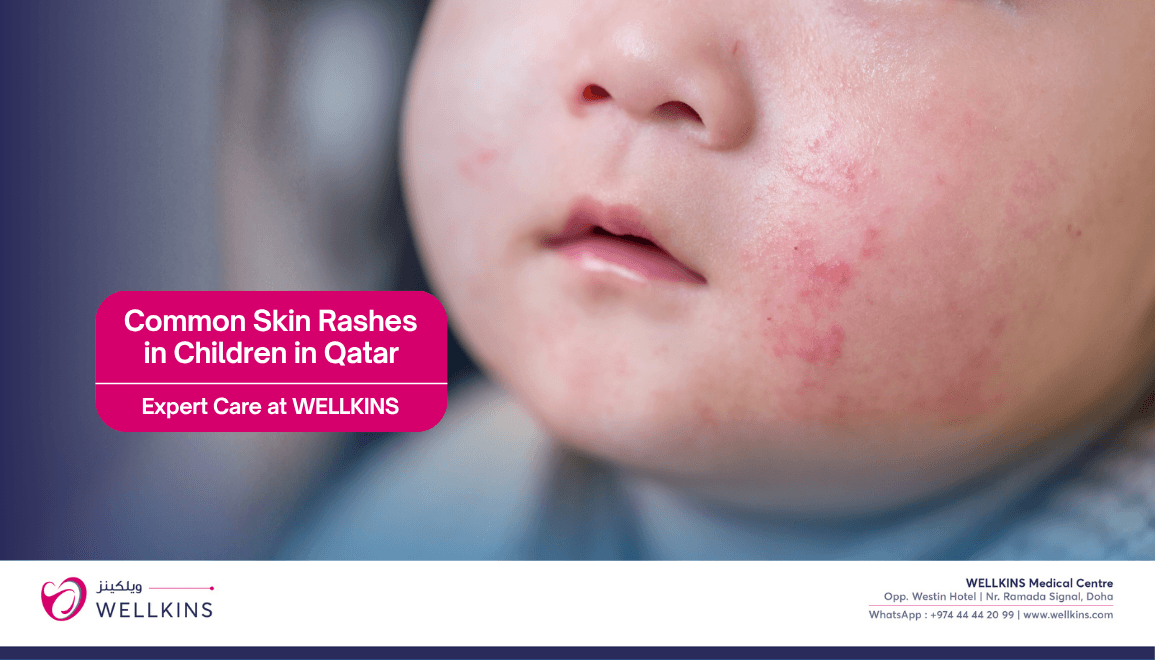
- Appearance: Dry, red, scaly and intensely itchy patches that appear on the cheeks and scalp in infants and progressively involve the elbow and knee creases, wrists, ankles and neck in older children. The skin may become thickened and leathery in areas of chronic scratching.
- Qatar-Specific Triggers: House dust mites thriving in air-conditioned spaces, desert dust allergens, pet dander, chlorine in swimming pools and the drying effect of air conditioning on skin are among the most consistent eczema triggers in Doha’s child population.
- Management: Daily emollient application even on clear skin days is the most important long-term measure for maintaining the skin barrier. Topical corticosteroids of appropriate potency for the child’s age and body site are used during flares. Identifying and reducing specific allergen triggers with guidance from a paediatrician significantly reduces flare frequency.
- When to Seek Help: Eczema that is not responding to emollient use, that involves widespread areas of the body, that causes significant sleep disruption from itching or that shows signs of secondary bacterial infection with weeping and crusting requires clinical assessment and a personalised management plan.
3. Heat-Aggravated Fungal Infections (Tinea)
Fungal skin infections caused by dermatophyte organisms thrive in warm moist environments and are significantly more common among children in Qatar during the summer months. Tinea corporis (ringworm of the body), tinea capitis (scalp ringworm) and tinea pedis (athlete’s foot) are the most frequently seen fungal rashes in the paediatric clinic at Wellkins.
- Appearance of Tinea Corporis: Circular or oval patches with a raised scaly border and a clearer centre, appearing on the trunk, arms or legs. The ring-like appearance gives it the common name ringworm despite no worm being involved.
- Appearance of Tinea Capitis: Scaling and hair loss in patches on the scalp. Tinea capitis can resemble dandruff or seborrhoeic dermatitis and may be accompanied by swollen lymph nodes at the back of the neck. It requires oral antifungal treatment rather than topical cream alone.
- Transmission: Fungal infections spread through direct skin contact with an infected person or animal and through shared items including towels, hairbrushes and sports equipment. Swimming pool environments are a frequent transmission source in Qatar.
- Management: Topical antifungal creams are effective for body and foot tinea. Scalp involvement requires oral antifungal medication as topical treatment cannot adequately penetrate the hair follicle. Treatment must be continued for the full prescribed duration even after visible improvement to prevent recurrence.
4. Impetigo
Impetigo is a highly contagious superficial bacterial skin infection caused most commonly by Staphylococcus aureus or Streptococcus pyogenes. It is prevalent among school-age children in Qatar’s nurseries and primary schools where close physical contact facilitates rapid transmission.
- Appearance: Honey-coloured crusted sores appearing most commonly around the nose and mouth in young children. Bullous impetigo, more common in infants and young toddlers, produces larger fluid-filled blisters that rupture to leave a red raw area with a thin brown crust.
- Transmission: Impetigo spreads through direct contact with the infected skin or with contaminated surfaces and items. Children with impetigo should be kept away from nursery or school until the lesions have been treated for at least forty-eight hours and are no longer weeping.
- Management: Limited or localised impetigo is treated with topical antibiotic ointment. Widespread infection, facial involvement or impetigo in children with underlying skin conditions including eczema requires oral antibiotic treatment. Prompt treatment reduces both the duration of the infection and the risk of spread to other family members.
5. Hand Foot and Mouth Disease
Hand foot and mouth disease is a common viral illness in young children caused by enteroviruses most commonly Coxsackievirus A16 and Enterovirus 71. It produces a recognisable combination of oral ulcers and a rash on the hands and feet and is highly prevalent in Qatar’s nursery and early school populations particularly during the transitional months of spring and autumn.
- Appearance: Small painful ulcers inside the mouth and on the tongue and gums accompanied by flat red spots or small blisters on the palms, soles and sometimes the buttocks and groin. The rash on the hands and feet is typically not itchy.
- Symptoms: Low-grade fever, reduced appetite and general irritability typically precede the rash by one to two days. The mouth ulcers are often the most distressing symptom for young children as they make eating and drinking painful.
- Management: Hand foot and mouth disease is self-limiting and resolves within seven to ten days without specific treatment. Management focuses on maintaining hydration, managing fever with age-appropriate analgesics and providing soft cool foods that are easier to eat with mouth ulcers present. Children should be kept away from nursery until the fever has resolved and the rash has dried.
6. Chickenpox (Varicella)
Despite the availability of an effective vaccine, chickenpox continues to circulate among unvaccinated children in Qatar’s diverse population. It is caused by the varicella-zoster virus and produces a characteristic itchy blister rash alongside fever and general malaise.
- Appearance: The rash progresses through distinct stages beginning as flat red spots that develop into raised papules then into fluid-filled vesicles that crust over within days. Crops of lesions appear in waves over several days meaning that spots at different stages of development are present simultaneously across the body and scalp.
- Complications in Qatar’s Context: Secondary bacterial infection of chickenpox lesions is more common in warm climates where sweating and scratching create an environment that favours bacterial entry. Children with eczema are at particular risk of widespread bacterial superinfection and should be seen promptly by a paediatrician at the onset of chickenpox.
- Management: Calamine lotion, cool baths and trimmed fingernails to reduce scratching damage. Oral antiviral treatment with acyclovir is indicated for adolescents, children with underlying health conditions or immunocompromised patients. Vaccination with two doses of the varicella vaccine is the most effective preventive measure and is recommended at Wellkins for all eligible children.
7. Urticaria (Hives)
Urticaria is characterised by raised itchy wheals on the skin that can appear and disappear rapidly and migrate across the body. It is a common presentation in children in Qatar and is triggered by a wide range of causes including food allergens, insect stings, medications viral infections and in many cases no identifiable trigger at all.
- Appearance: Raised pale or red welts with a surrounding flare appearing anywhere on the body. Individual lesions typically resolve within twenty-four hours but new lesions continue to appear giving the impression that the rash is spreading or persisting.
- When It Is Urgent: Urticaria accompanied by facial swelling particularly around the lips and eyes, difficulty breathing or swallowing or a general collapse is anaphylaxis and requires immediate emergency treatment with adrenaline. Parents of children with a known allergy history should have an adrenaline auto-injector prescribed and with them at all times.
- Management: Non-sedating antihistamines are the first-line treatment for acute urticaria and provide rapid relief of itching and wheal formation in most cases. Identifying and avoiding the trigger where possible reduces recurrence. Persistent urticaria lasting more than six weeks warrants specialist assessment to evaluate for underlying causes.
8. Molluscum Contagiosum
Molluscum contagiosum is a common viral skin infection caused by a poxvirus that produces characteristic small pearly raised bumps on the skin. It is particularly prevalent among school-age children in Qatar where shared pool environments and close contact sports facilitate transmission.
- Appearance: Small round pearly or flesh-coloured bumps with a dimpled centre appearing on the trunk, arms, legs and face. Lesions are typically painless and non-itchy unless the surrounding skin becomes inflamed.
- Natural Course: Molluscum is self-limiting and resolves spontaneously without treatment in most immunocompetent children within six to eighteen months. However in children with eczema lesions can be widespread and persistent due to the impaired skin barrier that facilitates viral spread.
- Management: Many cases in otherwise healthy children are managed with watchful waiting and reassurance. Treatment options including topical preparations or in-clinic procedures are available for widespread symptomatic or cosmetically distressing cases and are discussed based on the individual child’s presentation and the family’s preferences.
When to Seek Paediatric Assessment at Wellkins
Many childhood skin rashes are manageable at home with appropriate care. However the following situations always warrant clinical assessment without delay:
- The rash is spreading rapidly or covers a large area of the body.
- The child has a fever alongside the rash particularly if the fever is high or the child appears generally unwell.
- The rash is accompanied by swelling of the face, lips or tongue or any difficulty breathing or swallowing.
- The skin is weeping, crusted, warm to touch or showing signs of bacterial infection including increasing redness and pain beyond the original rash boundary.
- The rash is on or near the eyes or involves the scalp with associated hair loss.
- The child is scratching so severely that sleep is significantly disrupted or the skin is breaking down from the scratching.
- A rash that was improving has suddenly worsened or a new type of rash has appeared alongside an existing one.
- The rash has persisted for more than one week without clear improvement despite appropriate home management.
Preventing Skin Rashes in Children in Qatar: Practical Steps
While not every skin rash can be prevented, several practical measures significantly reduce the frequency and severity of the most common presentations in Qatar’s environment.
- Choose Lightweight Breathable Clothing: Loose cotton or moisture-wicking fabrics reduce sweat retention against the skin and lower the risk of heat rash and fungal infections in skin folds. Tight synthetic fabrics should be avoided particularly during outdoor activity and in warm environments.
- Maintain Thorough Skin Drying: After bathing, swimming or outdoor activity in the heat, thoroughly patting dry all skin folds including the neck, armpits, groin and between the toes significantly reduces the moisture environment that heat rash and fungal infections require to develop.
- Apply Emollient Daily for Eczema-Prone Children: Children with a history of eczema or dry skin should have an emollient applied at least once daily even when the skin appears clear. This maintains the skin barrier and reduces the frequency and severity of flares triggered by Qatar’s allergen and climate conditions.
- Use Pool Footwear and Avoid Sharing Personal Items: Wearing flip-flops in communal pool areas and changing rooms and avoiding shared towels, hairbrushes and sports equipment reduces transmission of fungal infections and molluscum contagiosum through shared environments.
- Keep Vaccinations Up to Date: Varicella vaccination prevents chickenpox and its complications. Ensuring children receive all scheduled vaccines protects them individually and reduces transmission within school and nursery communities in Qatar.
- Manage Indoor Air Quality: Regular cleaning and filter replacement in air conditioning units reduces the house dust mite and mould spore load in the indoor environment that triggers eczema flares. Maintaining appropriate indoor humidity with a humidifier during the driest months also supports skin barrier health.
Skin rashes in children are among the most common and most treatable paediatric presentations. Most resolve with accurate identification and appropriate management. What makes the difference between a rash that is managed quickly and confidently and one that lingers and worsens is usually simply knowing what you are dealing with.
If your child’s skin is telling you something, it is worth listening and getting the right answer sooner rather than later.
To book an appointment at Wellkins Medical Centre: https://wellkins.com/drjoanne/
To know more about the pediatric services: https://wellkins.com/pediatrics