

Author: Dr. Steffy Mariyam Reji, ( Specialist Dermatologist – WELLKINS Medical Centre )
There is a particular kind of skin frustration that does not announce itself dramatically. It builds quietly. The acne cleared months ago but left behind shadows that catch the light in unflattering ways. The texture never quite returned to what it was. The pores seem larger than they used to. The skin looks tired even after a full night of sleep. Nothing is drastically wrong. But something feels off and no amount of skincare products seems to fully address it.
This is precisely the clinical territory where microneedling excels and it is also why so many patients at Wellkins Medical Centre arrive curious about it but uncertain about whether it is the right choice for them specifically.
The honest answer is that microneedling is one of the most clinically well-supported aesthetic treatments available for a wide range of skin concerns. It works by engaging the skin’s own biology rather than imposing change from outside. It is safe across the full spectrum of skin tones present in Qatar’s diverse population. And when it is performed correctly, with appropriate assessment, technique and aftercare, the results are consistent and progressively rewarding across a course of treatments.
This guide covers everything a first-time patient needs to understand before booking their first session.
People Also Ask
Is microneedling painful for first-timers?
For most first-time patients, microneedling is a very manageable experience. A topical numbing cream is applied to the skin before the procedure begins, which significantly reduces sensation during treatment. Most people describe what they feel as a gentle pressure or a mild vibration across the skin rather than anything they would consider painful.
What skin issues can microneedling help improve?
Microneedling is a versatile treatment that addresses a wide range of concerns including acne scars, post-inflammatory pigmentation, fine lines, enlarged pores, uneven skin tone and texture, dull or dehydrated skin and stretch marks. It works by stimulating the skin’s natural collagen and elastin production, which means improvements develop gradually and build progressively over a course of sessions rather than appearing all at once.
How many microneedling treatments do I need?
Most patients benefit from a course of three to six sessions spaced four to six weeks apart, though the exact number depends on the concern being treated. General skin rejuvenation typically requires fewer sessions while acne scarring or deeper texture issues may call for a longer course. Results are cumulative and continue to improve between appointments as collagen remodelling progresses beneath the skin surface.
Can microneedling be done on all skin tones?
Yes, microneedling is safe and effective across all skin tones when performed by a trained professional using the correct technique and device. Unlike laser treatments that target skin pigment and require careful adjustment for darker skin tones, microneedling does not generate heat in the skin and carries no pigmentation risk, making it one of the most inclusive aesthetic treatments available for Qatar’s diverse patient population.
Microneedling is one of the treatments I recommend most because the science behind it is genuinely sound. It works by stimulating the skin’s natural regenerative pathways, making results reliable rather than variable. What first-time patients should understand is that results are cumulative and improve over time, not instantly after one session. The quality of results also depends on proper assessment and technique, not just the device.
What Microneedling Actually Is and How It Works
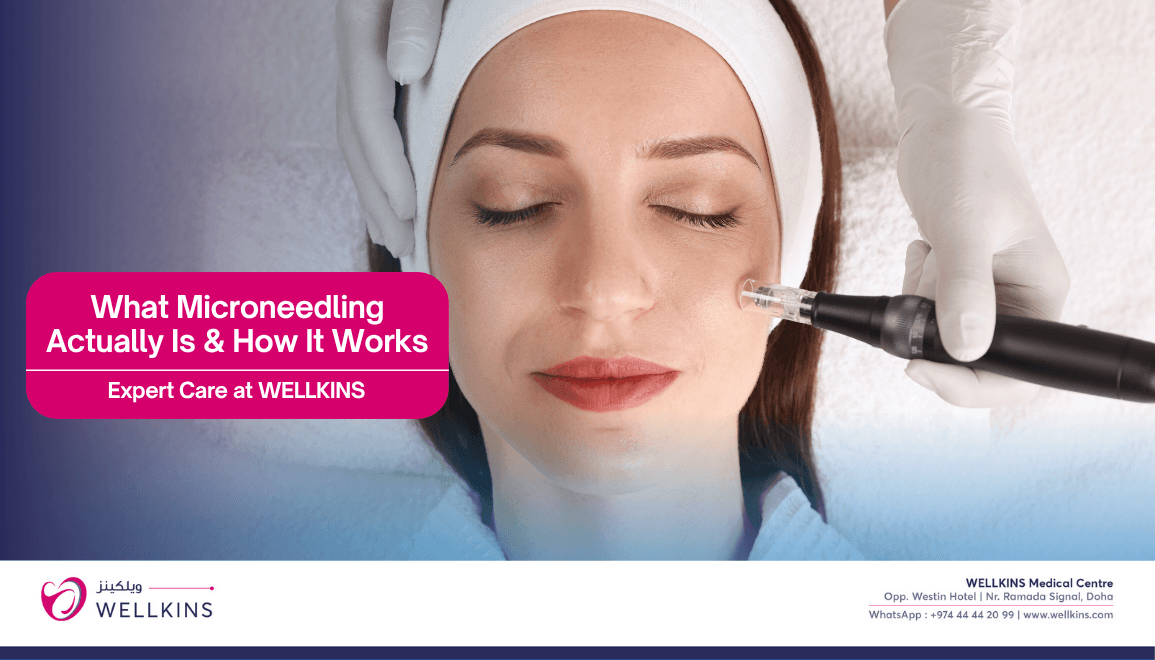
Microneedling is a minimally invasive skin treatment that uses a device fitted with very fine, medical-grade needles to create thousands of controlled micro-injuries across the skin’s surface during a treatment session. Each of these tiny punctures is too small to cause meaningful tissue damage but large enough to trigger the skin’s wound-healing response.
That healing response is the entire point.
When the skin detects these micro-injuries, it initiates a cascade of biological events. Fibroblasts are activated and begin producing new collagen and elastin fibres. Growth factors are released. Blood flow to the treated area increases. Cell turnover accelerates. Over the weeks following treatment, as this regenerative process progresses, the skin becomes structurally denser, more resilient and progressively improved in both texture and tone.
This is not a superficial process and it is not a temporary one. The new collagen produced in response to microneedling is genuine, structural collagen that integrates into the dermis and contributes to lasting improvements that develop and consolidate over months rather than days.
In Qatar’s environment, where UV exposure, dry air from air conditioning, heat and dust accelerate skin ageing and damage the skin barrier over time, this mechanism of internally driven regeneration rather than external product application makes microneedling particularly relevant and effective.
Why Microneedling Works With the Skin, Not Against It
Understanding why microneedling produces results requires understanding what happens to skin over time in an environment like Qatar’s.
As we age, natural collagen production slows progressively from the mid-twenties onward. Years of sun exposure, which in Qatar is a year-round reality rather than a seasonal one, cause photoageing that manifests as pigmentation, loss of elasticity and surface texture changes. Acne leaves post-inflammatory marks that persist long after the active breakout has resolved. Air conditioning strips moisture from the skin and impairs the natural barrier function that keeps the skin surface smooth and even.
Microneedling addresses these concerns through the skin’s own biology rather than attempting to chemically alter or mechanically resurface it. The treatment supports:
- New Collagen and Elastin Formation: The primary structural improvement that underlies better skin firmness, reduced fine lines and softened acne scarring over a course of treatments. Collagen remodelling continues for up to six months after the final session, meaning the full results of a treatment course are not apparent immediately after the last appointment.
- Improved Blood Flow to the Treated Area: Enhanced microcirculation supports the delivery of oxygen and nutrients to the skin cells and contributes to the healthy, luminous complexion that patients often notice first as a general brightening and radiance improvement following treatment.
- Enhanced Absorption of Active Serums: The microchannels created during treatment dramatically improve the penetration depth of topical serums applied immediately after the procedure. Ingredients that would otherwise sit largely on the skin surface, such as hyaluronic acid, peptides, growth factors and vitamin C, are delivered directly into the dermis where they can work most effectively.
- Accelerated Cell Turnover: Faster renewal of the surface skin layer progressively reduces the appearance of pigmentation, dullness and superficial textural irregularities that accumulate over time.
What Skin Concerns Does Microneedling Address in Qatar?
Microneedling is a genuinely versatile treatment but it performs at different levels of effectiveness for different concerns. Understanding this helps set expectations that are accurate rather than either overly optimistic or unnecessarily modest.
Where microneedling excels:
- Acne Scars and Post-Inflammatory Marks: This is the single most impactful application of microneedling and the concern that produces the most meaningful patient satisfaction over a treatment course. The collagen induction triggered by microneedling gradually fills and softens the depressed areas of atrophic acne scarring. Post-inflammatory hyperpigmentation from previous breakouts responds to the accelerated cell turnover and, where brightening serums are incorporated, to the enhanced penetration of these actives at the treatment session.
- Enlarged Pores: Chronically enlarged pores caused by excess sebum production in Qatar’s heat respond well to regular microneedling. The collagen produced around the pore walls progressively tightens the pore structure and reduces the visible size of enlarged pores over a course of treatments.
- Uneven Skin Tone and Texture: Surface irregularities from sun damage, past acne, ageing or environmental stress are among the most reliably improved concerns with microneedling. The combination of accelerated cell turnover and collagen production creates a progressively smoother, more even surface.
- Fine Lines and Early Skin Laxity: Microneedling produces meaningful improvements in fine lines and early skin firmness through collagen and elastin stimulation. It is most effective for fine surface lines and mild laxity rather than deep wrinkles or significant structural sagging.
- Dull, Dehydrated or Tired-Looking Skin: For patients in Qatar whose skin looks fatigued from air conditioning exposure, UV damage or the cumulative effects of a demanding lifestyle, microneedling produces an immediate improvement in luminosity and a progressive enhancement of overall skin quality that patients often describe as looking genuinely rested and healthy rather than treated.
- Stretch Marks: Microneedling over stretch marks stimulates collagen production in the dermis of the affected area, gradually improving the texture, colour and depth of stretch marks over a longer course of treatments than those used for facial concerns.
What microneedling does not replace:
- It does not relax muscles or prevent dynamic expression lines the way botulinum toxin does.
- It does not restore facial volume or lift deflated tissue the way dermal fillers do.
- It does not produce the degree of skin resurfacing that ablative laser treatments achieve for deep scarring or significant photoageing.
- It is not a primary treatment for active inflammatory acne with pustules or nodules and should be performed alongside appropriate medical management for active acne rather than as a standalone solution.
Microneedling works most powerfully as part of a considered skin care plan rather than as a single isolated intervention, and understanding where it sits within that plan is something a dermatologist consultation makes clear.
What a First Microneedling Session at Wellkins Feels Like
First-time patient anxiety about microneedling is almost always centred on two questions: will it hurt and what will I look like afterward? Both deserve a direct and honest answer.
During the treatment:
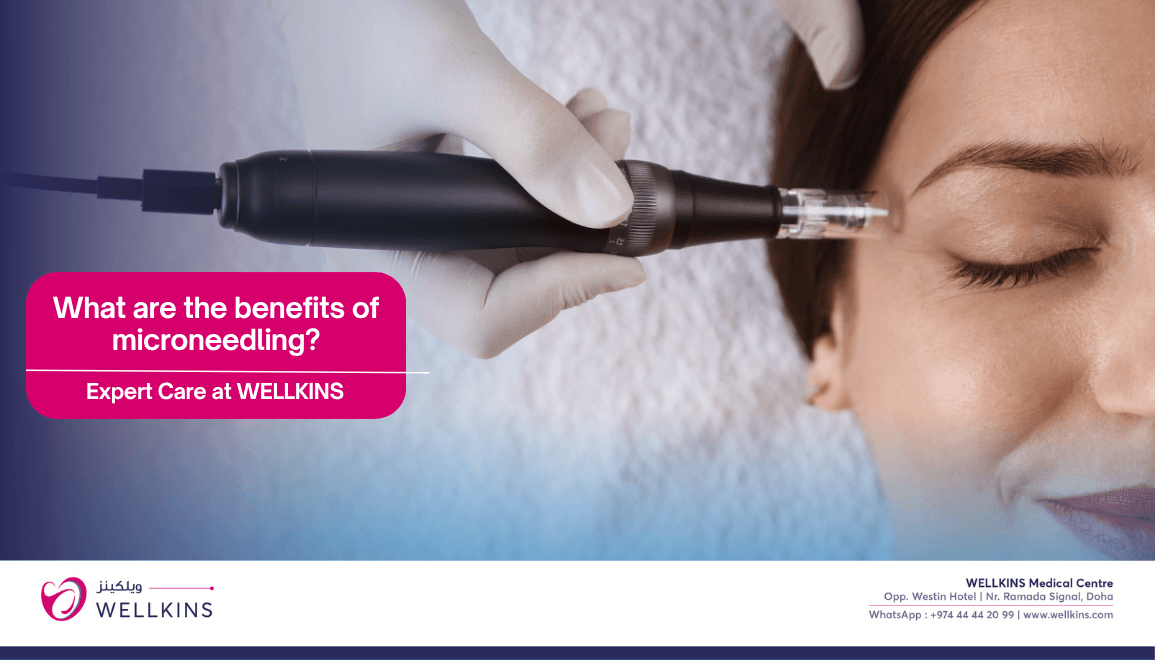
- Numbing Cream: A topical anaesthetic cream is applied to the treatment area and left for twenty to thirty minutes before the procedure begins. This significantly reduces sensation during the treatment and is a standard part of every microneedling session at Wellkins. The vast majority of patients describe the sensation with the numbing cream in place as mild pressure or a light vibration rather than pain.
- Areas of Greater Sensitivity: The forehead, upper lip area and areas with thinner skin may feel slightly more sensitive than the cheeks and forehead. The treating dermatologist adjusts needle depth and speed in these areas to maintain patient comfort throughout the session.
- Duration: A full face microneedling session at Wellkins takes approximately forty-five to sixty minutes including the numbing period. Localised treatments over a specific concern area such as a scar region or stretch marks may be shorter.
- Immediately After: The skin appears red and flushed immediately following the treatment, similar in appearance to a moderate sunburn. There may be mild swelling, particularly around thinner skin areas near the eyes. The skin feels warm and slightly tight.
The recovery period:
- Day One to Two: Redness and warmth are the primary features. Some patients experience mild pinpoint bleeding immediately after treatment that fully resolves within minutes in the clinic. The flushed appearance typically begins to settle within twenty-four hours.
- Day Two to Four: The skin may feel dry and slightly tight. Mild flaking or peeling can occur as the surface skin renews. This is a normal and expected part of the healing process and should not be manually exfoliated or picked.
- Day Four to Seven: The initial healing phase is complete for most patients. The skin begins to show the early signs of improvement: a subtle softening of texture, a general brightening and a healthier, more refreshed appearance that patients often describe as looking like they have been sleeping and eating well.
- Week Two Onward: Collagen remodelling continues beneath the surface and improvements become progressively more noticeable over the following weeks. The full benefit of each session is not apparent until approximately four to six weeks after treatment, which is why sessions are spaced at this interval.
Microneedling and Serums: Making Each Session Work Harder
One of the most clinically significant advantages of microneedling is the dramatic enhancement of topical serum absorption that the microchannels provide immediately after treatment. This pairing is not simply an add-on but a core component of an effective microneedling protocol at Wellkins.
Serums selected by the treating dermatologist based on the patient’s specific concerns are applied to the skin during and immediately after the microneedling pass, allowing them to penetrate several times more deeply than they would when applied to intact skin at home.
- Hyaluronic Acid: Delivers immediate and deep hydration to the dermis, plumping the skin from within and supporting the healing environment during the post-treatment period.
- Growth Factors and Peptides: Signal the skin’s fibroblasts to increase collagen and elastin production, amplifying the regenerative response triggered by the microneedling itself.
- Vitamin C and Antioxidants: Support brightening of post-inflammatory pigmentation and provide protection against the oxidative damage that continues to occur from UV and environmental exposure in Qatar.
- Platelet-Rich Plasma (PRP): When microneedling is combined with PRP derived from the patient’s own blood, the growth factor concentration delivered to the skin is significantly higher than serums alone can provide. This combination, sometimes called the vampire facial, is particularly effective for deeper scarring, hair restoration and patients seeking accelerated regenerative results.
- Exosomes: An emerging and highly active area of regenerative skincare, exosome serums deliver cell-signalling molecules that stimulate skin renewal through a complementary pathway to the microneedling mechanism itself.
The serum selected for each patient at Wellkins is determined by their skin assessment and treatment goals rather than a standard protocol applied uniformly, which is why the dermatologist consultation before and at each treatment session is a clinically meaningful rather than ceremonial step.
How Many Sessions and How Often?
- For General Skin Rejuvenation and Maintenance: Three to four sessions spaced four to six weeks apart, followed by maintenance sessions every three to four months, represents the most commonly recommended programme for patients seeking overall skin quality improvement rather than targeting a specific concern.
- For Acne Scarring: Four to six sessions are typically recommended as a foundational course for moderate acne scarring, with deeper or more extensive scarring potentially requiring additional sessions. Results build progressively across the course and continue to improve for several months after the final session.
- For Pigmentation and Uneven Tone: Three to six sessions incorporating brightening serums, combined with consistent daily SPF use in Qatar’s UV environment, produce meaningful and progressive improvement in skin evenness.
- For Fine Lines and Skin Firmness: A course of four sessions is a reasonable starting point, with ongoing maintenance sessions preserving and building on the collagen improvements achieved in the initial course.
The expectation-setting point that every first-time patient at Wellkins receives clearly is this: microneedling is not a single-session transformation. It is a progressive course of treatment where each session builds on the last, collagen production continues between appointments and the most significant results appear after the course is complete rather than immediately after any individual session.
Is Microneedling Safe for All Skin Tones in Qatar?
This is one of the most important questions for a treatment being performed in Qatar’s genuinely diverse patient population, and the answer is straightforwardly yes, with the appropriate technique and device.
Unlike laser resurfacing treatments that target melanin and carry a meaningful risk of post-inflammatory hyperpigmentation in darker skin tones if settings are not carefully calibrated, microneedling does not generate heat in the skin and does not interact with skin pigment. The controlled micro-injury mechanism is skin-tone-neutral, meaning the biological response it triggers is fundamentally the same across all Fitzpatrick skin types.
This makes microneedling one of the most genuinely inclusive aesthetic treatments available in Qatar, accessible and effective for patients from South Asian, Arab, African, East Asian, Middle Eastern and European backgrounds without the skin-tone-related safety concerns that limit other procedures.
The one important nuance is that patients with darker skin tones who have active post-inflammatory hyperpigmentation should discuss serum selection carefully with their dermatologist, as certain active ingredients used in combination with microneedling can cause irritation that temporarily worsens pigmentation if not chosen and applied appropriately.
Before Your First Session: Preparation That Matters
Arriving at your microneedling appointment with your skin in the optimal condition for treatment makes a meaningful difference to both the comfort of the session and the quality of the results.
- Stop Retinoids and Exfoliating Actives: Prescription retinoids, retinol products and chemical exfoliants including AHAs and BHAs should be paused for five to seven days before treatment. These ingredients increase skin sensitivity and can make the post-treatment recovery period more uncomfortable without adding to the treatment benefit.
- Avoid Prolonged Sun Exposure: Treating recently sun-exposed or tanned skin increases the risk of post-inflammatory pigmentation changes. In Qatar’s sunny environment, consistent SPF use in the weeks before treatment and avoidance of outdoor sun exposure in the days immediately before the appointment is the most important pre-treatment skin preparation step.
- Arrive With Clean, Product-Free Skin: No makeup, sunscreen, moisturiser or active skincare products should be applied on the day of the appointment. The skin is cleansed in clinic before treatment but arriving already clean reduces the preparation time and ensures no product residue interferes with the treatment.
- Stay Well Hydrated: Skin that is adequately hydrated responds more comfortably to microneedling and heals more efficiently. In Qatar’s heat, ensuring generous water intake in the days before treatment is a simple but genuinely useful preparatory step.
- Discuss Current Medications: Isotretinoin, blood thinners, certain antibiotics and immunosuppressive medications all have implications for microneedling safety and timing. Disclosing all current medications at the consultation ensures the treatment schedule is appropriate and safe.
Aftercare: Supporting the Skin Through Its Healing Response
What happens in the days following microneedling has a direct impact on how fully the results of the session are realised. Aftercare is not a precautionary formality. It is an active part of the treatment process.
- Gentle Cleansing for the First Forty-Eight Hours: Use lukewarm water and a fragrance-free, non-active cleanser. Avoid face cloths, exfoliating brushes or any mechanical friction on the treated skin. Pat dry with a clean towel without rubbing.
- Deep Hydration With Soothing Formulations: Apply a simple, fragrance-free hyaluronic acid serum or a dermatologist-recommended post-procedure moisturiser to support the skin barrier during healing. Avoid products containing retinol, vitamin C, AHAs, BHAs or any active ingredient for at least four to five days after treatment.
- SPF 50 Every Morning Without Exception: Post-microneedling skin is temporarily more photosensitive and in Qatar’s UV environment this makes daily sun protection genuinely non-negotiable rather than simply advisable. Unprotected sun exposure in the days after treatment can cause post-inflammatory pigmentation that partially or fully reverses the brightening benefits of the session.
- Avoid Heat Exposure for Forty-Eight Hours: Saunas, steam rooms, hot showers, intense exercise and outdoor activities in Qatar’s direct midday sun should be avoided for forty-eight hours post-treatment to reduce unnecessary inflammation in the healing skin.
- Do Not Pick at Flaking Skin: The mild peeling that may occur on days two to four is the surface skin renewing as part of the healing process. Picking or manually exfoliating this flaking skin disrupts the barrier repair and can create marks that take longer to settle than the treatment itself.
- Makeup: Mineral makeup can typically be applied twenty-four to forty-eight hours after treatment if needed for professional or social commitments. Full cosmetic product use should wait until any active redness or sensitivity has fully resolved.
When to Book Your Microneedling Consultation at Wellkins
A dermatologist consultation is the right starting point if any of the following apply:
- You have acne scarring, post-inflammatory pigmentation or skin texture concerns that have not responded adequately to topical products alone.
- You are interested in a professional skin treatment but want something with a well-established safety profile that is appropriate for your skin tone without the risks associated with heat-based devices.
- You have previously had a microneedling session elsewhere and were disappointed with the results and want to understand whether a different approach or a complementary treatment would produce a better outcome.
- You are managing active acne and want to understand how microneedling fits into a broader treatment plan alongside medical management of the active condition.
- You want a clear, honest assessment of what microneedling can realistically achieve for your specific skin concerns and what the treatment timeline and session commitment will look like before you begin.
Skin renewal is not a dramatic event. It is a process, quiet, consistent and cumulative, much like the skin’s own biology. Microneedling works because it respects that process rather than trying to shortcut it. Each session is a conversation with the skin’s regenerative intelligence, and the skin, given the right stimulus and the right support, almost always responds.
The only question is whether you are ready to begin.
To book an appointment at Wellkins Medical Centre: https://wellkins.com/dermatology