
Author: Dr. Cryscel Anne S Ramos, ( Specialist – Internal Medicine, WELLKINS Medical Centre )
Food is at the heart of Filipino culture. It is how we celebrate, connect and show love. So when a doctor says “you need to change your diet,” it can feel like being asked to give up something far bigger than just what is on the plate.
You do not have to give up Filipino food. You just need to understand it better and make it work for your health rather than against it.
At Wellkins Medical Centre, we work with a large Filipino community in Qatar managing conditions like diabetes, hypertension, high cholesterol and kidney disease. This guide adapts the internationally proven Plate Method specifically for Filipino eating habits so that healthy eating feels familiar, practical and sustainable.
The Filipino community in Qatar faces an elevated risk of type 2 diabetes, hypertension, dyslipidaemia and chronic kidney disease. Genetics play a role, but so does how diet changes when people move abroad. What I want every Filipino patient to understand is that managing these conditions through food does not mean eating bland, unfamiliar meals. The plate method, adapted for Filipino eating habits, is one of the most effective and practical tools I use in practice every day.

Why This Matters for Filipinos in Qatar
Filipinos have a documented genetic predisposition to several chronic conditions. But genetics are not destiny. Diet and lifestyle are among the most powerful ways to modify that risk. Here is why nutritional awareness is especially important for the Filipino community living in Qatar:
- Dietary Transition: Moving abroad often means more processed and convenience foods and fewer home-cooked meals with fresh vegetables and fish.
- White Rice Dependency: Large portions of white rice eaten multiple times a day significantly challenge blood sugar control for anyone with prediabetes or diabetes.
- High Sodium Intake: Fish sauce, soy sauce, bagoong and preserved meats are flavorful but collectively create a sodium load that is a major driver of hypertension.
- Delayed Diagnosis: Many Filipinos in Qatar priorities work and family above personal health monitoring. Chronic conditions often develop silently for years before a first diagnosis is made.
The Plate Method: The Framework Behind Every Healthy Filipino Meal
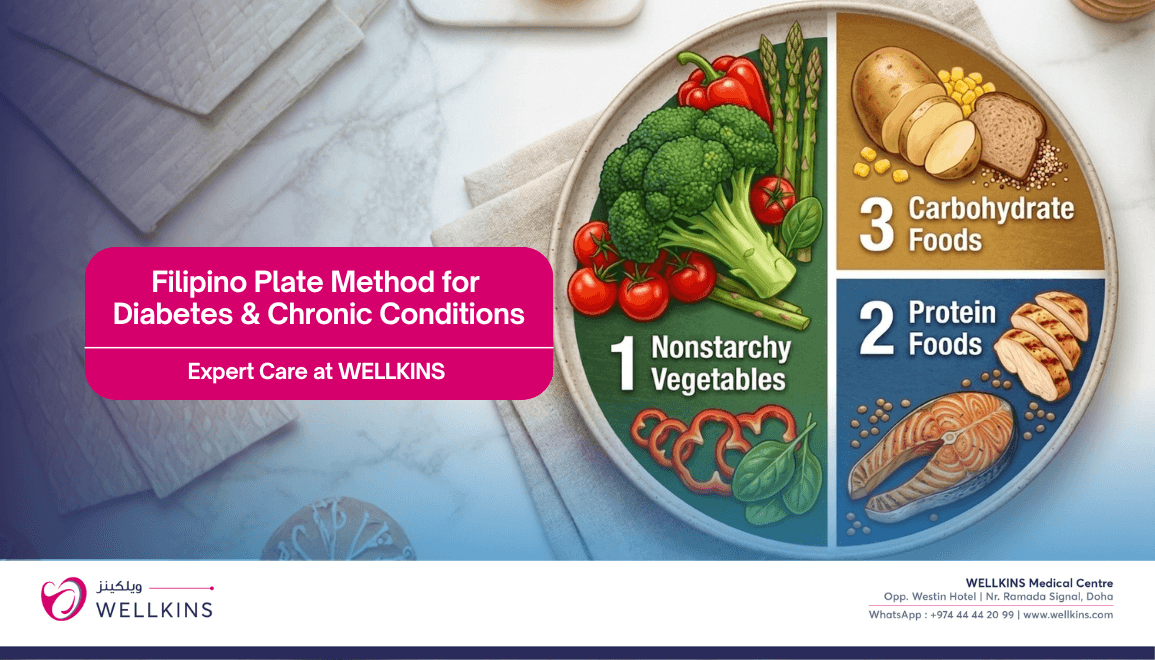
The Plate Method is a visual and practical tool for building balanced meals without counting calories or memorizing complicated rules. It is based on a standard nine-inch plate divided into three sections, with a small serving of dairy and fruit on the side.
It works for diabetes, hypertension, high cholesterol, fatty liver disease, chronic kidney disease and weight management because the core principle is universal: balance, appropriate portions and variety at every meal.
Here is how to build your plate the Filipino way.
1. Half the Plate: Non-Starchy Vegetables
This is the most impactful change most Filipino patients can make. Vegetables are often a small side or a garnish in everyday Filipino meals. The plate method puts them front and Centre.
Why it matters:
- Low in carbohydrates and calories
- High in fiber, vitamins and minerals
- Slows glucose absorption from the rest of the meal
- Supports blood pressure, digestion and heart health
Best Filipino non-starchy vegetables to fill this half:
- Ampalaya (Bitter Melon): Documented benefits for blood sugar management. Best prepared as ginisa with minimal oil.
- Kangkong (Water Spinach): Rich in iron, calcium and vitamins A and C. Quick to cook and easy to prepare in large portions.
- Pechay and Bok Choy: Versatile in soups and stir-fries. Excellent additions to sinigang and tinola.
- Sitaw (String Beans): Provides fiber and folate. A natural fit in pinakbet and kare-kare.
- Talong (Eggplant): Excellent grilled or as tortang talong alongside a smaller rice portion.
- Okra: High in soluble fiber that helps manage both blood sugar and cholesterol levels.
- Upo and Patola: Mild, low-calorie and perfect for Filipino soups without adding significant carbohydrate load.
Serving guide: One cup raw or half a cup cooked. Fill this half generously. Eating more non-starchy vegetables is almost always a benefit.
2. One Quarter of the Plate: Grains and Starchy Vegetables
This is where rice lives on the Filipino plate and where portion awareness makes the biggest difference for blood sugar, weight and metabolic health. The goal is not to eliminate carbohydrates. It is to right-size the portion and choose smarter varieties where possible.
Best carbohydrate choices for Filipino patients:
- Brown Rice: More fiber, magnesium and B vitamins than white rice. Raises blood sugar more slowly. Start by mixing brown and white rice, then gradually shift the ratio.
- Red Rice and Black Rice: Increasingly available in Qatar. Superior nutritional profiles with added antioxidant benefits.
- Smaller White Rice Portions: If switching varieties is not yet possible, reduce to one third to half a cup cooked per meal and significantly increase the vegetable portion to compensate.
- Sweet Potato and Gabi (Taro): Used as the carbohydrate portion of the plate rather than in addition to rice. More fiber and broader micronutrients than white rice. Steamed or boiled is best.
- Corn: More fiber than white rice and a lower glycemic load. Boiled corn as the grain portion is a strong, familiar choice.
- Monggo and Other Legumes: Contain both starch and protein alongside significant fiber. Raise blood sugar far more slowly than rice and are particularly valuable for patients with diabetes and high cholesterol.
Serving guide: One third to half a cup of cooked rice or grains, half a cup of cooked starchy vegetables or half a cup of cooked beans and lentils. Each of these provides approximately fifteen grams of carbohydrate.
3. One Quarter of the Plate: Protein
Protein supports muscle maintenance, keeps you full between meals and has minimal impact on blood sugar. Choose lean, high-quality sources at every meal.
Filipino protein choices ranked by health benefit:
- Fish and Seafood: The top recommendation for patients with chronic conditions. Bangus, galunggong, tilapia, tanigue and salmon provide lean protein and heart-protective omega-3 fatty acids. Prepare by steaming, grilling, baking or cooking in sinigang rather than deep frying.
- Skinless Chicken and Turkey: Lean, versatile and easy to incorporate into everyday Filipino cooking. Tinola is one of the most nutritionally complete Filipino dishes available.
- Eggs: Nutritious and affordable. Two to four per week for most patients. Individual cholesterol-related guidance should be discussed with your doctor.
- Lean Cuts of Pork and Beef: Pork tenderloin and loin cuts, trimmed of visible fat. Beef at ninety percent lean or higher. Braised, boiled or grilled rather than fried.
- Tofu: An excellent plant-based protein that absorbs Filipino flavors well. Works in sinigang, stir-fries and tokwa dishes.
- Low-Fat Cheese and Curd-Style Cheeses: In moderate quantities as a protein contribution alongside other sources.
Serving guide: Roughly the size of a deck of cards or the palm of your hand when cooked, approximately eighty-five grams or three ounces per meal.
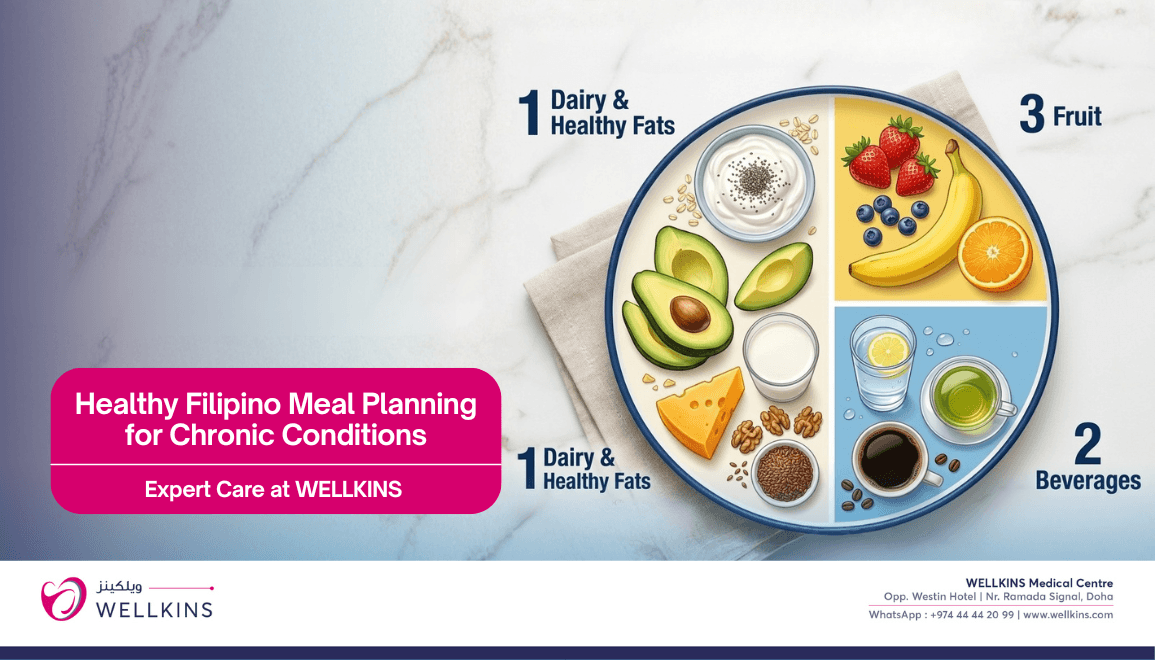
Completing the Meal: Dairy, Fruit, Healthy Fats and Beverages
Dairy (on the side):
- Choose fat-free or low-fat milk, soy milk or plain Greek yoghurt
- One serving contains approximately twelve grams of carbohydrate
- Dairy also has a beneficial effect on uric acid excretion, relevant for patients managing gout alongside other conditions
Fruit (on the side):
- Approximately half a cup of fresh fruit per meal
- Lower glycaemic Filipino fruit options include guava, papaya in moderate portions and watermelon as a smaller serving
- Whole fruit is always preferred over juice, which removes the fibre and concentrates the sugar
Healthy Fats (in cooking and as condiments):
- Replace lard and coconut oil with small amounts of olive oil or canola oil for everyday sauteing
- Avocado in modest portions as a side or condiment
- Nut butters from almonds and peanuts in small servings
- One teaspoon of healthy fat provides approximately five grams of fat and forty-five calories
Beverages:
- Best choices: Water, unsweetened calamansi juice, plain coffee or tea without sugar
- Reduce or eliminate: Sweetened softdrinks, packaged juices, energy drinks, sweetened milk tea and alcohol. These consistently worsen blood sugar, blood pressure and weight management over time.
How to Adapt Your Favorite Filipino Dishes
The plate method is not about replacing Filipino food. It is about rebalancing what is already there. Here is how to adapt five beloved Filipino dishes.
- Sinigang: Already one of the best-aligned Filipino dishes with this method. Load it with kangkong, sitaw, talong and okra. Use bangus or salmon as the protein. Serve with half a cup of brown rice. Reduce fish sauce in the broth to manage sodium for hypertension patients.
- Tinola: Use skinless chicken. Add generous malunggay leaves, which are nutritionally exceptional for iron, calcium and vitamin C. Make the broth and vegetables the dominant part of the meal with a smaller rice portion on the side.
- Pinakbet: Naturally vegetable-forward with ampalaya, sitaw, talong, okra and squash filling the plate beautifully. Use bagoong sparingly and balance with fresh vegetables to manage the sodium content.
- Adobo: Use skinless chicken or lean pork. Skim the fat from the sauce. Keep the adobo portion to one quarter of the plate and add a large serving of vegetables alongside a smaller rice portion. A low-sodium soy sauce reduces the hypertension impact significantly.
- Arroz Caldo: Reduce the rice quantity and use brown rice where possible. Add extra ginger. Top with a boiled egg, tofu or a small portion of lean chicken to increase the protein contribution of the meal.
Nutritional Priorities by Chronic Condition
The plate method applies to all chronic conditions, but each one has specific priorities to be aware of.
- Type 2 Diabetes and Prediabetes: Focus on reducing white rice portions, switching to brown or red rice, increasing legumes and non-starchy vegetables and eliminating sweetened beverages. These changes consistently improve blood sugar and HbA1c over time.
- Hypertension: Sodium reduction is the primary dietary goal. Reduce fish sauce, soy sauce and bagoong. Choose fresh or frozen over preserved and canned options. Increase potassium-rich vegetables including kangkong, sweet potato and banana in appropriate portions.
- High Cholesterol: Replace saturated fats from lard and coconut oil with unsaturated fats from fish, olive oil and nuts. Increase soluble fibre from oats, monggo and vegetables to lower LDL cholesterol through a complementary mechanism.
- Fatty Liver Disease: Reduce refined carbohydrates and sugars including white rice and sweetened foods and drinks. Achieving a healthy body weight through calorie-balanced eating is the most evidence-supported dietary approach.
- Chronic Kidney Disease (Earlier Stages): Emphasise plant-based proteins, control potassium from vegetables and reduce sodium. A dietitian-supervised plan is essential for more advanced stages and individual adjustments must be based on laboratory results and clinical staging.
When to See Your Internal Medicine Specialist at Wellkins
Book an appointment at Wellkins Medical Centre if any of the following apply to you:
- You have been diagnosed with diabetes, prediabetes, hypertension, high cholesterol, fatty liver or chronic kidney disease and have not had a recent specialist review.
- Your blood sugar, blood pressure or cholesterol levels are not reaching target despite current treatment.
- You want nutritional guidance that takes your Filipino dietary habits and cultural background into account rather than generic advice.
- You have a family history of chronic metabolic conditions and want a comprehensive baseline assessment before symptoms develop.
- You are managing your weight and want evidence-based dietary guidance tailored to your specific health status and laboratory results.
Good nutrition is not a punishment for a chronic diagnosis. It is one of the most direct and supporting ways to take ownership of your health. The Filipino table has always been rich in ingredients that support health. Vegetables, fish, legumes, ginger, garlic and malunggay are not foreign concepts introduced by a diet plan. They are already part of the culture.
The plate method simply asks that we put them at the centre of the plate where they have always belonged.
At Wellkins Medical Centre, Dr. Cryscel Anne S Ramos and the Internal Medicine team provide complete chronic disease management with nutritional guidance that is practical, culturally grounded and evidence-based.
To book an appointment at Wellkins Medical Centre: https://wellkins.com/visit