
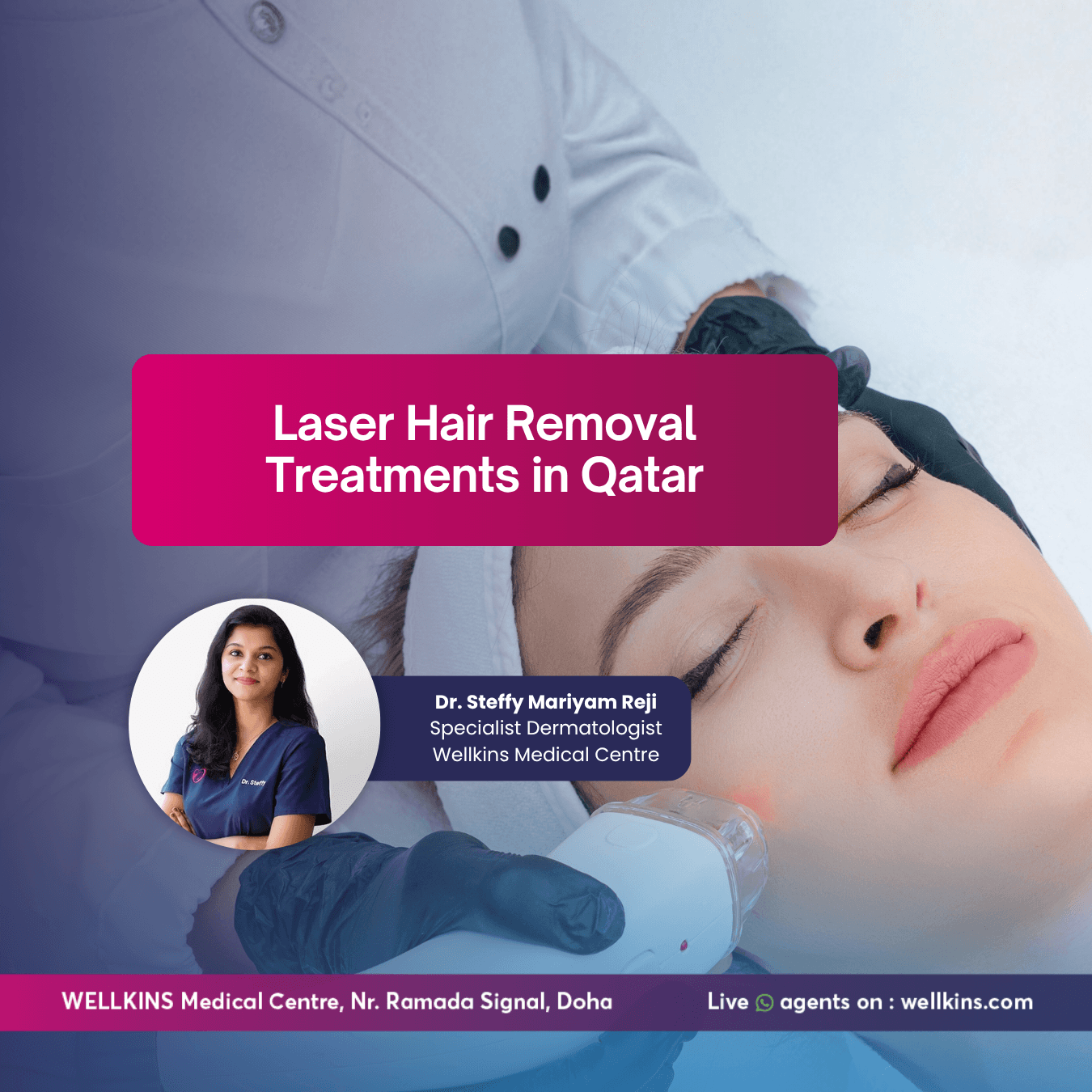
Author: Dr. Steffy Mariyam Reji, ( Specialist Dermatologist – WELLKINS Medical Centre )
Laser hair removal is one of the most requested aesthetic treatments in Qatar and it is not difficult to understand why. In a country where summer temperatures exceed 40°C for months at a time, where grooming standards are high and where the skin is under near-constant stress from heat, sweat and sun exposure, the appeal of a lasting solution to unwanted hair is entirely practical and not merely cosmetic.
Yet despite its popularity, laser hair removal remains one of the most misunderstood treatments in dermatology. Patients arrive at Wellkins Medical Centre having read conflicting information online, tried clinics that produced disappointing results or avoided the treatment altogether based on concerns about pain, safety or suitability for their skin tone.
This guide covers everything you genuinely need to know before booking your first session in Qatar. The science behind how it works, which factors determine whether it will work well for you, what to expect at every stage of the process and how Qatar’s specific climate influences the treatment from start to finish.
Laser hair removal is one of the safest and most effective aesthetic dermatology treatments available when it is performed correctly on the right patient with the right technology. Qatar has a very diverse population spanning a wide range of skin tones and hair types and the laser settings, wavelength and treatment protocol that produce excellent results on one patient can cause complications in another if the assessment is not done properly. A dermatologist-led consultation before any treatment begins is not a formality. It is the foundation of a safe and successful outcome.
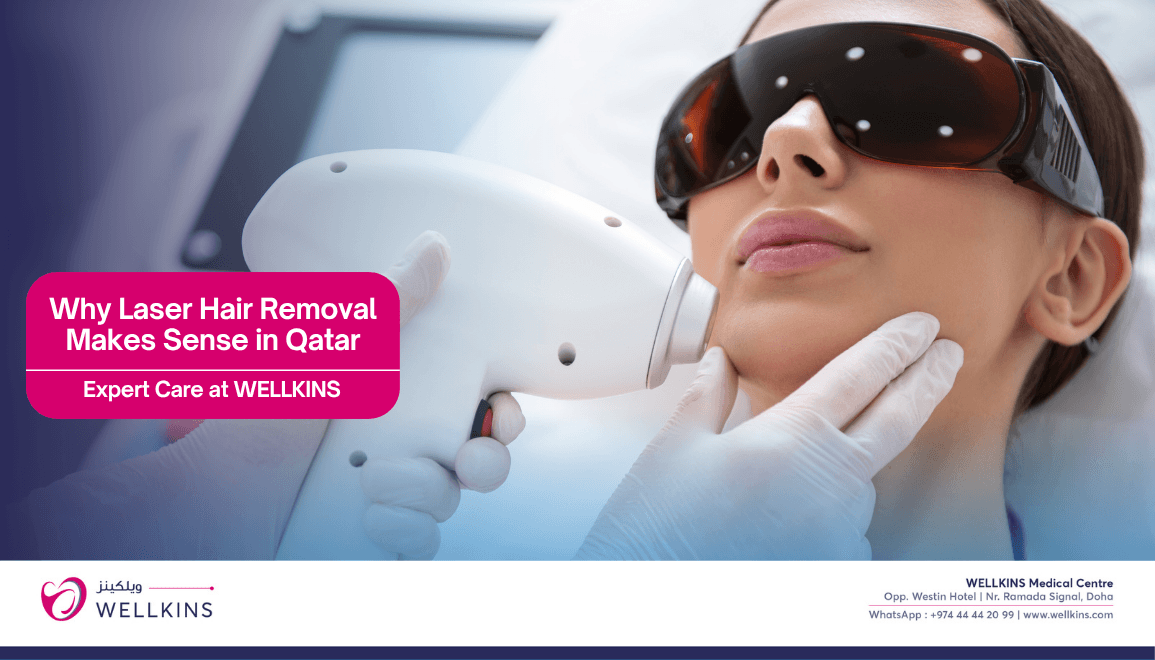
Why Laser Hair Removal Makes Particular Sense in Qatar
Most countries have one or two seasonal reasons to consider laser hair removal. Qatar has them year round and the reasons are more compelling here than in almost any other environment.
- Relentless Heat and Sweating: Body hair traps sweat and heat against the skin, creating a warm and moist microenvironment that is uncomfortable at best and actively problematic at worst. Chronic sweat retention in hair-bearing areas contributes to folliculitis, heat rash, skin maceration and fungal infections, all of which are significantly more prevalent in Qatar’s summer months. Laser hair removal reduces these risks directly by addressing the follicles themselves.
- The Ingrown Hair Problem: Regular waxing, threading and shaving all carry a risk of ingrown hairs, and in Qatar’s heat the resulting inflammation heals more slowly and is more likely to leave post-inflammatory hyperpigmentation on darker skin tones. Laser treatment breaks this cycle permanently by disabling the follicle rather than simply cutting or pulling the hair.
- Time and Practicality: Managing body or facial hair through traditional methods in Qatar’s busy, high-temperature environment is genuinely inconvenient. Many patients find that the investment in a course of laser sessions saves them significant time and money over the following years compared to ongoing waxing appointments or daily shaving routines.
- Year-Round Social Activity: Qatar’s active social, sporting and professional environment means that well-groomed skin is visible and relevant across all seasons rather than just summer. Pool gatherings, gym culture, beach visits and formal events all create consistent motivation to address unwanted hair permanently rather than seasonally.
- Skin Health in the Long Term: Repeated mechanical hair removal methods cause cumulative micro-trauma to the skin surface. Laser hair removal, when performed correctly, replaces this ongoing damage with a one-time course of treatment that leaves the surrounding skin intact and healthier over time.
How Laser Hair Removal Works: The Science in Plain Language
Laser hair removal operates on a principle called selective photothermolysis. A laser emits a highly focused beam of light at a specific wavelength that is selectively absorbed by melanin, the pigment that gives hair its colour. This light energy is converted to heat within the hair follicle, reaching temperatures sufficient to damage the follicle’s growth structures without meaningfully heating the surrounding skin.
The result is a follicle that is either destroyed entirely or significantly impaired in its ability to produce new hair growth.
There is one important biological detail that explains why multiple sessions are always necessary. Hair follicles do not all grow simultaneously. At any given moment, follicles in a particular area are distributed across three phases of the hair growth cycle: the active growth phase called anagen, the transition phase called catagen and the resting phase called telogen. Laser treatment only affects follicles that are in the active anagen phase at the time of treatment, because this is when melanin concentration in the follicle is at its highest.
Sessions spaced several weeks apart are designed to catch successive waves of follicles as they enter the anagen phase. This is not a limitation of the technology but a biological reality of how hair grows, and it is why patience with the treatment schedule is directly rewarded with better long-term results.
Am I a Good Candidate for Laser Hair Removal?
Candidate suitability depends on several factors that are assessed during the initial dermatologist consultation at Wellkins. Understanding these factors helps set realistic expectations before treatment begins.
1. Hair Colour and Follicle Pigmentation
The laser targets melanin in the hair follicle. Dark hair contains high concentrations of eumelanin and responds excellently to laser treatment. Light brown hair responds well in most cases. Blonde, grey, white and red hair contain little to no eumelanin and are significantly harder to treat effectively with standard laser technology, as there is insufficient pigment contrast for the laser to target selectively.
2. Skin Tone
This is one of the most important and most frequently misunderstood aspects of laser hair removal in Qatar’s context. The Fitzpatrick scale classifies skin tones from Type I (very fair) to Type VI (very dark). Older laser technologies posed genuine risks for darker skin tones because the laser could not easily distinguish between melanin in the hair follicle and melanin in the surrounding skin, leading to burns and pigmentation changes.
Modern laser systems, particularly the Nd:YAG laser operating at 1064 nanometres, have transformed this landscape. This wavelength bypasses surface skin melanin and targets the follicle at greater depth, making it safe and effective for the full range of skin tones including the darker South Asian, Arab and African skin types that make up a significant proportion of Qatar’s population.
At Wellkins, the laser technology used for each patient is selected based on their individual Fitzpatrick skin type, ensuring both safety and efficacy regardless of background.
3. Hormonal Factors
Conditions that cause hormonal imbalance such as polycystic ovary syndrome can stimulate continued hair growth in new follicles even after existing ones are successfully treated. Patients with PCOS or other androgen-driven hair growth conditions can still benefit significantly from laser hair removal but should expect to require more sessions and potentially periodic maintenance treatments to manage new follicular activity over time.
4. Medical History and Medications
Certain medications including photosensitising antibiotics, isotretinoin used for acne and some hormonal treatments can affect how the skin responds to laser energy. A thorough medical history review at the initial consultation identifies any such factors and allows the treatment plan to be adjusted accordingly.
Treatment Areas: What Can Be Treated?
Laser hair removal can be applied to virtually any area of the body where unwanted hair is present. The most commonly treated areas at Wellkins Medical Centre include the following.
- Face and Upper Lip: Among the most frequently requested areas for women. Laser treatment on the upper lip, chin, cheeks and sideburns produces lasting results and eliminates the need for threading appointments that many patients find both time-consuming and temporarily irritating to sensitive facial skin.
- Underarms: One of the fastest areas to treat per session and one that shows results relatively quickly. Underarm laser hair removal is particularly popular in Qatar given the practical hygiene and comfort benefits in a hot climate.
- Bikini and Brazilian Areas: Widely requested and performed with full privacy and professionalism at Wellkins. The skin in this area is sensitive and requires careful attention to laser settings, making dermatologist-supervised treatment particularly important.
- Legs: Full or partial leg treatment is among the most satisfying for patients given the surface area involved and the significant time savings compared to regular waxing or shaving.
- Back and Shoulders: Particularly popular among male patients. The back and shoulders are large, flat and accessible, making laser treatment across these areas both practical and highly effective.
- Chest and Abdomen: Treated in both male and female patients for different reasons, from athletic grooming to managing hormonal hair growth conditions.
- Arms: Full or half arm treatment is a common request among patients who find forearm hair aesthetically or practically bothersome.
- Neck and Beard Line: Defining the beard line and treating the neck below the jawline is a practical and popular choice, particularly for patients suffering from chronic razor bumps and ingrown hairs in this area.
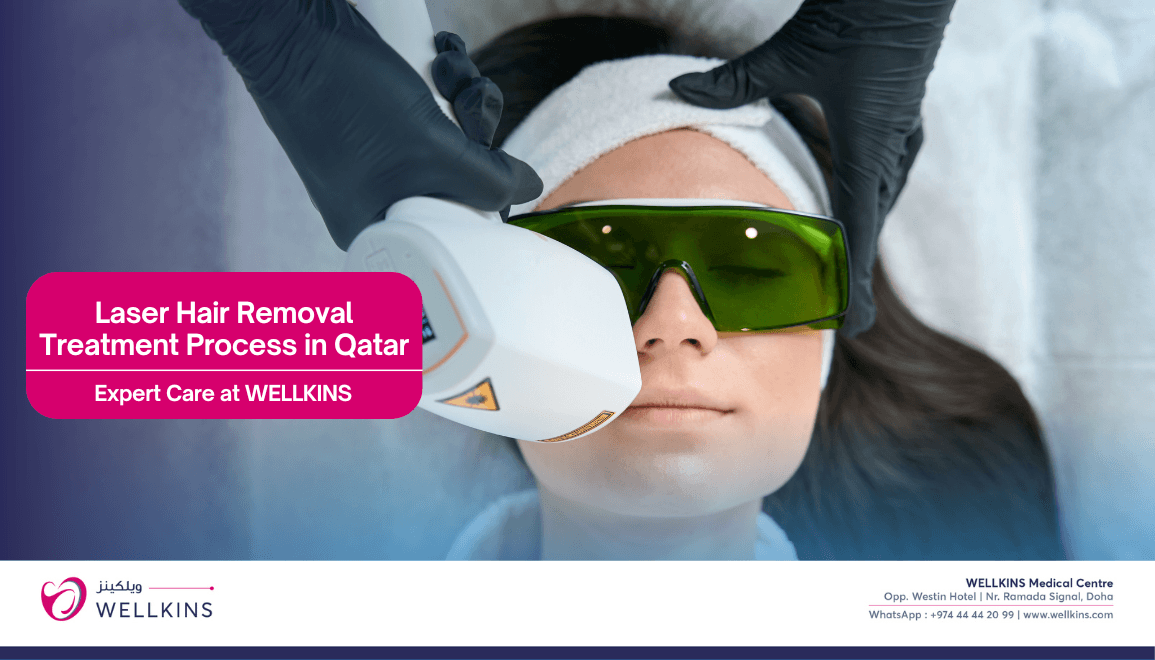
What to Expect at Every Stage of Treatment
Before Your Sessions
- Dermatologist Consultation: Every laser hair removal journey at Wellkins begins with a full consultation with Dr. Steffy Mariyam Reji. Skin type, hair characteristics, medical history, current medications and treatment goals are all assessed before any laser parameters are determined.
- Sun Avoidance: Tanned or recently sun-exposed skin has elevated surface melanin that increases the risk of burns and pigmentation changes during treatment. In Qatar, where sun exposure is intense and frequent, patients are advised to apply SPF 50 to treatment areas daily and minimise direct sun exposure for a minimum of four weeks before beginning sessions.
- Shave the Treatment Area: The treatment area should be shaved twenty-four to forty-eight hours before each session. Shaving removes the surface hair while leaving the follicle root intact below the skin for the laser to target. Waxing, threading and epilating must be completely stopped at least four weeks before treatment and throughout the course, as these methods remove the root that the laser needs.
- Arrive With Clean Skin: No perfumes, deodorants, creams, oils or self-tanning products should be applied to the treatment area on the day of the session.
During the Session
- What It Feels Like: The sensation is most commonly described as a warm snap against the skin, similar to the flick of a rubber band. Modern laser devices incorporate dynamic cooling systems that chill the skin immediately before and after each laser pulse, significantly reducing discomfort and protecting the skin surface throughout the treatment.
- Duration: Treatment time varies considerably by area. The upper lip takes as little as five minutes. Full legs or a complete back treatment may take forty-five minutes to an hour. Many patients treat multiple areas within a single appointment.
- Eye Protection: Appropriate laser safety eyewear is provided to every patient and must be worn for the entire duration of the session without exception.
After Each Session
- Immediate Skin Response: Mild redness and perifollicular swelling resembling small bumps around each treated hair is a completely normal and expected response. This typically settles within two to four hours. Cool compresses and a gentle fragrance-free moisturiser help manage any residual discomfort.
- Hair Shedding: Treated hairs do not fall out instantly. Over the two to three weeks following each session they shed gradually as the body expels the damaged follicle. Some patients mistake this shedding for new growth. It is not. It is the treatment working as intended.
- Sun Protection is Critical in Qatar: Post-treatment skin is temporarily more photosensitive. Given Qatar’s sun intensity, SPF 50 applied every morning to all treated areas is non-negotiable throughout the full treatment course and for at least four weeks after the final session.
- Avoid Heat for 48 Hours: Saunas, steam rooms, very hot showers and exercise that produces significant sweating should be avoided for forty-eight hours after each session to allow the treated follicles and surrounding skin to settle fully.
How Many Sessions Will You Need?
The number of sessions required varies based on the treatment area, hair density, hair colour and hormonal factors. As a general guide at Wellkins:
- Most Body Areas: Six to eight sessions spaced four to six weeks apart produces significant and lasting hair reduction in the majority of patients for areas including the legs, underarms, back, chest and arms.
- Facial Areas: The face, particularly areas influenced by hormonal activity, typically requires eight to ten sessions. Maintenance sessions once or twice a year are sometimes recommended for patients with hormonally driven facial hair growth.
- Bikini and Brazilian: Six to eight sessions for most patients, with spacing of four to five weeks between sessions in this area.
Consistency with the treatment schedule is one of the most important determinants of the final result. Missing sessions or extending the gaps between them significantly reduces the cumulative effect of the treatment by allowing more follicles to cycle out of the anagen phase before they can be targeted.
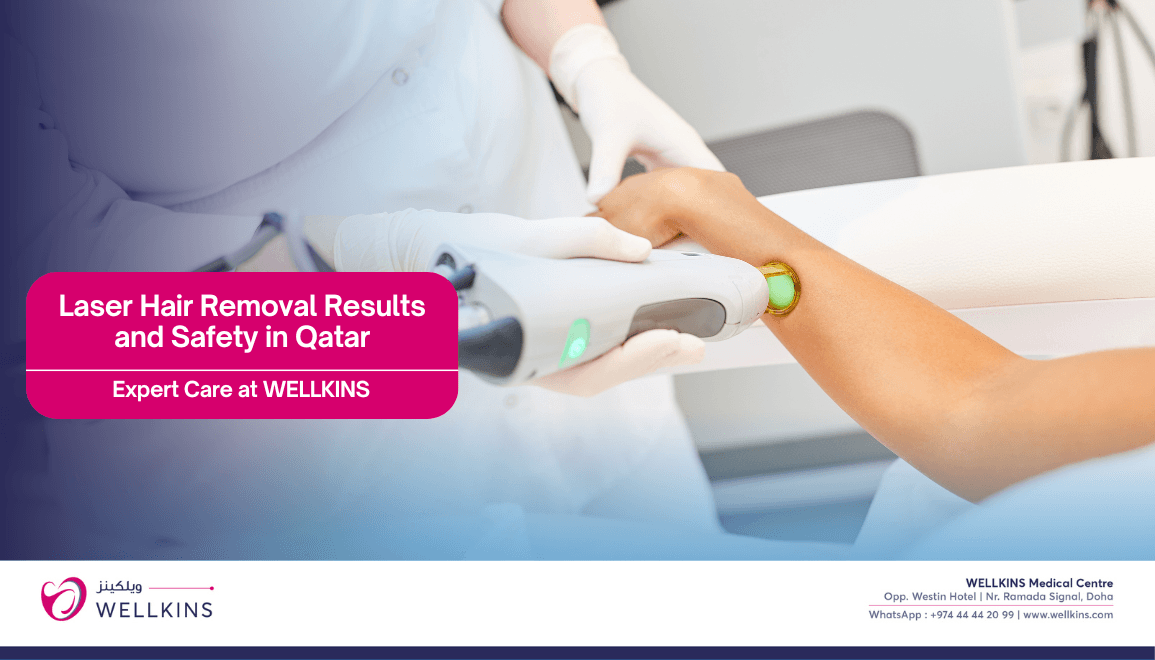
Addressing the Most Common Questions and Concerns
- Is laser hair removal permanent? The accurate and honest answer is that it produces permanent hair reduction rather than guaranteed complete permanent removal in every single follicle. Most patients achieve a seventy to ninety percent reduction in hair density after a full course of treatment. Any hair that does regrow tends to be considerably finer, lighter in colour and significantly less dense than the original hair. Many patients find this residual hair so minimal that no further treatment is needed or wanted.
- Is it safe for darker skin tones? Yes, with the right technology and the right specialist. The Nd:YAG laser is specifically designed for safe and effective treatment of darker skin types and is available at Wellkins. This makes laser hair removal accessible to the full diversity of patients in Qatar’s population, including those with South Asian, Arab, African and mixed skin tones who were previously considered unsuitable candidates by older laser standards.
- Can I get laser treatment in Qatar’s summer? Yes, with appropriate precautions. Treatment is available year round at Wellkins. The key requirements during summer are consistent SPF 50 application to treated areas, strict avoidance of prolonged direct sun exposure between sessions and following all post-treatment care instructions carefully. Many patients actually prefer to begin treatment in the cooler months between October and April when sun management is easier, but summer treatment is entirely achievable with the right approach.
- Will it affect the surrounding skin? When performed correctly with appropriate settings for the patient’s skin type, laser hair removal affects only the targeted hair follicles. The surrounding skin is protected by the selective nature of the laser wavelength and the integrated cooling systems used during treatment. Temporary redness is normal. Lasting skin damage from a properly conducted session is not.
- Is it suitable during pregnancy? Laser hair removal is not recommended during pregnancy. Patients who become pregnant during a treatment course should pause their sessions and resume after delivery and the completion of breastfeeding.
- What happens if I miss a session? A single missed or delayed session does not undo progress but it does reduce the efficiency of the course by allowing follicles to cycle out of the targetable anagen phase. Resuming as close to the scheduled interval as possible and completing the full planned number of sessions remains the priority.
When to Book Your Consultation at Wellkins
You should book a dermatologist consultation at Wellkins Medical Centre if:
- You are spending significant time and money on regular waxing, threading or shaving and want a lasting alternative.
- You are experiencing chronic ingrown hairs, razor bumps or post-waxing skin irritation that is affecting your skin quality.
- You have previously tried laser hair removal elsewhere and were disappointed with the results or experienced a skin reaction.
- You have a darker skin tone and have been told by other providers that laser treatment is not suitable for you.
- You want a clear, honest and expert assessment of whether laser hair removal is the right treatment for your specific skin type, hair type and lifestyle in Qatar.
Laser hair removal is not a luxury reserved for a particular gender, skin tone or lifestyle. In Qatar’s climate it is one of the most practically motivated dermatological treatments available, and when it is performed correctly by a qualified specialist using appropriate technology, it is among the safest and most reliably effective options in aesthetic medicine.
At Wellkins Medical Centre, Dr. Steffy Mariyam Reji and the dermatology team bring the clinical expertise and the right technology together to deliver laser hair removal that is safe, effective and tailored to every individual patient. Your consultation is the starting point for understanding exactly what treatment will look like for you and what results you can realistically expect.
To book your consultation at Wellkins Medical Centre: https://wellkins.com/dermatology