
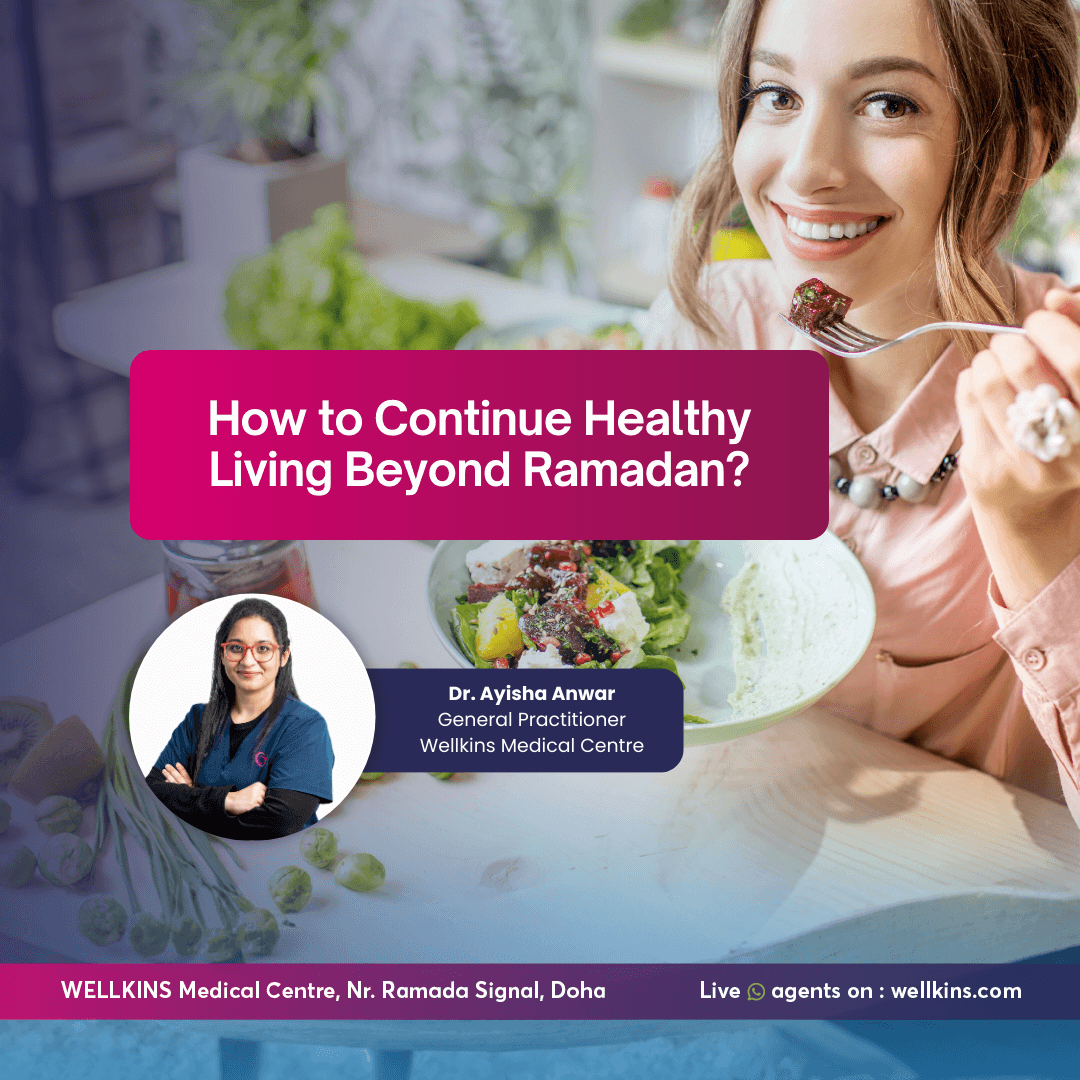
Author: Dr. Ayisha Anwar (General Practitioner – WELLKINS Medical Centre)
Ramadan is one of the most meaningful times of the year. The fasting, the early mornings, the shared meals and the renewed focus on faith and gratitude create a rhythm of living that genuinely benefits both body and mind. Many people find that they sleep better, eat more intentionally and feel a deeper sense of calm during the holy month than at any other point in the year.
And then Eid arrives, and slowly but surely the routine unravels.
Late nights return. Large meals come back. Exercise disappears. The discipline that felt so natural during Ramadan fades into the background of a busy life. This is one of the most common patterns we see at Wellkins Medical Centre in the weeks following Eid, and it is entirely understandable. But it does not have to be this way.
Ramadan gives every one of us a genuine head start on better health. The habits formed during the holy month are not temporary arrangements to be packed away with the prayer mats. They are a foundation worth building on throughout the year.
After Ramadan I often see two types of patients. Those who carry the discipline of the holy month forward and genuinely transform their health over the following months, and those who return to previous habits within two weeks. The difference is rarely willpower. It is usually awareness. Once patients understand that the healthy patterns Ramadan created are already working in their favour, they become much more motivated to protect them. You have already done the hard part. The challenge now is simply not to undo it.

Start Your Day With a Healthy Breakfast
One of the quietest gifts Ramadan gives us is a renewed relationship with Suhoor. Waking before dawn and eating a nourishing first meal reestablishes something many people lose in ordinary life: the habit of breakfast.
The science here is straightforward. A proper morning meal provides sustained energy, supports better concentration and significantly reduces the likelihood of overeating later in the day. After Ramadan, resist the temptation to skip breakfast just because the obligation of Suhoor is gone. Foods like oats, whole grains, eggs, yoghurt and fresh fruit provide the kind of steady energy release that keeps you focused and comfortable through a long morning in Qatar’s demanding heat.
Think of breakfast not as a Ramadan rule but as a daily investment in how well the rest of your day goes.
Continue the Spirit of Mindful Eating
Ramadan trains us to be conscious of food in a way that ordinary life rarely demands. When you fast through the day you naturally think more carefully about what you eat when you finally break that fast. Portion sizes become more intentional. Gratitude for food increases. Eating slowly and with awareness becomes the default rather than the exception.
This mindfulness is worth keeping.
After Ramadan, try applying the same awareness to your everyday meals. Eat smaller, balanced portions across the day rather than one or two large meals. Choose grilled, baked or steamed preparations over fried options wherever possible. Include a variety of vegetables, fruits, whole grains and lean protein at most meals. These are not dramatic changes. They are simply the continuation of what Ramadan already started in you.
Consider a Gentle Form of Intermittent Fasting
Many patients ask whether they should continue some form of fasting after Ramadan. The answer, for most healthy adults, is yes.
You do not need to observe the full fasting hours of Ramadan to benefit from the metabolic advantages of structured meal timing. Simply allowing twelve to fourteen hours between your last meal of the evening and your first meal the following morning gives your digestive system adequate recovery time and may help improve metabolism and insulin sensitivity over time.
The most practical way to achieve this is to move dinner to an earlier hour and avoid late-night snacking. This single change alone makes a meaningful difference to digestion, sleep quality and weight management.
Dates and Fruit: Keep the Tradition, Mind the Quantity
Breaking the fast with dates is a beautiful and nutritionally sound tradition. Dates provide natural sugars, fibre, potassium and magnesium that help the body transition gently from fasting to eating. After Ramadan, there is every reason to keep dates as part of your daily diet.
The one note of caution is quantity. Dates are naturally high in sugar and calories. Two or three dates per day is a reasonable and beneficial amount for most people. Combining them with a handful of nuts provides a more balanced and filling snack. Pairing the date tradition with a broader daily intake of fresh seasonal fruit gives your body the vitamins and antioxidants it needs year round.
Return to Regular Physical Activity
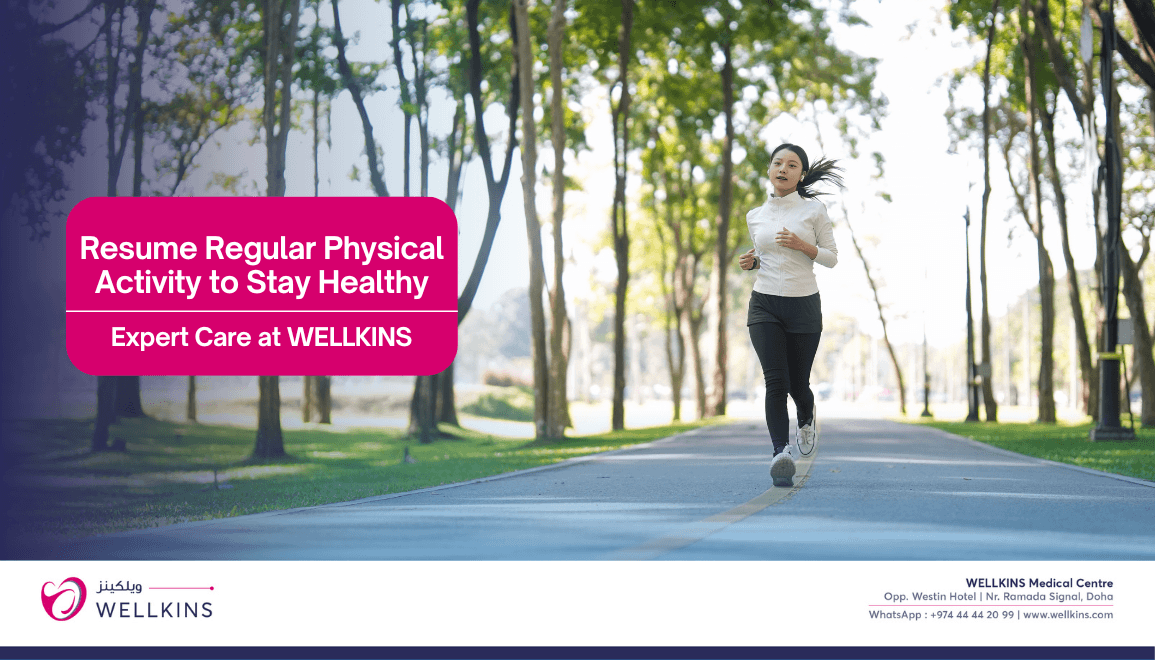
Reduced activity during Ramadan is entirely normal and expected. Fasting through Qatar’s long and warm days makes intense exercise impractical for most people. But now that the fasting period has ended, returning to regular movement is one of the most important steps you can take for your health.
Exercise after Ramadan does not need to begin dramatically. Start with thirty minutes of moderate activity on most days of the week, whether that is walking, swimming, cycling or a gym session. If you were not exercising regularly before Ramadan, two or three sessions per week is a completely respectable starting point. Build gradually and consistently rather than attempting to compensate for the month all at once.
The benefits of regular physical activity in Qatar’s context go beyond weight management. Exercise improves mood, strengthens cardiovascular health, helps regulate blood sugar and reduces the risk of the chronic diseases that are particularly prevalent in this region, including type 2 diabetes and hypertension. The timing of exercise matters too. In Qatar’s summer months, early morning or late evening sessions avoid the dangerous midday heat and make sustaining the habit far more comfortable.
Prioritise Hydration Throughout the Day
After a month of managing fluid intake carefully around fasting hours, the temptation post-Ramadan is to simply drink whenever you feel like it and assume that is enough. In Qatar’s climate, this approach is not sufficient.
Qatar’s combination of heat and heavy air conditioning means the body loses fluid continuously throughout the day both through sweat outdoors and through dry air indoors. Aim for two to three litres of water daily as a baseline, and more on days involving physical activity or extended time outdoors. Keeping a water bottle on your desk, in your car and by your bed makes consistent hydration a default rather than a deliberate effort.
Limit sugary drinks and heavily caffeinated beverages, which provide calories without meaningful hydration and can increase dehydration over time.
Protect the Social Side of Eating
One of the most genuinely joyful aspects of Ramadan is the communal dimension of Iftar. Gathering with family and friends, sharing food and slowing down together around a table is a profoundly positive experience for both mental and physical health. Research consistently shows that people who eat with others tend to eat more slowly, more mindfully and more healthily than those who eat alone.
After Ramadan, make a conscious effort to preserve this tradition. Regular family meals, sharing food with neighbours and inviting friends to eat together are habits that nourish far more than just the body. In a busy city like Doha where work schedules and social commitments can fragment daily life, the shared meal is a meaningful anchor worth protecting.
Address the Habits Ramadan Helped You Reduce
Many people naturally reduce or stop smoking during Ramadan. Some cut back significantly on caffeine. Others find that the structure of fasting naturally breaks patterns of mindless snacking or stress eating that had built up over months.
The weeks immediately after Ramadan are the most powerful window to make these reductions permanent. The physical dependence has already weakened during the fasting period and the psychological association between daily routines and these habits has been disrupted. Use this moment. Speak to your doctor about support for smoking cessation if you want to stop entirely. The health benefits of quitting smoking begin within hours of the last cigarette and compound significantly over time.
Keep the Spiritual Lessons Alive
Health is not only physical. Ramadan nurtures patience, gratitude, generosity and self-reflection in ways that have a direct and measurable effect on mental and emotional wellbeing. The reduction in stress, the improved sleep from consistent prayer times and the sense of community during the holy month all contribute to a psychological stability that many people notice clearly and miss when it fades.
After Ramadan, find ways to preserve some of these practices. Regular prayer, time for reflection, acts of generosity and meaningful connection with your community are not seasonal obligations. They are daily foundations of a life lived with balance and purpose. A healthy life in the fullest sense is one that nourishes the mind and soul alongside the body.

Make Your Health Measurable: Book a Post-Ramadan Checkup
The period immediately after Ramadan is an excellent time for a comprehensive health assessment. Your body has been through significant metabolic and physiological changes during the month of fasting and the weeks following are an ideal window to evaluate where your key health indicators stand.
At Wellkins Medical Centre, we recommend that all adults use this period to check blood sugar levels, cholesterol, blood pressure, kidney function and other markers that can reveal developing health conditions before they become serious. In Qatar’s population, rates of type 2 diabetes, hypertension and metabolic syndrome are among the highest in the world. Early detection through routine screening is the most effective and least expensive form of healthcare available.
Many patients who have made dietary and lifestyle changes during Ramadan are genuinely surprised and encouraged by improvements in their blood markers at a post-Ramadan checkup. Seeing real numbers improve is one of the most powerful motivators for continuing a healthy lifestyle into the rest of the year.
You have already done the meaningful work of Ramadan. A health screening simply tells you how much that work has paid off and points you toward what to protect and improve going forward.
Ramadan gives us something genuinely rare: a natural reset of habits, appetite and priorities. The discipline of the holy month proves to each of us that we are more capable of healthy choices than we might otherwise believe. The only question after Eid is whether we choose to carry that forward.
At Wellkins Medical Centre, our general practice team is here to support you in doing exactly that. Whether you want guidance on maintaining a healthy post-Ramadan routine, a comprehensive health screening or management of a specific concern, we provide the personalised care that helps you build on the foundation Ramadan has already created.
To explore our health screening packages or to book an appointment, visit: https://wellkins.com/packages