
Author: Dr. Biji Anilkumar (Specialist – Laboratory Medicine – Wellkins Medical Centre)
Understanding Food Allergy at WELLKINS Medical Centre
Do you often find yourself feeling lethargic, bloated, or “off” after a meal, even when you believe you are eating healthily? You are not alone. Research indicates that approximately 45% of the population suffers from some form of food intolerance or allergies. At Wellkins Medical Centre, we recognize that these silent triggers can significantly impact your quality of life. We are committed to helping you decode your body’s unique reactions through advanced Food allergy testing. By identifying the specific foods that cause internal distress, we help you transition from persistent discomfort to a life of vitality and wellness.
Defining Food Allergy: A Biological Perspective
Food intolerance or allergy is a complex physiological reaction that occurs within the body after consuming a specific substance. Unlike standard digestive issues, these reactions are often deep-seated and multi-faceted.
- Enzymatic Deficiency: Many intolerances stem from the body’s inability to produce a specific enzyme required to break down certain food components.
- Chemical Sensitivity: Some individuals react negatively to naturally occurring or added chemicals present in their diet.
- Immune System Involvement: When the body perceives a specific food substance as a threat, it may secrete antibodies to defend itself.
- The Antibody Link: Recent clinical research has established that food intolerance is closely tied to the specific antibodies produced by the immune system in response to dietary triggers.
Food intolerance can often go unnoticed, yet it may affect digestion, skin health, energy levels, and overall well-being. A food intolerance blood test helps identify specific trigger foods by analyzing your body’s immune response, allowing for more informed dietary choices. At WELLKINS Medical Centre, we support patients with accurate testing, clear guidance and personalized care to help you manage symptoms confidently and restore nutritional balance.
The Critical Distinction: Food Intolerance is Not a Food Allergy
It is common to confuse these two conditions, but they are fundamentally different in their biological impact and severity.

Understanding Food Allergies
A food allergy is an acute immune response that can be life-threatening in severe cases. Reactions are typically immediate, occurring within minutes of exposure. Symptoms can include anaphylaxis, severe swelling and respiratory distress, requiring urgent medical intervention.
Understanding Food Intolerances
While food intolerance can cause chronic illness and disturbing symptoms, it is generally not life threatening. The primary challenge with food intolerance is its delayed onset. Symptoms may not appear for 3 to 7 days after the food is ingested, making it nearly impossible to identify the culprit without professional clinical testing.
Unveiling the Root Causes
While the exact causes of food intolerance are diverse and sometimes poorly understood, several common factors have been identified that contribute to its development.
- Incomplete Digestion: When food is not properly broken down, it can trigger an inflammatory response in the gut.
- Bacterial Imbalance: A disruption in the delicate microbiome of the digestive tract can lead to sensitivities.
- Internal Parasites and Infections: Conditions like Candidiasis, parasites, or chronic intestinal infections can weaken the gut barrier.
- The Impact of Medications: Prolonged use of certain drugs and medications can alter the body’s ability to process specific foods.
- Genetic and Lifestyle Factors: An unbalanced diet or genetic predisposition can also play a major role in how your body reacts to ingredients.
A Full-Body Impact: Recognizing the Symptoms
Because food intolerance involves the immune system, the resulting antibodies can unite with proteins to form “complexes”. When the immune system becomes exhausted, these complexes settle in various tissues, leading to a wide array of symptoms across the body.

1. Digestive and Gastric Distress
- Persistent abdominal distension and painful bloating.
- Chronic spasms, excessive gas and colic.
- Conditions like Irritable Bowel Syndrome (IBS), constipation, or diarrhea.
- Frequent bouts of nausea and vomiting.
2. Dermatological and Skin Health
- Chronic conditions such as eczema and psoriasis.
- Common flare-ups like acne, rashes, or itchy skin.
- Acute reactions like urticaria (hives) or atopic dermatitis.
3. Neurological and Behavioral Changes
- Frequent migraines and tension headaches.
- A noticeable lack of concentration or “brain fog”.
- Mood-related shifts including depression, anxiety and constant tiredness.
- Behavioral concerns such as hyperactivity, dizziness, or links to autism.
4. Musculoskeletal and Respiratory Issues
- Inflammatory symptoms like arthritis and chronic joint pain.
- General muscle pain, weakness and fibromyalgia.
- Respiratory struggles including asthma, sinus inflammation and wheezing.
The Power of the Foodprint Test
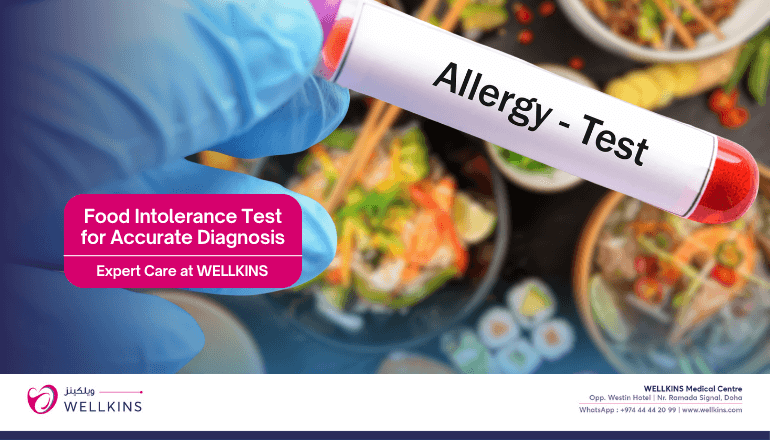
The Food Intolerance Test, also known as the Foodprint Test, is the definitive first step toward identifying the hidden triggers in your diet. At Wellkins Medical Centre, we use high concentrations of antibodies as markers to pinpoint exactly which foods are causing your internal stress.
- Comprehensive Screening: Our test analyzes more than 220 different types of food from just a single drop of blood.
- Targeted Elimination: Identifying foods with a “positive” result where antibodies are elevated allows us to remove them from your diet to facilitate radical healing.
- Three-Month Reset: For foods that show a moderate or strong reaction, we typically recommend a complete abstention for at least 3 months.
- Proven Results: Most patients report significant improvement and the disappearance of symptoms within 1 to 3 months of following their personalized nutrition plan.
Food Allergy Test at WELLKINS Medical Centre, Doha
We have streamlined our testing process to be as comfortable and efficient as possible for our patients in Doha.
- Expert Consultation: Begin by making an appointment with our specialist to discuss your health history.
- The Finger-Prick Method: A laboratory technician will draw a very small amount of blood using a sophisticated finger pricking technique.
- No Fasting Required: Unlike many medical tests, you do not need to fast before your Foodprint analysis.
- Pediatric Friendly: This test is safe and effective for children aged two years and over.
- Actionable Reports: Your results are provided in a complete file that outlines which foods to avoid and how to restructure your diet for success.
Essential Guidelines Before Food Intolerance Test
To ensure the highest level of accuracy, it is important to understand how your current eating habits affect the results.
- Maintain Your Diet: The test relies on the immune system’s response. If you have avoided a specific food for more than 3 months, your body may not produce detectable antibodies, leading to a “false negative”.
- The 4-Week Rule: If you suspect an intolerance to a food, you haven’t eaten recently, you should include it in your daily diet for at least 3 to 4 weeks before the test (provided it does not cause severe reactions).
- Retesting Advice: Most people do not need to re-test once they feel better. However, if you choose to do so, we recommend waiting at least 6 months between tests.
Wellkins Medical Centre: Your Partner in Nutritional Wellness
At Wellkins Medical Centre, our mission is to provide more than just a diagnosis; we provide a pathway to a better life. We understand that dietary changes can be challenging, which is why our experts are here to guide you every step of the way helping you choose healthy alternatives and reintroduce foods safely and gradually when the time is right. We believe that no one should have to live with “disturbing symptoms” that can be easily identified and managed. By combining world-class laboratory technology with personalized clinical care, we support you to take control of your health. Your journey to a comfortable, symptom-free life starts with understanding what your body is trying to tell you.
To book an appointment at Wellkins Medical Centre: https://wellkins.com/visit