
Author: Dr. Reneesh (Consultant Orthopedic Surgeon – Wellkins Medical Centre)
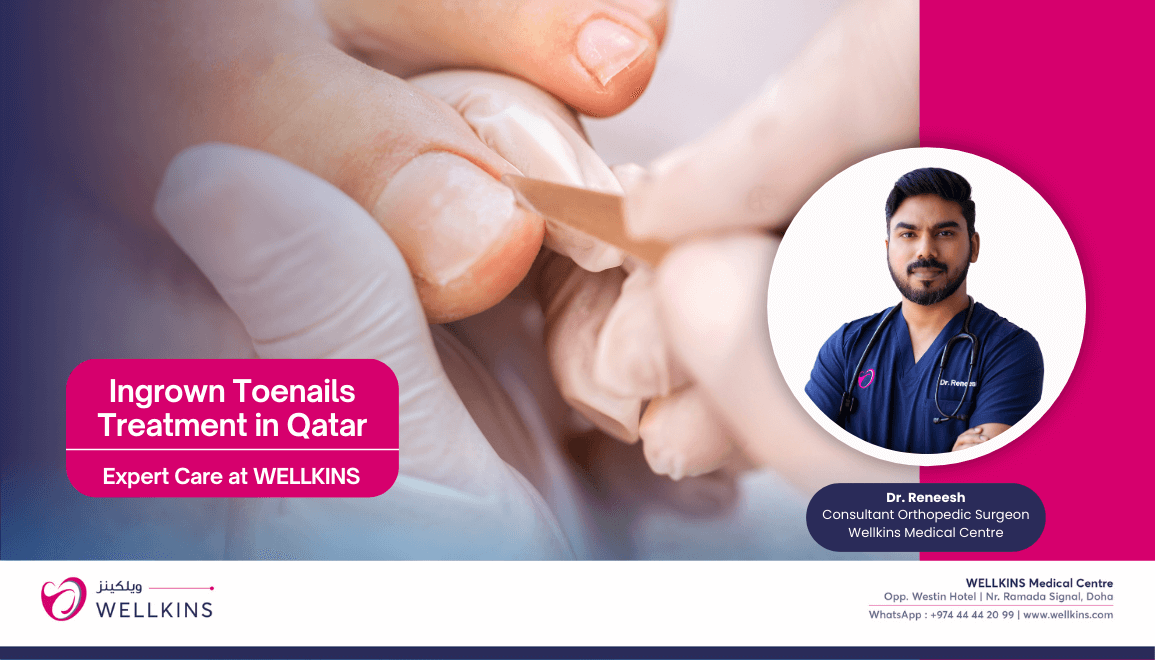
An ingrowing nail, medically known as onychocryptosis, is a common and painful condition where the edge of the nail grows into the surrounding skin. It most frequently affects the great toe and can significantly interfere with walking, footwear use and daily activities if left untreated. At Wellkins Medical Centre, we often see patients who have delayed treatment, leading to avoidable infections. Our orthopedic specialist prioritizes early intervention to restore mobility and prevent the chronic discomfort that disrupts your lifestyle. This blog explains the causes, complications, treatment options, procedure, recovery, outlook and prevention of ingrowing toenails from a professional orthopedic perspective.
For recurrent ingrown toenails in Qatar, early clinical intervention offers an effective, non-surgical solution. From a orthopedic perspective, proper assessment of nail shape, footwear habits and infection risk is essential. Targeted treatments combined with correct nail care, footwear modification and hygiene practices help relieve pain, prevent infection and reduce recurrence addressing the root cause rather than providing temporary relief.
Risk Factors
While anyone can develop this condition, certain groups at Wellkins Medical Centre are prioritized for screening due to their higher risk of complications:
- Adolescents and young adults: Often due to rapid growth and increased sweat production.
- Athletes: Particularly those in “stop-start” sports like tennis or padel.
- Diabetic patients: High risk due to potentially poor healing and nerve damage.
- Vascular issues: Patients with poor circulation or neuropathy.
- Anatomical variations: Individuals with naturally abnormal nail anatomy or bone spurs under the nail.
Complications of Ingrowing Nail
If untreated, what starts as a minor pinch can escalate into a serious medical concern. The toe is highly vascularized, meaning infections can spread quickly if not managed.
Complications may lead to:
- Persistent pain and swelling: Making it impossible to wear closed shoes.
- Local infection (paronychia): Bacterial invasion of the nail fold.
- Abscess formation: Collection of pus that may require drainage.
- Granulation tissue overgrowth: The body creates “proud flesh” that bleeds easily.
- Cellulitis: A deep skin infection that can spread up the foot.
- Osteomyelitis: In rare, neglected cases, the infection can reach the bone.
- Systemic risks: Serious infections in diabetic or immunocompromised patients.
Clinical Stages
Orthopedic doctors categorize the condition into three stages to determine the best course of action:
- Stage I (Mild): Characterized by redness, slight swelling and pain when pressure is applied.
- Stage II (Moderate): Visible infection, serosanguinous discharge (pus/blood) and increased warmth.
- Stage III (Severe): Chronic infection, significant granulation tissue and permanent nail fold hypertrophy (thickening).
Treatment Options
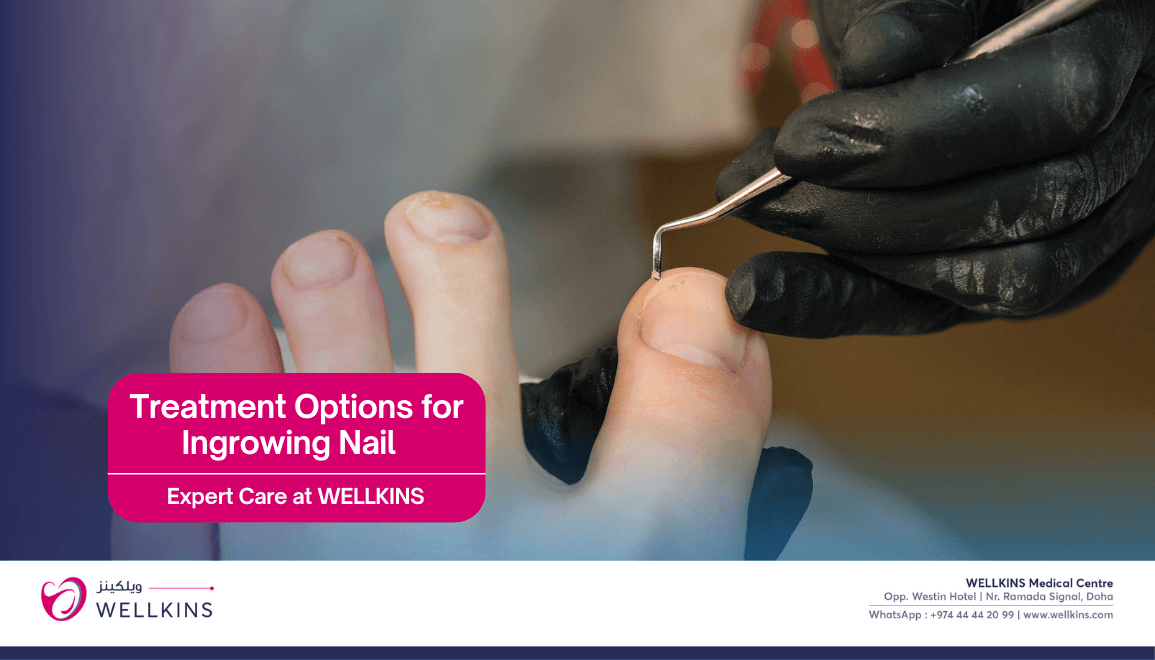
Treatment depends on the severity and recurrence. At Wellkins, we always explore conservative methods first for early-stage cases.
1. Conservative (Non-Surgical) Treatment
Indicated in early or mild cases:
- Proper nail trimming advice: Educating the patient on the “straight across” rule.
- Warm saline foot soaks: To soften the skin and draw out minor infections.
- Topical antibiotic or antiseptic ointments: To manage local bacteria.
- Cotton-wick or dental floss technique: Gently lifting the nail edge away from the skin.
- Footwear modification: Wearing open-toe or wide-box footwear during healing.
- Oral antibiotics: Prescribed only if a spreading infection is present.
2. Surgical Treatment
Indicated in recurrent, infected, or severe cases where conservative measures fail:
- Partial Nail Avulsion (Most Common): Removal of the offending nail edge under local anesthesia.
- Total Nail Avulsion: Reserved for severe deformity, fungal destruction, or recurrent cases.
- Winograd or Wedge Resection Procedure: A specialized surgical excision of the nail edge and the underlying matrix.
Procedure: How Partial Nail Avulsion Is Done
This is one of the most effective procedures we perform at Wellkins Medical Centre. It is a permanent solution for chronic sufferers.
1. Preparation
- Procedure performed under strictly sterile conditions in our day-care unit.
- Digital nerve block: Using local anesthesia to ensure the toe is completely numb.
2. Nail Removal
- A small vertical portion of the nail edge (about 2-3mm) is removed.
- Matricectomy: The nail matrix (the root) is treated surgically or chemically to prevent the ingrowing part from returning.
3. Dressing
- Antibiotic dressing is applied to the site.
- The toe is bandaged securely to manage any minor post-op bleeding.
Duration: 20–30 minutes (day-care procedure; no overnight stay required).
Post-Procedure Care
Successful outcomes depend heavily on how the patient manages the wound in the first few days:
- Elevation: Keep the foot elevated for the first 24 hours to reduce throbbing.
- Daily dressing changes: Keeping the area clean and dry.
- Soaks: Warm saline soaks can typically begin after 48 hours.
- Comfortable Gear: Avoid tight footwear; sandals are recommended for the first week.
- Medication: Complete the prescribed course of antibiotics and analgesics to prevent secondary infection.
Recovery Timeline
- First 24–48 hours: Mild pain and some oozing; managed easily with rest.
- 3–5 days: Significant pain relief; most patients can return to office work.
- 1–2 weeks: The wound dries and begins to heal completely.
- 2–3 weeks: Return to full activities, including sports and gym.
Note: Most patients walk comfortably into the clinic and walk out with minimal assistance within an hour.
Side Effects and Risks
As with any minor surgery, there are small risks, although they are infrequent with professional orthopedic care:
- Temporary pain or swelling: Usually subsides within 48 hours.
- Infection: Rare when post-op care instructions are followed.
- Delayed wound healing: More common in smokers or diabetic patients.
- Nail shape changes: The treated nail will appear slightly narrower.
- Recurrence: Very low (less than 5%) with proper chemical matricectomy.
Overall Outlook (Prognosis)
The prognosis of an ingrowing toenail is excellent. With correct technique and appropriate aftercare, success rates exceed 90–95%. Early intervention prevents the need for more invasive surgeries and ensures you don’t have to miss out on your favorite physical activities.
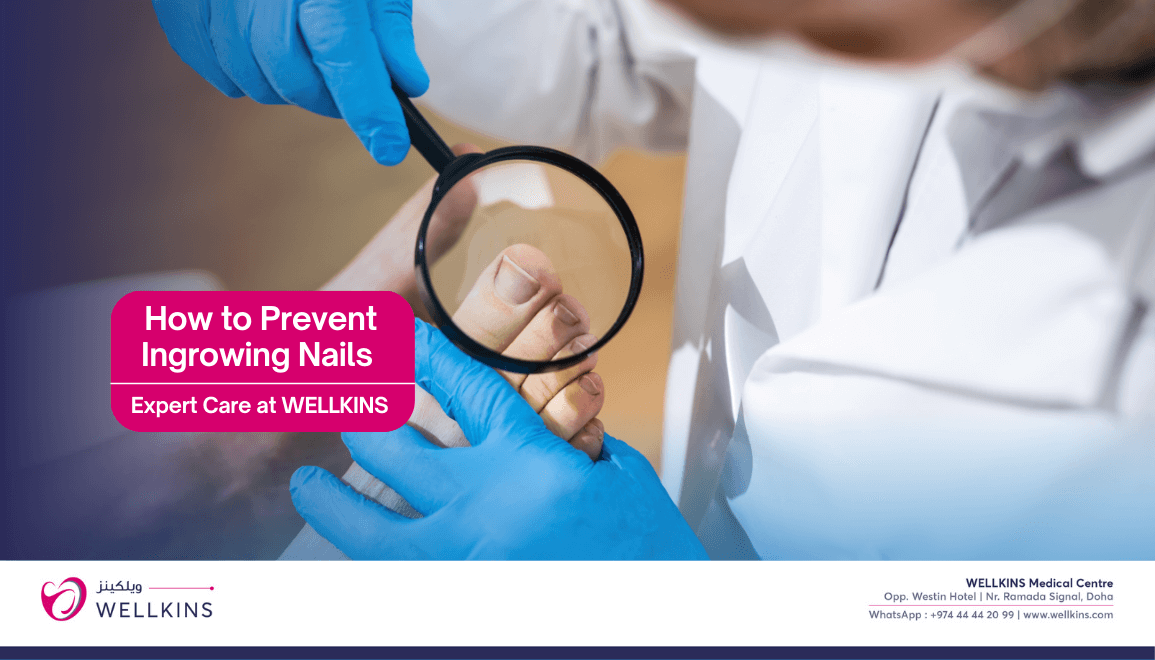
How to Prevent Ingrowing Nails
Prevention is always better than a surgical procedure. Follow these “Golden Rules” of foot health:
- Trim nails straight across: Never round the corners into a “V” or “U” shape.
- Don’t go too short: Leave a small bit of the white free edge visible.
- Wear properly fitting footwear: Ensure there is a “thumb’s width” of space at the front of your shoes.
- Maintain good foot hygiene: Dry between the toes thoroughly after every shower.
- Treat fungal nail infections early: Don’t wait for the nail to become thick or brittle.
- Avoid repeated trauma: Use proper protective gear if playing impact sports.
- Seek early medical advice: If you notice redness or a “twinge” of pain, consult a specialist before it becomes infected.
Conclusion
In growing toenails are a common yet easily treatable condition. Early diagnosis, proper foot care and timely surgical intervention when needed can provide long-term relief and prevent recurrence. At Wellkins Medical Centre, our aim is to restore your comfort, function and quality of life with simple, effective and professional treatment.
To book an appointment at Wellkins Medical Centre: https://wellkins.com/orthopedics/