
Author: Dr. Steffy Mariyam Reji, Specialist Dermatologist Wellkins Medical Centre
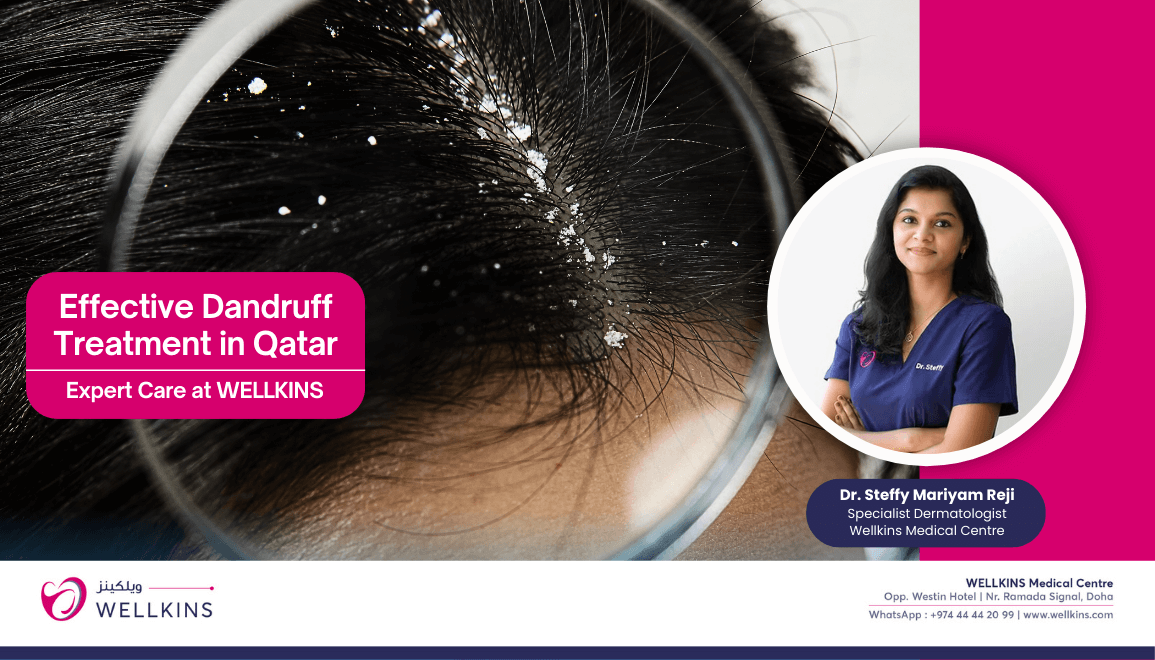
Dandruff is a common scalp condition that affects millions of people worldwide, regardless of age or gender. While it is often seen as a minor cosmetic issue, for many, it can be a source of significant social embarrassment, reduced self confidence and persistent physical discomfort. In a climate like Qatar’s characterized by intense heat, high humidity, and constant exposure to air conditioning scalp health can be particularly challenging to maintain. At Wellkins Medical Centre, we believe that understanding the “why” behind your scalp health is the first step toward effective treatment. Dandruff isn’t just about “being dry”; it is a complex interaction between your skin, natural oils and the environment. With the right care and professional guidance, you can achieve a flake-free scalp and restore your confidence.
Almost everyone experiences dandruff at some point, but when flakes, itching and scalp irritation become persistent, they can quietly affect confidence and daily comfort. Constant itching, visible flakes on clothing, and scalp dryness or redness are often more than just a minor concern. With Qatar’s climate, rising stress levels and lifestyle factors, dandruff can worsen if left untreated. Recognizing the early signs and seeking proper treatment can help prevent long-term scalp issues and restore a healthy, comfortable scalp.
What Exactly is Dandruff?
Dandruff is a chronic scalp condition characterized by the shedding of dead skin cells from the scalp. While skin cells are constantly renewing and shedding, dandruff occurs when this process accelerates significantly.
- Cellular Turnover: Normally, skin cells take about 30 days to mature and shed. With dandruff, this can happen in as little as 2-7 days.
- The Role of Malassezia: A yeast-like fungus called Malassezia lives on the scalps of most adults. In some people, it becomes overactive, feeding on the oils (sebum) produced by hair follicles.
- Inflammatory Response: As the fungus breaks down oils, it produces oleic acid, which can irritate the scalp, causing the body to shed skin cells faster as a defense mechanism.
- Seborrheic Dermatitis: Dandruff is often considered a mild, non-inflammatory form of seborrheic dermatitis.
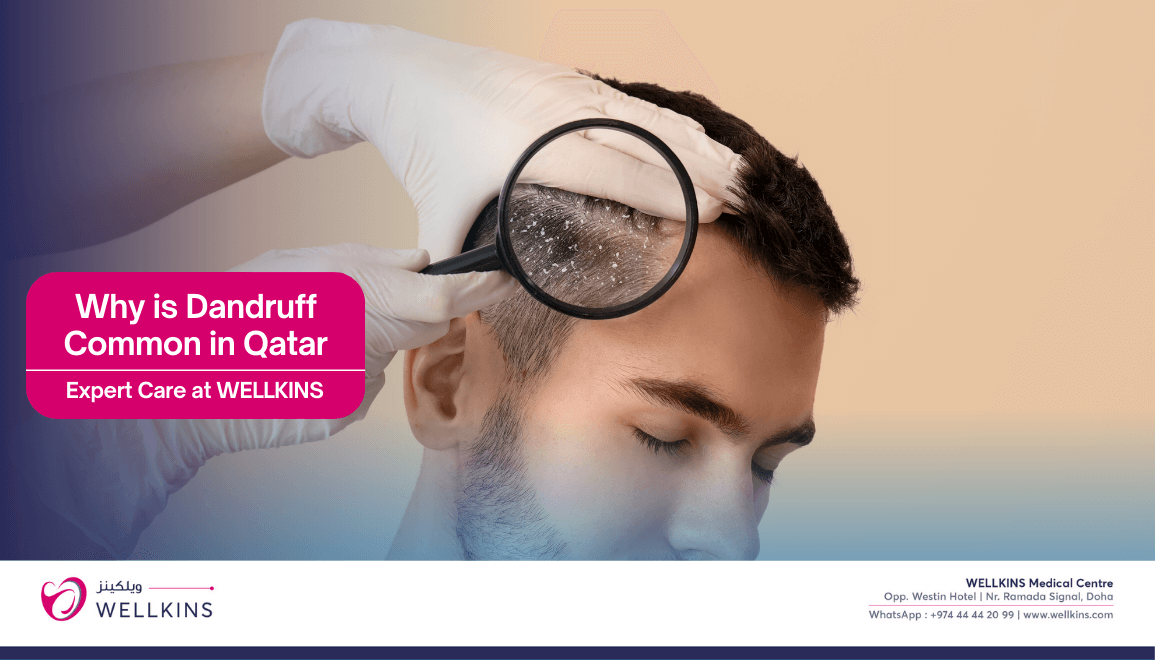
Why is Dandruff Common in Qatar?
Living in Doha presents unique environmental triggers that can exacerbate scalp issues. Understanding these local factors is key to managing the condition effectively.
- Humidity and Sweat: High humidity levels can lead to excessive sweating. When sweat mixes with scalp oils, it creates an ideal breeding ground for the Malassezia fungus.
- Hard Water Impacts: The desalinated water used in many households can be “hard,” containing minerals that strip the scalp of its natural protective barrier, leading to irritation.
- Constant Air Conditioning: Moving between extreme outdoor heat and dry, cooled indoor air can dehydrate the scalp, causing it to produce even more oil to compensate (the “rebound effect”).
- Dust and Pollution: Fine sand and dust particles can settle on the scalp, clogging pores and trapping oils, which worsens flaking and itching.
- Lifestyle Stress: High pressure work environments can trigger hormonal changes that increase oil production, fueling dandruff flare-ups.
Common Signs and Symptoms
Dandruff manifests differently depending on your skin type and the underlying cause. Recognizing these symptoms early can prevent the condition from worsening.
- Visible White or Yellow Flakes: These may appear in the hair or fall onto the shoulders, especially noticeable on dark clothing.
- Scalp Pruritus (Itching): This is often the most uncomfortable symptom, caused by the underlying inflammation and fungal activity.
- Oily or Greasy Scalp: Contrary to popular belief, dandruff is often associated with oily skin rather than dry skin.
- Redness and Irritation: In more severe cases, the scalp may appear pink or inflamed, indicating seborrheic dermatitis.
- Dry, Tight Sensation: Some individuals experience a feeling of “tightness” on the scalp, even when it appears oily.
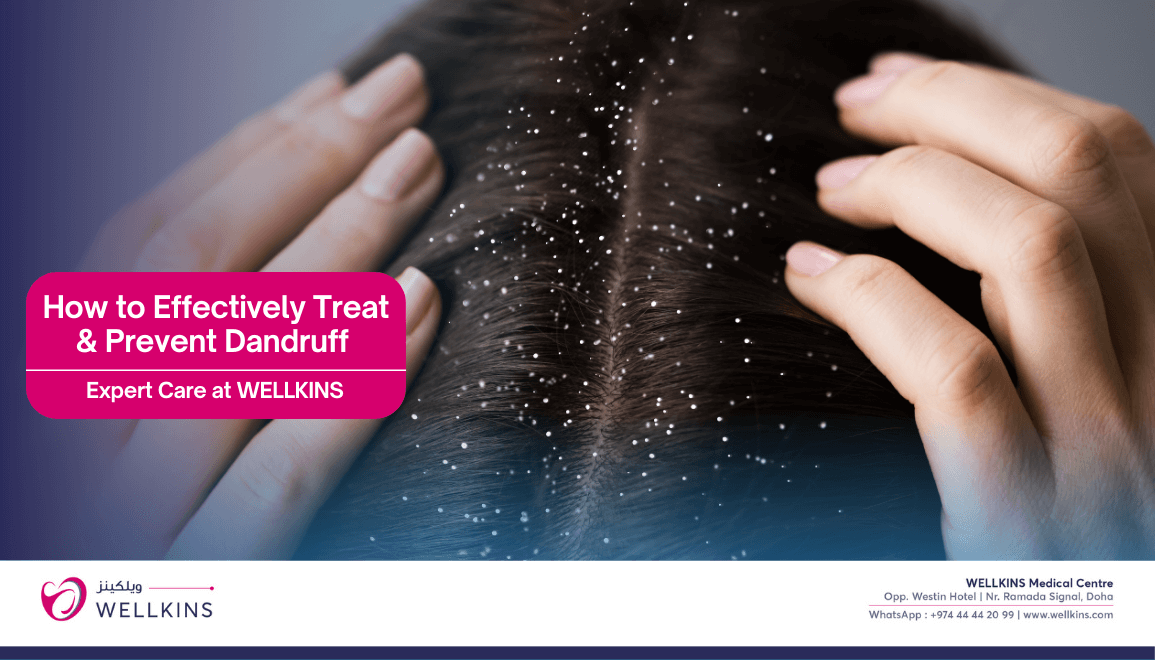
How to Effectively Treat and Prevent Dandruff
Treating dandruff requires a consistent routine rather than a one time fix. A combination of medicated treatments and lifestyle adjustments is usually most effective.
Medicated Shampoos: Look for active ingredients such as:
- Zinc Pyrithione: Targets fungus and bacteria.
- Ketoconazole: A powerful antifungal agent.
- Salicylic Acid: Helps dissolve and wash away dead skin cells (keratolytic).
- Selenium Sulfide: Slows down the production of skin cells and reduces fungus.
Correct Washing Technique: Apply shampoo directly to the scalp, massage gently with fingertips (not nails) and leave it on for at least 3-5 minutes to allow the active ingredients to work before rinsing.
Hydration and Diet: Drinking plenty of water is essential in Qatar’s heat. A diet rich in Zinc, B vitamins and Omega-3 fatty acids supports scalp barrier health.
Scalp Hygiene: After outdoor activities or exercise, wash your hair promptly to remove sweat and environmental pollutants.
Manage Stress: Since stress triggers oil production, incorporating relaxation techniques can help reduce the frequency of flare-ups.
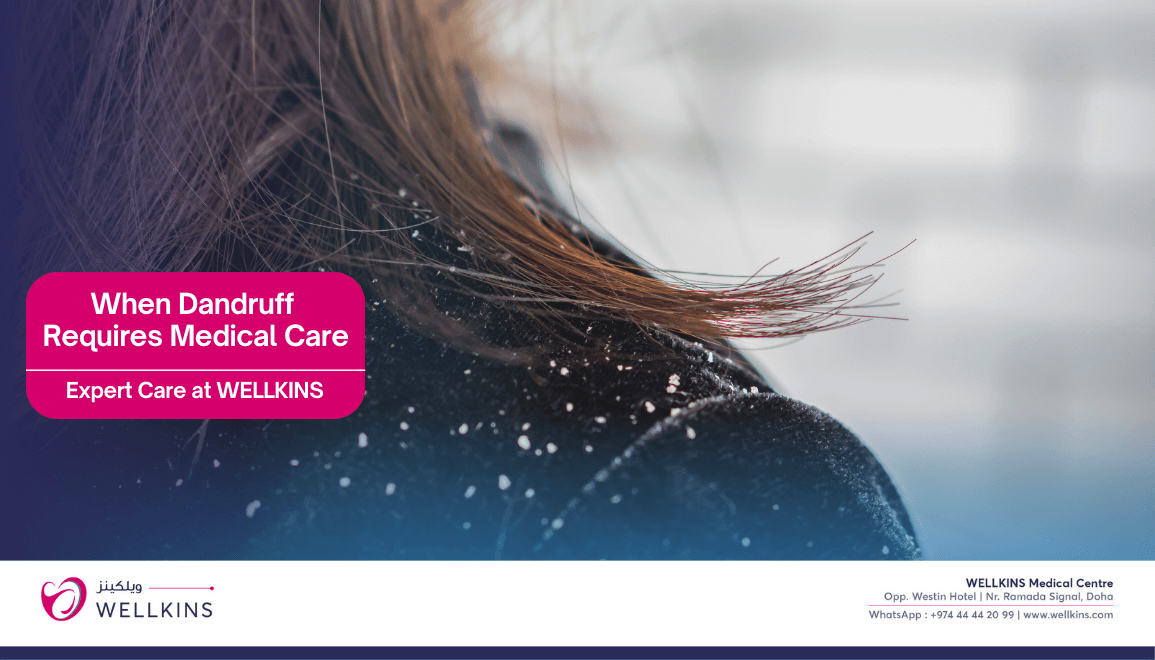
When to See a Specialist
While many cases of dandruff can be managed with over-the-counter products, some situations require a professional diagnosis from a dermatologist if you notice:
- Persistent Flaking: If dandruff continues despite using medicated shampoos for 2 4 weeks.
- Extreme Itching: If the urge to scratch is interfering with your sleep or daily activities.
- Signs of Infection: Such as crusting, oozing, or intense redness on the scalp.
- Hair Loss: If you notice thinning hair or patches of hair loss accompanying the scalp irritation.
- Spread of Symptoms: If redness and scaling move to the eyebrows, nose, or behind the ears (indicating more systemic seborrheic dermatitis).
Final Thoughts
Dandruff is a manageable condition, but it requires a tailored approach that considers your skin type and the environmental challenges of living in Qatar. It is not a sign of poor hygiene, but rather a signal that your scalp’s ecosystem is out of balance. By adopting the right washing habits and seeking professional help when needed, you can maintain a healthy, flake-free scalp.
At Wellkins Medical Centre, we are here to help you find a long-term solution. Our specialist can provide a thorough scalp analysis to differentiate between simple dandruff, psoriasis, or fungal infections, ensuring you receive the exact treatment you need. Don’t let scalp concerns hold you back reach out to us today to rebuild your confidence and comfort.
To book an appointment at Wellkins Medical Centre: https://wellkins.com/visit