
Author: Dr. Preethi Sarma, ( Specialist ENT – WELLKINS Medical Centre )
Head pain is one of the most common reasons people visit a clinic. And among the many types of headache that bring patients to Wellkins Medical Centre, sinus headaches are among the most frequently misunderstood, most commonly misdiagnosed and, as a result, most inadequately treated.
A large number of people in Qatar self-diagnose sinus headaches. They feel pressure across the forehead or behind the cheekbones, their nose feels blocked, the pain seems to worsen in the heat or when they step between outdoors and the air conditioning, and they conclude the sinuses must be the problem. They reach for a decongestant or an antihistamine, get partial and temporary relief and repeat this cycle for months or years without ever resolving the underlying issue.
The reality is more nuanced and far more treatable once correctly understood. Some of what patients call sinus headaches are genuinely sinus-related. Many are not. And in Qatar’s environment, the line between the two is particularly easy to blur because genuine nasal and sinus symptoms coexist with headache disorders at a higher rate here than in most parts of the world.
Getting the diagnosis right changes everything about how the pain is managed.
I see patients almost every week who have been treating themselves for sinus headaches for months, sometimes years, with no lasting relief. In many of these cases the sinus is contributing to the pain but it is not the whole story. Qatar’s dust, allergens and air conditioning create a perfect environment for nasal inflammation, and that inflammation genuinely does cause head and facial pain. But a significant proportion of patients also have an underlying migraine or tension headache disorder that the nasal symptoms are triggering or mimicking. Treating only the nose leaves the headache. Treating only the headache leaves the sinus inflammation. The correct approach addresses both, and that starts with an accurate diagnosis.
Why Sinus Headaches Are So Common in Qatar
Qatar’s environment creates a uniquely high burden of nasal and sinus inflammation that translates directly into head and facial pain for a large proportion of the population. Understanding the specific triggers that make this so prevalent here is the starting point for managing it effectively.
- Shamal Winds and Desert Dust: Fine particulate matter carried by Shamal winds does not simply cause nasal irritation. It penetrates the nasal mucosa, triggers inflammatory responses in the sinus lining and causes the mucosal swelling that obstructs sinus drainage and generates the characteristic pressure and pain of sinus headache. Patients often report their worst headache days coinciding with periods of elevated dust in Doha, and this correlation is not coincidental.
- Rapid Temperature Transitions: Qatar’s extreme contrast between outdoor summer heat and intensely air-conditioned indoor spaces creates repeated thermal shocks to the nasal and sinus mucosa throughout the day. These transitions trigger mucosal vasoconstriction and expansion cycles that maintain a state of low-grade sinus inflammation and contribute directly to frontal and facial headache patterns in sensitized individuals.
- Year-Round Allergen Exposure: Unlike temperate climates where allergen seasons are defined and limited, Qatar’s allergen calendar runs for a significantly larger portion of the year. Dust mites in air-conditioned spaces, desert pollen from February through May, mould spores from humidity fluctuations and cockroach allergens in urban areas all maintain perennial allergic nasal inflammation that directly drives sinus pressure headache in susceptible patients.
- Dehydration: Qatar’s heat means that many residents are in a state of chronic mild dehydration without being aware of it. Dehydration thickens sinus mucus, impairs mucociliary clearance and significantly worsens sinus congestion and the headache that accompanies it. It is also a well-established independent trigger for migraine, which further complicates the clinical picture in patients with coexisting headache disorders.
- High Screen Use and Prolonged Indoor Sedentary Work: Qatar’s professional population spends a large proportion of the working day under artificial lighting in air-conditioned offices, looking at screens. Both screen glare and the dry air of climate-controlled spaces independently worsen headache in predisposed individuals, and when combined with underlying sinus inflammation the result is a headache pattern that feels sinus-related but has multiple simultaneous contributors.
- Air Travel Through Doha: Qatar’s position as a major international aviation hub means that a significant portion of residents travel frequently. The extremely low cabin humidity of long-haul flights dries and inflames the nasal and sinus mucosa, and the pressure changes of ascent and descent cause acute sinus pain that can persist for days after landing, particularly in passengers with pre-existing sinus inflammation.
What a True Sinus Headache Actually Feels Like
Not every headache that feels like it is coming from the sinuses actually originates there. A genuine sinus headache, caused by inflammation and pressure buildup within the sinus cavities, has a specific and recognizable character that distinguishes it from other headache types.
- Location: The pain is felt directly over the affected sinus. Maxillary sinusitis produces pain across the cheekbones and may radiate to the upper teeth. Frontal sinusitis causes pressure and aching across the forehead above the eyebrows. Ethmoid sinusitis produces pain between and behind the eyes. Sphenoid sinusitis, which is less common, causes a deep, poorly localized pain felt at the top or back of the head.
- Worsening with Forward Bending: A characteristic and clinically useful feature of true sinus headache is that it intensifies when the patient bends forward, such as when tying shoelaces or picking something up from the floor. This position-related worsening reflects the increased pressure on the already congested and inflamed sinus cavities.
- Associated Nasal Symptoms: True sinus headache almost always coexists with nasal symptoms including congestion, discharge, reduced sense of smell and postnasal drip. A headache that occurs in the complete absence of any nasal symptoms is very unlikely to be genuinely sinus-related.
- Tenderness on Palpation: Pressing over the affected sinus area, such as the cheekbones or the inner corners of the eyebrows, typically produces localized tenderness in patients with active sinus inflammation. This physical finding supports the sinus origin of the pain.
- Worse in the Morning: Sinus headaches are often most severe on waking because mucus accumulates and sinus pressure builds during the hours of sleep when drainage is less active. Symptoms may partially ease as the patient becomes upright and mucus begins to drain.
- Associated with Fever or Malaise in Acute Cases: When sinus headache accompanies an acute sinus infection, patients typically feel generally unwell with fatigue and may have a low-grade fever. The absence of these systemic symptoms alongside a persistent headache pattern suggests a non-infectious cause warrants consideration.
The Critical Distinction: Sinus Headache or Migraine?
This is the most important diagnostic question in managing head and facial pain that patients attribute to the sinuses, and it is one of the most consistently missed distinctions in primary care worldwide.
Research has shown that the majority of self-diagnosed sinus headaches, in some studies as high as eighty to ninety percent, are actually migraines. The overlap between the two conditions is extensive and genuinely confusing because migraines can cause nasal congestion, facial pressure, eye tearing and nasal discharge through an autonomic nerve mechanism that has nothing to do with sinus inflammation. This means a patient can experience what feels exactly like a sinus headache, complete with nasal symptoms, and have a completely normal sinus examination.
Features that suggest migraine rather than true sinus headache:
- Throbbing or Pulsating Quality: Sinus pain is typically a dull, constant pressure. A throbbing or pulsating headache that worsens with physical activity suggests a vascular migraine mechanism rather than sinus pressure.
- Nausea or Vomiting: These symptoms are characteristic of migraine and are not expected features of a sinus headache. Their presence alongside facial pain strongly suggests a migraine diagnosis.
- Light and Sound Sensitivity: Photophobia and phonophobia are hallmarks of migraine. Patients who need to retreat to a dark, quiet room during a headache episode are almost certainly experiencing migraine rather than sinusitis.
- Response to Migraine-Specific Treatment: If a headache that has been attributed to sinuses responds well to triptan medications or other migraine-specific treatments but does not improve significantly with decongestants or antibiotics, this is strong evidence of a migraine diagnosis.
- Headaches Triggered by Hormonal Changes, Sleep Disruption or Stress: These are classic migraine triggers rather than sinusitis triggers. Patients who notice their headaches correlating with menstrual cycles, poor sleep or high-stress periods are more likely experiencing migraine.
- Normal Sinus Examination: If a thorough ENT examination, including nasal endoscopy, reveals no significant mucosal inflammation, no discharge and no structural abnormality, then the sinuses are not the cause of the headache and the diagnosis requires urgent reassessment.
Other Conditions That Mimic Sinus Headache in Qatar
Beyond migraine, several other conditions produce head and facial pain patterns that are attributed to the sinuses but require different management entirely.
- Tension Headache: The most common headache type globally, tension headache produces a band-like pressure around the head and across the forehead that patients frequently interpret as frontal sinus pressure. It is driven by muscle tension and stress rather than sinus inflammation and does not respond to sinus-directed treatment.
- Temporomandibular Joint Dysfunction: Problems with the jaw joint and associated muscles can produce pain that radiates across the face, temples and around the eyes in patterns that convincingly mimic sinus headache. Patients with teeth grinding, jaw clenching or a history of jaw injury are particularly prone to this pattern.
- Cluster Headaches: Severe, strictly one-sided headaches centered around one eye, occurring in clusters of episodes across days or weeks, can be accompanied by nasal congestion and eye watering on the affected side. These autonomic features cause cluster headaches to be misattributed to sinusitis, delaying the correct diagnosis and access to effective treatment for a condition that is genuinely debilitating.
- Referred Dental Pain: As with sinusitis itself, dental pathology including abscesses and cracked teeth can refer pain into the face and forehead in patterns indistinguishable from sinus headache without a careful clinical assessment that includes dental evaluation.
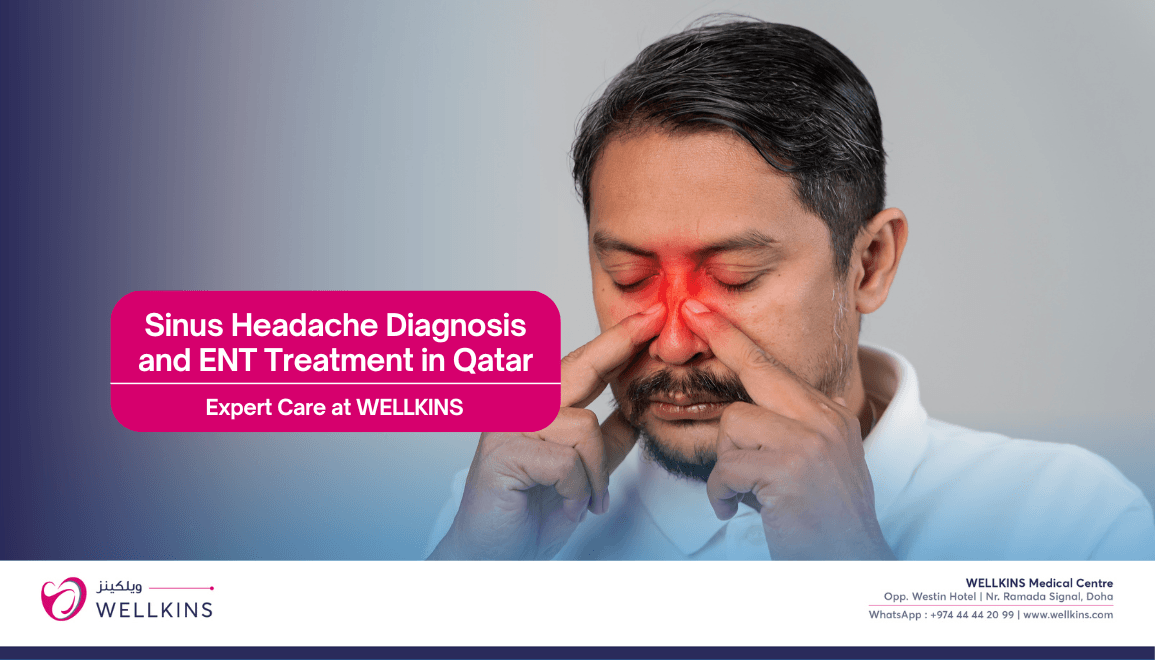
Diagnosis at Wellkins: Finding the Real Source of the Pain
Accurate diagnosis of sinus headache in Qatar requires a structured clinical assessment that goes beyond a brief examination and a prescription. At Wellkins, Dr. Preethi Sarma uses a systematic approach to identify the true source of each patient’s pain before any treatment is initiated.
- Detailed Headache History: The character, location, timing, duration, triggers and associated symptoms of the headache are mapped carefully. This history alone allows a skilled clinician to differentiate between sinus, migraine, tension and other headache types in the majority of cases before any examination or investigation is performed.
- Nasal Endoscopy: Direct visualization of the nasal passages, middle meatus and sinus drainage pathways confirms or excludes active sinus inflammation, polyps, structural deviation and the presence of mucopurulent discharge. A clear endoscopic examination in a patient with head and facial pain is a critical finding that redirects the diagnostic pathway away from sinus disease toward other headache disorders.
- Allergy Assessment: Given Qatar’s high allergen burden, identifying specific allergic sensitizations that may be driving nasal inflammation and contributing to sinus pressure headache is an important part of the diagnostic workup for patients with recurrent or chronic presentations.
- Assessment for Structural Factors: A deviated nasal septum, contact points between nasal structures, enlarged turbinate’s or anatomical variations that cause localized mucosal irritation can generate referred facial and head pain without frank sinusitis. Identifying these requires careful examination and, in selected cases, CT imaging of the paranasal sinuses.
- Coordination With Neurology When Indicated: For patients where the headache pattern clearly suggests migraine or another primary headache disorder rather than sinus pathology, appropriate referral or co-management ensures that each component of a complex presentation receives the correct specialist input.
Relief and Treatment: Matching the Approach to the Diagnosis
Treatment for sinus-related headache in Qatar must address both the sinus inflammation and the environmental and lifestyle factors that maintain it. No single intervention works in isolation.
For genuine sinus-related headache:
- Nasal Saline Irrigation: Daily high-volume nasal saline rinses are the most immediately effective and evidence-supported intervention for reducing the sinus mucus load and inflammation that drives sinus pressure headache. In Qatar’s dusty environment, rinsing after outdoor exposure removes the particulate allergens that would otherwise maintain mucosal irritation throughout the day. Many patients experience meaningful headache relief within days of establishing a consistent irrigation routine.
- Intranasal Corticosteroid Sprays: The cornerstone of both acute and chronic sinus headache management. Used consistently over days to weeks, these sprays reduce the mucosal swelling that obstructs sinus drainage and generates pressure. They are not immediate-acting but their sustained benefit over time is significantly greater than any short-term decongestant.
- Decongestants: Short-term oral or nasal decongestants reduce acute mucosal swelling and facilitate drainage during periods of significant congestion. They provide faster symptom relief than intranasal steroids but must not be used for more than three to five days due to the risk of rebound congestion that worsens the underlying condition.
- Addressing Underlying Allergic Rhinitis: For patients whose sinus headaches are driven by allergic nasal inflammation, appropriate antihistamines and allergen avoidance measures reduce the inflammatory baseline that makes headaches so frequent. Allergen immunotherapy offers a longer-term modification of the allergic response for patients with moderate to severe allergic rhinitis.
- Antibiotics When Infection Is Confirmed: Antibiotics are appropriate when bacterial sinusitis is clinically confirmed and the headache is driven by active infection. They are not appropriate as a routine first response to any facial headache and their use without confirmed bacterial sinusitis contributes to resistance without providing meaningful benefit.
- Steam Inhalation and Warm Compresses: These simple measures provide temporary relief by loosening thick mucus and encouraging sinus drainage. They are a useful adjunct to medical treatment during acute episodes and are particularly practical during Qatar’s winter months when indoor air conditioning is slightly less aggressive.
Lifestyle adjustments specific to Qatar’s environment:
- Hydration: Maintaining adequate water intake throughout the day, at least two to three liters in Qatar’s heat, keeps sinus mucus thin and reduces the frequency and severity of headaches in both sinus and migraine sufferers.
- Air Conditioning Management: Directing air conditioning vents away from the face, using a desktop humidifier in the workspace and ensuring that air conditioning filters are cleaned regularly reduces the drying and allergen-distributing effect of indoor climate control on the nasal and sinus mucosa.
- Dust Protection on High-Particulate Days: Wearing a well-fitting mask during Shamal conditions or on high-dust days in Doha significantly reduces the quantity of particulate matter reaching the nasal mucosa and the sinus pressure headaches that follow heavy dust exposure.
- Nasal Rinse After Outdoor Exposure: Making nasal saline irrigation a routine immediately after returning indoors from a dusty or high-pollen outdoor environment removes allergens before they can trigger or sustain the inflammatory cascade that leads to sinus headache.

When to Book Your ENT Consultation at Wellkins
You should not wait months in a cycle of self-treatment that is not working. Book a consultation at Wellkins Medical Centre if:
- You experience headaches across the forehead or cheeks more than four times per month.
- Over-the-counter decongestants provide only temporary relief and headaches return consistently within days.
- Your headaches are accompanied by persistent nasal congestion, reduced smell or postnasal drip that has never been properly investigated.
- You have completed antibiotic courses for presumed sinus infections but your headaches have not resolved.
- Your headache episodes are associated with nausea, light sensitivity or sound sensitivity, suggesting a possible migraine component requiring specialist assessment.
- Headaches are affecting your productivity at work, your sleep quality or your daily comfort on a regular basis.
Sinus headaches in Qatar are neither inevitable nor something you simply have to manage around. Whether the source is active sinus inflammation, an underlying headache disorder triggered by Qatar’s allergen environment or a combination of both, a clear diagnosis puts the right treatment in your hands rather than another round of medication that addresses the wrong problem.
Your head has been hurting long enough. The answers are closer than you think.
To book an appointment at Wellkins Medical Centre: https://wellkins.com/ent/