
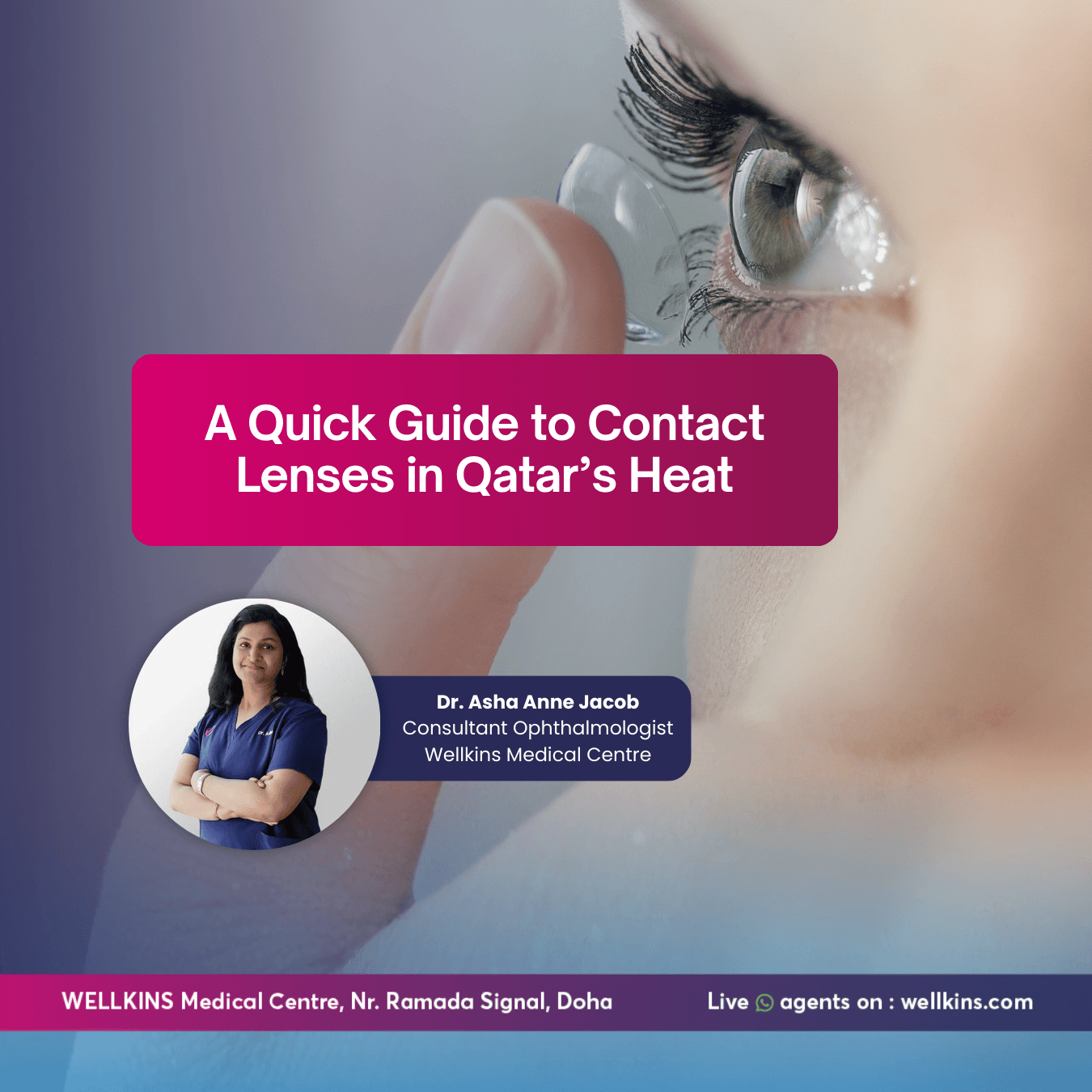
Author: Dr. Asha Anne Jacob (Consultant Ophthalmologist – WELLKINS Medical Centre)
Millions of people around the world wear contact lenses every day without a second thought. But wearing them in Qatar is a different experience entirely. The combination of intense heat, desert dust, aggressive air conditioning and long screen hours creates an environment that places your lenses and more importantly your eyes under a level of stress that most contact lens wearers are simply not prepared for.
At Wellkins Medical Centre, we see a steady stream of patients who have developed avoidable complications from contact lens wear. Redness, infections, corneal abrasions and chronic dry eye are all far more common here than in cooler, more temperate climates. The good news is that most of these problems are entirely preventable with the right knowledge, the right lens choice and a few straightforward habits.
Contact lenses are a wonderful optical tool and most of my patients wear them safely for years. What I want every lens wearer in Qatar to understand is that this environment is genuinely harder on contact lenses than most places in the world. The heat, dust and air conditioning all work against you. Small oversights that might be harmless elsewhere can lead to real problems here. A yearly review with your eye doctor is not optional when you wear lenses in Doha. It is essential.
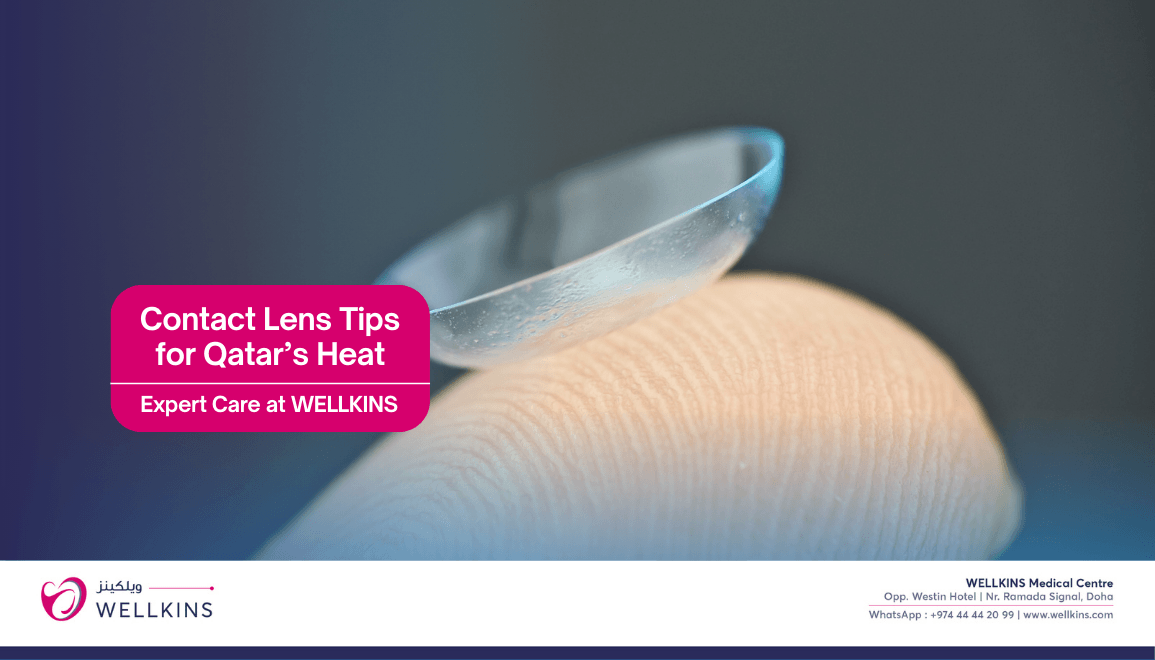
Why Qatar’s Climate Makes Contact Lens Wear More Demanding
Understanding why Qatar is a uniquely challenging environment for contact lens wearers begins with the tear film. Contact lenses sit directly on this thin fluid layer that covers the cornea. When the tear film is destabilised, the lens dries out, moves poorly and starts to irritate the very surface it is meant to protect.
- Extreme Heat Outdoors: Temperatures regularly exceeding 40°C in summer months increase the rate at which moisture evaporates from both the lens surface and the underlying tear film. A lens that feels comfortable indoors can become noticeably dry and uncomfortable within minutes of stepping outside.
- Air Conditioning Dehydration: Qatar’s interiors are kept heavily air conditioned for most of the year. Cold, dry recycled air strips moisture from soft contact lenses continuously throughout the day, accelerating dehydration of both the lens and the ocular surface.
- Shamal Wind and Desert Dust: Fine particulate matter carried by Shamal winds settles under and around contact lenses with ease. This causes mechanical irritation, micro-scratches on the corneal surface and a significantly elevated risk of infection.
- Prolonged Screen Use: Screen work reduces the blink rate dramatically, from a normal rate of around fifteen blinks per minute to as few as five. Each blink refreshes the tear film over the lens. Fewer blinks mean a drier lens, faster protein deposit buildup and greater discomfort by the end of a working day.
- Swimming and Water Activities: Qatar’s pools and coastal waters are popular year round. Wearing contact lenses in any water source, including hotel pools and the sea, carries a serious risk of Acanthamoeba keratitis, a rare but potentially sight-threatening corneal infection caused by a microscopic organism found in water.
The Most Common Contact Lens Problems We See in Qatar
Several complications arise consistently in contact lens wearers living in Qatar. Recognising them early makes a significant difference to outcomes.
1. Contact Lens-Induced Dry Eye
This is the most frequently encountered problem in our clinic. Patients report end-of-day discomfort, burning, lens awareness and blurred vision that clears briefly when they blink or remove the lens.
- What is Happening: The lens absorbs moisture from the tear film to maintain its own hydration. In a low-humidity environment this competes directly with the cornea’s need for lubrication, leaving the ocular surface exposed and irritated.
- Who is Most at Risk: Patients wearing older generation lenses, high water content lenses in dry conditions and those wearing lenses beyond the recommended daily wear time are most affected.
2. Giant Papillary Conjunctivitis (GPC)
Repeated mechanical irritation and protein deposit buildup on lens surfaces triggers an immune response in the inner lining of the upper eyelid, causing the formation of small raised bumps called papillae.
- Symptoms: Increasing lens awareness, itching, excess mucus discharge on waking and lenses that move excessively or feel uncomfortable from the first moments of insertion.
- Qatar Connection: Dusty environments accelerate protein and lipid deposits on lens surfaces, making this condition more common and more rapidly progressive here than in many other regions.
3. Microbial Keratitis
A corneal infection caused by bacteria, fungi or in more serious cases the Acanthamoeba organism. This is a medical emergency requiring urgent attention.
- Warning Signs: Sudden onset of severe eye pain, marked redness, light sensitivity, discharge and vision disturbance. If you experience any of these symptoms while wearing or after removing lenses, seek specialist care immediately.
- Primary Risk Factors in Qatar: Sleeping in lenses, swimming or showering while wearing lenses, using tap water to rinse lens cases and extending the wear period of daily disposable lenses beyond a single day.
4. Corneal Neovascularisation
When lenses are worn for excessively long periods or when poorly fitting lenses deprive the cornea of adequate oxygen, blood vessels begin to grow inward from the white of the eye toward the corneal surface in an attempt to compensate.
- Why This Matters: The cornea is normally avascular, meaning it contains no blood vessels. Once vessels grow into it they do not always fully regress, and in severe cases this can affect vision permanently.
- Prevention: Wearing daily disposable lenses, never sleeping in lenses not approved for extended wear and attending annual contact lens reviews are the most effective preventive measures.
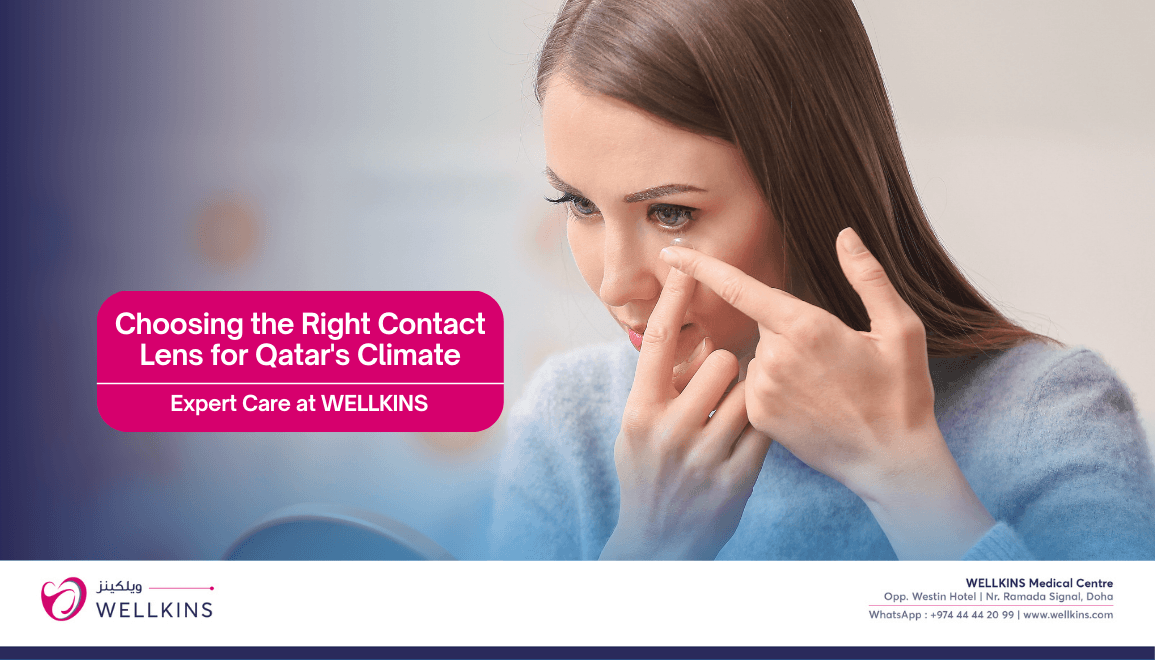
Choosing the Right Contact Lens for Qatar’s Environment
Not all contact lenses perform equally in hot and dry conditions. Lens material, water content and replacement schedule all influence how comfortable and safe your lenses will be throughout a day in Qatar.
- Daily Disposable Lenses: These are the single best lens option for most patients living in Qatar. A fresh, clean lens every morning eliminates deposit accumulation, reduces infection risk and means you always start the day with optimal comfort. There is no lens case to maintain and no risk of reusing a contaminated lens.
- Silicone Hydrogel Materials: Modern silicone hydrogel lenses transmit significantly more oxygen to the cornea than older hydrogel designs, reducing the risk of neovascularisation and end-of-day hypoxic discomfort. For patients who prefer monthly or two-weekly lenses, silicone hydrogel materials are the recommended choice in Qatar’s climate.
- Low Water Content Lenses in Dry Environments: This is counterintuitive but important. High water content lenses may sound more comfortable but they actively draw moisture from the tear film to maintain their own hydration in dry conditions. Lower water content silicone hydrogel lenses tend to perform more consistently in low-humidity environments.
- Avoid Extended Wear in Qatar: Lenses approved for overnight or continuous wear are used by some patients in other climates. In Qatar the additional heat and dust exposure during the day already places the cornea under stress. Adding overnight wear to this equation significantly increases infection risk and is not recommended for most patients here.
Essential Contact Lens Hygiene Rules for Qatar
The rules for safe lens wear are consistent worldwide but their importance is amplified considerably in Qatar’s environment. These are not optional guidelines. They are the difference between comfortable, safe lens wear and a preventable corneal emergency.
- Wash Hands Thoroughly Before Every Insertion and Removal: Dust, bacteria and environmental particulates picked up on your hands in Qatar’s outdoor environment transfer directly to the lens and corneal surface if hand hygiene is skipped.
- Never Use Tap Water on Your Lenses or Lens Case: Qatar’s tap water, like all municipal water supplies, contains microorganisms including Acanthamoeba. Always use fresh sterile multipurpose solution or saline to rinse lenses and cases.
- Replace Your Lens Case Every Month: Biofilm builds up inside lens cases rapidly in warm, humid conditions. A dirty case is one of the most consistent risk factors for microbial keratitis. Cases should be rinsed with fresh solution, not water, left face down on a clean tissue to air dry and replaced monthly as a minimum.
- Remove Lenses Before Any Water Exposure: This includes showers, pools, the sea, water parks and even splashing your face. If you cannot remove them beforehand, tight-fitting waterproof goggles provide some protection, though removal remains the safest option.
- Respect Your Wear Schedule: If your lenses are daily disposables, they end at the end of the day. If they are monthly lenses, they end at one month regardless of whether they feel comfortable. Protein and lipid deposits are not always visible and degraded lenses cause problems before patients are even aware of them.
- Keep Lubricating Drops Accessible: Preservative-free lubricating drops compatible with contact lenses are a practical necessity in Qatar, not a luxury. Keeping a bottle at your desk, in your car and in your bag makes it easy to re-wet lenses before discomfort builds and before you are tempted to rub your eyes.
Practical Tips for Specific Qatar Situations
Several everyday situations in Qatar deserve specific guidance for contact lens wearers.
- During Ramadan Fasting: Reduced fluid intake during fasting hours can lower systemic hydration and reduce tear production. If you fast regularly, consider wearing glasses for part of the day or keeping lubricating drops close by and using them more frequently during fasting periods.
- At the Gym or Playing Sport: Sweat entering the eye can alter the pH of your tear film and disrupt lens comfort. Wash your face before inserting lenses before exercise, avoid touching your eyes during activity and consider daily disposables specifically for sport days.
- During Sandstorms or High-Dust Days: On days when dust is heavy or a Shamal is forecast, switching to glasses entirely is the safest and most comfortable option. If lenses must be worn, add lubricating drops before going outdoors and insert fresh lenses afterward if you are using dailies.
- When Travelling Through Qatar’s Airports: Aircraft cabins have extremely low humidity, sometimes lower than desert conditions. For long-haul travel through or from Doha, wearing glasses on the flight and switching to lenses on arrival is the most comfortable approach for the majority of regular lens wearers.
When to See Your Eye Doctor at Wellkins
Contact lens wearers should attend a routine review at least once a year even if everything feels comfortable. Beyond that scheduled care, you should seek urgent attention if:
- You experience sudden eye pain, significant redness or light sensitivity while wearing or after removing lenses.
- Your vision becomes blurred or hazy in a way that does not resolve after removing lenses.
- You notice discharge, crusting or persistent watering that is different from your normal experience.
- Your lenses feel uncomfortable from the moment of insertion despite being new or freshly replaced.
- You have slept in your lenses accidentally, especially if followed by any redness or discomfort on waking.
Never attempt to push through discomfort by continuing to wear lenses when your eyes are telling you something is wrong. The cornea has the highest density of pain receptors of any tissue in the body. Discomfort is its warning system and it should always be respected.
Contact lenses and Qatar’s climate can absolutely coexist. Hundreds of thousands of people in Doha wear them safely and comfortably every day. The key is understanding what this environment demands, choosing the right lens for these conditions and maintaining the hygiene standards that keep your corneas healthy for the long term.
At Wellkins Medical Centre, Dr. Asha Anne Jacob and the ophthalmology team offer comprehensive contact lens assessments, fitting services and annual reviews tailored to patients living in Qatar’s unique environment. Whether you are new to contact lenses or have worn them for years, a professional review ensures your prescription, lens type and care routine are all working together optimally for your eyes and for where you live.
To book an appointment at Wellkins Medical Centre: https://wellkins.com/visit